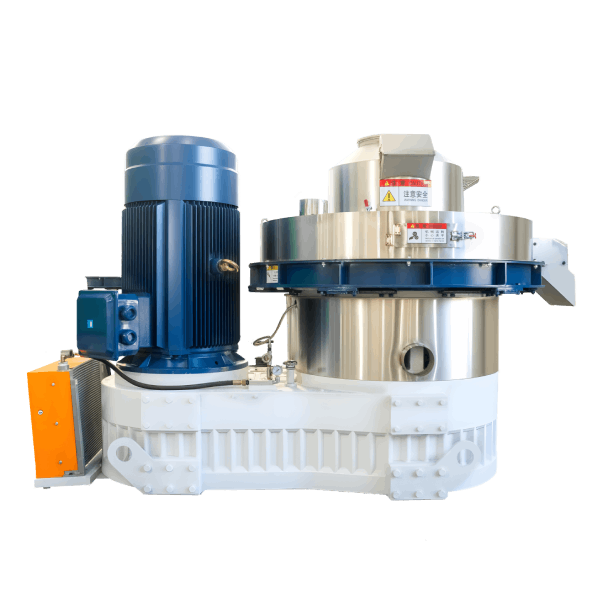
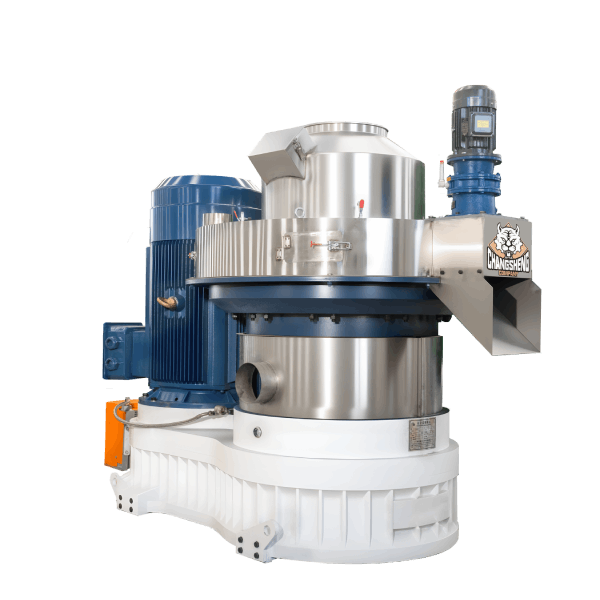
Biomass Pellet Machine Price: What Affects the Cost?
News 2026-04-08
Biomass pellet machine price depends heavily on the feedstock. Rice husk, wheat straw, corn stalks, bagasse, and wood waste can require different feeding, grinding, drying, die, and roller configurations. Two machines with the same nominal capacity can differ significantly in price because the feedstock is different.
This guide is written for procurement managers, importers, EPC contractors, farms, grain processing plants, and biomass pellet producers. It covers price by capacity, how feedstock affects price, biomass pellet machine specifications by feedstock, selection steps, common buying mistakes, project experience, and FAQ. For wood pellet machine pricing, see the separate wood pellet machine price page on this site. For general pellet mill selection, see the separate pellet mill guide on this site.
Biomass Pellet Machine Price by Capacity
Capacity: 0.5–1 t/h
Typical Feedstock: Straw or husk
Main Configuration Concern: Preprocessing
Capacity: 1–2 t/h
Typical Feedstock: Rice husk or straw
Main Configuration Concern: Wear resistance
Capacity: 2–3 t/h
Typical Feedstock: Mixed biomass
Main Configuration Concern: Drying and feeding
Capacity: 3–5 t/h
Typical Feedstock: Industrial biomass
Main Configuration Concern: Complete line integration
Price is not published as a fixed figure because configuration varies widely between projects. The same nominal capacity can differ significantly in price depending on feedstock, moisture, ash content, silica content, particle size, ring die material, drive system, automation, and included auxiliary equipment. Final price should be confirmed against a written scope of supply. Price depends on feedstock, moisture, ash, silica, and auxiliary equipment scope, and should always be confirmed in writing.
A general rule applies across all capacities: as capacity increases, motor power increases, ring die diameter increases, and auxiliary equipment scope increases. Total project price increases accordingly.
A low machine price does not always mean low production cost. Cost per ton of pellets is the figure that matters, and it depends on die life, energy consumption per ton, spare parts cost, and downtime.
How Feedstock Affects Biomass Pellet Machine Price
Rice Husk
Rice husk is abrasive and has high ash and silica content. It requires a hard die, suitable compression ratio, and more frequent die inspection. Roller shells should be selected for high abrasion. Common wear-resistant options include hardfacing and carbide overlay on roller shells. Magnetic separation is important to remove metal and stones that damage dies. Ash and silica content vary by origin and should be confirmed by laboratory test for your specific rice husk.
Wheat Straw
Wheat straw has high fiber content and low lignin content. It usually requires higher compression ratio, more careful feeding, and in some cases a binder. Die wear is generally higher than with wood materials. Ash content should be tested. Crushing and conditioning requirements depend on straw particle size and moisture.
Corn Stalks
Corn stalks are fibrous and variable in moisture. They usually require crushing, drying, and careful feeding. Compression ratio and feeding configuration should be matched to the material. Moisture variation is a common cause of unstable output.
Bagasse
Bagasse has high moisture and fibrous structure. Drying is usually required. Bulk density affects feeder design and storage. Bagasse may require a feeder designed for low bulk density material.
Wood Waste
Wood waste includes sawdust, wood chips, shavings, and bark. It usually pelletizes more easily because of higher lignin content. Drying and grinding requirements depend on initial moisture and particle size. Bark content increases ash and wear.
Mixed Agricultural Residues
Mixed agricultural residues are common in commercial projects. Mix ratio should be consistent. Variable mix causes variable compression, feeding, and pellet quality. When mix ratio cannot be controlled, the die and process should be selected for the most challenging component in the mix.
Biomass Feedstock Comparison
Feedstock: Rice husk
Main Challenge: High silica and abrasion
Equipment Focus: Wear-resistant die and rollers
Feedstock: Wheat straw
Main Challenge: Fiber and ash
Equipment Focus: Crushing and conditioning
Feedstock: Corn stalk
Main Challenge: Moisture and fiber
Equipment Focus: Drying and feeding
Feedstock: Bagasse
Main Challenge: High moisture
Equipment Focus: Drying system
Feedstock: Wood waste
Main Challenge: Moisture and particle size
Equipment Focus: Crushing and drying
Feedstock: Mixed biomass
Main Challenge: Variable properties
Equipment Focus: Flexible feeding and conditioning
Biomass Pellet Machine Specifications by Feedstock
Specification: Capacity
What It Means by Feedstock: Same nominal capacity can produce different actual output with rice husk, straw, or bagasse
Specification: Motor power
What It Means by Feedstock: Depends on feedstock density, fiber, and moisture
Specification: Ring die diameter
What It Means by Feedstock: Affects production configuration; larger die supports higher capacity
Specification: Pellet diameter
What It Means by Feedstock: Usually 6, 8, 10, or 12 mm depending on application
Specification: Moisture range
What It Means by Feedstock: Rice husk, straw, corn stalk, and bagasse have different target moisture ranges; typical target around 12 to 15 percent and should be confirmed with a pelletizing test
Specification: Ash and silica content
What It Means by Feedstock: Determines die and roller material selection; should be confirmed by laboratory test
Specification: Compression ratio
What It Means by Feedstock: Depends on feedstock density, fiber, and moisture
Specification: Die and roller life
What It Means by Feedstock: Varies widely by feedstock and contamination level; confirm with supplier based on similar material
Specification: Energy consumption
What It Means by Feedstock: Determines operating cost per ton; depends on feedstock moisture, ash, and die specification
Specification: Pellet density
What It Means by Feedstock: Affects fuel value and handling; depends on feedstock type, compression ratio, and pellet diameter
Specification: Drive system
What It Means by Feedstock: Gearbox or belt drive; affects efficiency, maintenance, and cost
Specification: Power supply
What It Means by Feedstock: Must match local voltage, phase, frequency, and transformer capacity
Actual values should be confirmed in a written technical agreement, not estimated from catalog images. A 2 t/h machine for rice husk is not the same configuration as a 2 t/h machine for bagasse. For a more detailed comparison of ring die and flat die, see the separate pellet mill guide on this site.
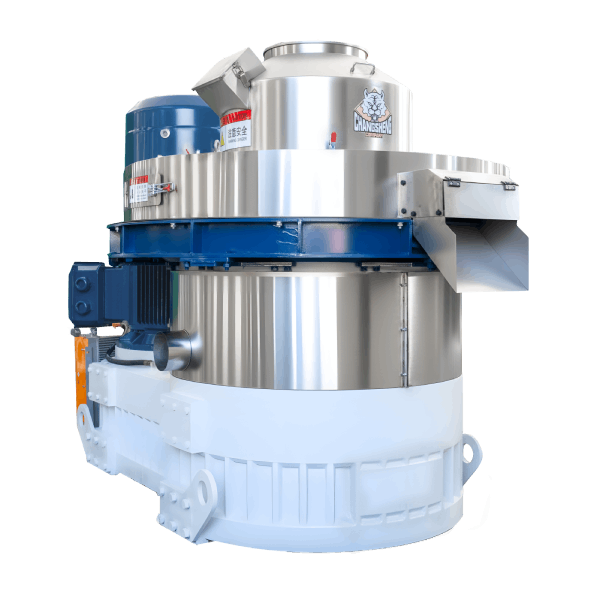
How to Choose a Biomass Pellet Machine
Step 1 — Identify Your Feedstock
Confirm feedstock type and mix ratio. Different feedstocks require different die, roller, feeder, and drying configurations. Rice husk, wheat straw, corn stalk, and bagasse cannot use the same configuration without adjustment.
Step 2 — Test Moisture and Ash
Moisture determines drying requirement. Ash and silica content determine die and roller material. Laboratory test results should be used for selection. Ash and silica vary by origin, so test results for your specific feedstock are the only reliable basis.
Step 3 — Check Particle Size
Particle size affects feeding stability, compression, pellet density, and die wear. Grinding may be required. Screen size should be selected based on feedstock and downstream equipment.
Step 4 — Estimate Required Capacity
Required hourly capacity equals annual production target divided by annual operating hours, plus a capacity margin of about 20 to 30 percent. Actual capacity depends on feedstock, moisture, ash, particle size, and die specification.
Step 5 — Select Die and Roller Configuration
Die compression ratio and roller material should be selected for feedstock density, fiber, moisture, ash, and silica content. For abrasive feedstocks such as rice husk, hardfacing or carbide overlay on roller shells is commonly used. For fibrous feedstocks such as straw, higher compression ratio and careful feeding are usually required.
Step 6 — Check Dryer and Crusher Requirements
Drying is required when moisture is above the suitable range. Crushing or grinding is required when particle size is too coarse. Bagasse and corn stalk usually require drying. Wheat straw and rice husk may require crushing.
Step 7 — Compare Complete Line Cost
Machine price is not the same as complete line cost. Compare scope of supply, not headline price. A complete line may include magnetic separator, crusher, dryer, pellet mill, cooler, screener, packing, and dust collection.
7 Biomass Pellet Machine Buying Mistakes
1. Choosing the Machine Before Testing the Feedstock
Feedstock properties determine machine configuration. Without a material test, selection is based on assumption. Rice husk, straw, and bagasse have different requirements and cannot be treated as the same material.
2. Using the Same Configuration for Rice Husk and Straw
Rice husk is abrasive and high in silica. Straw is fibrous and low in lignin. The same configuration will not perform equally well on both. Die, roller, feeder, and compression ratio should be matched to the specific feedstock.
3. Ignoring Ash and Silica Content
Ash and silica content determine die and roller material. Ignoring these values leads to short die life and high spare parts cost. Ash and silica should be confirmed by laboratory test.
4. Comparing Machine Prices Without the Dryer
If feedstock moisture is above the suitable range, a dryer is required. Comparing machine prices without drying cost is not a valid comparison. Bagasse and corn stalk often require drying; the dryer can be a significant part of total project cost.
5. Comparing Capacity Without Specifying Moisture
Capacity is only meaningful when feedstock, moisture, and particle size are stated. A capacity figure without these conditions is not a technical commitment.
6. Buying a Low-Cost Die for Abrasive Biomass
Low-cost dies wear faster on abrasive biomass. The cost of a die should be evaluated against the tons it can produce, not against its purchase price alone. For rice husk and straw, the cost per ton of pellets is the figure that matters. A die that costs more but lasts significantly longer may reduce cost per ton.
7. Comparing Only Machine Price Instead of Cost per Ton
Cost per ton includes raw material, power, labor, depreciation, maintenance, and spare parts. Machine price alone does not show real production cost. For abrasive biomass, spare parts and downtime often dominate total cost.
Biomass Pellet Machine Project Experience
The following summarizes typical project parameters from biomass pellet machine projects. Specific customer names and contact details are not included.
Typical project: rice husk pellet production at a rice mill in Vietnam.
Raw material: rice husk with high silica content.
Capacity: 1.5 t/h.
Initial moisture: reduced by drying to the range suitable for pelletizing.
Final pellet diameter: 6 to 8 mm.
Configuration: ring die pellet machine with magnetic separator, hammer mill, dryer, cooler, screener, and packing.
Application: industrial boiler fuel and local fuel market supply.
Acceptance: trial run with actual rice husk, output and pellet quality recorded before shipment.
The parameters above are typical project parameters and should be confirmed with actual test records. Where a project cannot be documented with material, moisture, pellet diameter, capacity, and operating hours, it should not be presented as a case study.
Frequently Asked Questions
What is the price of a biomass pellet machine?
Price depends on capacity, feedstock type, moisture, ash and silica content, ring die material, automation, and included auxiliary equipment. A 0.5 to 1 t/h machine, a 2 to 3 t/h machine, and a complete 3 to 5 t/h industrial line are in clearly different price categories. A machine for rice husk and a machine for wood waste at the same capacity may also differ in price because of die and roller specification. Final price should be confirmed against a written scope of supply.
How much does a 1 t/h biomass pellet machine cost?
A 1 t/h biomass pellet machine is in the small to medium capacity category. Price depends on feedstock type, ring die material, drive system, automation, and whether a dryer, hammer mill, cooler, screener, and packing machine are included. For abrasive feedstocks such as rice husk, upgraded die and roller material add cost. Final price should be confirmed against a written scope of supply.
Which biomass materials can be pelletized?
Rice husk, wheat straw, corn stalks, bagasse, wood waste, and mixed agricultural residues can be pelletized with appropriate preprocessing, drying, grinding, and die selection.
Is a biomass pellet machine suitable for rice husk?
Yes, but rice husk is abrasive and has high silica content. It requires wear-resistant die and roller material, suitable compression ratio, and magnetic separation to remove metal and stones. Hardfacing or carbide overlay on roller shells is commonly used. Die and roller life varies widely by feedstock and contamination level, so expected working hours should be confirmed with the supplier based on similar material.
What type of pellet machine is suitable for wheat straw?
Wheat straw is fibrous and low in lignin. A ring die machine with higher compression ratio, careful feeding, and in some cases a binder is suitable. Flat die machines may be used for small-scale straw pellet production. For commercial capacity and continuous operation, ring die is generally preferred. Crushing and conditioning requirements depend on straw particle size and moisture.
Does rice husk require special rollers or dies?
Yes. Rice husk requires harder die and roller material because of high silica content. Common wear-resistant options include hardfacing and carbide overlay on roller shells, and case-hardened alloy dies. Die and roller life varies widely by feedstock and contamination level, so expected working hours should be confirmed with the supplier based on similar material.
How much does moisture affect biomass pellet production?
Moisture affects compression, binding, throughput, and die wear. If moisture is too high, drying is required. If moisture is too low, binding may be poor. Typical target moisture before pelletizing is around 12 to 15 percent, depending on feedstock and die specification. The exact target should be confirmed with a pelletizing test.
Does biomass pellet production require a dryer?
Drying is required when feedstock moisture is above the suitable range for pelletizing. Rice husk, straw, corn stalk, and bagasse may have different drying requirements. Bagasse and corn stalk often require drying. The dryer can be a significant part of total project cost and should be included in the comparison.
What equipment is included in a complete biomass pellet line?
A complete line may include magnetic separator, crusher or hammer mill, dryer, pellet mill, cooler, screener, packing machine, and dust collection. Scope depends on feedstock and target pellet quality. Machine price is not the same as complete line cost.
How do I calculate the total cost per ton?
Add raw material, power, labor, depreciation, maintenance, and spare parts. Divide by annual output. Compare with the local price of biomass pellets or alternative fuel to estimate payback. For abrasive feedstocks such as rice husk and straw, spare parts and downtime often dominate total cost. Actual payback depends on feedstock supply, moisture, power price, and machine utilization rate. Use conservative data.
Author Introduction
This article was prepared by a technical content specialist with over ten years of experience in industrial equipment, biomass processing machinery, and B2B export projects. The author has worked with biomass pellet machine projects in rice mills, straw processing facilities, and wood pellet plants in Southeast Asia, Eastern Europe, and South America, including rice husk, wheat straw, corn stalks, bagasse, and mixed agricultural residues, and understands the practical challenges buyers face in feedstock testing, die selection, moisture control, and international procurement.
The content reflects real engineering practice in biomass pellet machine price analysis, feedstock preparation, cost control, and project execution. It is intended to help procurement managers, importers, EPC contractors, farms, grain processing plants, and biomass pellet producers make informed decisions and reduce purchase risk. The author is affiliated with Shandong Changsheng Machinery Co., Ltd.
Call to Action
If you are planning a biomass pellet project and need help confirming machine type, capacity, ring die material, moisture control, auxiliary equipment scope, or spare parts plan, you can request a technical proposal based on your feedstock and required output. Share your feedstock type, moisture, ash content, silica content, particle size, target capacity, pellet diameter, local power supply, and operating hours, and a suitable configuration can be recommended.
You can also request a quotation for a biomass pellet machine, ask for a cost breakdown by feedstock, request a spare parts list, or arrange a video factory inspection before making a final decision. If you have a biomass feedstock sample, a pelletizing test can be arranged to confirm die selection and expected performance under your actual material conditions.