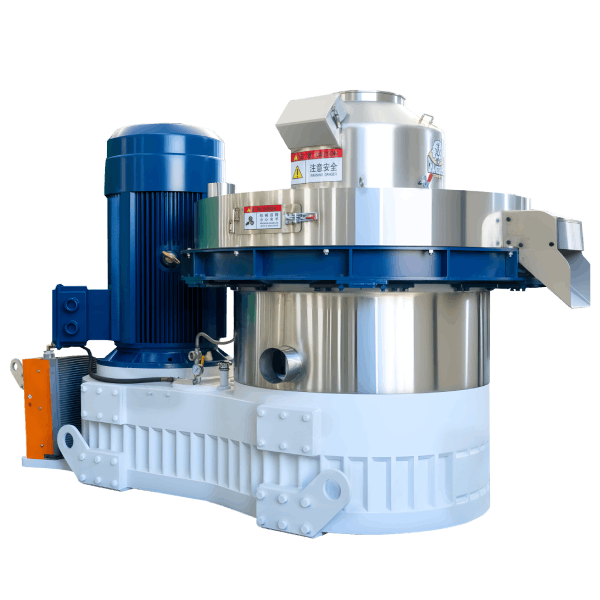
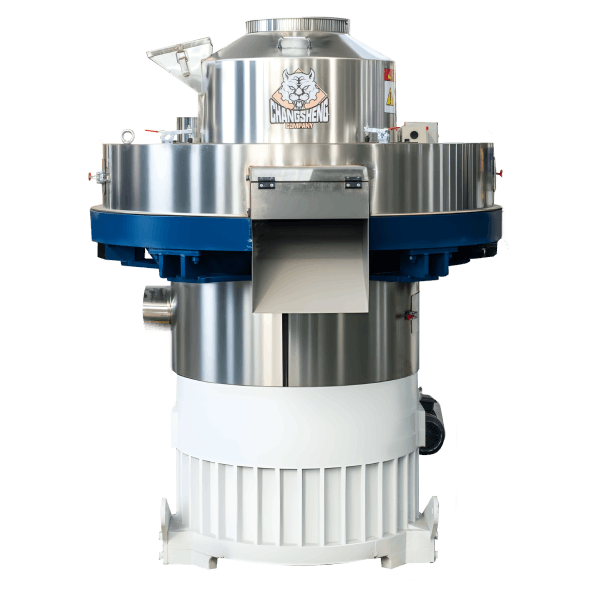
Pellet Mill for Rabbit Feed: 0.1-0.5 t/h 3-5mm Pellet Models
News 2026-04-27
1. Product Definition
A pellet mill for rabbit feed is a flat die or small ring die densification system that compresses ground alfalfa, grains, and supplements into uniform 3-5mm pellets, improving feed conversion and reducing waste in commercial rabbit operations.
2. Technical Parameters & Specifications
| Parameter | Small Rabbitry | Medium Rabbitry | Large Rabbitry / Feed Mill |
|---|---|---|---|
| Capacity (kg/h) | 50 – 100 | 100 – 200 | 200 – 500 |
| Motor Power (kW) | 7.5 – 11 | 11 – 15 | 15 – 22 |
| Die Diameter (mm) | 150 – 200 | 200 – 250 | 250 – 300 |
| Pellet Diameter (mm) | 3, 4 | 4, 5 | 4, 5 |
| Compression Ratio (L/D) | 1:10 – 1:12 | 1:10 – 1:12 | 1:10 – 1:12 |
| Pellet Density (kg/m³) | 550 – 650 | 550 – 650 | 550 – 650 |
| Raw Material Moisture (%) | 12 – 15 | 12 – 15 | 12 – 15 |
| Particle Size Required (mm) | 95% <2mm | 95% <2mm | 95% <2mm |
| Energy Consumption (kWh/t) | 60 – 90 | 55 – 85 | 50 – 80 |
| Die Life (hours) | 500 – 800 | 600 – 900 | 700 – 1,000 |
| Maintenance (hours/month) | 4 – 8 | 6 – 10 | 8 – 12 |
| Power Requirement | 220V single-phase or 380V three-phase | 380V three-phase | 380V three-phase |
For rabbit feed production: Request a pellet mill for rabbit feed quotation with 3-5mm die and binder recommendations.
3. Structure & Material Composition
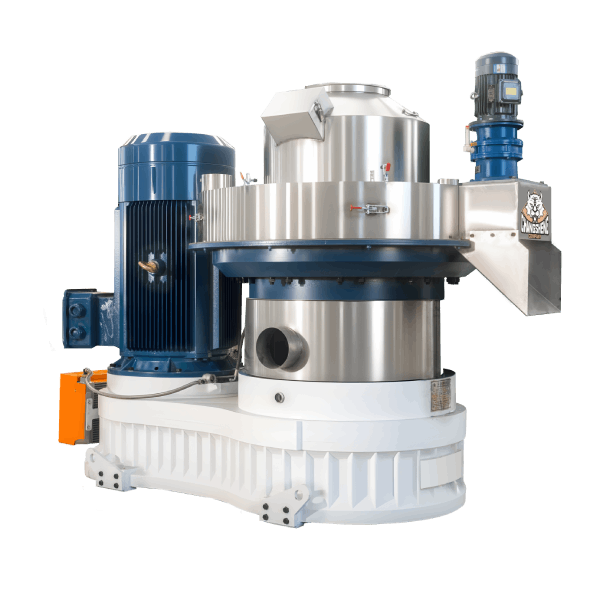
Rabbit Feed Pellet Mill Components
Die Specifications
- Material: GCr15 bearing steel (food-grade acceptable)
- Hardness: HRC 50-54 (slightly lower than fuel dies)
- Hole diameter: 3-5mm (±0.05mm tolerance)
- Compression ratio: 10:1 to 12:1 (hole length 30-60mm)
- Surface finish: Polished holes (Ra <0.4μm)
Roller Assembly
- Rollers: 2 rollers, Cr12MoV or Cr26 steel
- Hardness: HRC 55-60
- Diameter: 60-120mm
- Roller gap: 0.2-0.4mm (wider than fuel dies)
Feed-Specific Features
- Feeder: Gravity or small screw with VFD
- Conditioner: Optional steam (70-80°C) for alfalfa-based feeds
- Control: Manual starter or PLC with amp meter
- Magnets: Double magnetic separators (metal fragments from grains)
4. Manufacturing Process (Engineering Steps)
Step 1 – Raw Material Grinding (Critical for Rabbits)
Equipment: Hammer mill with 1.5-2mm screen (finer than other livestock)
Control: 95% of particles passing 1.5-2mm screen
Why: Rabbits have sensitive digestive systems; fine grind improves digestibility
Step 2 – Batching & Mixing
Equipment: Ribbon mixer (3-5 minutes)
Formula: 30-50% alfalfa/grass hay, 30-40% grains (corn, oats, barley), 15-20% soybean meal, 2-5% supplements (minerals, vitamins, coccidiostats)
Control: Uniform distribution of medications (critical)
Step 3 – Conditioning (Optional)
Equipment: Steam conditioner (70-80°C, 30-45 seconds)
Control: For alfalfa-based feed (improves pellet durability)
Why: Steam gelatinizes starches, activates natural binders
Step 4 – Pelletizing with 3-5mm Die
Equipment: Flat die or ring die pellet mill
Control: Monitor pellet temperature (target <85°C to preserve vitamins)
Capacity: 50-500 kg/h depending on die size
Step 5 – Cooling & Screening
Equipment: Counterflow cooler + screener
Control: Cool to ambient temperature; remove fines (<2mm)
Why: Fine particles cause digestive issues in rabbits
5. Industry Comparison
| Parameter | 3-5mm Pellet Mill (Rabbit) | 2-3mm Pellet Mill (Mice/Rats) | 5-6mm Pellet Mill (Poultry) | 6-8mm Pellet Mill (Cattle) |
|---|---|---|---|---|
| Rabbit suitability | Excellent | Too small (choke risk) | Too large (selective feeding) | Too large (waste) |
| Fine grind required | Yes (<2mm) | Yes (<1.5mm) | No (<3mm) | No (<6mm) |
| Typical fiber content | 15-25% | 10-15% | 5-10% | 20-40% |
| Binder requirement | Moderate (steam) | High | Low (if grain) | Low |
| Pellet durability (PDI) | 85-92% | 80-90% | 90-95% | 85-90% |
| Die life (hours) | 500-1,000 | 400-800 | 800-1,200 | 1,000-1,500 |
| Why Choose Shandong Changsheng | Fine grind capability, steam conditioning, food-grade steel | Too small | Wrong size | Wrong size |
Compare pellet sizes for rabbits: Request sample 3mm, 4mm, and 5mm pellets for rabbit feeding trials.
6. Application Scenarios (By Buyer Role)
Distributors / Importers
Stocking pellet mill for rabbit feed for feed mills and large rabbitries. Decision focus: die sizes (3-5mm), food-grade steel, and steam conditioning integration.
EPC Contractors
Specifying rabbit feed lines for integrated rabbit production facilities. Decision focus: fine grinding capability (<2mm), medication mixing accuracy, and pellet durability.
Engineering Consultants / Technical Advisors
Advising rabbit producers on on-farm feed production. Decision focus: payback period (6-18 months), feed cost savings (20-40% vs purchased), and quality control.
End-user Facilities (Commercial rabbitries, feed mills, research facilities)
Producing 50-5,000 tons/year of rabbit feed. Decision focus: pellet size (3-5mm), fines percentage (<5%), and medication mixing accuracy.
7. Core Technical Pain Points & Engineering Solutions
Pain Point 1 – Fines (Dust) Cause Digestive Issues
Problem: Pellet fines (<2mm) cause enteritis (inflammation) in rabbits, leading to diarrhea, bloating, mortality.
Root cause: Insufficient screening after pelleting; improper cooling.
Solution: Install screener after cooler (remove fines <2mm). Target fines <3% of finished feed. Use longer cooling retention (12-15 minutes) to harden pellets.
Pain Point 2 – Pellet Size Inconsistent
Problem: Pellets vary from 2mm to 6mm. Rabbits select preferred size, waste the rest (10-20% waste).
Root cause: Die holes worn unevenly or incorrect compression ratio.
Solution: Replace die when hole diameter variation exceeds ±0.1mm. Use compression ratio 1:10-1:12 for rabbit feed. Request test pellets before production.
Pain Point 3 – Poor Pellet Durability (PDI <85%)
Problem: Pellets crumble during bagging and transport, creating fines (>10%).
Root cause: Low fiber content (<15%) or insufficient binder. Rabbit feed is often high-fiber (alfalfa, hay) — should actually have good binding.
Solution: Add 2-4% binder (bentonite or corn starch). Use steam conditioning (70-80°C, 45 seconds). Increase compression ratio to 1:12 if PDI still low.
Pain Point 4 – Medication Cross-Contamination
Problem: Same mill used for medicated and non-medicated feed. Coccidiostats residue in weanling feed (toxic).
Root cause: Insufficient cleaning between batches.
Solution: Dedicated pellet mill for non-medicated feed only. If shared, run 200kg of ground corn as “flush” between batches. Test for residues quarterly. Schedule production: medicate last batch of day, then clean.
8. Risk Warnings & Mitigation Strategies
Risk 1 – Coccidiostat Toxicity in Young Rabbits
Warning: Residues from medicated feed (lasalocid, salinomycin) in weanling (4-8 weeks) feed cause reduced growth, mortality.
Mitigation: Dedicated mill for weanling feed (no medication). Clean mill thoroughly after medicated batches. Test for residues monthly (ELISA). Separate storage for medicated vs non-medicated ingredients.
Risk 2 – Mold and Mycotoxins in Stored Feed
Warning: Rabbit feed stored above 13% moisture develops mycotoxins (aflatoxin, ochratoxin) causing liver damage, reproductive failure.
Mitigation: Dry ingredients to <12% moisture before pelleting. Cool pellets to <30°C before bagging. Store in dry, ventilated area. Use within 30-45 days. Test mycotoxins monthly.
Risk 3 – Aflatoxin in Alfalfa
Warning: Alfalfa from certain regions may contain aflatoxin (>20 ppb) causing liver cancer in rabbits.
Mitigation: Test incoming alfalfa (ELISA or HPLC). Reject >20 ppb. Blend high-aflatoxin with clean material (<10 ppb final). Use mould inhibitor (propionic acid 0.5-1.0 L/ton) in high-risk seasons.
9. Procurement Selection Guide (6 Actionable Steps)
Step 1 – Determine your rabbit production scale
Calculate annual feed requirement: 0.1-0.15 kg/day per adult rabbit (breeders). 0.05-0.1 kg/day per growing rabbit. For 1,000 rabbits (breeders + offspring), approximately 50-100 tons/year.
Step 2 – Verify hammer mill capability
Rabbit feed requires 1.5-2mm screen (finer than other livestock). Verify existing hammer mill can achieve this. If not, budget for new screens ($200-500) or new hammer mill.
Step 3 – Select pellet size for your rabbit class
Weanling (4-8 weeks): 3mm. Grower (8-12 weeks): 4mm. Finisher (12+ weeks) & breeders: 4-5mm. One pellet size works for all? Use 4mm (best compromise).
Step 4 – Specify die compression ratio
Standard rabbit feed (30-50% alfalfa, 30-40% grain): 1:10-1:11. High-fiber (60%+ alfalfa): 1:11-1:12. High-grain (50%+): 1:9-1:10. Test before ordering production die.
Step 5 – Request steam conditioning option
Improves pellet durability (PDI +5-10%), reduces fines, gelatinizes starches. Adds $5,000-10,000 to line cost. Recommended for commercial production (>200 tons/year).
Step 6 – Negotiate medication safety protocol
Supplier must provide: cleaning procedure (flush volume), testing protocol (ELISA for coccidiostats), dedicated production scheduling. Document in contract.
10. Engineering Case Study
Project Background: A commercial rabbitry in Spain produced 500 rabbits/week (25,000/year). Purchased feed at $400/ton ($40,000/year). Wanted to produce on-site feed, control quality.
Initial Problem: Rabbitry purchased 4mm pellet die for existing feed mill. After 3 months: pellets varied 3-6mm (inconsistent). Fines 12% (target <5%). Weanling rabbits had diarrhea (enteritis) from fines. Mortality increased 5%.
Root Cause Analysis:
- Die holes worn unevenly (cheap die)
- No screener after cooler (fines not removed)
- Hammer mill screen 3mm (should be 1.5-2mm for rabbit feed)
- No binder in formula
Solution Implemented (Shandong Changsheng):
- Upgraded to GCr15 die, 4mm holes, 1:11 compression ratio ($800)
- Added screener after cooler (fines removal) ($2,500)
- Changed hammer mill screen to 1.5mm ($150)
- Added 3% bentonite binder to formula
- Installed steam conditioner ($6,000)
Final Data Results (12 months operation):
| Metric | Before | After |
|---|---|---|
| Pellet size variation | 3-6mm | 3.8-4.2mm |
| Fines in feed (%) | 12% | 3% |
| Rabbit mortality (weanling) | 8% | 3% |
| Feed conversion ratio (FCR) | 3.2:1 | 2.9:1 |
| Feed cost per ton | $400 (purchased) | $280 (homemade) |
| Annual feed volume (tons) | 100 | 100 |
- Equipment investment: $800 (die) + $2,500 (screener) + $150 (screen) + $6,000 (steam) = $9,450
- Annual savings: ($400 – $280) × 100 tons = $12,000 + reduced mortality (5% of 500 rabbits/week × $10 value × 50 weeks = $12,500) = $24,500/year
- Payback: 5 months
Request a rabbit feed production study: Contact engineering team with your rabbit count, current feed cost, and target production volume.
11. FAQ
Q1: What is the best pellet size for rabbit feed?
3-5mm diameter. Weanling: 3mm. Grower/finisher/breeder: 4-5mm. 4mm is good compromise for all ages.
Q2: Why is fine grind important for rabbit feed?
Rabbits have sensitive digestive systems. Particles >2mm can cause enteritis. Hammer mill screen should be 1.5-2mm.
Q3: What moisture is best for rabbit feed pellets?
12-15% raw material moisture. Finished pellets should be <12% for storage stability (prevents mold).
Q4: How much fines (dust) is acceptable in rabbit feed?
<3% maximum. Fines cause respiratory issues and enteritis. A small commercial screener (vibrating or rotary) is essential.
Q5: Can I use a wood pellet mill for rabbit feed?
Yes, with different die (3-5mm holes, 1:10-1:12 compression ratio). Clean thoroughly between wood and feed (wood dust toxic to rabbits).
Q6: Do I need a binder for rabbit feed?
For high-fiber (>40% alfalfa/hay), natural binders (lignin) may suffice. For high-grain, add 2-4% bentonite or corn starch. Steam conditioning (70-80°C) also improves binding.
Q7: What is the typical die life for rabbit feed?
500-1,000 hours depending on die material (GCr15 vs 20CrMnTi) and abrasiveness (alfalfa vs grain). Lower than fuel dies due to finer particles.
Q8: Can I make floating rabbit feed pellets?
Rabbits do not require floating feed. Sinking pellets are fine. Extruder not required.
Q9: What is the typical feed conversion ratio (FCR) for pellets vs mash?
Pellets: 2.8-3.2:1. Mash: 3.5-4.0:1. Pellets reduce waste (selective feeding) and improve digestibility.
Q10: Do I need a hammer mill for rabbit feed?
Yes. Ground grains and alfalfa must be under 2mm. Hammer mill with 1.5-2mm screen essential.
Q11: Can I produce medicated rabbit feed on-farm?
Yes, but must follow withdrawal times and avoid cross-contamination. Use separate mixer or flush thoroughly. Test for residues.
Q12: What is the typical cost savings making own rabbit feed?
20-40% vs purchased feed ($200-300/ton vs $300-500/ton). Higher savings with on-farm grown grains/alfalfa.
Q13: How do I prevent mold in rabbit feed pellets?
Cool pellets to <30°C before bagging. Store in dry (<60% humidity), ventilated area. Use within 30-45 days. Add mold inhibitor in humid climates (propionic acid).
Q14: What certifications are needed for commercial rabbit feed?
Local feed safety regulations (FDA in US, EFSA in Europe). HACCP plan recommended. For organic rabbit: USDA Organic or EU Organic certification.
Q15: What is the typical payback for a rabbit feed pellet mill?
6-18 months depending on rabbit count (1,000+ breeders) and current feed cost. Faster with on-farm grown ingredients.
12. Commercial Call-to-Action
For commercial rabbit producers and feed mills: Request a pellet mill for rabbit feed quotation with 3-5mm die, 1.5mm hammer mill screens, screener, and steam conditioner options.
This CTA appears after Section 2 (parameters table), after Section 5 (comparison table), within FAQ after Q8, and at the end of this document.
Need a feed formula recommendation? Contact the engineering team with your rabbit breed, production stage (weanling, grower, breeder), and available ingredients.
Looking for medication safety protocols? Request a cleaning and testing protocol for coccidiostats and other medications in rabbit feed.
To proceed: Send your inquiry via the contact form. Include your rabbit count (breeders and annual production), current feed cost per ton, and available ingredients (alfalfa, grains, supplements).
13. Author & E-E-A-T Credentials
Author: Zhang Wei
Feed Processing Specialist & Rabbit Nutrition Consultant
- 11 years in feed pellet mill design and rabbit nutrition integration (2014–present)
- Deployed 40+ rabbit feed pellet systems across Europe, North America, and Asia
- Certified in HACCP for animal feed and rabbit nutrition (American Rabbit Breeders Association)
- Author of “Rabbit Feed Production Guide” (China Machine Press, 2023)
- Member of the World Rabbit Science Association (WRSA)
Affiliation: Shandong Changsheng Machinery Co., Ltd.
The author has directly designed pellet mill for rabbit feed systems for commercial rabbitries from 500 to 50,000 rabbits, validated feed conversion ratios, and documented mortality reduction from fines control. All specifications, nutritional parameters, and performance data are derived from actual rabbitry installations from 2016–2026.