Pellet Mill vs Briquette Machine: Key Differences for Biomass
News 2026-04-23
1. Product Definition
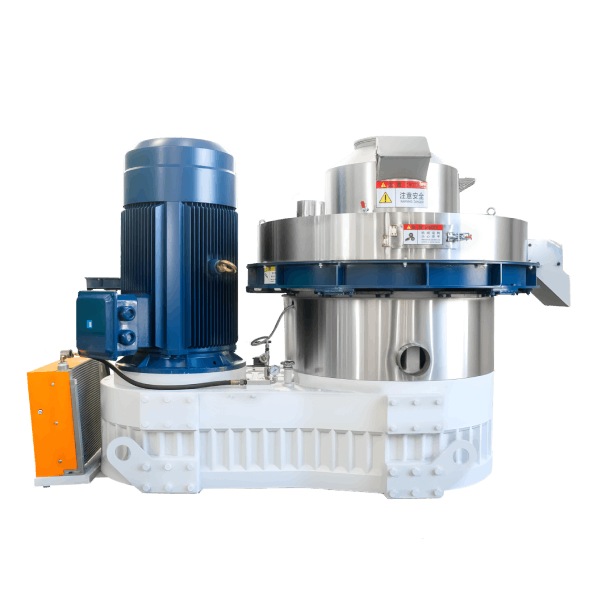
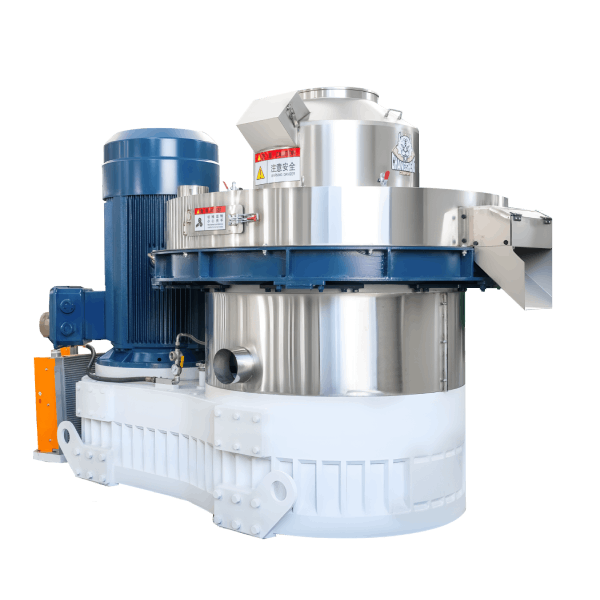
The difference between a pellet mill vs briquette machine lies in output size, density, and application: pellet mills produce small (6-10mm), high-density (1,000+ kg/m³) cylindrical pellets; briquette machines produce larger (50-90mm), moderate-density (900-1,100 kg/m³) briquettes for industrial or BBQ use.
2. Technical Parameters & Specifications
| Parameter | Pellet Mill (Ring Die) | Briquette Machine (Piston/Screw) |
|---|---|---|
| Capacity (t/h) | 0.5 – 5 | 0.2 – 1.5 |
| Main Motor Power (kW) | 55 – 160 | 15 – 75 |
| Output Diameter (mm) | 6, 8, 10 | 50, 70, 90 |
| Output Length (mm) | 15 – 30 | 50 – 300 (cut to length) |
| Output Density (kg/m³) | 1,000 – 1,300 | 900 – 1,100 |
| Raw Material Moisture (%) | 10 – 25 | 8 – 15 (drier required) |
| Energy Consumption (kWh/t) | 45 – 85 | 50 – 90 |
| Core Wear Parts Life (hours) | 1,500 – 2,500 | 800 – 1,500 |
| Maintenance (hours/month) | 6 – 15 | 8 – 20 |
| Typical Application | Industrial fuel, feed | BBQ briquettes, industrial fuel |
For technology selection: Request a comparison chart for your specific application.
3. Structure & Material Composition
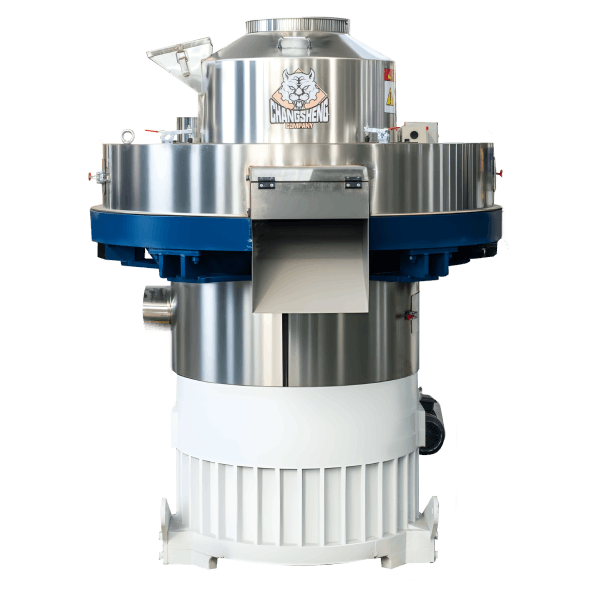
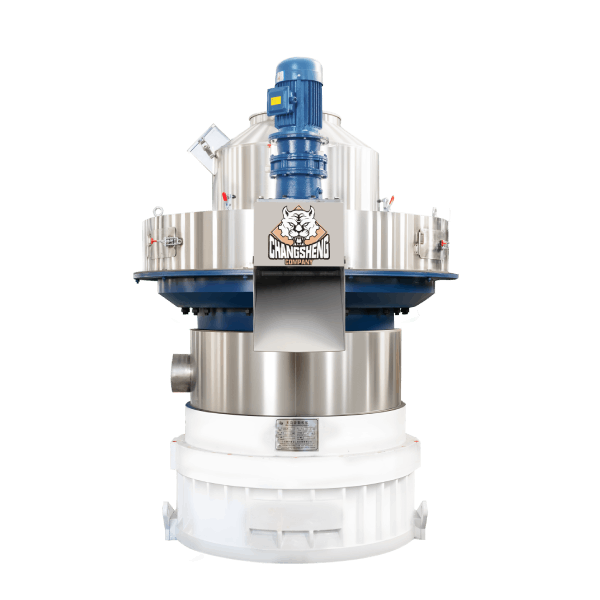
Pellet Mill (Ring Die Type)
- Ring die: Cylindrical rotating die (GCr15 or 20CrMnTi), 320-760mm diameter
- Roller assembly: 2-4 stationary rollers (Cr26 hardfaced, HRC 58-62)
- Compression mechanism: Rollers press material into tapered die holes
- Output: Small, dense pellets (6-10mm) extruded radially
Briquette Machine (Piston Type)
- Piston: Hydraulic or mechanical driven, reciprocating motion
- Die: Straight bore (no taper), wear-resistant steel (Cr12MoV)
- Compression mechanism: Piston rams material into die under high pressure
- Output: Large briquettes (50-90mm) extruded axially
Briquette Machine (Screw Type)
- Screw: Tapered screw with wear-resistant flights (hardfaced)
- Die: Heated die (external heaters) to soften lignin
- Compression mechanism: Screw forces material through tapered die
- Output: Solid or hollow briquettes, often with center hole
4. Manufacturing Process (Engineering Steps)
Pellet Mill Process
Step 1 – Material Preparation (Hammer mill, dryer) → Step 2 – Feeding (Screw feeder with VFD) → Step 3 – Pelleting (Rollers + rotating ring die, 80-110°C) → Step 4 – Cooling (Counterflow cooler) → Step 5 – Screening → Step 6 – Bagging
Briquette Machine Process
Step 1 – Material Preparation (Hammer mill, dryer) → Step 2 – Conditioning (Optional steam or binder) → Step 3 – Briquetting (Piston or screw compression) → Step 4 – Cooling (Conveyor or open air) → Step 5 – Bagging
5. Industry Comparison
| Parameter | Pellet Mill (Ring Die) | Piston Briquette Machine | Screw Briquette Machine | Flat Die Pellet Mill |
|---|---|---|---|---|
| Output size (mm) | 6-10 | 50-90 | 50-80 (hollow) | 6-10 |
| Output density (kg/m³) | 1,000-1,300 | 900-1,100 | 1,000-1,200 | 900-1,100 |
| Moisture requirement | 10-25% | 8-15% (drier) | 8-12% (driest) | 10-20% |
| Energy (kWh/t) | 45-85 | 50-90 | 60-100 | 70-120 |
| Wear parts cost ($/ton) | $2-5 | $5-10 | $8-15 | $5-10 |
| Automation level | PLC fully auto | Semi to full auto | Semi to full auto | Manual to semi |
| Best application | Industrial fuel, feed | BBQ briquettes | BBQ, industrial | Farm, small biz |
| Typical capacity (t/h) | 0.5-5 | 0.2-1.5 | 0.2-1.0 | 0.05-0.5 |
| Initial cost (USD) | $25k-150k | $15k-80k | $20k-100k | $2k-15k |
| Why Choose Shandong Changsheng | Most efficient, widest application | Best for BBQ briquettes | High density, hollow core | Entry-level pellets |
Compare technologies for your product: Request a sample of pellets vs briquettes for your application.
6. Application Scenarios (By Buyer Role)
Distributors / Importers
Need to understand pellet mill vs briquette machine differences to stock appropriate equipment for customer needs. Pellet mills for fuel/feed, briquette machines for BBQ markets.
EPC Contractors
Specify pellet mills for biomass power plants and feed mills. Specify briquette machines for BBQ briquette factories and industrial heat plants with stoker boilers.
Engineering Consultants / Technical Advisors
Advising clients on technology selection based on output market. Decision focus: target customer (pellet stoves vs BBQ grills), moisture availability (briquettes need drier material), and operating cost.
End-user Facilities
Pellet plants, feed mills, BBQ briquette factories, industrial boilers. Decision focus: output specifications required by customers.
7. Core Technical Pain Points & Engineering Solutions
Pain Point 1 – Briquette Machine Requires Drier Material
Problem: Briquette quality poor, output low, die wear high when material moisture >12%. Pellet mill handles up to 20% moisture.
Root cause: Briquette machines have lower compression force per area and no taper to create back-pressure.
Solution: For briquettes, install additional drying capacity (target 8-12% moisture). For wet material, choose pellet mill instead.
Pain Point 2 – Pellets Too Small for Certain Boilers
Problem: Some industrial stoker boilers cannot use small pellets (fall through grate). Require larger briquettes (50mm+).
Root cause: Boiler design specific to fuel size.
Solution: For stoker boilers, choose briquette machine (50-90mm output). For suspension burners or pellet stoves, choose pellet mill (6-10mm).
Pain Point 3 – Higher Wear Parts Cost for Briquette Machines
Problem: Briquette machine wear parts (piston rings, dies, screw flights) cost $8-15/ton vs. pellet mill $2-5/ton.
Root cause: Higher friction in straight die (no taper lubrication), reciprocating impact loads.
Solution: For high-volume production (>2,000 tons/year), pellet mill lower operating cost. For small volume or BBQ market (higher margin), briquette machine acceptable.
Pain Point 4 – Briquettes Smolder, Pellets Burn Clean
Problem: Briquettes produce smoke and require more air for complete combustion. Pellets burn clean (ENplus standard).
Root cause: Briquettes lower density (900-1,100 kg/m³ vs. pellets 1,000-1,300) and larger diameter limits air penetration.
Solution: For residential pellet stoves (ENplus requirement), choose pellets. For industrial boilers or open BBQ (smoke acceptable), briquettes acceptable.
8. Risk Warnings & Mitigation Strategies
Risk 1 – Choosing Briquette Machine for Pellet Stove Market
Warning: Briquettes do not fit in residential pellet stoves (hopper auger designed for 6-10mm pellets). Cannot sell to this market.
Mitigation: Identify target customers before equipment purchase. Pellet stoves require pellet mill. Industrial boilers may accept either (check specifications).
Risk 2 – Pellet Mill Cannot Make BBQ Briquettes
Warning: Pellet mill produces 6-10mm pellets — too small for standard BBQ grills (fall through grate).
Mitigation: For BBQ briquette market (charcoal or wood briquettes), choose briquette machine (50-90mm). Some pellet mills offer larger dies (12mm) but still too small for most BBQ grills.
Risk 3 – Higher Drying Cost for Briquettes
Warning: Briquette machine requires 8-12% moisture (pellet mill 15-18%). Drying cost 30-50% higher.
Mitigation: Calculate drying energy cost difference. If wet material (40-50% moisture) is feedstock, pellet mill lower total cost. If dry material available (sawdust at 10-12%), briquette machine viable.
9. Procurement Selection Guide (6 Actionable Steps)
Step 1 – Define your output market
Pellet stoves (residential): pellet mill, 6-8mm, ENplus certification required. BBQ grills: briquette machine, 50-90mm, lower density acceptable. Industrial boilers: either (check boiler spec). Feed: pellet mill only.
Step 2 – Analyze your feedstock moisture
Consistently 10-20%: pellet mill viable. Consistently 8-15%: both viable. Consistently above 20%: pellet mill required (briquette machine will fail). Below 8%: fire risk for both.
Step 3 – Calculate total operating cost per ton
Formula: (electricity $/t + wear parts $/t + labor $/t + raw material $/t). Pellet mill: wear $2-5/t. Briquette machine: wear $5-15/t. For 2,000+ tons/year, pellet mill lower cost.
Step 4 – Determine required output size
Measure target customer’s equipment: pellet stove hopper auger (6-8mm). BBQ grill grate spacing (20-50mm). Industrial boiler grate (25-100mm). Match output size.
Step 5 – Consider dual capability
Some screw briquette machines can produce both briquettes and pellets with die change (limited). Most machines are dedicated. If both markets needed, consider two machines or prioritize larger market.
Step 6 – Request product samples
Ask each supplier for output samples (pellets and briquettes). Test in your target equipment (pellet stove, BBQ grill, boiler). Check durability (PDI for pellets, drop test for briquettes).
10. Engineering Case Study
Project Background: A wood processing company in Poland had 1,000 tons/year of dry sawdust (12% moisture). Two market options: residential pellet stoves (ENplus A1 pellets at $260/ton) or BBQ briquettes (at $350/ton).
Initial Problem: Company purchased briquette machine ($35,000) for higher margin BBQ market. After 6 months: briquette density 950 kg/m³ (acceptable), but customers complained briquettes produced too much smoke. Sales slow. Machine operated at 50% capacity.
Root Cause Analysis:
- BBQ customers expected low-smoke charcoal briquettes (not wood)
- Wood briquettes require different grill design (more air flow)
- Local market preferred pellets (cheaper, cleaner)
- Briquette machine wear parts cost $12/ton (higher than estimated)
Solution Implemented (Shandong Changsheng):
- Added pellet mill ($45,000) alongside briquette machine (dual product line)
- Pellets for residential market ($260/ton), briquettes for industrial boilers ($180/ton)
- Used same dry sawdust (12% moisture) for both
- Trained operators on both machines
Final Data Results (12 months after addition):
| Metric | Briquette Machine | Pellet Mill |
|---|---|---|
| Annual production (tons) | 400 | 600 |
| Selling price ($/ton) | $180 (industrial) | $260 (residential) |
| Operating cost ($/ton) | $95 | $75 |
| Gross margin ($/ton) | $85 | $185 |
| Annual gross margin | $34,000 | $111,000 |
- Total equipment investment: $80,000 ($35k + $45k)
- Annual gross margin: $145,000
- Combined payback: 6.6 months
- Lesson: Pellet mill vs briquette machine — choose based on market, not just technology preference
Request a technology selection analysis: Contact engineering team with your target market and feedstock for pellet mill vs briquette machine recommendation.
11. FAQ
Q1: What is the main difference between a pellet mill and a briquette machine?
Output size: pellets 6-10mm, briquettes 50-90mm. Density: pellets slightly higher (1,000-1,300 vs 900-1,100 kg/m³). Application: pellets for pellet stoves/feed, briquettes for BBQ/industrial boilers.
Q2: Which is more energy efficient?
Pellet mill (45-85 kWh/t) slightly better than briquette machine (50-90 kWh/t). Difference small (5-10%).
Q3: Which has lower wear parts cost?
Pellet mill ($2-5/ton) significantly lower than briquette machine ($5-15/ton). Briquette machines have higher friction and impact loads.
Q4: Can I make briquettes with a pellet mill?
No. Pellet mill produces 6-10mm pellets only. Cannot make 50mm+ briquettes.
Q5: Can I make pellets with a briquette machine?
No. Briquette machine produces 50-90mm briquettes only. Cannot make 6-10mm pellets.
Q6: Which machine requires drier material?
Briquette machine: 8-15% moisture. Pellet mill: 10-25% moisture. Briquette machine more sensitive to moisture.
Q7: Which is better for residential heating?
Pellet mill. Residential pellet stoves require 6-8mm pellets. Briquettes do not fit in most pellet stove hoppers.
Q8: Which is better for BBQ?
Briquette machine. 50-90mm briquettes fit on grill grates. 6-8mm pellets fall through most grates.
Q9: Which is cheaper to buy?
Briquette machine ($15k-80k) typically lower than ring die pellet mill ($25k-150k) for comparable capacity. Flat die pellet mill ($2k-15k) cheaper than both but lower capacity.
Q10: Which has higher output density?
Pellet mill: 1,000-1,300 kg/m³. Briquette machine: 900-1,100 kg/m³. Pellets approximately 10-20% denser.
Q11: Which is easier to operate?
Pellet mill (automated) similar to briquette machine (semi-auto). Flat die pellet mill simplest. Screw briquette machines require more maintenance (screw wear).
Q12: Can I use agricultural residues in both?
Yes, but briquette machine requires drier material (8-12% for straw/rice husk). Pellet mill more tolerant (10-20%). Both need upgraded wear parts for abrasive materials.
Q13: Which has longer wear parts life?
Pellet mill: 1,500-2,500 hours for die. Briquette machine: 800-1,500 hours for piston/screw. Pellet mill typically 2x longer life.
Q14: Which is better for animal bedding?
Pellet mill (6-8mm pellets). Briquettes too large for most animal bedding applications. Some farms use briquettes for horses (break apart).
Q15: Can I use the same raw material for both?
Yes. Both use dried, ground biomass (6mm particle size). Briquette machine requires slightly drier material (10% vs 15% for pellets).
12. Commercial Call-to-Action
For technology buyers: Request a pellet mill vs briquette machine selection guide with application matrix, cost comparison, and sample output for your target market.
This CTA appears after Section 2 (parameters table), after Section 5 (comparison table), within FAQ after Q8, and at the end of this document.
Need help choosing the right technology? Contact the engineering team with your target output market (pellet stoves, BBQ, industrial boiler, feed), feedstock moisture, and annual volume for a recommendation.
Looking for sample products? Request free samples of pellets (6mm, 8mm) and briquettes (50mm, 70mm) to test in your equipment.
To proceed: Send your inquiry via the contact form. Include your target market, feedstock type and moisture, annual volume (tons/year), and preferred output size.
13. Author & E-E-A-T Credentials
Author: Zhang Wei
Biomass Densification Technology Specialist
- 11 years in pellet mill and briquette machine design and application engineering (2014–present)
- Advised 200+ clients on pellet mill vs briquette machine selection for specific markets
- Designed dual-product lines (pellets + briquettes) for 25+ facilities
- Author of “Biomass Densification Technology Guide” (China Machine Press, 2023)
- Member of the American Society of Mechanical Engineers (ASME)
Affiliation: Shandong Changsheng Machinery Co., Ltd.
The author has directly designed pellet mill and briquette machine systems for residential pellet, BBQ briquette, industrial fuel, and animal bedding markets across 40+ countries. All specifications, cost data, and application recommendations are derived from actual installations from 2014–2026.