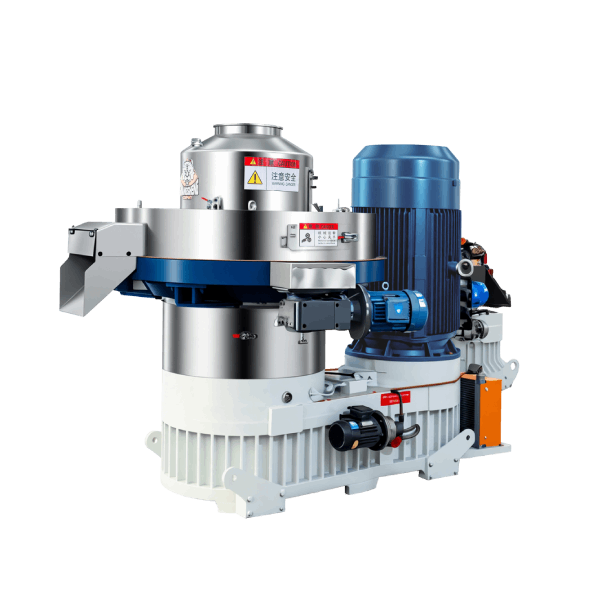
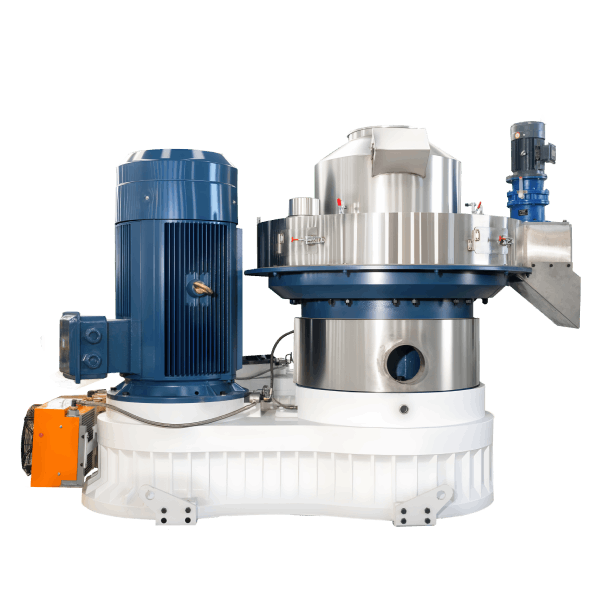
Pellet Machine for Startup Biomass Plant
News 2026-02-24
Product Definition
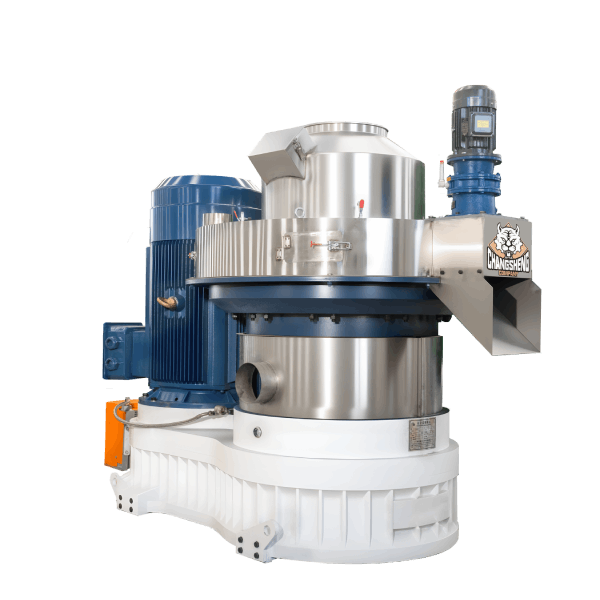
A pellet machine for startup biomass plant applications is a compact-to-mid scale densification system designed for new biomass fuel producers. It integrates controlled feeding, mechanical compression, and stable transmission to convert wood residues or agricultural waste into standardized fuel pellets while maintaining manageable capital investment and scalable capacity.
Technical Parameters and Specifications
When selecting a pellet machine for startup biomass plant operations, the focus should be on balanced output, moderate power demand, and expansion flexibility.
Typical Technical Range for Startup Facilities
Rated capacity: 0.8–3 tons per hour
Main motor power: 55–132 kW
Ring die diameter: 420–560 mm
Pellet diameter: 6–10 mm
Raw material moisture: 10–15%
Feeding system: variable frequency screw feeder
Transmission: hardened gearbox drive
Lubrication: automatic grease lubrication
Control system: PLC with load monitoring
Cooling capacity: matched counterflow cooler
A pellet machine for startup biomass plant projects should operate 10–16 hours per day initially, with structural capability for extended shifts as production stabilizes.
Energy consumption benchmark: 75–110 kWh per ton depending on raw material type and compression ratio.
Structure and Material Composition
Industrial durability remains critical even in startup configurations.
Core Structural Components
• Ring die made of heat-treated alloy steel
• Two press rollers with replaceable shells
• Gear-driven main transmission system
• Reinforced main shaft assembly
• Heavy-duty bearing housing
• Forced feeding mechanism with anti-bridging design
• Steel base frame with vibration isolation pads
Material Engineering Highlights
• Die hardness: HRC 50–55
• Roller shell wear resistance optimized for mixed biomass
• Gearbox with oil bath cooling
• External lubrication access for simplified maintenance
A pellet machine for startup biomass plant environments must ensure mechanical stability while remaining cost-efficient.
Manufacturing Process Flow
Step 1: Raw Material Collection and Pre-Screening
Remove metal and stones using magnetic separators and vibrating screens.
Step 2: Size Reduction
Hammer mill reduces biomass to 3–5 mm particle size.
Step 3: Moisture Adjustment
Dryer reduces moisture to target range if above 15%.
Step 4: Controlled Feeding
Variable speed feeder regulates material input to pellet machine.
Step 5: Compression
Rollers press biomass through ring die holes, forming cylindrical pellets under mechanical pressure.
Step 6: Cooling
Counterflow cooler reduces pellet temperature from approximately 80–90°C to near ambient.
Step 7: Screening and Recycling
Fine particles are separated and returned to the pelletizing stage.
For a pellet machine for startup biomass plant operations, stable feeding and moisture control are the most critical process factors.
Industry Comparison Table
Comparison for Startup Biomass Producers
Parameter
Flat Die Machine
Ring Die Machine
Pellet Machine for Startup Biomass Plant (Optimized Ring Die)
Capacity range
0.3–1 t/h
1–20 t/h
0.8–3 t/h
Duty cycle
Intermittent
Industrial continuous
Semi-continuous to expandable
Transmission
Belt drive
Gear drive
Reinforced gearbox
Energy efficiency
Moderate
High
Optimized for startup scale
Initial investment
Low
High
Balanced
Scalability
Limited
High
Modular expansion ready
This optimized configuration provides technical reliability without excessive capital burden.
Application Scenarios
Distributors
Regional distributors entering the biomass fuel sector require manageable equipment size with room for expansion.
EPC Contractors
Small-scale biomass heating plants supplying local industrial users.
Engineering Consultants
Pilot biomass projects validating local feedstock viability.
Importers and Industrial Buyers
Emerging markets transitioning from coal to biomass fuel.
A pellet machine for startup biomass plant deployment supports phased investment and controlled production ramp-up.
Core Pain Points and Engineering Solutions
- Limited Initial Capital
Solution: Modular design allowing future expansion without replacing core equipment. - Unstable Raw Material Supply
Solution: Adjustable compression ratio and flexible die configurations. - Inexperienced Operators
Solution: PLC-based load monitoring and automatic lubrication systems. - Energy Cost Sensitivity
Solution: Correct motor sizing and stable feeding to reduce specific energy consumption. - Market Demand Uncertainty
Solution: Select capacity aligned with confirmed off-take agreements rather than theoretical maximum output.
These strategies reduce operational risk in early-stage biomass businesses.
Risk Warnings and Mitigation Advice
• Oversizing equipment increases idle capacity and ROI pressure
• Undersizing may limit contract fulfillment
• Ignoring moisture variation leads to die blockage
• Poor electrical infrastructure causes voltage instability
• Lack of spare parts inventory increases downtime
Startup biomass plants should implement preventive maintenance from commissioning phase.
Procurement Selection Guide
- Confirm annual pellet demand and realistic sales contracts
- Analyze feedstock type: wood sawdust, rice husk, corn stalk, etc.
- Conduct moisture and bulk density testing
- Determine available electrical capacity
- Evaluate workshop space and foundation strength
- Request machine load testing reports
- Review gearbox and bearing brand specifications
- Calculate five-year operating cost per ton
- Ensure availability of technical training and commissioning support
A pellet machine for startup biomass plant projects must align with both engineering feasibility and financial sustainability.
Engineering Case Example
A regional startup biomass producer planned to supply 15,000 tons of fuel pellets annually to a local industrial boiler operator. Initial feasibility analysis recommended a 1.5 t/h pellet machine for startup biomass plant configuration.
System Details
Main motor: 90 kW
Ring die diameter: 508 mm
Raw material: mixed pine sawdust
Operating schedule: 14 hours per day
Cooling system: counterflow cooler 3 t/h
After commissioning, the plant achieved stable daily output of approximately 20–22 tons. Energy consumption averaged 92 kWh per ton. The modular layout allowed future addition of a second pellet line without redesigning the entire facility.
Downtime during first year remained under 6%, primarily due to scheduled die replacement.
Frequently Asked Questions
- What capacity is suitable for a startup biomass plant?
Typically 0.8–3 tons per hour. - Is a flat die machine recommended?
Only for very small pilot production. - What moisture level is optimal?
10–15% for most biomass materials. - Can agricultural residues be processed?
Yes, with correct die configuration. - What is typical die life?
3,000–6,000 hours depending on material abrasiveness. - How much space is required?
Approximately 150–400 square meters depending on layout. - Is steam conditioning mandatory?
Optional for higher pellet durability requirements. - What is expected energy consumption?
75–110 kWh per ton. - Can capacity be expanded later?
Yes, with modular plant design. - How long does installation take?
Typically 20–45 days including commissioning.
Call to Action
For detailed technical specifications, plant layout drawings, cost estimation models, or a customized quotation for your pellet machine for startup biomass plant project, submit your annual capacity target and raw material analysis to receive engineering evaluation documentation.
E-E-A-T Author Credentials
This technical article is prepared by a biomass process engineer with more than ten years of experience in pellet production line design, startup plant commissioning, and industrial fuel project consulting across emerging and established biomass markets.