Complete pellet production line
News 2026-03-24
Complete Pellet Production Line: Engineering Design, Equipment & Procurement Guide
Product Definition
A complete pellet production line is an integrated industrial system that converts raw materials such as biomass, wood residues, or feedstock into standardized pellets through coordinated processes including crushing, drying, pelletizing, cooling, screening, and packaging under controlled mechanical and thermal conditions.
Technical Parameters & Specifications
Typical technical specifications of a complete pellet production line:
| Parameter | Range |
|---|---|
| Production Capacity | 1–30 tons/hour |
| Pellet Diameter | 4–12 mm |
| Raw Material Moisture | 10–20% |
| Final Pellet Moisture | ≤10% |
| Pellet Density | 1.0–1.4 g/cm³ |
| Total Installed Power | 200–1500 kW |
| Energy Consumption | 80–150 kWh/ton |
| Automation Level | Semi-auto to full PLC |
| Plant Area | 1000–5000 m² |
| Pellet Durability Index | ≥95% |
These values depend on raw material type, plant configuration, and process optimization.
Structure & Material Composition
A complete pellet production line includes the following engineering modules:
1. Raw Material Handling System
- Belt conveyors (Q235 carbon steel)
- Magnetic separator
2. Crushing System
- Hammer mill (high manganese steel blades)
- Cyclone separator
3. Drying System
- Rotary drum dryer (heat-resistant steel)
- Heat source: biomass furnace / gas burner
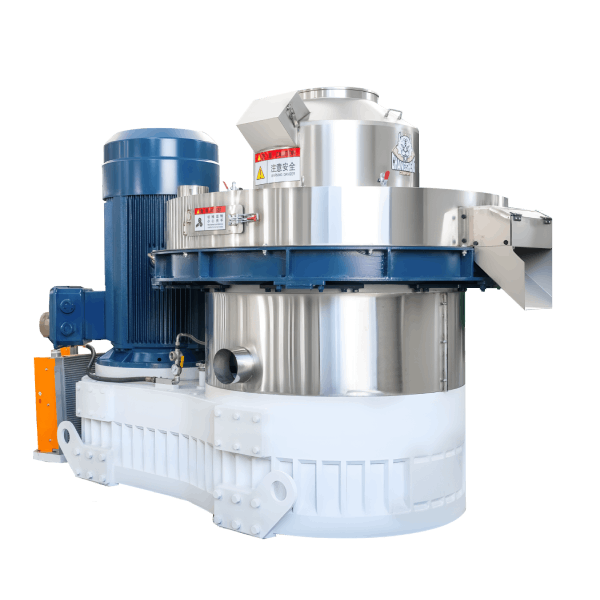
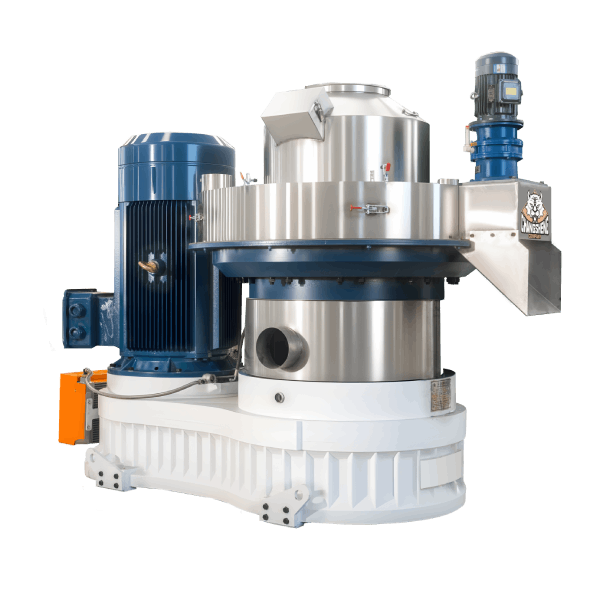
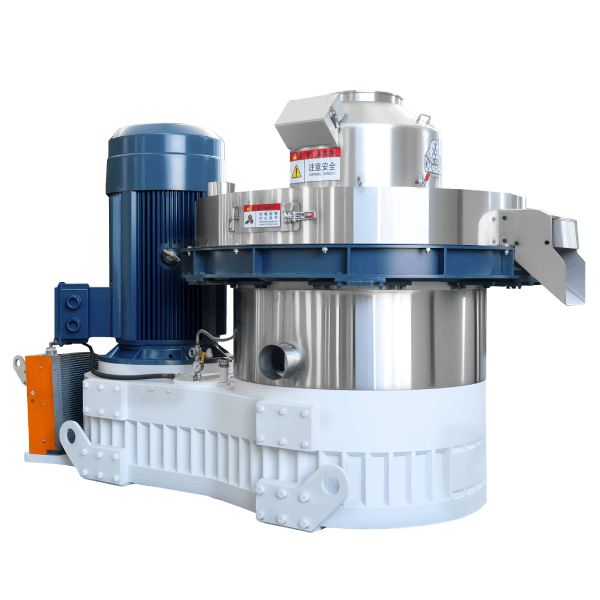
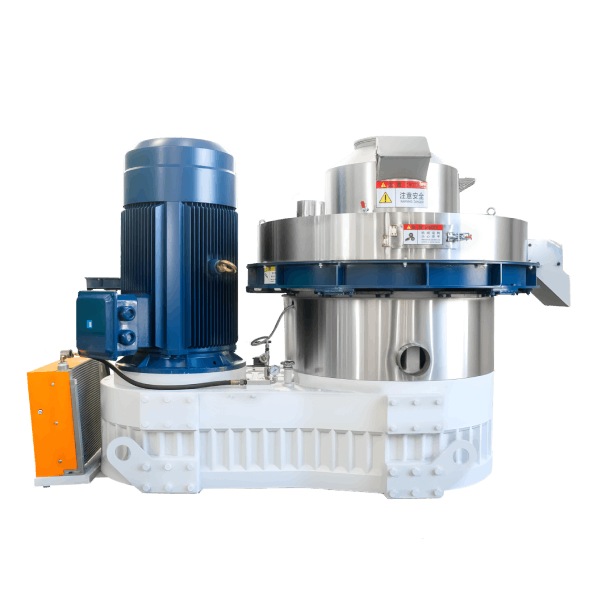
4. Pelletizing System
- Ring die pellet mills (alloy steel die, hardened rollers)
- Forced feeding mechanism
5. Cooling & Screening System
- Counterflow cooler (galvanized steel)
- Vibrating screen (multi-layer design)
6. Packaging System
- Automatic weighing and bagging machine
- Storage silo
7. Dust Control System
- Cyclone separator + pulse dust collector
Manufacturing Process (Engineering Workflow)
A complete pellet production line operates through the following process:
Step 1: Size Reduction
- Equipment: Hammer mill
- Target size: ≤5 mm
- Key point: Uniform size ensures stable pelletizing
Step 2: Drying
- Equipment: Rotary dryer
- Moisture reduction: up to 50% → 10–15%
- Key point: Avoid over-drying to maintain binding properties
Step 3: Pelletizing
- Equipment: Ring die pellet mill
- Pressure: 200–300 MPa
- Key point: Lignin activation acts as natural binder
Step 4: Cooling
- Equipment: Counterflow cooler
- Reduces pellet temperature and stabilizes structure
Step 5: Screening
- Equipment: Vibrating screen
- Removes fines and improves product consistency
Step 6: Packaging
- Equipment: Automatic bagging system
- Supports bulk or bagged output
Industry Comparison
| Factor | Complete Pellet Production Line | Briquette Line | Charcoal Line |
|---|---|---|---|
| Product Form | Pellets | Blocks | Carbonized fuel |
| Density | High | Medium | High |
| Automation Level | High | Medium | Low–Medium |
| Energy Efficiency | High | Medium | Low |
| Investment Cost | Medium–High | Medium | Medium |
| Application | Fuel, feed | Industrial fuel | BBQ, metallurgy |
Application Scenarios
Distributors / Importers
- Supply standardized pellets for global heating markets
EPC Contractors
- Biomass power plant construction
- Industrial fuel conversion projects
Industrial Users
- Coal replacement in boilers
- Cement and steel manufacturing
Agricultural Sector
- Feed pellet production
- Waste biomass utilization
Core Pain Points & Solutions
1. Unstable Pellet Quality
- Cause: Inconsistent moisture and raw material variation
- Solution: Install automated moisture control systems
2. High Operating Cost
- Cause: Inefficient energy usage
- Solution: Optimize drying system and heat recovery
3. Equipment Wear and Downtime
- Cause: Abrasive materials
- Solution: Use high-hardness alloy components and preventive maintenance
4. Dust and Environmental Issues
- Cause: Poor dust management
- Solution: Multi-stage dust collection systems
Risk Warnings & Mitigation
- Fire Risk: Install fire detection in drying systems
- Dust Explosion Risk: Ensure proper ventilation and dust filtration
- Mechanical Failure: Avoid overloading and ensure routine inspection
- Improper Layout: Poor plant design increases logistics cost
Procurement & Selection Guide (≥6 Steps)
Step 1: Define Production Capacity
- Align with market demand and raw material supply
Step 2: Analyze Raw Materials
- Wood, straw, or mixed biomass affects system design
Step 3: Select Core Equipment
- Pellet mill model and dryer capacity
Step 4: Evaluate Energy Source
- Biomass, gas, or coal heating systems
Step 5: Determine Automation Level
- Manual vs PLC-controlled system
Step 6: Assess Supplier Capability
- Engineering design and EPC experience
Step 7: Review After-Sales Support
- Spare parts supply and technical service
Engineering Case Study
Project: 12 T/H Complete Pellet Production Line
Location: Eastern Europe
Raw Material: Pine wood chips
Configuration:
- 2 × hammer mills
- 1 × rotary dryer (Ø2.4m × 13m)
- 3 × ring die pellet mills (132 kW each)
- Cooling, screening, and packaging systems
Performance Results:
- Pellet diameter: 6 mm
- Density: 1.28 g/cm³
- Moisture: 8%
- Energy consumption: 100 kWh/ton
- Continuous operation: 22 hours/day
FAQ (Frequently Asked Questions)
1. What materials can be processed?
Wood, straw, rice husk, and agricultural residues.
2. What is the ideal moisture level?
10–15% before pelletizing.
3. What capacity should I choose?
Depends on demand and raw material availability.
4. How long does installation take?
Typically 30–90 days.
5. What is pellet durability?
Usually ≥95% PDI.
6. How often should dies be replaced?
Every 800–1500 hours.
7. Is automation necessary?
Recommended for medium and large plants.
8. What is the main operating cost?
Energy consumption and wear parts.
9. Can mixed materials be used?
Yes, with proper system design.
10. What certifications are required?
CE, ISO, and local compliance standards.
CTA (Call to Action)
For detailed layouts, customized complete pellet production line solutions, and project quotations, contact our engineering team.
We provide full support including design, equipment supply, installation guidance, and turnkey EPC services.
E-E-A-T: Authoritative Statement
This article is prepared by the engineering team at Shandong Changsheng Machinery, with over 15 years of experience in pellet equipment manufacturing and industrial production line solutions. We specialize in delivering complete pellet production line systems tailored to global clients across biomass energy and feed industries.