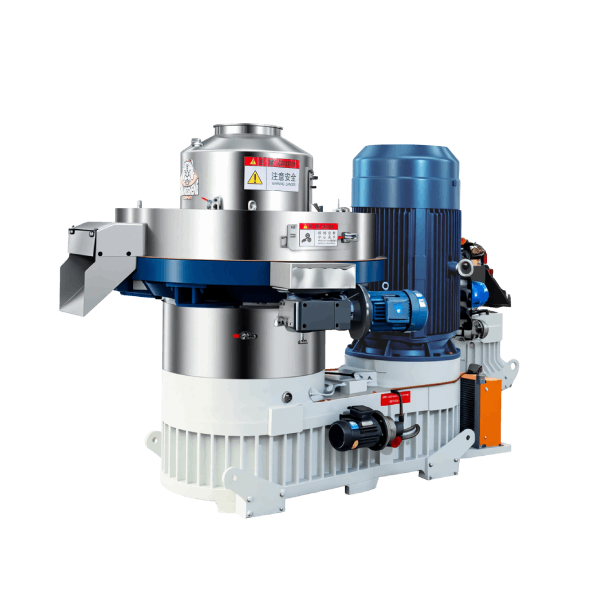
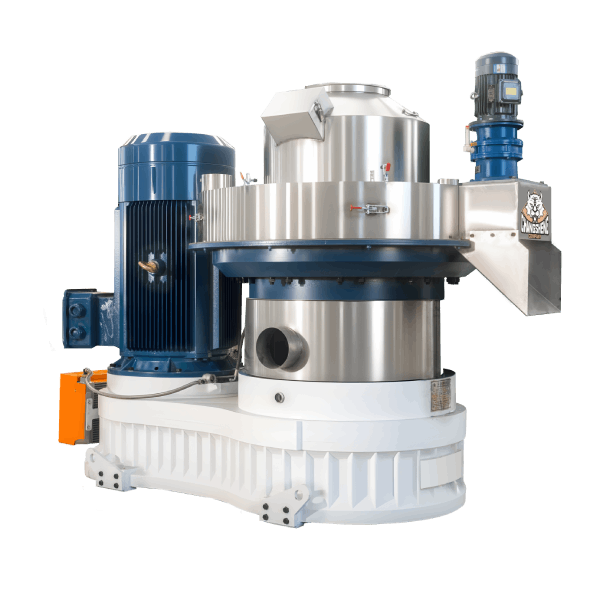
Biomass Pellet Production Line – Design, Process & Solutions
News 2026-03-23
Biomass Pellet Production Line: Engineering Design, Process Flow & Procurement Guide
Product Definition (40–60 words)
A biomass pellet production line is an integrated industrial system that converts raw biomass materials—such as wood chips, sawdust, or agricultural residues—into high-density fuel pellets through crushing, drying, pelletizing, cooling, and packaging processes under controlled mechanical and thermal conditions.
Technical Parameters & Specifications
Below are typical engineering parameters for an industrial biomass pellet production line:
| Parameter | Range |
|---|---|
| Production Capacity | 1–20 tons/hour |
| Pellet Diameter | 6–12 mm |
| Raw Material Moisture | 10–15% (optimal) |
| Final Pellet Moisture | ≤10% |
| Power Consumption | 75–300 kWh/ton |
| Pellet Density | 1.1–1.4 g/cm³ |
| Line Footprint | 800–3000 m² |
| Pellet Durability Index (PDI) | ≥95% |
| Operating Temperature | 80–120°C (pelletizing zone) |
These specifications vary depending on raw materials, configuration, and automation level.
Structure & Material Composition
A biomass pellet production line typically consists of the following subsystems:
1. Raw Material Preparation System
- Hammer mill (alloy steel blades)
- Conveyor system (carbon steel frame)
- Magnetic separator (to remove metal impurities)
2. Drying System
- Rotary drum dryer (Q235 steel shell)
- Heat source: biomass burner / gas furnace
3. Pelletizing System
- Pellet mill (alloy steel die + rollers)
- Forced feeding system
4. Cooling & Screening
- Counterflow cooler (galvanized steel)
- Vibrating screen (multi-layer mesh)
5. Packaging System
- Automatic bagging machine (PLC-controlled)
6. Dust Collection System
- Cyclone separator + pulse dust collector
Manufacturing Process (Engineering Workflow)
A standard biomass pellet production line follows these steps:
Step 1: Size Reduction
- Equipment: Hammer mill
- Target size: ≤5 mm
- Key point: Uniform particle size ensures stable pellet formation
Step 2: Drying
- Equipment: Rotary dryer
- Moisture reduction: 30–50% → 10–15%
- Key point: Over-drying reduces binding ability
Step 3: Pelletizing
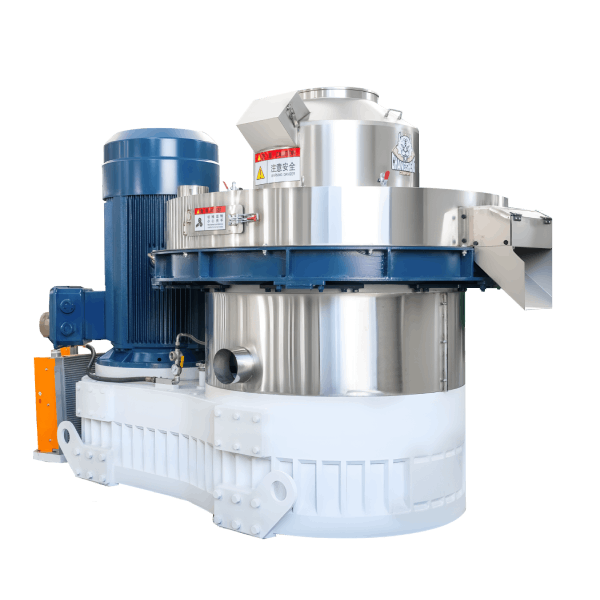
- Equipment: Ring die pellet mill
- Pressure: 200–300 MPa
- Key point: Proper compression ratio ensures pellet density
Step 4: Cooling
- Equipment: Counterflow cooler
- Temperature reduction: 90°C → ambient
- Key point: Prevents cracking and deformation
Step 5: Screening
- Equipment: Vibrating screen
- Removes fines and broken pellets
Step 6: Packaging
- Equipment: Automatic packing machine
- Bag size: 15–50 kg
Industry Comparison
| Factor | Biomass Pellet Line | Briquette Line | Charcoal Line |
|---|---|---|---|
| Product Form | Cylindrical pellets | Blocks | Carbonized briquettes |
| Density | High | Medium | High |
| Automation Level | High | Medium | Low–Medium |
| Energy Efficiency | High | Medium | Low |
| Application | Fuel, power plants | Industrial fuel | BBQ, metallurgy |
| Investment Cost | Medium–High | Medium | Medium |
Application Scenarios
Biomass pellet production lines are widely used by:
Distributors / Importers
- Supply pellets for heating markets (EU, Korea, Japan)
EPC Contractors
- Turnkey biomass energy projects
- Industrial boiler fuel systems
Industrial Users
- Power plants replacing coal
- Cement plants and steel factories
Agricultural Enterprises
- Converting waste (straw, husk) into value-added fuel
Core Pain Points & Solutions
1. Inconsistent Pellet Quality
- Cause: Moisture fluctuation
- Solution: Install moisture sensors + automatic dryer control
2. High Energy Consumption
- Cause: Inefficient drying system
- Solution: Optimize heat recovery and insulation design
3. Frequent Equipment Wear
- Cause: Abrasive raw materials (e.g., rice husk)
- Solution: Use high-hardness alloy dies (HRC 52–55)
4. Dust Pollution
- Cause: Inadequate dust collection
- Solution: Multi-stage cyclone + pulse dust collector
Risk Warnings & Mitigation
- Fire Hazard: High-temperature drying systems require spark detection and fire suppression systems
- Material Blockage: Ensure consistent feeding and avoid oversized raw materials
- Electrical Load Risk: Install stable voltage and overload protection
- Improper Layout: Poor plant layout increases operational inefficiency
Procurement & Selection Guide (≥6 Steps)
Step 1: Define Capacity Requirements
- Based on daily output (e.g., 5 T/H or 10 T/H)
Step 2: Analyze Raw Materials
- Wood, straw, rice husk—each requires different configurations
Step 3: Select Pellet Mill Type
- Ring die (industrial scale) vs flat die (small scale)
Step 4: Evaluate Energy Source
- Biomass burner vs gas vs coal
Step 5: Check Automation Level
- Manual, semi-automatic, or fully automatic PLC system
Step 6: Verify Supplier Engineering Capability
- Ability to provide layout drawings and EPC solutions
Step 7: Consider After-Sales Support
- Spare parts availability and technical support
Engineering Case Study
Project: 10 T/H Biomass Pellet Production Line
Location: Southeast Asia
Raw Material: Rubber wood chips
Configuration:
- 2 × hammer mills
- 1 × rotary dryer (Ø2.2m × 12m)
- 2 × ring die pellet mills (132 kW each)
- Cooling + screening + packing system
Results:
- Final pellet density: 1.25 g/cm³
- Moisture: 8%
- Energy consumption: 95 kWh/ton
- ROI period: ~14 months
FAQ (Frequently Asked Questions)
1. What raw materials can be used?
Wood chips, sawdust, rice husk, straw, bamboo.
2. What is the ideal moisture content?
10–15% before pelletizing.
3. What capacity should I choose?
Depends on market demand and raw material availability.
4. How long does installation take?
Typically 30–60 days.
5. What is pellet durability?
Usually ≥95% PDI.
6. How often should dies be replaced?
Every 800–1500 hours depending on material.
7. Is automation necessary?
Recommended for ≥5 T/H lines.
8. What is the power requirement?
75–300 kWh per ton.
9. Can the line handle mixed materials?
Yes, with proper preprocessing.
10. What certifications are required?
CE, ISO, and local compliance standards.
CTA (Call to Action)
For detailed engineering layouts, customized biomass pellet production line configurations, or budgetary quotations, please contact our technical team.
We provide process design, equipment selection, and turnkey EPC solutions tailored to your project.
E-E-A-T: Authoritative Statement
This article is prepared by engineers from Shandong Changsheng Machinery, with over 15 years of experience in biomass pellet equipment manufacturing and turnkey production line design. Our team has delivered projects across Asia, Europe, and South America, supporting industrial clients with reliable, scalable pellet production solutions.