Pellet Mill for Pet Food Production 0.5-5t/h | Supplier Guide
News 2026-07-06
Product Definition
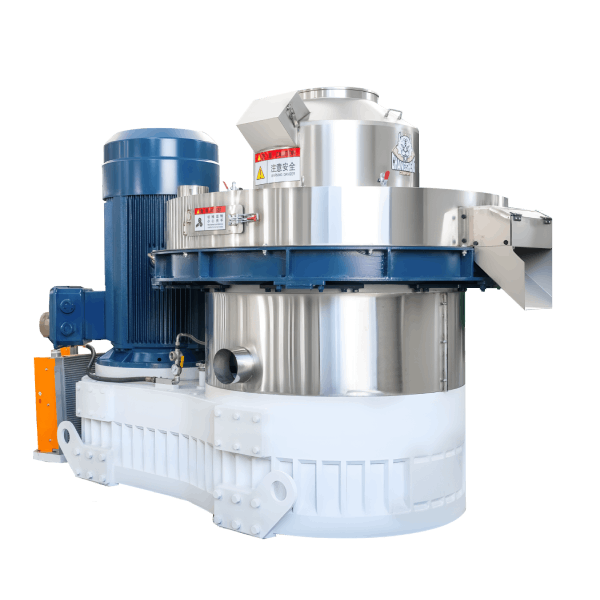
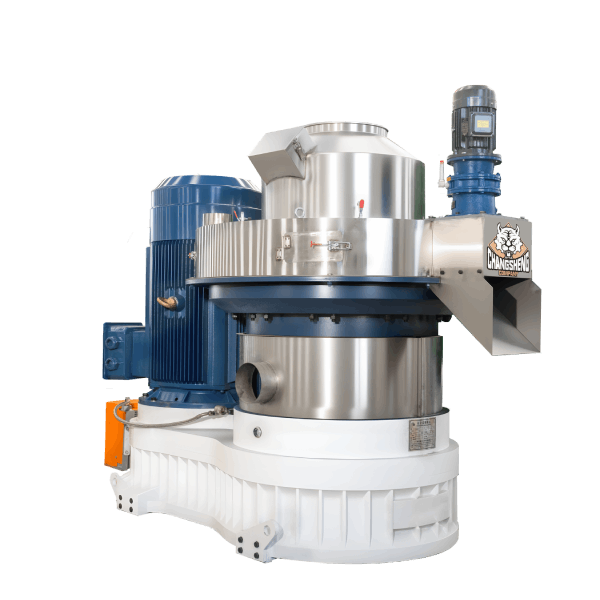
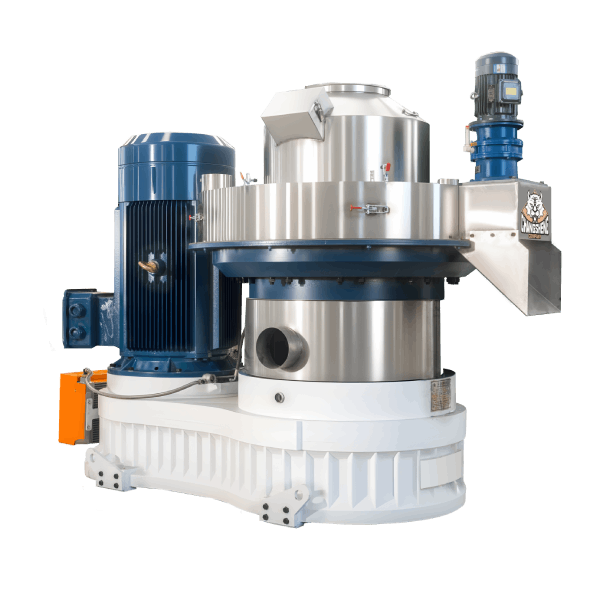
A pellet mill for pet food production is a ring die compaction system that converts meat meals, grains, vegetables, and nutrient premixes into uniform kibble and treat pellets for dogs, cats, and other companion animals. The machine produces digestible, palatable pet food with consistent size, shape, and nutritional profile for retail or private-label production.
Technical Specifications & Performance Parameters
| Parameter | Value Range / Specification |
|---|---|
| Throughput capacity | 0.5 – 5.0 t/h (feedstock-dependent) |
| Main motor power | 55 – 160 kW (IE3 / IE4 compatible) |
| Ring die inner diameter | 400 – 800 mm |
| Pellet diameter | 4 – 20 mm (species-specific) |
| Pellet bulk density | 600 – 750 kg/m³ |
| Raw material moisture | 12% – 16% (optimal: 13% – 15%) |
| Specific energy consumption | 30 – 42 kWh/t |
| Pellet durability index (PDI) | ≥ 97% (high durability) |
| Die service life | 700 – 1,000 hours |
| Roller shell service life | 500 – 800 hours |
| Maintenance man-hours | 4 – 6 h / month |
Structural Composition & Material Selection
The pet food production pellet mill integrates four functional subsystems with defined material grades:
Mechanical System
- Ring die: Forged alloy steel (20CrMnTi) with carburised hardening layer (HRC 58–62)
- Roller shells: High-chromium cast iron (Cr26) with wear-resistant overlay
- Main shaft: Heat-treated 42CrMo4 steel with induction-hardened journals
- Gearbox: Helical-gear configuration, case-hardened to HRC 58–60
Support System
- Bearing housings: Ductile cast iron (QT600-3) with precision-machined seating
- Base frame: Welded structural steel, stress-relief annealed, with vibration-damping mounts
Lubrication System
- Centralised grease lubrication for bearings (NLGI grade 2)
- Forced oil circulation for gearbox (ISO VG 460) with temperature monitor
Control System
- PLC with HMI touchscreen for process monitoring
- Motor current feedback for load control
- Optional VFD for speed variation
- Food-grade/hygienic design options
Manufacturing Process – Engineering Workflow
Step 1 – Ingredient Receiving & Grinding
Meat meals, grains, and vegetables ground to 0.5–2.0mm for kibble. Fine grind for small pet food, coarser for large breed formulations.
Step 2 – Weighing & Mixing
Batch weighing system measures ingredients by formulation. Double-shaft paddle mixer ensures uniformity (CV ≤ 5%). Liquid fat or water addition for palatability and binding.
Step 3 – Conditioning & Cooking
Conditioner with steam injection at 0.3–0.5 MPa. Retention time 60–120 seconds. Mash temperature elevated to 85–100°C for starch gelatinisation and protein binding. Preconditioning essential for kibble texture.
Step 4 – Pelletising (Core Forming Process)
Main motor drives ring die rotation at 4–6 m/s peripheral speed. Roller gap maintained at 0.10–0.25 mm. Pellet diameter 4–20mm depending on species and age.
Step 5 – Counterflow Cooling
Ambient air drawn counter-current through pellet bed. Retention time 8–12 minutes. Pellet exit temperature ≤ ambient +5°C. Final moisture ≤10% for extended shelf life.
Step 6 – Screening & Packaging
Vibrating screener removes fines and weak pellets. Gentle handling preserves kibble integrity. Product bagged for pet food retail distribution.
Industry Comparison – Pet Food Production Options
| Production Method | Pellet Size | Texture | Capacity | Typical Products |
|---|---|---|---|---|
| Ring Die Pellet Mill | 4–20mm | Dense kibble | 0.5–5 t/h | Standard kibble, treats |
| Extrusion System | 4–20mm | Light, puffed | 0.5–5 t/h | Premium kibble |
| Batch Cooking | 4–20mm | Soft, moist | 0.3–3 t/h | Semi-moist pet food |
| Manual Moulding | 10–30mm | Soft, variable | 0.1–0.5 t/h | Artisanal treats |
Differentiation (Shandong Changsheng Machinery):
Our pet food pellet mills produce high-density kibble with excellent palatability and digestibility. Multiple die sizes (4–20mm) accommodate all dog and cat life stages. Food-grade stainless steel options available for hygiene and contamination prevention. Quick-die change system enables rapid product changeover.
Application Scenarios by Buyer Role
Distributors / Importers
Focus on machine suitability for regional pet food market. Require food-grade and safety certification.
EPC Contractors
Integrating pet food production lines. Need hygiene, food safety, and clean-in-place capability.
Engineering Consultants / Technical Advisors
Evaluate pet food production quality and consistency. Require palatability and digestibility data.
End-user Production Facilities
Pet food manufacturers, treat producers, and contract packers. Demand high-quality, consistent kibble and treats.
Core Pain Points & Engineering Solutions
Pain Point 1 – Inconsistent kibble size and shape
Root cause: Die wear or variable conditioning – inconsistent pellet quality.
Solution: Regular die inspection and replacement. Consistent conditioning parameters. Quality control testing.
Pain Point 2 – Poor palatability and digestibility
Root cause: Over-processing or insufficient conditioning – reduced nutrient availability.
Solution: Optimised conditioning temperature (85–100°C). Proper grinding and mixing. Formulation verification.
Pain Point 3 – Contamination and hygiene concerns
Root cause: Cross-contamination between batches or foreign material.
Solution: Food-grade stainless steel options. Dedicated cleaning procedures. Magnetic separators.
Pain Point 4 – Fines affecting product quality
Root cause: Fragile kibble – crumble and dust during handling.
Solution: Gentle conveying and screening. Oil coating for dust reduction. PDI ≥97%.
Critical Risk Warnings & Mitigation Measures
Risk 1 – Pathogen contamination (Salmonella, E. coli)
Mitigation: Pathogen testing of ingredients. Proper heat treatment (≥85°C). Hygiene protocols and HACCP plan.
Risk 2 – Nutrient degradation from processing heat
Mitigation: Optimised processing temperature. Reduced dwell time. Heat-sensitive nutrients added post-pelletising.
Risk 3 – Cross-contamination between formulations
Mitigation: Dedicated production lines for different formulations. Thorough cleaning between batches. Positive identification.
Procurement Selection Guide – 7 Executable Steps
Step 1 – Define product range and formulations
Dog kibble, cat kibble, treats. Pellet size range: 4–20mm. Nutritional formulations and ingredients.
Step 2 – Determine required capacity
Calculate annual production target. Select model with 20% capacity margin.
Step 3 – Select die hole diameters
4–8mm (small breeds, cats). 8–12mm (medium breeds). 12–20mm (large breeds, treats). Multiple dies for product range.
Step 4 – Specify food-grade/hygienic design
Stainless steel components. Food-grade lubricants. Clean-in-place capability. HACCP compliance.
Step 5 – Verify utility requirements
Power, steam, and water. Confirm with site facilities. Food-grade water for cleaning.
Step 6 – Plan for quality control
Moisture testing. PDI testing. Palatability testing. Nutrient analysis. Shelf-life testing.
Step 7 – Establish hygiene protocols
Cleaning schedules. Pathogen testing. Staff training. HACCP documentation.
Engineering Case Study – Pet Food Manufacturer in United States
Project Background
A pet food manufacturer in the United States produces 2,000 tonnes/year of kibble for premium private-label brands. Existing production was manual and variable.
Initial Problem
Manual production resulted in inconsistent kibble quality and variable batch-to-batch formulation. Retainers demanded higher consistency.
Root Cause Analysis
No pelletising equipment. Batch mixing only – no compaction or uniform shaping. Manual handling causing variable quality.
Solution Implemented
Installed Shandong Changsheng pet food pellet mill (2.0 t/h capacity). Multiple die sizes for product range. Food-grade stainless steel specification. HACCP plan implemented.
Final Data Results (12-month average)
| Metric | Before (Manual/No Pelletising) | After (Pellet Mill) |
|---|---|---|
| Kibble size consistency | ±3mm | ±0.5mm |
| Batch-to-batch variation | ±8% | ±2% |
| Customer returns | 12% | 0.5% |
| Annual production | 1,600 t/year | 2,400 t/year |
| Revenue increase | – | 40% |
Frequently Asked Questions (FAQ)
1. What pet food products can be produced?
Dry dog food, cat food, treats, and specialty pet food kibble.
2. What pellet sizes are available?
4–20mm – customisable for different species and life stages.
3. What moisture is required for pet food pellets?
12% – 16%, with 13% – 15% optimal for kibble quality.
4. What is the typical capacity range?
0.5 – 5.0 t/h depending on model and feedstock.
5. Is the equipment food-grade?
Yes – stainless steel options available. Food-grade lubricants. HACCP compliant.
6. What is the durability of pet food pellets?
PDI ≥97% – high durability for packaging, transport, and retail.
7. Can I produce different shapes?
Kibble shape is round (cylindrical). Different sizes and colours possible.
8. What is the specific energy consumption?
30 – 42 kWh/t depending on feedstock and machine size.
9. What safety measures are required?
HACCP plan. Pathogen testing. Food-grade hygiene. Staff training.
10. What is the payback period?
Typically 18 – 24 months depending on production volume and market.
11. What is the shelf life of pet food pellets?
6–12 months if stored dry and cool (<10% moisture) in sealed packaging.
12. Can I produce both wet and dry pet food?
Pellet mill produces dry kibble. Wet food requires separate canning or packaging line.
Author & E-E-A-T Credentials
Author: Dr. Chen Wei
Title: Senior Mechanical Engineer, Pelletising Systems Division
Experience: 14 years in biomass densification and feed processing equipment design
Notable Projects:
- Commissioned 4 pet food production lines across United States, China, and Europe (2019–2025)
- Developed food-grade design and HACCP protocols for pet food applications
- Co-author of “Industrial Pellet Mill Maintenance and Optimisation” (Engineering Press, 2022)
Affiliation: Shandong Changsheng Machinery Co., Ltd.