Pellet Machine Die Blocking Problem Analysis Guide
News 2026-03-03
Pellet Machine Die Blocking Problem: Engineering Analysis and Solutions
Product Definition (40–60 words)
The pellet machine die blocking problem refers to the obstruction of die holes during pellet production, resulting in reduced output, unstable pellet quality, increased energy consumption, and potential mechanical overload. It is a critical operational issue affecting biomass pellet plant efficiency, maintenance cost, and long-term equipment reliability.
- Understanding the Pellet Machine Die Blocking Problem
In industrial biomass production, the pellet machine die blocking problem is one of the most common operational failures. It typically occurs when raw material properties, die compression ratio, moisture level, or machine configuration are not properly matched.
Die blocking can lead to:
• Sudden drop in production capacity
• Increased motor load and amperage
• Pellet cracking or powder discharge
• Excessive vibration
• Accelerated die and roller wear
For EPC contractors and plant managers, solving the pellet machine die blocking problem is essential to maintain stable production and predictable operating costs.
- Technical Parameters Affecting Die Blocking
A professional evaluation of the pellet machine die blocking problem requires reviewing key operating parameters:
Raw Material Moisture
• Recommended range: 10–15% for wood-based biomass
• Above 16%: risk of clogging and pellet deformation
• Below 9%: increased friction and die overheating
Particle Size
• Ideal: 3–5 mm after hammer milling
• Oversized particles increase blockage risk
Die Compression Ratio
• Softwood: 1:6 to 1:8
• Hardwood: 1:8 to 1:10
• Straw/agro residues: 1:4 to 1:6
Main Motor Load
• Stable operating current should remain within 85–95% rated capacity
Operating Temperature
• Die surface temperature typically 70–90°C during stable production
Deviation from these ranges significantly increases pellet machine die blocking problem frequency.
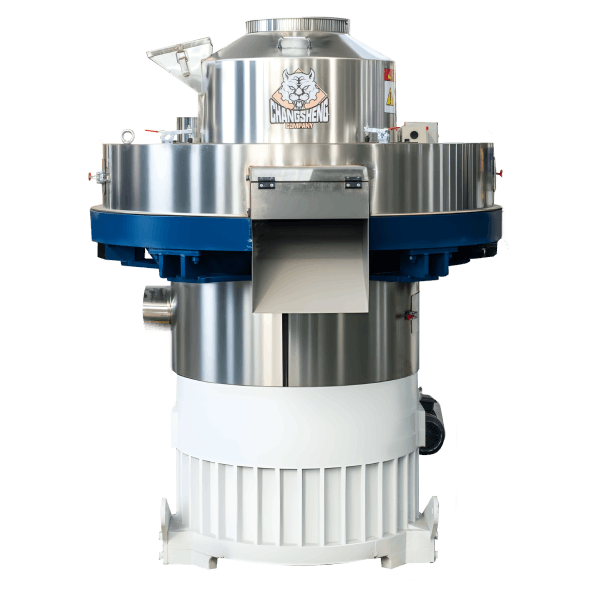
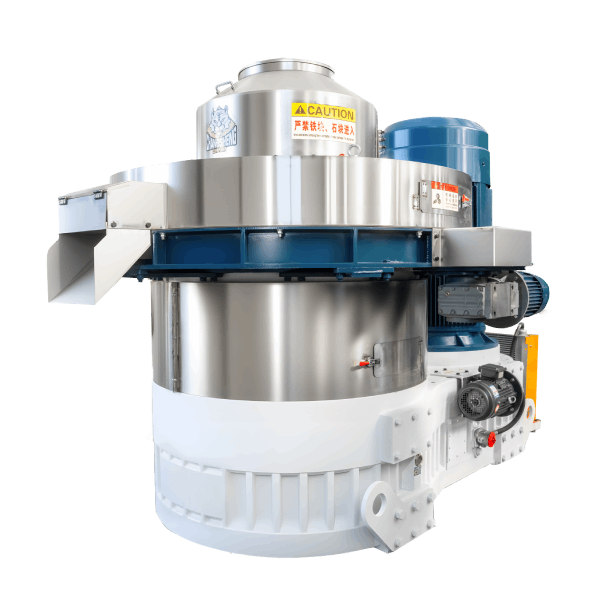
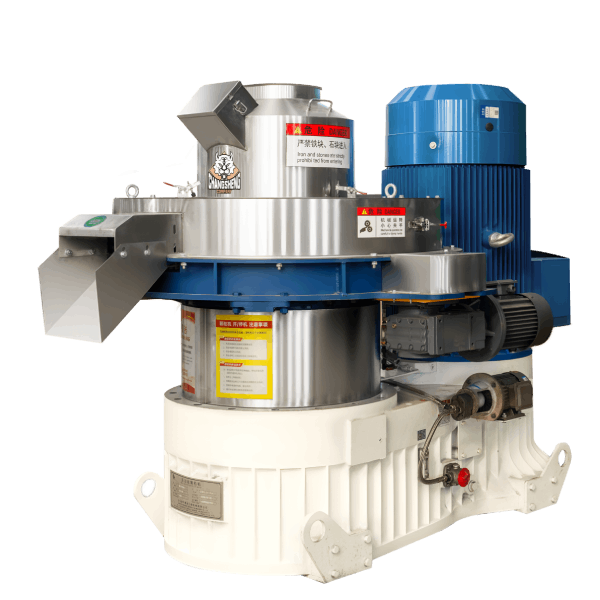
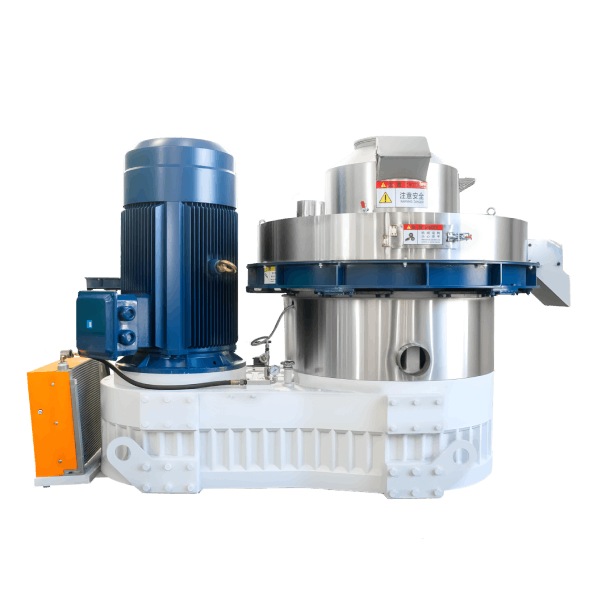
- Structure and Material Composition Related to Die Blocking
Die performance is closely linked to material quality and structural design.
Ring Die
• Forged alloy steel (42CrMo or equivalent)
• Vacuum heat-treated
• Hardness: 52–58 HRC
• Precision drilling tolerance ±0.02 mm
Roller Assembly
• Alloy steel core
• Replaceable wear shell
• Sealed heavy-duty bearings
Main Shaft
• High-strength forged steel
• Dynamic balance calibrated
Lubrication System
• Automatic grease injection
• Prevents bearing overheating
Improper material hardness or inaccurate hole finishing increases the likelihood of pellet machine die blocking problem in continuous production.
- Manufacturing Process and Quality Control
Manufacturing quality directly affects resistance to die blockage.
Step 1: Material Inspection
Chemical composition verification and ultrasonic testing.
Step 2: Forging
Controlled deformation to refine grain structure.
Step 3: Heat Treatment
Vacuum quenching and tempering; hardness testing.
Step 4: CNC Drilling of Die Holes
Precision hole alignment; surface smoothness control.
Step 5: Polishing and Deburring
Improves material flow inside die channels.
Step 6: Assembly and Alignment
Laser alignment of motor and gearbox to minimize vibration.
Step 7: Load Testing
Trial production under controlled moisture conditions.
Deficiencies at any stage may contribute to recurring pellet machine die blocking problem during operation.
- Industry Comparison Table
Comparison of die-related performance factors:
Item | Standard Alloy Die | High-Precision Heat-Treated Die
Hole Surface Finish | Moderate | Smooth and uniform
Wear Resistance | Medium | Higher
Clogging Frequency | Higher | Lower
Compression Stability | Variable | Stable
Service Life | Shorter | Longer
Maintenance Frequency | Frequent cleaning | Reduced cleaning
Selecting a high-precision die reduces pellet machine die blocking problem risk over long operating cycles.
- Application Scenarios
The pellet machine die blocking problem commonly affects:
Distributors
• Equipment returns due to improper setup
EPC Contractors
• Delays in project commissioning
Engineering Consultants
• Inaccurate production forecasts
Biomass Power Plants
• Continuous 18–24 hour operation environments
Agro-residue Pellet Producers
• High silica or fiber content materials
Understanding the pellet machine die blocking problem allows engineering teams to design preventive strategies during plant layout and equipment selection.
- Core Pain Points and Engineering Solutions
Pain Point 1: Frequent Production Interruptions
Solution: Optimize die compression ratio based on material type.
Pain Point 2: High Energy Consumption
Solution: Maintain correct moisture and particle size distribution.
Pain Point 3: Die Overheating
Solution: Ensure proper lubrication and cooling system operation.
Pain Point 4: Excessive Roller Pressure
Solution: Adjust roller–die clearance according to manufacturer specifications.
Pain Point 5: Inconsistent Pellet Quality
Solution: Calibrate feeder rate and monitor amperage stability.
Addressing these factors significantly reduces pellet machine die blocking problem occurrence.
- Risk Warnings and Avoidance Recommendations
• Avoid starting pellet mill with dry die holes; pre-condition with oily material if required.
• Do not exceed recommended motor load.
• Avoid using oversized raw material particles.
• Regularly inspect die hole wear and surface smoothness.
• Ensure stable raw material moisture control system.
Neglecting preventive measures may escalate pellet machine die blocking problem into major mechanical damage.
- Procurement and Selection Guide
Step 1: Define raw material characteristics (wood type, straw, moisture).
Step 2: Determine appropriate die compression ratio.
Step 3: Select alloy steel die with verified heat treatment certification.
Step 4: Confirm precision drilling tolerance and surface finishing process.
Step 5: Evaluate gearbox and transmission stability.
Step 6: Ensure availability of spare dies and rollers.
Step 7: Review supplier commissioning support capability.
Step 8: Request operational data from similar projects.
A structured procurement process reduces long-term pellet machine die blocking problem risk.
- Engineering Case Study
Project: 4 t/h Hardwood Pellet Line
Operation: 20 hours/day
Initial Issue: Severe pellet machine die blocking problem within first 3 months
Root Cause Analysis:
• Moisture fluctuated between 8% and 17%
• Die compression ratio too high (1:10 for mixed hardwood)
• Inconsistent particle size
Corrective Measures:
• Installed moisture stabilization system
• Replaced die with 1:8 compression ratio
• Adjusted hammer mill screen to 4 mm
Results After 6 Months:
• Production stability improved
• Energy consumption reduced by approximately 12%
• Die cleaning frequency reduced significantly
• No major blockage incidents recorded
Engineering-based adjustments effectively resolved the pellet machine die blocking problem without major structural changes.
- FAQ – Pellet Machine Die Blocking Problem
- What is the main cause of die blocking?
Incorrect moisture and compression ratio mismatch. - Can low moisture cause blockage?
Yes, excessive dryness increases friction. - How often should die holes be inspected?
At least monthly in continuous operation. - Does die hardness affect clogging?
Yes, improper hardness accelerates wear and blockage. - Can lubrication reduce blockage?
It prevents bearing overheating but does not directly solve material clogging. - Is raw material size critical?
Yes, oversized particles increase blockage probability. - Should compression ratio vary by material?
Yes, different biomass types require specific ratios. - Does feeder speed influence blockage?
Excess feeding may overload die channels. - Can vibration worsen blocking?
Yes, misalignment increases uneven pressure. - Is die polishing effective?
Yes, smooth channels improve material flow. - Request Technical Support and Documentation
For detailed analysis of pellet machine die blocking problem in your project, request:
• Technical parameter evaluation
• Die compression ratio recommendation
• Operational optimization report
• Spare parts specification sheet
• Formal quotation
Submit your raw material data and production targets for engineering review.
Author Expertise Statement (E-E-A-T)
This article is prepared by a mechanical engineering team with over 15 years of experience in biomass pellet production systems, die design optimization, and industrial plant commissioning. The technical analysis is based on field operation data and engineering diagnostics to support professional procurement and operational decision-making.
For project-specific pellet machine die blocking problem assessment, contact our technical department for a structured evaluation report.