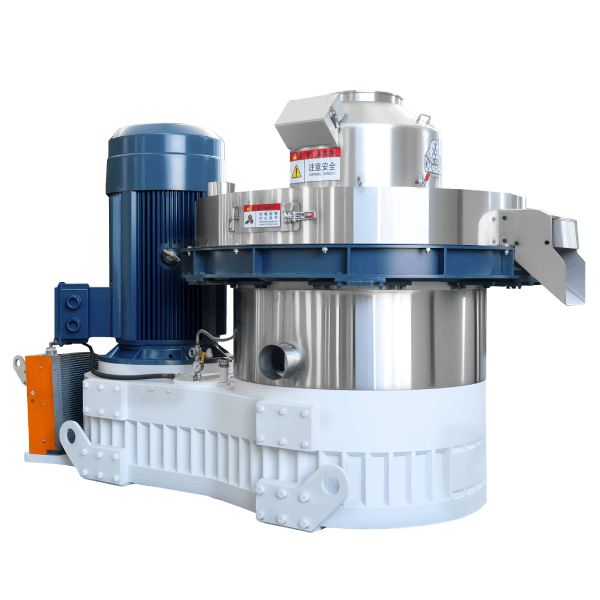
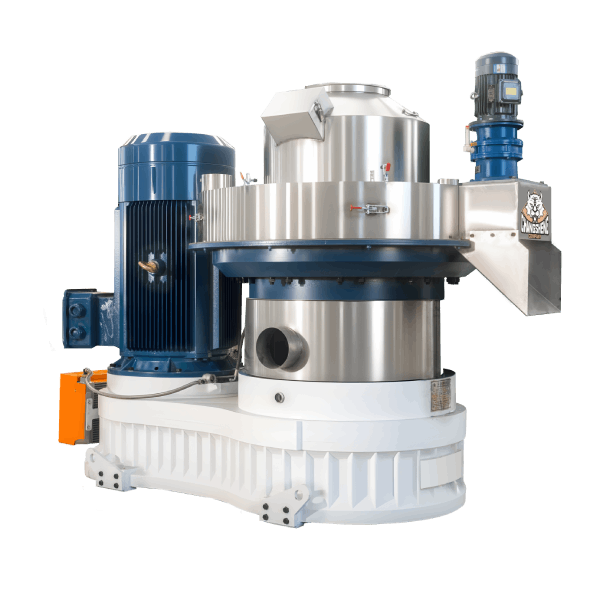
Industrial Pellet Mill with 2 Year Warranty: Buyer’s Risk Guide
News 2026-07-15
Page SEO Summary: This procurement guide helps buyers understand the true value of an industrial pellet mill with 2 year warranty—covering scope of coverage, common exclusions, international claim procedures, and how to evaluate suppliers beyond the warranty period.
A procurement manager reviews two proposals for an industrial pellet mill. Both machines appear similar—similar specifications, similar capacities, similar appearance. But one supplier offers a standard 12-month warranty, while the other offers a 2 year warranty.
Which one should the procurement manager choose? The immediate instinct is to favor the longer warranty. But is that always the right decision? What does the 2 year warranty actually cover? What does it say about the supplier—and what does it potentially reveal about the machine?
In industrial equipment procurement, the warranty is more than a legal document. It is a signal of supplier confidence, a statement about product quality, and a risk allocation mechanism between buyer and seller. A 2 year warranty on an industrial pellet mill represents a substantial commitment from the manufacturer—and a significant benefit to the buyer—provided the terms are clearly understood.
This guide provides procurement professionals with a framework for understanding, evaluating, and negotiating warranty terms for industrial pellet mills—ensuring that the warranty delivers the protection it promises.
What the Warranty Actually Means: Beyond the Calendar
When a supplier offers an industrial pellet mill with 2 year warranty, it is essential to understand what this commitment actually represents.
The Warranty Definition
A warranty is a legally enforceable promise by the manufacturer that the equipment will perform as specified for a defined period. It establishes the supplier’s obligation to repair or replace defective components and, in some cases, to cover associated labor and shipping costs.
What a 2 Year Warranty Signals
| Signal | What It Indicates | Procurement Implication |
|---|---|---|
| Supplier confidence | Supplier believes in the durability of their equipment | Reduced risk of premature failure |
| Quality commitment | Components and assembly meet higher standards | Higher initial quality likely |
| Service capability | Supplier has resources to support international claims | Better long-term support likely |
| Customer focus | Supplier values long-term relationships | Potential for better partnership |
Important Caveat: A 2 year warranty is a positive signal, but it is not a guarantee of superior quality in isolation. Warranty terms must be evaluated alongside the supplier’s track record, the machine’s specifications, and the buyer’s intended operation.
Industry Standard vs. 2 Year Warranty: A Comparison
The industry standard for industrial pellet mills is typically 12 months from the date of commissioning or 18 months from the date of shipment, whichever comes first. A 2 year warranty—24 months—represents a meaningful extension.
Warranty Duration Comparison
| Warranty Duration | Industry Standard? | Typical Coverage | Supplier Implication |
|---|---|---|---|
| 12 months | Standard | Parts and labor on new equipment | Meets baseline expectations |
| 18 months | Above standard | Parts and labor (some exclusions) | Above-average supplier confidence |
| 24 months (2 years) | Significantly above standard | Parts and labor | High confidence in product quality |
| 36 months | Rare | Parts only (often with conditions) | Premium offering; likely cost-reflective |
What the Extra 12 Months Means
| Benefit | Value to Buyer |
|---|---|
| One additional full year of coverage | Significant reduction in Year 2 repair expenses |
| Extended testing period | Provides validation of equipment reliability |
| Increased supplier accountability | Greater incentive for supplier to deliver a reliable product |
| Peace of mind during ramp-up | Covers the entire initial production period |
Coverage Analysis: What Is—and Isn’t—Included
The warranty period is only part of the equation. The scope of coverage determines the true value of the warranty.
Standard Warranty Coverage
| Coverage Element | Typical Inclusion | What to Verify |
|---|---|---|
| Mechanical components | Yes | Which components specifically? |
| Electrical components | Yes | Motors, switches, control components |
| Motors | Yes | Standard motors; verify if special motors are covered |
| Gearboxes | Yes | Critical component requiring verification |
| Wear parts | Typically excluded | Dies, rollers, hammers, screens, belts |
| Installation | Time-limited | Typically 30-90 days for installation labor |
| Travel and accommodation | Supplier specific | Who pays for service engineer travel? |
Critical Exclusions to Verify
| Exclusion | Why It Matters | Question to Ask |
|---|---|---|
| Wear parts (dies, rollers) | These are consumed in normal operation and represent 10-20% of annual operating cost | Is the wear part exclusion absolute, or is there a prorated coverage? |
| Consumables (belts, bearings) | Normal replacement items; high replacement cost over time | Are these excluded entirely? |
| Operator error | Many warranty claims are denied if misoperation is determined | What training is provided to prevent operator error? |
| Improper maintenance | Lack of documented maintenance voids warranty | What maintenance records are required? |
| Non-approved parts | Use of non-genuine parts voids warranty | Are parts pricing competitive to encourage compliance? |
| Consequential damages | Loss of production due to downtime may be excluded | Is there any coverage for consequential losses? |
Warranty Signal Theory: What Long Warranties Tell You
In industrial equipment markets, warranty duration is an information signal. Suppliers who know their equipment is reliable offer longer warranties because they expect few claims. Suppliers who are uncertain about quality keep warranties shorter.
The Signaling Framework
| Supplier Type | Warranty Duration | Likely Product Quality | Risk Level |
|---|---|---|---|
| High-quality manufacturer | 24+ months | Superior | Low |
| Standard manufacturer | 12 months | Good | Moderate |
| Low-quality manufacturer | 6-12 months (with exclusions) | Variable | High |
| Unproven manufacturer | 6 months or less | Unknown | High |
Procurement Insight: The warranty duration should be evaluated in combination with:
- The supplier’s years in business and track record
- The number of machines installed in comparable applications
- Customer references on warranty claim experiences
- The clarity and completeness of the warranty document itself
Key Warranty Clause-by-Clause Analysis
When reviewing a warranty agreement for an industrial pellet mill with 2 year warranty, the following clauses require particular attention.
1. Warranty Period Definition
What to Look For:
- When does the warranty clock start? (Ship date? Installation date? Commissioning date?)
- Is there a “whichever comes first” clause?
- Does the warranty period reset or extend if components are replaced?
Procurement Recommendation: Negotiate for the warranty to start from the date of commissioning—not shipment. This is particularly important for international purchases where shipping and installation can take 2-4 months.
2. Scope of Coverage
What to Look For:
- Which components are covered and for what duration?
- Are all components covered for the full 2 years, or do some components have shorter coverage?
- Is labor included for the full 2 years?
Procurement Recommendation: Ensure the coverage scope is clearly defined and includes both parts and labor for the full 2 year period.
3. Wear Part Exclusion
What to Look For:
- What specifically is defined as a “wear part”?
- Is the exclusion absolute or conditional?
- Are there any guarantees on wear part life (e.g., die life in hours)?
Procurement Recommendation: Request a clear, written list of excluded wear parts. If possible, negotiate a reduced price for initial wear part orders as compensation for the exclusion.
4. Technical Support and Claims Process
What to Look For:
- How are warranty claims initiated?
- Who is responsible for diagnosis?
- What documentation is required for a claim?
- What is the expected response time?
Procurement Recommendation: Ensure the warranty includes clear, reasonable terms for claims processing. Look for a 24-48 hour response time on claims and a defined escalation path for unresolved issues.
5. Shipping and Logistics for Replacement Parts
What to Look For:
- Who pays for shipping of replacement parts?
- Who pays for return shipping of defective parts?
- Is expedited shipping available and at what cost?
Procurement Recommendation: Confirm that warranty shipping costs are clear. For critical operations, negotiate for expedited shipping coverage at the supplier’s expense for warranty claims.
6. International Claim Execution
What to Look For:
- How are claims handled for international customers?
- Is local service available, or must parts be sourced from headquarters?
- What is the process for customs clearance of warranty parts?
- Who handles documentation for customs?
Procurement Recommendation: International claims can be complex. Request the supplier to provide clear procedures, including the documentation they will provide to facilitate customs clearance of warranty replacement parts.
The Economics of Warranty: Supplier Cost Structure
Understanding the supplier’s economics helps buyers assess the financial viability of a 2 year warranty commitment.
Estimated Supplier Warranty Costs
| Cost Component | Estimated Cost as % of Equipment Price | Notes |
|---|---|---|
| Typical warranty claims (Year 1) | 1-3% | Normal industrial equipment range |
| Extended warranty reserve (Year 2) | 1-2% | Additional reserve for 2-year coverage |
| Service engineer travel | 2-5% of claim costs | Significant variable cost |
| Replacement parts cost | Manufacturing cost + logistics | Typically less than retail price |
What the Supplier Assumes
To offer a 2 year warranty, the supplier must have confidence in their:
- Component quality: Low defect rate in all supplied components
- Assembly quality: Consistent, controlled manufacturing processes
- Supply chain: Reliable component suppliers with consistent quality
- Design: Robust design that maintains integrity over extended operation
Procurement Insight: A supplier that offers a 2 year warranty has effectively calculated that the additional warranty reserve cost is less than the marketing and risk premium associated with offering a shorter warranty. This is a positive indication of their quality confidence.
Complementary Protection: Insurance and Spare Parts
A warranty is an important risk mitigation tool, but it should be part of a broader risk management strategy.
Warranty vs. Insurance
| Aspect | Warranty | Industrial Insurance |
|---|---|---|
| Covers | Manufacturing defects | Accidental damage, theft, fire, etc. |
| Duration | Typically 1-3 years | Annual renewable |
| Claim basis | Proof of defect | Proof of insured event |
| Cost | Included in equipment price | Additional premium |
Recommended Spare Parts for Warranty-Effective Operation
To ensure smooth warranty claims and minimize downtime, consider ordering the following spare parts with the initial purchase:
| Spare Part | Rationale |
|---|---|
| Die (primary and secondary sizes) | Highest wear part; critical for production |
| Roller shells (2-4 sets) | High wear; frequent replacement needed |
| Set of belts | Consumable; price is favorable at time of initial order |
| Bearings (main shaft, roller) | Critical components; availability ensures rapid repair |
| Limit switches and sensors | Common failure points; low cost |
| PLC backup battery | Maintains programming during power outages |
Procurement Recommendation: Ordering spare parts with the initial equipment purchase typically secures:
- 10-20% lower pricing than ordering separately
- Guaranteed compatibility
- Consolidated shipping
- No future compatibility obsolescence
Supplier Evaluation Beyond the Warranty
The warranty is one element of the supplier evaluation. A comprehensive evaluation considers multiple dimensions.
Supplier Evaluation Matrix
| Evaluation Dimension | Weight | What to Assess |
|---|---|---|
| Equipment quality | High | Technology; component quality; build standards |
| Warranty terms | High | Duration; scope; exclusions; claims process |
| Service capability | High | Local support; response time; spare parts availability |
| Track record | High | Number of units installed; references; years in business |
| Price | Medium | Competitive pricing with comparable features |
| Delivery reliability | Medium | On-time delivery history |
| Engineering support | Medium | Pre-sales engineering; design capability |
| Financial stability | Medium | Company viability for long-term support |
Procurement Checklist: Industrial Pellet Mill with 2 Year Warranty
| Check Item | Verify |
|---|---|
| Warranty duration confirmed in writing | ☐ |
| Commencement date (shipment vs. commissioning) clarified | ☐ |
| Coverage scope (parts and labor) clearly defined | ☐ |
| Wear part exclusion list reviewed | ☐ |
| Claims process and response times understood | ☐ |
| International claim procedures verified | ☐ |
| Shipping costs for warranty claims clarified | ☐ |
| Training provision (operator and maintenance) | ☐ |
| Maintenance record requirements understood | ☐ |
| Spare parts ordered alongside equipment | ☐ |
| Reference calls conducted for warranty experience | ☐ |
Frequently Asked Questions
1. Is a 2 year warranty standard in the pellet mill industry?
No. The industry standard is typically 12 months from commissioning or 18 months from shipment. A 2 year warranty is significantly above standard and indicates the supplier’s confidence in product quality.
2. What does a 2 year warranty typically cover?
Standard coverage includes parts and labor for all mechanical and electrical components except wear parts (dies, rollers, hammers, screens, belts). Verify specific coverage by reviewing the actual warranty document.
3. Are wear parts ever covered under warranty?
Typically, no. Wear parts are considered consumables and are excluded from standard warranties. Some suppliers may offer prorated coverage for wear parts if they fail prematurely, but this is not standard.
4. Does the warranty cover the cost of shipping replacement parts internationally?
This depends on the supplier’s terms. Some suppliers cover shipping for parts under warranty; others require the buyer to pay shipping. This should be clarified before purchase.
5. What happens if I need to make a warranty claim from overseas?
International warranty claims require clear documentation. The supplier will typically provide replacement parts, which you would receive through customs. Working with an experienced supplier who understands international logistics is important for smooth warranty claim execution.
6. Does a longer warranty mean the machine is better quality?
Generally, yes. A supplier who offers a longer warranty is expressing confidence in their product reliability. However, the warranty duration should be evaluated alongside actual specifications, references, and the supplier’s track record.
7. Can I negotiate the warranty terms?
Yes. Experienced procurement professionals can negotiate warranty duration, coverage scope, shipping terms, and claim response times as part of the overall contract negotiation. The most common point is shifting the warranty start date from shipment to commissioning.
8. Should I order spare parts at the same time as the equipment?
Yes. Ordering spare parts at the time of equipment purchase ensures compatibility, reduces cost, and avoids future supply issues. Focus on high-wear items (dies, rollers, belts) and critical components (bearings, sensors).
About the Author
Zhang Wei – Senior International Sales Engineer, Shandong Changsheng Machinery Co., Ltd.
Zhang Wei has over 12 years of experience in the biomass and feed pellet mill industry, with a background in mechanical engineering and international project execution. He has managed pellet mill supply projects for clients across Southeast Asia, the Middle East, Africa, Europe, and Latin America, with extensive experience in warranty negotiation and after-sales support.
With hands-on experience in both the manufacturing workshop and client-side operations, Zhang brings practical insights into successful equipment procurement—from the factory floor to the customer’s production site.