Pellet Machine Durability Comparison Guide for Biomass Plants
News 2026-03-03
Pellet Machine Durability Comparison: Engineering Evaluation Guide for Industrial Biomass Projects
Product Definition
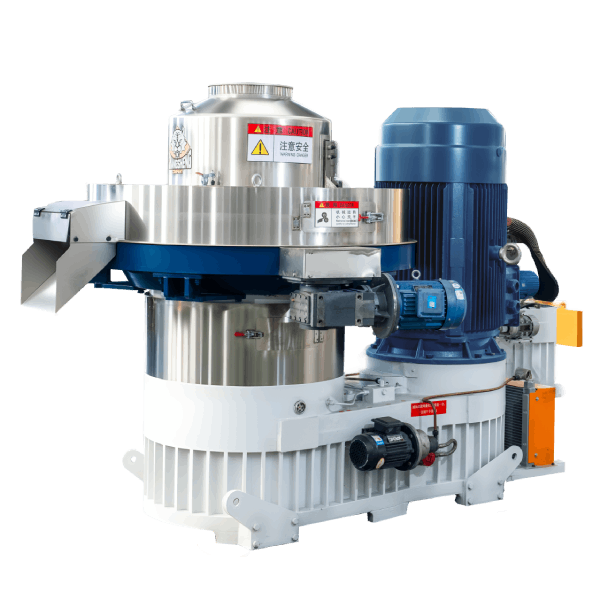
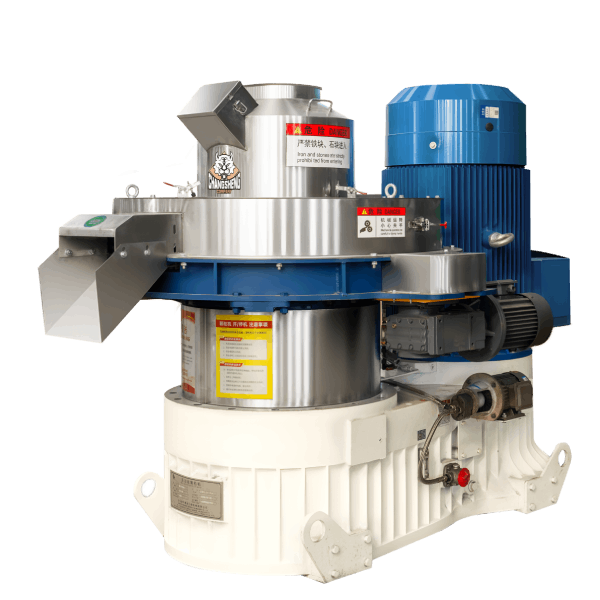
Pellet machine durability comparison refers to the systematic evaluation of structural strength, wear resistance, fatigue life, and operational stability of industrial biomass pellet mills under continuous load conditions. It enables EPC contractors, distributors, and plant operators to select equipment capable of sustaining high-output production with minimal unplanned downtime.
- Why Pellet Machine Durability Comparison Matters in Biomass Projects
In industrial biomass plants operating 16–24 hours per day, mechanical fatigue, abrasive wear, and thermal stress directly determine total cost of ownership. A professional pellet machine durability comparison goes beyond brand marketing and focuses on engineering indicators such as die lifespan, bearing endurance, shaft rigidity, gearbox reliability, and frame deformation resistance.
Durability directly impacts:
• Maintenance frequency
• Spare parts consumption
• Production continuity
• Energy efficiency stability
• Long-term ROI
For procurement managers and engineering consultants, pellet machine durability comparison is not optional—it is risk control.
- Technical Parameters and Performance Specifications
When conducting a pellet machine durability comparison, evaluate measurable parameters:
Production Capacity
• 1–2 t/h (small industrial)
• 3–6 t/h (mid-scale plant)
• 8–12 t/h (large biomass line)
Main Motor Power
• 90 kW – 315 kW depending on output
Die Diameter
• 450 mm
• 560 mm
• 700 mm
• 850 mm
Die Material
• Alloy steel (42CrMo or equivalent)
• Surface hardness: 52–58 HRC after heat treatment
Roller Material
• Forged alloy steel
• Hardness: 50–55 HRC
Bearing Type
• Heavy-duty spherical roller bearings
• Rated dynamic load capacity suitable for continuous 20-hour operation
Gearbox Type
• Helical gear transmission
• Hardened and ground gears
Lubrication System
• Automatic grease injection
• Oil circulation cooling system
In any pellet machine durability comparison, these parameters must be verified with material certificates and machining tolerance data.
- Structural and Material Composition
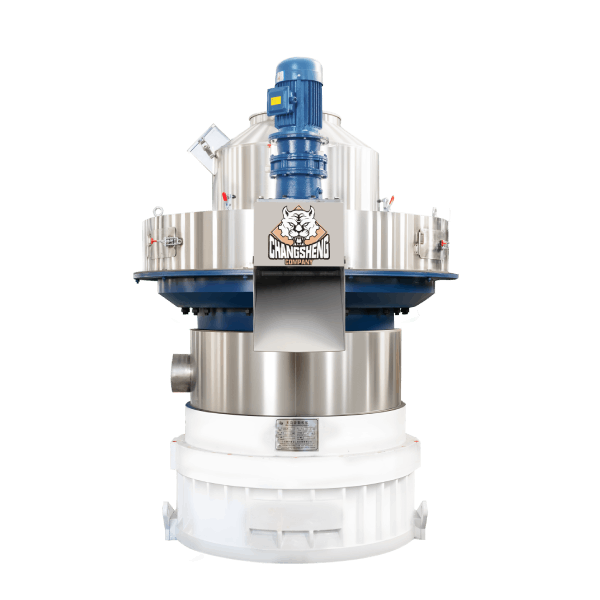
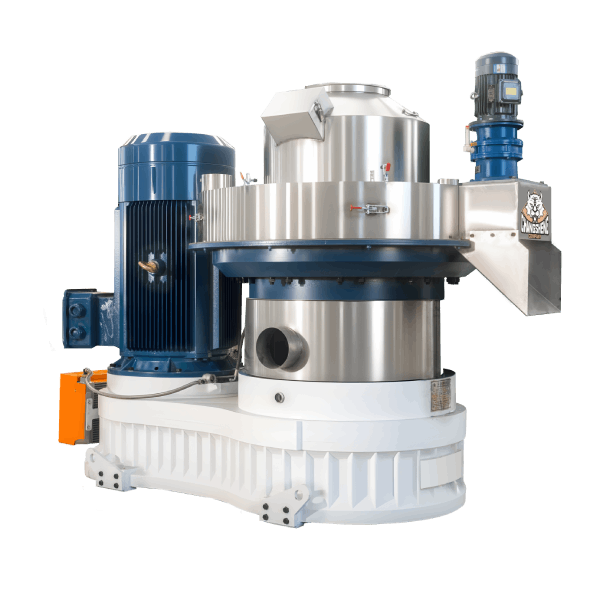
A proper pellet machine durability comparison includes structural analysis:
Main Frame
• Welded high-strength steel structure
• Stress-relieved after welding
• Machined alignment surfaces
Ring Die
• Precision CNC drilled
• Vacuum heat treated
• Wear-resistant alloy composition
Press Rollers
• Replaceable shell design
• Bearing-sealed structure
Main Shaft
• Forged alloy steel
• Ultrasonic flaw detection tested
Gearbox
• Integrated cast housing
• Tempered alloy gears
• Oil bath lubrication
Feeding System
• Variable speed screw feeder
• Stainless steel conditioning chamber
Structural rigidity and material consistency are decisive factors in pellet machine durability comparison results.
- Manufacturing Process and Engineering Controls
Durability depends on manufacturing discipline. A professional pellet machine durability comparison must examine production methodology:
Step 1: Material Selection
Certified alloy steel procurement; chemical composition verification.
Step 2: Forging and Rough Machining
Controlled forging temperature to ensure grain structure integrity.
Step 3: Heat Treatment
Vacuum quenching + tempering; hardness and microstructure inspection.
Step 4: CNC Precision Machining
Tolerance control within ±0.02 mm for die and shaft interfaces.
Step 5: Dynamic Balancing
Rotor balancing to reduce vibration.
Step 6: Assembly and Alignment
Laser alignment for motor–gearbox–shaft concentricity.
Step 7: Load Testing
Trial run under 70–90% load for vibration and temperature monitoring.
Without these controls, pellet machine durability comparison outcomes may be misleading.
- Industry Comparison Table
Below is an engineering-focused pellet machine durability comparison between common configurations:
Item | Belt-Driven Pellet Mill | Direct-Drive Gear Pellet Mill
Transmission Stability | Medium | High
Energy Loss | Higher | Lower
Gear Wear Rate | Moderate | Low (hardened gears)
Bearing Load Distribution | Less balanced | Optimized
Maintenance Frequency | Higher | Lower
Suitable Operation | Intermittent | Continuous 20–24h
For industrial biomass plants, direct gear transmission often performs better in pellet machine durability comparison studies.
- Application Scenarios
Pellet machine durability comparison is critical for:
Distributors
• Selecting equipment with lower warranty risk
EPC Contractors
• Ensuring mechanical reliability for biomass power plant contracts
Engineering Consultants
• Technical evaluation during bidding stage
Importers / Wholesalers
• Avoiding high after-sales claims
Industrial End Users
• Wood pellet plants
• Agricultural residue pellet facilities
• Biomass fuel export manufacturers
- Core Pain Points and Engineering Solutions
Pain Point 1: Frequent Die Cracking
Solution: Use forged alloy steel with controlled heat treatment and hardness verification.
Pain Point 2: Bearing Overheating
Solution: Upgrade to heavy-duty spherical roller bearings with automated lubrication.
Pain Point 3: Gearbox Oil Leakage
Solution: Integrated cast housing and industrial-grade sealing systems.
Pain Point 4: Excessive Vibration
Solution: Precision dynamic balancing and rigid frame reinforcement.
Pain Point 5: High Spare Parts Cost
Solution: Standardized roller shell replacement system.
A structured pellet machine durability comparison identifies these risks before purchase.
- Risk Warnings and Avoidance Recommendations
• Avoid selecting equipment based solely on price per ton capacity.
• Request material certificates for die and shaft.
• Verify heat treatment reports.
• Inspect gearbox machining accuracy.
• Confirm real load test records.
Inadequate pellet machine durability comparison may result in premature wear and production interruption.
- Procurement Selection Guide (Executable Steps)
Step 1: Define annual production target and operating hours.
Step 2: Calculate load factor (daily tonnage × operating hours).
Step 3: Request detailed technical drawings.
Step 4: Review material and heat treatment documentation.
Step 5: Evaluate gearbox transmission design.
Step 6: Inspect manufacturing facility if possible.
Step 7: Request reference project performance data.
Step 8: Compare total cost of ownership, not only machine price.
A structured pellet machine durability comparison reduces capital expenditure risk.
- Engineering Case Study
Project: 6 t/h Wood Pellet Production Line
Operation: 20 hours/day
Location: Southeast Asia biomass export plant
Configuration:
• 560 mm ring die pellet mill
• 132 kW motor
• Hardened gear transmission
• Automatic lubrication system
Performance Results:
• Die lifespan: 1,800–2,200 hours depending on raw material
• Stable vibration level below industrial safety threshold
• Bearing replacement cycle > 12 months
• Downtime reduced by 30% compared with previous belt-driven unit
This engineering case demonstrates how pellet machine durability comparison directly affects operational continuity.
- FAQ – Pellet Machine Durability Comparison
- What defines pellet mill durability?
Material quality, heat treatment, structural rigidity, and load distribution. - Does higher motor power mean better durability?
Not necessarily; transmission design is more critical. - How long should a ring die last?
Typically 1,500–2,500 hours depending on raw material. - Are gear-driven systems more durable?
In continuous operation, generally yes. - What causes premature bearing failure?
Overload, poor lubrication, misalignment. - How important is frame welding quality?
Critical for vibration control and structural life. - Should EPC contractors request heat treatment reports?
Yes, as part of technical due diligence. - Does moisture content affect durability?
Yes, excessive moisture increases mechanical stress. - How often should lubrication systems be inspected?
Daily visual check; full inspection monthly. - Is spare parts compatibility important?
Yes, standardized parts reduce downtime risk. - Request Technical Documentation
For detailed pellet machine durability comparison data including material certificates, gearbox design specifications, and load test reports, contact our engineering department for:
• Quotation
• Technical drawings
• Performance documentation
• Sample project references
Serious procurement inquiries from distributors, EPC firms, and biomass plant operators are welcome.
Author Expertise Statement (E-E-A-T)
This article is prepared by an industrial mechanical engineering team with over 15 years of experience in biomass pellet production systems, including equipment selection, manufacturing supervision, and commissioning of continuous-operation pellet lines across Asia and Europe. All technical evaluations follow engineering-based durability criteria rather than marketing claims.
For technical consultation or project assessment support, submit your production parameters for a customized pellet machine durability comparison report.