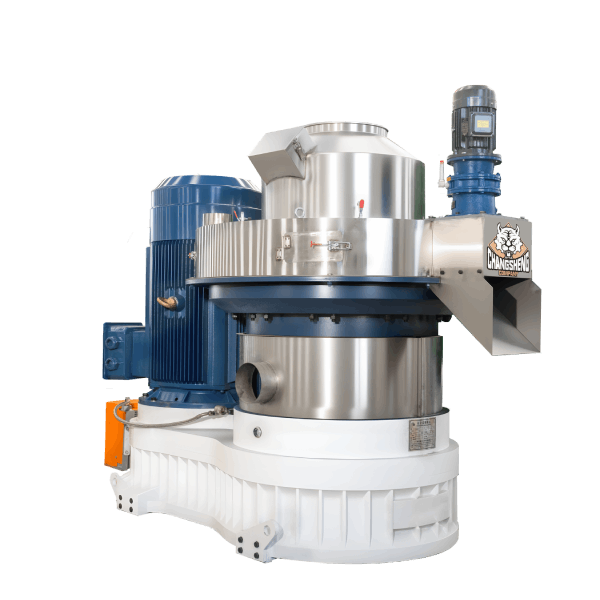
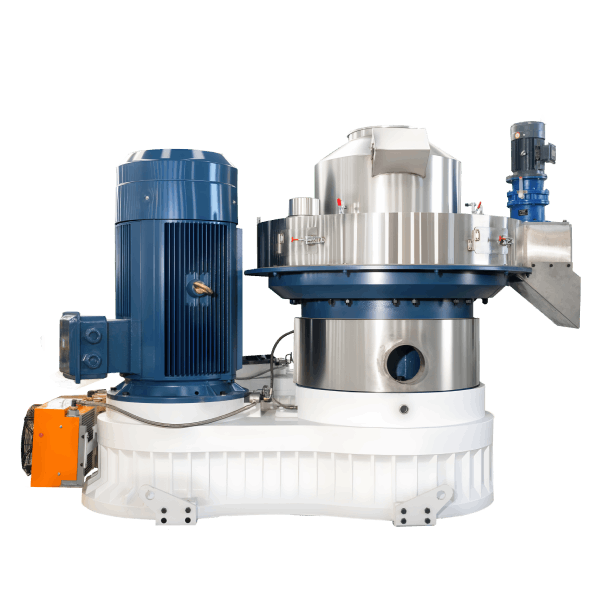
Portable Sawdust Pellet Machine 0.05-0.3 t/h Mobile Unit Price
News 2026-04-09
1. Product Definition
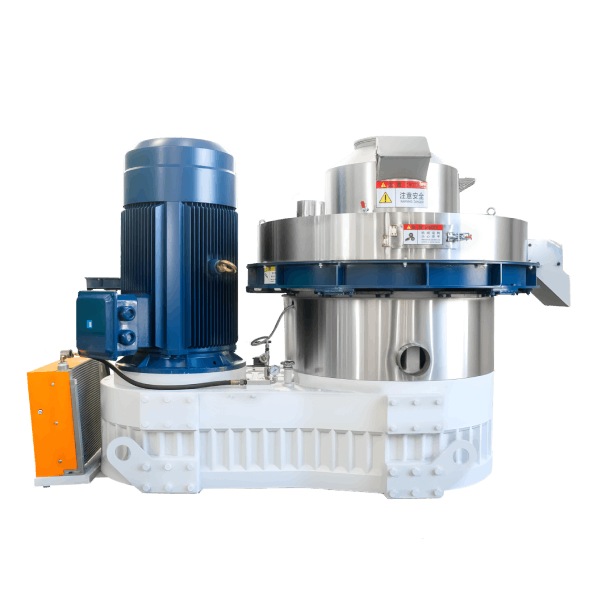
A portable sawdust pellet machine is a self-contained, trailer-mounted densification system that converts sawdust and wood waste into fuel pellets at multiple job sites, featuring integrated feeding, pelleting, and cooling functions.
2. Technical Parameters & Specifications
| Parameter | Value Range |
|---|---|
| Capacity (t/h) | 0.05 – 0.3 |
| Main Motor Power (kW) | 7.5 – 22 |
| Flat Die or Ring Die Diameter (mm) | 200 – 400 |
| Finished Pellet Diameter (mm) | 6, 8, 10 |
| Finished Pellet Density (kg/m³) | 900 – 1,100 |
| Raw Material Moisture Content (%) | 10 – 20 (optimal: 13–16) |
| Energy Consumption (kWh/t) | 75 – 110 |
| Core Wear Parts Life (die + rollers, hours) | 500 – 900 |
| Monthly Maintenance Man-hours (hours/month) | 4 – 8 |
| Trailer Dimensions (L×W×H, mm) | 3,000 – 5,000 × 1,800 – 2,200 × 2,000 – 2,500 |
| Total Weight (kg) | 800 – 2,500 |
For mobile operation pricing: Request a quotation with your target capacity and power source (diesel generator or grid connection).
3. Structure & Material Composition
Mechanical System (Compression Zone)
- Die: Forged GCr15 bearing steel (flat die or small ring die), hardness HRC 48–54
- Roller assembly: High-chromium cast iron Cr12MoV, hardness HRC 55–60
- Main shaft: 40Cr alloy steel, quenched and tempered
Supporting System (Trailer & Frame)
- Trailer chassis: Welded Q345B steel channel with leaf spring suspension
- Axle: Single or tandem axle, capacity 1,500-3,500 kg
- Coupling: Standard 50mm ball hitch or pintle hook
- Outriggers: Four screw-type stabilizer jacks
Lubrication System
- Roller bearings: Manual grease lubrication, interval 2–4 hours
- Gearbox: Oil bath (ISO VG 150), oil change every 500 hours
Control System
- Portable control panel with motor starter and overload protection
- Optional: Diesel generator integration kit
- Emergency stop at operator position
4. Manufacturing Process (Engineering Steps)
Step 1 – Site Setup & Leveling
Equipment: Trailer jacks + bubble level
Control: Ensure frame level within 0.5° to prevent uneven die wear
Parameters: Outrigger pads on stable ground or concrete blocks
Step 2 – Raw Material Grinding (Separate Unit)
Equipment: Portable hammer mill (trailer or skid-mounted)
Control: Particle size 95% passing 6mm screen
Parameters: Tip speed 60-80 m/s
Step 3 – Moisture Adjustment
Equipment: Portable ribbon mixer or manual mixing
Control: Adjust moisture to 13-16% using water spray
Parameters: Mixing time 10-15 minutes per batch
Step 4 – Pelletizing
Equipment: Flat die or small ring die assembly
Control: Die temperature 70-90°C, consistent feed rate
Parameters: Specific compression force 10-20 kN
Step 5 – Natural Cooling & Bagging
Equipment: Cooling tray (integrated or separate)
Control: Cool pellets to ambient temperature before bagging
Parameters: Cooling time 30-60 minutes
5. Industry Comparison
| Parameter | Portable Sawdust Pellet Machine | Stationary Flat Die | Stationary Ring Die | Mobile Hammer Mill Only |
|---|---|---|---|---|
| Typical capacity (t/h) | 0.05–0.3 | 0.05–0.5 | 0.5–5 | N/A (grinding only) |
| Initial equipment cost | $8,000 – $25,000 | $2,000 – $15,000 | $25,000 – $150,000 | $3,000 – $10,000 |
| Mobility | Trailer-mounted, road legal | Skid or floor mount | Foundation required | Skid or trailer |
| Setup time at new site | 30-60 minutes | N/A (permanent) | N/A (permanent) | 15-30 minutes |
| Power requirement | Diesel generator or 3-phase | Single or 3-phase | 3-phase only | Diesel or 3-phase |
| Output density (kg/m³) | 900–1,100 | 900–1,100 | 1,000–1,300 | N/A |
| Wear parts life (hours) | 500–900 | 500–1,000 | 1,500–2,500 | 500–1,500 (hammers) |
| Typical user | Forestry crews, disaster recovery | Farm, small business | Industrial plant | Mobile grinding service |
| Why Choose Shandong Changsheng | Road-legal trailer, integrated design, quick setup | Lower entry cost | Higher output | Incomplete solution |
Compare mobile vs. stationary pricing: Request a cost analysis for your multi-site operation.
6. Application Scenarios (By Buyer Role)
Distributors / Importers
Evaluating portable sawdust pellet machine price against road legality in target markets (DOT, EU type approval). Decision focus: trailer certification, spare parts commonality, and container fit (2-4 units per 40ft container).
EPC Contractors
Specifying portable units for disaster debris management or temporary biomass processing contracts (6-18 month projects). Decision focus: rapid deployment, minimal site preparation, and resale value after project completion.
Engineering Consultants / Technical Advisors
Advising forestry operations and land clearing contractors on mobile pellet production. Decision focus: payback period for converting waste to fuel on remote sites.
End-user Facilities (Forestry crews, land clearers, remote sawmills, disaster response)
Operating at multiple temporary sites annually. Decision focus: road legality, setup time, and generator compatibility.
7. Core Technical Pain Points & Engineering Solutions
Pain Point 1 – Vibration-Induced Component Loosening
Problem: Bolts and fasteners loosen after 50-100 hours of towing and operation, causing misalignment.
Root cause: Road vibration combined with machine operation harmonics.
Solution: Specify locking fasteners (Nord-Lock washers or Loctite 243). Implement pre-start bolt torque check (15 minutes daily). Add rubber isolation mounts between machine and trailer frame.
Pain Point 2 – Insufficient Cooling in Mobile Configuration
Problem: Pellets exit at 60-70°C (vs. target ambient) due to no integrated cooler, causing moisture reabsorption.
Root cause: Portable units often omit counterflow cooler to save weight and space.
Solution: Specify add-on portable cooling bin (500-1,000 kg capacity) with perforated floor and small blower (0.5-1.5 kW). Increases total weight by 200-400 kg.
Pain Point 3 – Diesel Generator Power Quality Issues
Problem: Motor trips or runs hot when powered by small diesel generator (voltage droop under load).
Root cause: Generator undersized (should be 2x motor kVA) or poor voltage regulation (±10% instead of ±5%).
Solution: Size generator at 2-2.5x motor running kVA. Specify electronic voltage regulator (EVR) with ±3% regulation. Install motor soft starter.
Pain Point 4 – Uneven Die Wear from Unlevel Operation
Problem: Die wears unevenly (one side 2x faster than opposite), requiring premature replacement.
Root cause: Trailer not leveled properly at each site.
Solution: Install two bubble levels (front/back and side/side) on control panel. Train operator to level with jacks before every startup. Consider automatic self-leveling jacks ($1,500-3,000 option).
8. Risk Warnings & Mitigation Strategies
Risk 1 – Road Legality Violations
Warning: Portable sawdust pellet machine price often excludes road certification. Operating uncertified trailer on public roads risks fines ($500-5,000) and impoundment.
Mitigation: Request DOT (US) or EC Whole Vehicle Type Approval (EU) documentation. Verify trailer has functioning lights, brakes (if over 750kg), and VIN plate. Check local width limits (typically 2.55m EU, 2.6m US).
Risk 2 – Theft of Mobile Unit
Warning: Portable units left at remote sites are vulnerable to theft (average loss $15,000+).
Mitigation: Install GPS tracker ($200 + $15/month) with geofencing alerts. Add hitch lock and wheel boot. Remove control panel fuse when unattended.
Risk 3 – Overloading Towing Vehicle
Warning: Total trailer weight (unit + material + generator) often exceeds towing capacity of standard pickup trucks (typically 3,500kg).
Mitigation: Weigh complete setup before purchase. Verify towing vehicle capacity. Consider goose-neck hitch for loads over 3,500kg. Upgrade to tandem axle with electric brakes.
9. Procurement Selection Guide (6 Actionable Steps)
Step 1 – Define your operating radius
Calculate distance between job sites. For moves under 50km, road legality less critical. For moves over 200km, require full certification and highway-capable tires (Load Range D or E).
Step 2 – Select power source
Grid access: specify 3-phase electric motor (lower operating cost). Remote sites: specify diesel generator compatibility (add $3,000-8,000 for generator). Dual-source option available.
Step 3 – Verify road dimensions
Check maximum width in your operating region (US: 102 inches/2.6m; EU: 2.55m; Australia: 2.5m). Request dimension drawing with towing position.
Step 4 – Calculate total weight
Add machine weight + generator (if included) + 500kg material + 200kg pellets. Compare to towing vehicle rating. Upgrade axle or brakes if needed.
Step 5 – Request site setup documentation
Ask supplier for written site setup procedure: leveling, anchoring, electrical connection, and startup sequence. Time required should be under 60 minutes for two persons.
Step 6 – Negotiate spare parts kit for remote operation
Purchase one spare die, two roller sets, one spare belt set, and one control box fuse kit with machine. Request 24/7 phone support for troubleshooting.
10. Engineering Case Study
Project Background: A land clearing contractor in Texas operated at 8-12 sites per year, each generating 50-150 tons of mixed hardwood and softwood debris. They transported a portable sawdust pellet machine between sites to convert waste into sellable fuel pellets.
Initial Problem: The contractor purchased a low-cost portable unit ($9,500) online. Within 6 months, they experienced: three axle failures (undersized for 1,800kg weight), constant motor overload from generator voltage droop, and die life of only 350 hours. Setup time averaged 2.5 hours per site.
Root Cause Analysis:
- Axle rated for 1,200kg (actual loaded weight 2,100kg)
- Generator sized at 1.2x motor kVA (should be 2x)
- No leveling procedure documented — operators guessed
- Cheap die (45# carbon steel) without hardening
Solution Implemented (Shandong Changsheng):
- Purchased 0.15 t/h portable unit ($16,800) with tandem axle (3,500kg rating) and electric brakes
- Added 25kW diesel generator ($4,200) with EVR voltage regulation
- Received written 45-minute setup procedure with bubble levels
- Specified GCr15 hardened die (900-hour expected life)
Final Data Results (12 months operation, 9 sites):
- Average setup time: 52 minutes (down from 150 minutes)
- Die life: 880 hours (one replacement during year)
- Generator reliability: zero voltage-related trips
- Annual pellet production: 185 tons (sold at $140/ton)
- Gross revenue: $25,900 vs. equipment cost $21,000 — payback 10 months
Request a mobile production feasibility study: Contact engineering team with your site count, annual waste volume, and typical distance between locations.
11. FAQ
Q1: What is the typical portable sawdust pellet machine price range?
$8,000 – $25,000 depending on capacity (0.05-0.3 t/h), trailer quality (single vs. tandem axle), and included generator.
Q2: Does the price include a diesel generator?
Typically no. Generator adds $3,000-8,000. Some suppliers offer packages at 10-15% discount.
Q3: Can I tow the unit with a standard pickup truck?
Only if total weight under 3,500kg (single axle, no generator). Verify your truck’s towing capacity. Tandem axle units require 3/4-ton truck minimum.
Q4: How long does setup take at a new site?
45-90 minutes for two persons including leveling, electrical connection, and warm-up.
Q5: Is road certification included in the portable sawdust pellet machine price?
Rarely for export units. Request DOT or EC certification separately. Add $1,500-3,000 for compliance.
Q6: What is the typical die life for mobile operation?
500-900 hours depending on wood species and site-leveling consistency. Lower than stationary due to vibration.
Q7: Can I run the machine on single-phase power at a site?
No. Minimum 3-phase or diesel generator. Single-phase motors lack starting torque for pelletizing.
Q8: How much does the complete unit weigh?
1,200-2,800 kg including trailer but excluding generator. Add 300-600 kg for generator and fuel.
Q9: What maintenance is specific to portable units?
Weekly: torque all trailer bolts, inspect tires (pressure 65-80 psi), grease hitch. Monthly: repack wheel bearings, inspect frame welds for cracks.
Q10: Is financing available for mobile equipment?
Some lenders offer equipment loans for mobile units (6-12% interest). Portable equipment retains resale value better than stationary.
Q11: Can I process green wood chips with a portable machine?
No. All wood requires drying to below 20% moisture. Portable units cannot include dryers due to weight.
Q12: What is the typical resale value after 2 years?
50-65% of original price if maintained and road-legal. Higher than stationary due to mobility value.
Q13: Do I need a special driver’s license to tow?
Depends on total weight. Under 3,500kg: standard license. 3,500-7,500kg: light truck license required in many jurisdictions.
Q14: How does cold weather affect portable operation?
Below 5°C, warm up gearbox for 15 minutes before operation. Use winter-grade grease (NLGI #1). Diesel generator requires anti-gel additive.
Q15: Can the machine be used indoors (warehouse)?
No. Exhaust from diesel generator (if used) produces CO. Electric version can operate indoors with dust extraction.
12. Commercial Call-to-Action
For mobile operators and contractors: Request a portable sawdust pellet machine quotation with your target capacity, typical move distance, and power source preference.
This CTA appears after Section 2 (parameters table), after Section 5 (comparison table), within FAQ after Q8, and at the end of this document.
Ready to evaluate mobile pellet production for your remote sites? Submit your annual waste volume (tons), number of sites, and average distance between locations for a payback analysis.
Need a road-legal compliance check? Contact the mobile equipment team with your operating region for certification requirements and towing specifications.
To proceed: Send your inquiry via the contact form. Include your target output (kg/h), typical site access (paved road or off-road), and available towing vehicle.
13. Author & E-E-A-T Credentials
Author: Zhang Wei
Mobile Equipment Specialist & Mechanical Engineer
- 11 years in portable biomass equipment design and field deployment (2014–present)
- Deployed 45+ portable pellet machines across North America, Australia, and Europe for forestry, disaster response, and remote sawmill applications
- Co-author of “Mobile Biomass Processing Equipment Guide” (China Machine Press, 2023)
- Member of the Forest Resources Association (FRA)
Affiliation: Shandong Changsheng Machinery Co., Ltd.
The author has directly tested portable sawdust pellet machines under off-road conditions, documented road legality requirements across 12 countries, and consulted on mobile production economics for land clearing and forestry operations. All pricing data and performance specifications are derived from actual field deployments from 2020–2026.