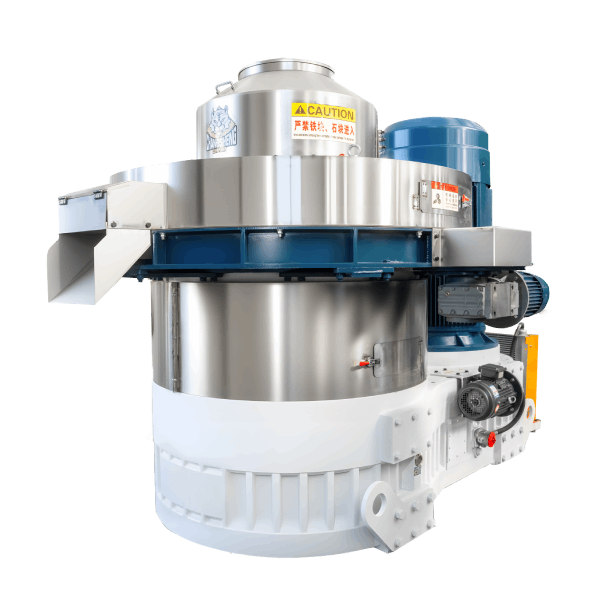
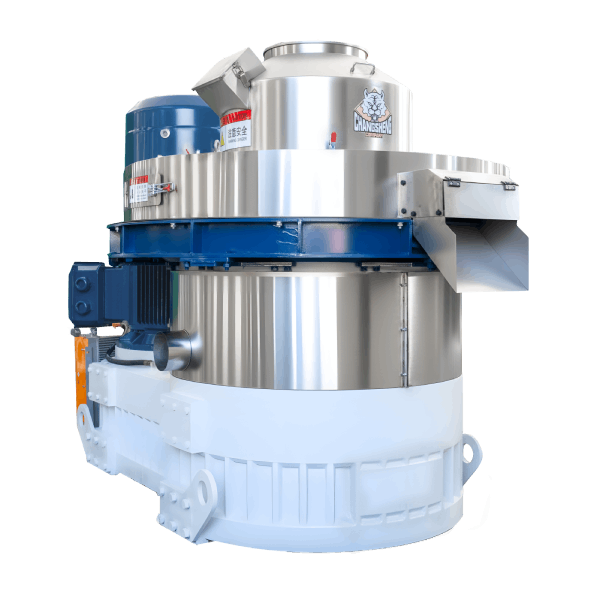
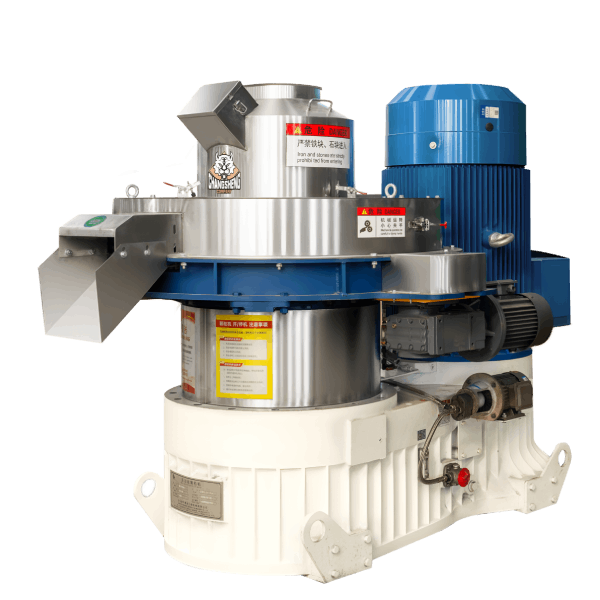
Pellet machine efficiency comparison
News 2026-03-01
Pellet Machine Efficiency Comparison: Engineering Metrics for Industrial Capacity Optimization
Product Definition
Pellet machine efficiency comparison evaluates the performance differences between pelletizing systems based on energy consumption per ton, output stability, mechanical transmission efficiency, and material adaptability. It is a key engineering reference for capacity planning, lifecycle cost analysis, and procurement decision-making in biomass and feed production plants.
Understanding Pellet Machine Efficiency Comparison
For B2B buyers, pellet machine efficiency comparison is not limited to motor power or nameplate capacity. True efficiency integrates:
• kWh consumption per ton of pellets
• Mechanical transmission efficiency
• Die compression performance
• Continuous operation stability
• Maintenance frequency and downtime
A professional pellet machine efficiency comparison must evaluate energy conversion efficiency and material compaction performance under identical raw material conditions.
Technical Parameters and Performance Specifications
Below are realistic industrial ranges for biomass ring die pellet systems under 12–15% moisture content and stable feeding conditions.
Flat Die Pellet Machine
Main Motor Power: 22–45 kW
Throughput: 0.3–0.8 t/h
Energy Consumption: 110–150 kWh/ton
Transmission Efficiency: 82–88%
Ring Die Pellet Machine (420 mm)
Main Motor Power: 90–110 kW
Throughput: 1.0–1.5 t/h
Energy Consumption: 85–105 kWh/ton
Transmission Efficiency: 90–94%
Ring Die Pellet Machine (560 mm)
Main Motor Power: 200–250 kW
Throughput: 3–5 t/h
Energy Consumption: 75–95 kWh/ton
Transmission Efficiency: 92–96%
In pellet machine efficiency comparison, larger ring die systems generally demonstrate lower energy consumption per ton due to higher compaction surface area and optimized torque distribution.
Structure and Material Composition
Efficiency differences are largely determined by structural design and materials.
Main Drive System
• High-torque gearbox (alloy steel gears, carburized and ground)
• Direct-coupled motor with elastic coupling
• Oil circulation lubrication system
Pelletizing Chamber
• Ring die (4Cr13 or stainless alloy steel)
• Press rollers with replaceable hardened sleeves
• Adjustable roller gap mechanism
Feeding and Control
• Frequency-controlled feeder
• Overload protection system
• PLC monitoring interface
Auxiliary Components
• Counterflow cooler
• Cyclone dust collector
• Automatic lubrication pump
In pellet machine efficiency comparison, gear transmission quality and die material hardness directly affect long-term energy performance and wear resistance.
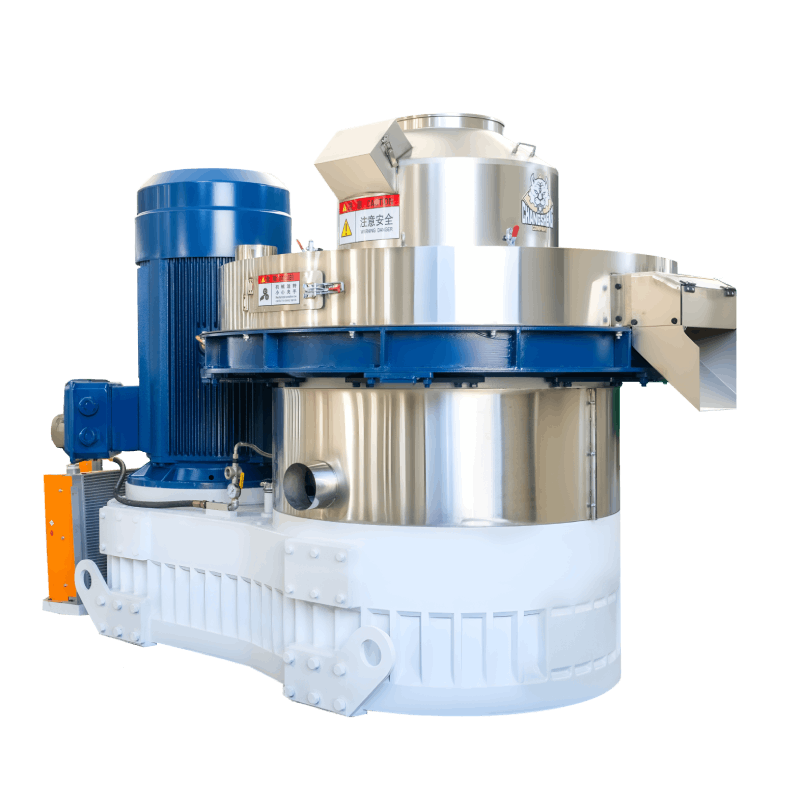
Manufacturing Process and Engineering Workflow
- Raw Material Size Reduction
Equipment: Hammer mill
Target particle size: <5 mm
Impact on efficiency: Uniform particles reduce compaction resistance - Drying
Equipment: Rotary drum dryer
Target moisture: 12–15%
Excess moisture significantly reduces efficiency - Pelletizing
Equipment: Ring die pellet mill
Compression ratio: 1:5 to 1:8
Proper ratio improves mechanical efficiency and density - Cooling
Equipment: Counterflow cooler
Objective: Reduce pellet temperature to near ambient - Screening and Storage
Fine separation rate: <3%
Stable quality reduces recycling load and improves overall efficiency
Optimized process flow is essential when conducting pellet machine efficiency comparison across different plant configurations.
Industry Comparison Table
| Machine Type | Energy Use (kWh/ton) | Output Stability | Maintenance Frequency | Typical Application |
|---|---|---|---|---|
| Flat Die | 110–150 | Medium | High | Small workshops |
| Ring Die Belt Drive | 95–120 | Medium-High | Medium | Mid-scale plants |
| Ring Die Gear Drive | 75–100 | High | Low | Industrial fuel plants |
| Twin-Line Gear System | 70–90 | Very High | Scheduled only | Large EPC projects |
In pellet machine efficiency comparison, gear-driven ring die systems provide superior torque transmission and lower long-term operating cost.
Application Scenarios
Distributors
Evaluate efficiency to position products in competitive markets.
EPC Contractors
Require pellet machine efficiency comparison data to design transformer capacity and cable sizing.
Engineering Consultants
Use energy-per-ton metrics to prepare feasibility studies and financial projections.
Importers and Wholesalers
Select high-efficiency systems to reduce warranty claims and maintenance costs.
Core Pain Points and Solutions
- High Energy Consumption
Cause: Improper die compression ratio.
Solution: Match die design to raw material fiber characteristics. - Frequent Gearbox Failure
Cause: Inferior gear heat treatment.
Solution: Specify carburized and precision-ground gears. - Output Instability
Cause: Uneven feeding.
Solution: Install variable frequency feeder with level control. - Excessive Roller Wear
Cause: Poor material hardness or improper lubrication.
Solution: Use hardened roller sleeves and automatic grease system. - Motor Overload
Cause: Moisture above 18%.
Solution: Install inline moisture monitoring and pre-drying control.
Risk Warnings and Mitigation
• Comparing efficiency without identical raw material conditions leads to misleading conclusions.
• Oversized motors do not automatically increase efficiency.
• Poor electrical infrastructure reduces effective power transmission.
• Ignoring preventive maintenance reduces long-term mechanical efficiency.
All pellet machine efficiency comparison assessments should be conducted under standardized testing conditions.
Procurement and Selection Guide
Step 1: Define annual production target and allowable energy cost per ton.
Step 2: Collect raw material analysis data (moisture, density, fiber length).
Step 3: Request real operating energy consumption records from suppliers.
Step 4: Compare gearbox structure (belt vs gear drive).
Step 5: Verify die material grade and hardness certification.
Step 6: Evaluate after-sales technical support capability.
Step 7: Conduct pilot production testing if possible.
Engineering Case Study
Project Type: Biomass Fuel Plant
Location: Southeast Asia
Raw Material: Mixed hardwood sawdust
Installed Equipment: Two 560 mm gear-driven ring die pellet machines
Motor Power: 220 kW each
Measured Energy Consumption: 82–88 kWh per ton
Average Throughput: 4.2 t/h per unit
Operating Hours: 20 hours/day
Annual Availability: 91%
Pellet machine efficiency comparison between belt-driven and gear-driven systems in the same facility showed 12–15% lower energy use and reduced downtime after upgrading to gear transmission. ROI improvement was achieved within 16 months.
FAQ
- What is the main metric in pellet machine efficiency comparison?
Energy consumption per ton. - Does higher motor power mean higher efficiency?
No, efficiency depends on mechanical design and material conditions. - Which drive system is more efficient?
Gear-driven systems generally outperform belt-driven systems. - What moisture level ensures optimal efficiency?
12–15% for biomass materials. - How often should rollers be replaced?
Depending on wear, typically 800–1200 hours. - Can agricultural waste reach same efficiency as wood?
Usually slightly lower due to fiber structure differences. - How to improve compaction efficiency?
Optimize compression ratio and feeding uniformity. - What is acceptable energy consumption?
75–100 kWh per ton for industrial biomass systems. - Is PLC control necessary?
Recommended for stable and measurable efficiency. - How to compare suppliers objectively?
Request documented operating data under identical conditions.
Request Technical Documentation or Quotation
For detailed pellet machine efficiency comparison reports, energy consumption analysis, or plant layout consultation, submit your raw material parameters and required capacity. Our engineering department will provide formal technical documentation and budgetary quotation upon review.
Authoritative Industry Background (E-E-A-T)
This technical article is prepared by mechanical engineers with more than 15 years of experience in biomass pellet plant engineering, system integration, and industrial equipment manufacturing. The team has supported multiple international EPC projects, focusing on efficiency optimization, lifecycle cost reduction, and performance validation under real production conditions.