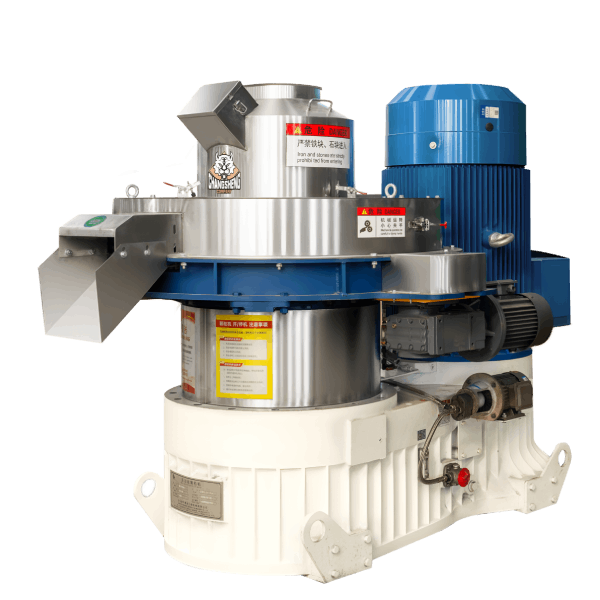
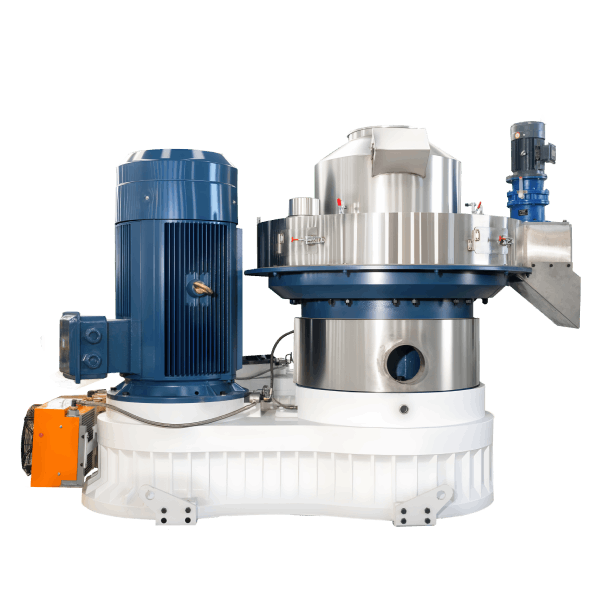
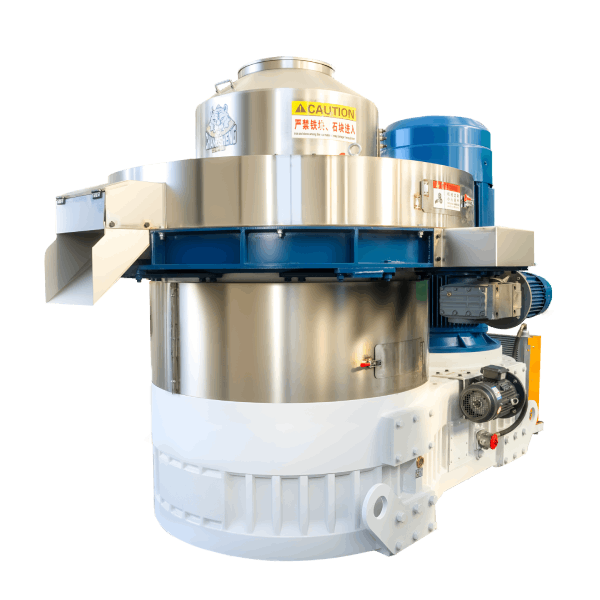
Pellet machine for mixed biomass raw materials
News 2026-02-28
Pellet Machine for Mixed Biomass Raw Materials – Industrial Engineering Guide
Product Definition
A pellet machine for mixed biomass raw materials is an industrial densification system designed to process blended agricultural and forestry residues with varying moisture, ash, and fiber characteristics, converting heterogeneous feedstocks into uniform, high-density fuel pellets through controlled crushing, conditioning, and compression.
Introduction
Unlike single-feedstock pellet production, processing blended biomass—such as wood chips mixed with straw, rice husk, or palm residues—introduces variability in fiber length, lignin content, ash percentage, and moisture stability. A pellet machine for mixed biomass raw materials must therefore be engineered for adaptability, load stability, and material consistency control.
For procurement managers and EPC contractors, system flexibility and long-term operating stability are more critical than nominal output alone.
Technical Parameters and Specifications
The following parameters reflect standard industrial configurations for a pellet machine for mixed biomass raw materials in continuous production:
Production capacity: 2–8 tons/hour per line
Main motor power: 160–355 kW
Die type: Heavy-duty ring die
Pellet diameter: 6–12 mm
Feedstock moisture before pelletizing: 10%–15%
Maximum incoming moisture (before drying): up to 40%
Pellet density: 1.1–1.35 t/m³
Bulk density: 650–750 kg/m³
Energy consumption (pelletizing stage): 85–120 kWh/ton
Recommended particle size after crushing: ≤4 mm
Compression ratio: 1:6–1:9 depending on blend composition
Continuous operation: 20–22 hours/day industrial duty
A pellet machine for mixed biomass raw materials must accommodate fluctuating fiber elasticity and ash content without excessive die wear.
Structure and Material Composition
The system is reinforced to handle heterogeneous materials and variable friction characteristics.
Raw Material Feeding Section
– Variable speed screw feeder
– Buffer silo with level sensors
– Anti-bridging design
Blending and Conditioning Unit
– Horizontal mixer for uniform feedstock blending
– Steam or water conditioning interface (optional)
Pelletizing Chamber
– Alloy steel ring die (HRC 52–58)
– Two or three compression rollers
– Adjustable roller-die clearance
Transmission System
– Industrial-grade motor
– Hardened gear reducer
– Overload protection clutch
Monitoring and Lubrication
– Automatic centralized lubrication
– Bearing temperature sensors
– Vibration detection interface
Frame Structure
– Heavy welded steel base
– Reinforced bearing housings
Durable metallurgy is essential because mixed biomass may contain higher silica or mineral content.
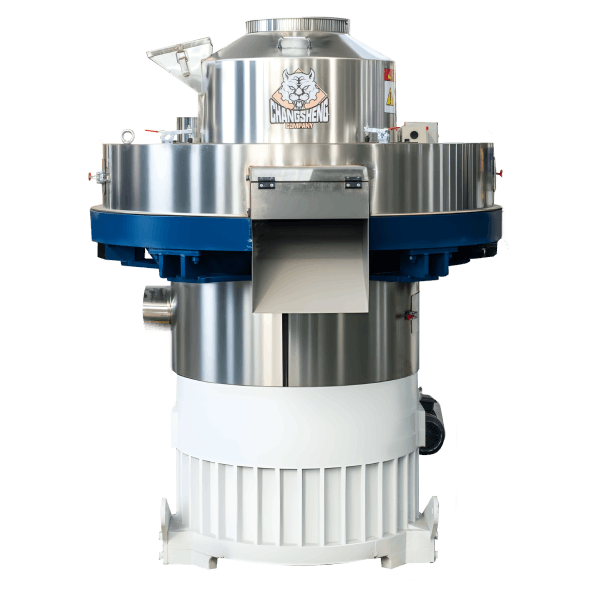
Manufacturing Process (Engineering Workflow)
Step 1: Raw Material Sorting
Separate and classify materials such as wood residues, straw, husks, and agricultural waste.
Step 2: Pre-Crushing
Equipment: Hammer mill
Target particle size: ≤4 mm.
Step 3: Moisture Adjustment
Equipment: Rotary dryer or conditioning mixer
Goal: Uniform 10%–15% moisture before pelletizing.
Step 4: Blending
Equipment: Horizontal ribbon mixer
Purpose: Achieve consistent material ratio to stabilize pellet quality.
Step 5: Pelletizing
Equipment: Pellet machine for mixed biomass raw materials
Control points:
– Stable feed rate
– Controlled die temperature (75–95°C)
– Consistent compression pressure
Step 6: Cooling
Equipment: Counter-flow cooler
Objective: Reduce pellet temperature and internal stress.
Step 7: Screening and Recycling
Fines returned to pelletizing stage.
Industry Comparison
Feedstock Type | Process Complexity | Die Wear | Pellet Stability | Operational Flexibility
Single Wood Sawdust | Low | Low | High | Low
Agricultural Straw Only | Medium | Medium | Medium | Medium
Rice Husk Only | Medium | High | Medium | Medium
Mixed Biomass Blends | High | Medium–High | High (if controlled) | High
A pellet machine for mixed biomass raw materials offers greater raw material flexibility but requires more advanced process control.
Application Scenarios
Distributors
– Supply standardized fuel pellets sourced from diverse regional biomass.
EPC Contractors
– Biomass power plants requiring flexible feedstock intake.
– Waste-to-energy facilities handling seasonal material changes.
Engineering Firms
– Agricultural residue consolidation projects.
– Industrial boiler retrofits using multi-source biomass fuel.
Core Pain Points and Solutions
Problem 1: Inconsistent Pellet Quality
Cause: Variable raw material ratio.
Solution: Install automated blending and real-time moisture monitoring.
Problem 2: Excessive Die Wear
Cause: High silica or mineral content in certain materials.
Solution: Pre-screening and magnetic separation; optimized compression ratio.
Problem 3: Output Instability
Cause: Density variation between components.
Solution: Buffer silo and controlled feeding speed.
Problem 4: High Energy Consumption
Cause: Over-compression or improper moisture balance.
Solution: Maintain uniform 12–14% moisture and correct die ratio.
Problem 5: Dust Generation
Cause: Improper cooling or low lignin binding.
Solution: Optimize conditioning and cooling cycle.
Risk Warnings and Avoidance Strategies
Risk 1: Ignoring Blend Ratio Control
Uncontrolled mixing leads to fluctuating calorific value.
Risk 2: Undersized Crushing System
Large particles create die blockage.
Risk 3: Incorrect Compression Ratio
Improper die selection reduces durability.
Risk 4: Seasonal Moisture Variation
Outdoor storage may alter feedstock characteristics.
Procurement Selection Guide
- Analyze each raw material component for ash, moisture, and fiber length.
- Define blend ratio and seasonal variation plan.
- Calculate required dryer capacity for worst-case moisture scenario.
- Confirm crushing capacity meets maximum throughput.
- Select ring die compression ratio suitable for blended lignin content.
- Verify installed electrical capacity and transformer rating.
- Require supplier to conduct pilot test with mixed sample.
- Evaluate long-term spare parts availability.
Engineering Case Study
Project: Regional Biomass Consolidation Plant, Southeast Asia
Feedstock Mix: 50% wood chips, 30% rice husk, 20% straw
Initial moisture range: 18%–35%
Target capacity: 5 tons/hour
System Configuration:
Pre-crushing → Rotary dryer → Horizontal mixer → Pellet machine for mixed biomass raw materials → Cooler → Screening → Automatic packaging
Operational Data:
Moisture before pelletizing: 13%
Stable output: 4.8–5.2 t/h
Pellet density: 1.22 t/m³
Pellet durability index: >95%
Pelletizing energy consumption: approx. 100 kWh/ton
Result: Stable industrial-grade fuel pellets meeting boiler fuel specifications across seasonal variations.
FAQ
- Can different biomass types be pelletized together?
Yes, with controlled blending and moisture regulation. - Is blending mandatory?
For consistent pellet quality, yes. - What moisture is optimal?
10%–15% before pelletizing. - Does mixed biomass increase die wear?
It can, depending on mineral content. - Is a ring die required?
For industrial scale production, yes. - Can seasonal variation affect output?
Yes, moisture and fiber changes impact performance. - How to control calorific value?
By stabilizing blend ratios. - Is additional conditioning required?
Sometimes, especially for low-lignin blends. - How important is cooling?
Critical for pellet strength and storage stability. - Can this system operate continuously?
Yes, with industrial-duty configuration and proper maintenance.
Call to Action
For engineering evaluation, blend testing, technical layout planning, or a formal quotation for a pellet machine for mixed biomass raw materials, contact our technical team. We provide feasibility analysis, capacity calculation, and commissioning support for industrial biomass projects.
E-E-A-T Author Qualification
This document is prepared by a biomass engineering specialist with over ten years of experience in pellet plant design and EPC implementation, focusing on multi-feedstock industrial systems. Technical references are based on operational industrial standards and practical project data from commercial biomass facilities.