Pellet Machine Electricity Consumption Per Hour Guide
News 2026-02-26
Pellet Machine Electricity Consumption Per Hour: Engineering Analysis for Industrial Biomass Production
Product Definition
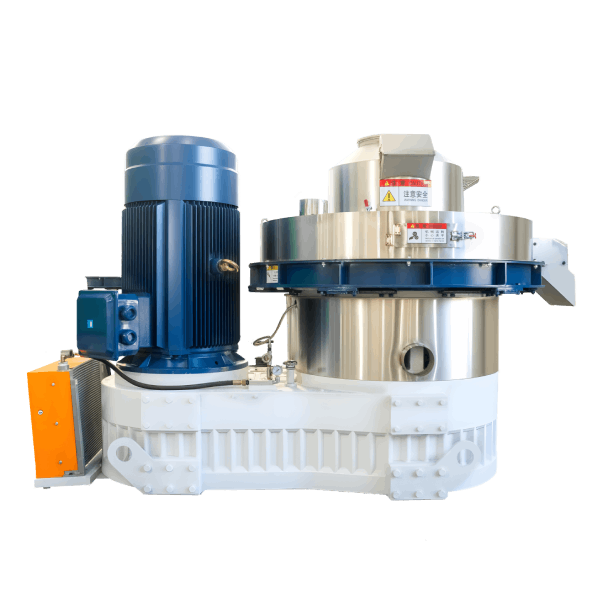
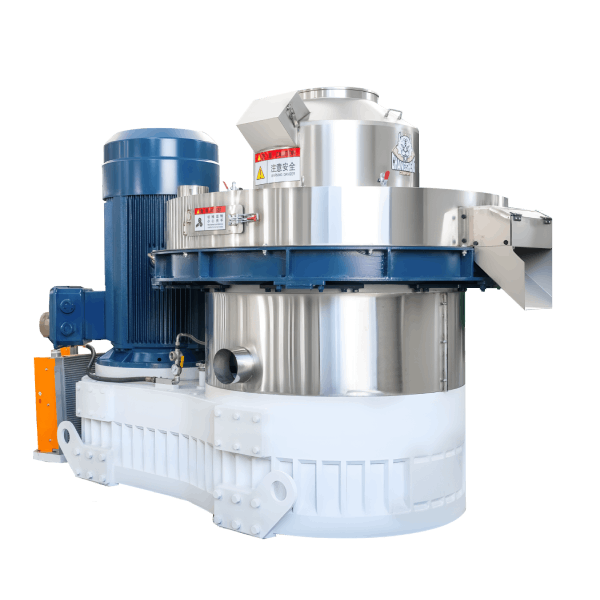
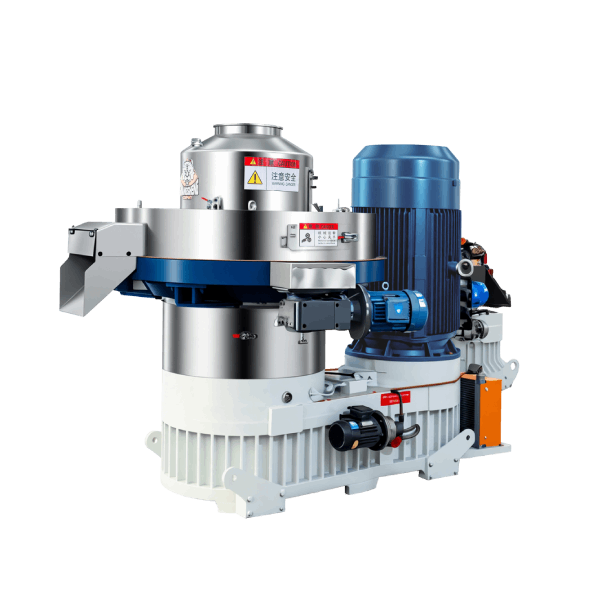
Pellet machine electricity consumption per hour refers to the real-time power usage (kW) required for pelletizing biomass materials under stable operating conditions. It reflects motor load, material characteristics, and process efficiency, serving as a key performance indicator for plant energy management and production cost control.
Introduction
For biomass pellet producers, pellet machine electricity consumption per hour is one of the most critical technical indicators in both plant design and daily operation. Unlike total plant investment, hourly electricity consumption directly affects operating expenditure, grid capacity planning, transformer sizing, and long-term profitability.
In industrial-scale biomass facilities, understanding pellet machine electricity consumption per hour helps procurement managers, EPC contractors, and technical directors accurately forecast energy budgets and evaluate equipment efficiency.
Typical Electricity Consumption Benchmarks
Electricity demand varies by machine size, raw material type, and automation level. Below are realistic industrial benchmarks for ring die pellet mills:
Small Industrial Unit (1–2 t/h)
Main motor: 90–110 kW
Average operating load: 70–85%
Pellet machine electricity consumption per hour: 65–95 kWh
Medium Industrial Unit (3–5 t/h)
Main motor: 160–220 kW
Average operating load: 75–90%
Pellet machine electricity consumption per hour: 140–200 kWh
Large Industrial Unit (6–10 t/h)
Main motor: 250–315 kW
Average operating load: 80–92%
Pellet machine electricity consumption per hour: 220–300 kWh
These values refer only to the pellet mill section. Full plant hourly consumption must also include grinders, conveyors, coolers, and packaging systems.
Technical Parameters and Specifications
Capacity Range
1–10 tons/hour per pellet mill
Main Motor Power
90–315 kW
Feeder Motor
1.5–3 kW
Conditioner Motor
3–7.5 kW
Lubrication System
0.75–1.5 kW
Specific Energy Consumption
75–110 kWh per ton (wood biomass)
60–90 kWh per ton (agricultural biomass)
Voltage
380–480V industrial standard
Frequency
50 Hz or 60 Hz depending on region
These parameters directly determine pellet machine electricity consumption per hour during stable production.
Structure and Material Composition
The electricity profile of a pellet mill depends heavily on its structural configuration.
Main Components Influencing Energy Usage
Drive System
• High-efficiency IE3 or IE4 motor
• Gearbox with hardened alloy gears
• Flexible coupling
Pelletizing Chamber
• Ring die (alloy steel, vacuum heat treated)
• Press rollers with carburized surface
Feeding System
• Variable frequency controlled feeder
• Force feeder for high-fiber material
Lubrication System
• Automatic grease pump
• Oil cooling unit
Control System
• PLC with load monitoring
• Overcurrent protection
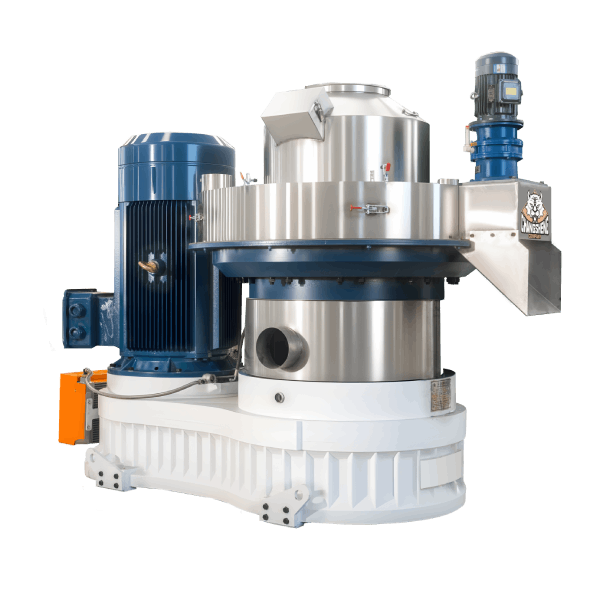
Material selection and machining precision significantly influence mechanical resistance and therefore pellet machine electricity consumption per hour.
Manufacturing Process and Energy Impact
Step 1: Raw Material Preprocessing
Particle size reduced to ≤3 mm. Oversized particles increase motor load.
Step 2: Drying
Moisture adjusted to 10–15%. Excess moisture raises compression resistance.
Step 3: Fine Grinding
Uniform particle distribution reduces die friction.
Step 4: Conditioning
Steam conditioning softens fibers, lowering compression energy demand.
Step 5: Pelletizing
The main contributor to pellet machine electricity consumption per hour. Compression ratio and die hole configuration determine load intensity.
Step 6: Cooling and Screening
Separate motors add auxiliary load, typically 5–15% of total plant power.
Proper process engineering ensures stable power draw without overload spikes.
Industry Comparison
| Equipment Type | Main Motor (kW) | Hourly kWh Usage | Energy Stability | Industrial Suitability |
|---|---|---|---|---|
| Ring Die Pellet Mill | 90–315 | 65–300 | High | Excellent |
| Flat Die Pellet Mill | 22–75 | 20–80 | Medium | Small scale |
| Briquette Press | 45–110 | 40–120 | High | Medium scale |
| Manual Compression | N/A | Low | Unstable | Not industrial |
Ring die systems provide better stability and lower vibration-related energy loss at high capacity, optimizing pellet machine electricity consumption per hour for industrial plants.
Application Scenarios
For Distributors
Evaluate electricity benchmarks when promoting equipment in energy-sensitive markets.
For EPC Contractors
Design transformer capacity and cable sizing based on pellet machine electricity consumption per hour.
For Industrial Developers
Model operating expenditure and forecast annual energy demand.
For Importers
Assess competitiveness in regions with high electricity tariffs.
Core Pain Points and Solutions
- Excessive Power Consumption
Cause: Improper die compression ratio.
Solution: Select die based on raw material fiber density. - Motor Overload and Tripping
Cause: Inconsistent feeding rate.
Solution: Install variable frequency drive for feeder. - Energy Spikes During Startup
Cause: Full-load startup configuration.
Solution: Use soft starter or VFD. - High Friction Due to Poor Grinding
Cause: Uneven particle size distribution.
Solution: Upgrade hammer mill screen and rotor balance.
Each corrective action reduces pellet machine electricity consumption per hour while stabilizing production.
Risk Warnings and Mitigation
Undersized Transformer Risk
Ensure transformer capacity ≥1.3 times maximum connected load.
Grid Voltage Fluctuation
Install voltage stabilizers in unstable regions.
Improper Cable Sizing
Use industrial-grade copper cables based on calculated current load.
Ignoring Auxiliary Equipment Load
Include all motors when calculating pellet machine electricity consumption per hour.
Procurement and Selection Guide
- Define target hourly production capacity.
- Verify motor efficiency rating (IE3 or above recommended).
- Request supplier’s real operating load data.
- Compare specific kWh per ton benchmarks.
- Review gearbox efficiency and transmission losses.
- Confirm compatibility with local voltage and frequency.
- Inspect PLC load monitoring system.
- Conduct material testing before finalizing die configuration.
Engineering Case Example
Project: 5 t/h Wood Pellet Line
Location: Southeast Asia
Main Motor: 220 kW
Measured Average Load: 82%
Recorded Pellet Machine Electricity Consumption Per Hour:
Pellet mill section: 180 kWh
Grinding system: 65 kWh
Cooling and screening: 25 kWh
Total plant: 270 kWh
Electricity tariff: USD 0.095/kWh
Hourly energy cost: USD 25.65
Stable operation achieved after optimizing particle size and moisture control. Power fluctuations reduced by 12% compared to initial trial phase.
FAQ
- What is typical pellet machine electricity consumption per hour?
65–300 kWh depending on machine size. - Does capacity increase power proportionally?
Generally yes, but efficiency improves at scale. - Is IE4 motor necessary?
Recommended for high electricity tariff regions. - How to measure real power usage?
Use calibrated industrial power analyzer. - Does moisture affect electricity consumption?
Yes, high moisture increases compression resistance. - Can VFD reduce power consumption?
Yes, by stabilizing feeding and load balance. - What is safe motor load percentage?
75–90% under stable operation. - Is flat die more energy efficient?
Only at small capacities below 2 t/h. - Does die hole diameter affect power?
Yes, smaller holes increase compression load. - How to reduce hourly consumption?
Optimize grinding, moisture, and compression ratio.
Call to Action
For a detailed energy calculation sheet, load curve analysis, and transformer sizing recommendation, submit your required hourly capacity and raw material data. Technical drawings and power consumption reports are available upon formal engineering inquiry.
Authoritative Industry Statement (E-E-A-T)
This technical guide is prepared by a senior biomass equipment engineer with over 15 years of experience in industrial pellet plant design, commissioning, and energy optimization. Data is based on operational benchmarks from commercial biomass facilities across Asia, Europe, and emerging energy markets, ensuring engineering reliability and procurement-level accuracy.