Pellet machine for factory use not home use Guide
News 2026-02-25
Pellet Machine for Factory Use Not Home Use: Industrial Engineering Guide
Product Definition
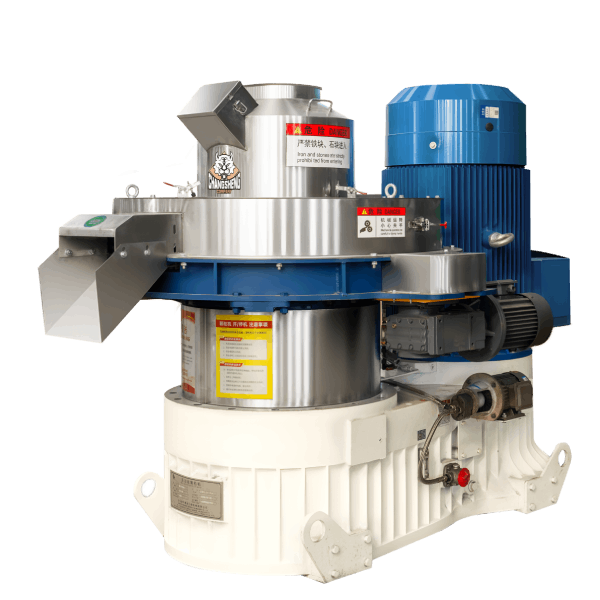
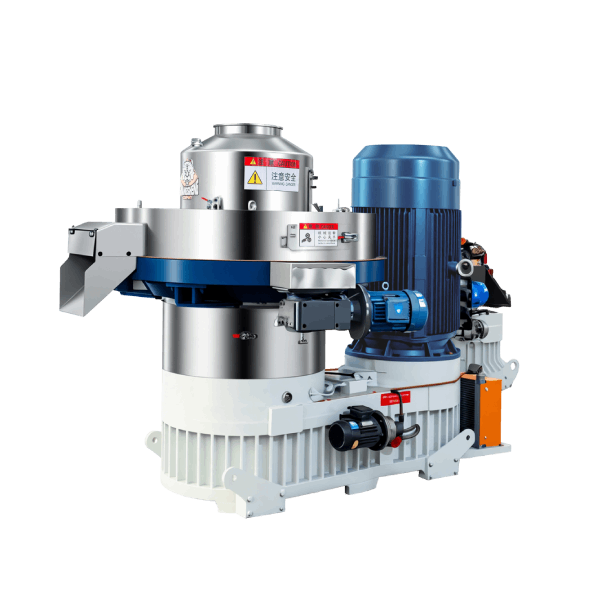
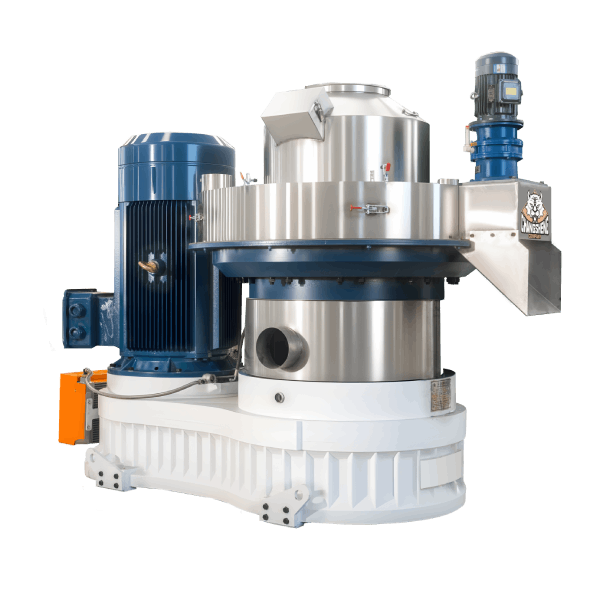
A pellet machine for factory use not home use is a heavy-duty industrial pelletizing system designed for continuous, high-capacity production of biomass or feed pellets in commercial facilities, operating under controlled mechanical, thermal, and load conditions.
Technical Parameters and Specifications
A pellet machine for factory use not home use must meet industrial performance benchmarks rather than household standards. The following parameters are commonly adopted in factory-scale projects:
Production Capacity
- 1–20 tons per hour per single production line
- 8,000 operating hours per year (industrial duty cycle)
Main Motor Power
- 90–315 kW for ring die systems
- Variable frequency drive (VFD) recommended for load stabilization
Ring Die Diameter
- 520 mm / 560 mm / 678 mm typical industrial sizes
Pellet Diameter
- 6–10 mm (biomass fuel standard)
- 3–6 mm (feed applications)
Compression Ratio
- 1:6 to 1:10 depending on raw material density
Moisture Requirement
- 10–15% at pelletizing stage
Electrical Configuration
- 380V / 400V / 415V / 480V, 50–60 Hz (customizable)
Bearing System
- Heavy-duty SKF/FAG class bearings or equivalent
A pellet machine for factory use not home use is engineered for continuous torque load, unlike small flat die units designed for intermittent operation.
Structure and Material Composition
Industrial systems are modular and structurally reinforced. Typical configuration includes:
Main Frame
- Welded Q345B structural steel
- Stress-relieved and precision-machined base
Ring Die Assembly
- Alloy steel 4Cr13 or equivalent
- Vacuum heat-treated for wear resistance
Roller System
- Forged alloy steel rollers
- Automatic lubrication system
Transmission
- High-precision helical gear reducer
- Oil circulation cooling system
Feeding System
- Frequency-controlled screw feeder
- Anti-arching hopper design
Electrical Control
- PLC-based automation
- Overload and temperature protection
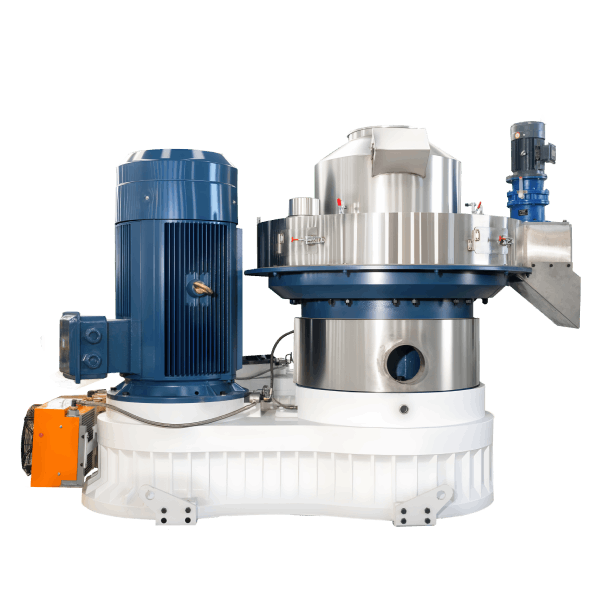
A pellet machine for factory use not home use must prioritize durability, mechanical stability, and maintainability over compactness.
Manufacturing Process: Engineering Workflow
Factory pellet production follows a structured process chain:
- Raw Material Preprocessing
Equipment: Hammer mill, magnetic separator
Process point: Reduce particle size to 3–5 mm; remove metal contaminants - Drying Section
Equipment: Rotary drum dryer
Process point: Moisture adjustment to 12–15% - Pelletizing Stage
Equipment: Pellet machine for factory use not home use
Process point: Controlled compression under stable feed rate - Cooling
Equipment: Counterflow cooler
Process point: Reduce pellet temperature to ambient +5°C - Screening
Equipment: Vibrating sieve
Process point: Remove fines and recycle - Packaging
Equipment: Automatic bagging machine
Process point: 15–1000 kg packaging formats
Each stage is interlocked through PLC control for consistent throughput and quality.
Industry Comparison
| Parameter | Factory Pellet Machine | Home-Use Pellet Machine |
|---|---|---|
| Capacity | 1–20 T/H | 50–200 kg/h |
| Operation Time | 24/7 continuous | Intermittent |
| Motor Power | 90–315 kW | 3–15 kW |
| Die Type | Ring die | Flat die |
| Automation | PLC integrated | Manual control |
| Application | Commercial fuel/feed | Small-scale DIY |
A pellet machine for factory use not home use is suitable for industrial supply chains, while home units serve limited personal production needs.
Application Scenarios
For Distributors
- Bulk pellet fuel production for regional heating markets
- Commercial feed supply contracts
For EPC Contractors
- Biomass power plant pellet preparation lines
- Agricultural waste valorization projects
For Engineering Firms
- Integrated waste-to-energy facilities
- Industrial boiler fuel processing
A pellet machine for factory use not home use is typically integrated into full production lines rather than operating as a standalone unit.
Core Pain Points and Solutions
- Inconsistent Output Capacity
Solution: Install VFD-controlled feeding and load monitoring systems. - Excessive Die Wear
Solution: Use heat-treated alloy dies with optimized compression ratio. - High Energy Consumption
Solution: Select high-efficiency motors and stabilize moisture before pelletizing. - Bearing Failure Under Continuous Load
Solution: Adopt automatic lubrication and temperature monitoring sensors. - Raw Material Variability
Solution: Conduct laboratory compression testing before final equipment configuration.
A pellet machine for factory use not home use must be configured based on raw material characteristics, not generic specifications.
Risk Warnings and Mitigation
- Incorrect compression ratio may cause die blockage.
- Insufficient drying leads to low pellet density.
- Oversized motors increase unnecessary power cost.
- Poor foundation installation causes vibration and bearing damage.
Mitigation includes pre-project feasibility testing, foundation drawings, and commissioning supervision.
Procurement Selection Guide
- Define Annual Output Target
Calculate hourly capacity based on 8,000 annual hours. - Analyze Raw Material Properties
Moisture, fiber length, bulk density. - Determine Electrical Infrastructure
Confirm voltage and transformer capacity. - Evaluate Maintenance Accessibility
Check spare part availability and die replacement time. - Request Load Test Data
Ask for actual operating video under similar material conditions. - Review Engineering References
Verify completed factory installations. - Compare Lifecycle Cost
Assess energy consumption per ton rather than machine price only.
Selecting a pellet machine for factory use not home use requires engineering evaluation, not price comparison alone.
Engineering Case Study
Project Location: Southeast Asia
Application: Palm fiber biomass fuel production
Configuration:
- 2 sets pellet machine for factory use not home use (560 mm ring die)
- 12 T/H total capacity
- 132 kW motors
- Integrated drying and cooling system
Outcome:
- 6–8 mm industrial fuel pellets
- 24-hour continuous operation
- 4-year stable performance with scheduled die replacement
The project demonstrates the importance of raw material testing before final die selection.
FAQ
- What is the minimum industrial capacity?
Typically 1 ton per hour. - Can it run 24 hours continuously?
Yes, with proper cooling and lubrication. - What materials are supported?
Wood chips, sawdust, straw, palm fiber, feed mash. - Is automation necessary?
For factory scale, PLC control is recommended. - How often is die replacement required?
Every 800–1500 hours depending on material. - What is the average power consumption?
70–110 kWh per ton. - Is foundation required?
Yes, reinforced concrete base is necessary. - Can moisture be adjusted internally?
Pre-drying is recommended; pelletizer is not a dryer. - What safety systems are included?
Overload protection and emergency stop systems. - Is training required?
Operator training is recommended for optimal performance.
CTA
For detailed technical drawings, load test reports, or a formal quotation for a pellet machine for factory use not home use, contact our engineering team. Project-specific configuration and feasibility assessment are available upon request.
E-E-A-T Author Statement
This article was prepared by an industrial biomass equipment engineering team with over 15 years of experience in pellet production line design, factory installation, and international EPC project execution. All parameters reflect common industrial standards and operational data from commercial installations.