Pellet production line machine list and function: Technical Guide
News 2026-02-11
Product Definition
A pellet production line machine list and function describes the complete set of industrial equipment used to convert raw biomass or feed materials into standardized pellets, defining each machine’s technical role, operating parameters, and integration within a continuous, engineered pellet manufacturing system.
Why a Clear Pellet Production Line Machine List Matters
For industrial buyers, the pellet production line machine list and function is not a catalog—it is a process control document. Each machine determines throughput stability, energy consumption, maintenance cost, and final pellet quality.
Incomplete or misconfigured machine lists are a primary cause of:
• Underperforming capacity
• Excessive operating cost
• Commissioning delays
• Long-term reliability issues
Technical Parameters and Specifications (System-Level)
Typical industrial pellet production lines are designed around the following baseline parameters:
Designed capacity
• 1–3 t/h (small commercial)
• 5–6 t/h (standard industrial)
• 8–12 t/h (large industrial)
Raw material moisture
• Incoming: 20–35%
• Before pelletizing: ≤12%
Pellet specifications
• Diameter: 3–5 mm (feed), 6–10 mm (fuel)
• Bulk density: ≥600 kg/m³ (fuel pellets)
Specific energy consumption
• Electricity: 90–150 kWh/ton
• Thermal (drying): 0.8–1.6 GJ/ton
Operating mode
• Continuous, 16–24 h/day
• Annual utilization: 6,000–7,500 hours
Pellet Production Line Machine List and Functions
Below is the standard pellet production line machine list and function, presented in process order.
Raw Material Receiving and Storage
• Equipment: Storage silo, belt conveyor, screw conveyor
• Function: Buffer raw material supply and stabilize feed rate
Primary Size Reduction
• Equipment: Hammer mill
• Function: Reduce raw material to ≤5 mm particle size for uniform pelletizing
Drying System
• Equipment: Rotary drum dryer, hot air furnace, cyclone, bag filter
• Function: Reduce moisture to target range while controlling thermal efficiency
Fine Grinding (Optional)
• Equipment: Secondary hammer mill
• Function: Improve pellet density and die performance for difficult materials
Conditioning and Pelletizing
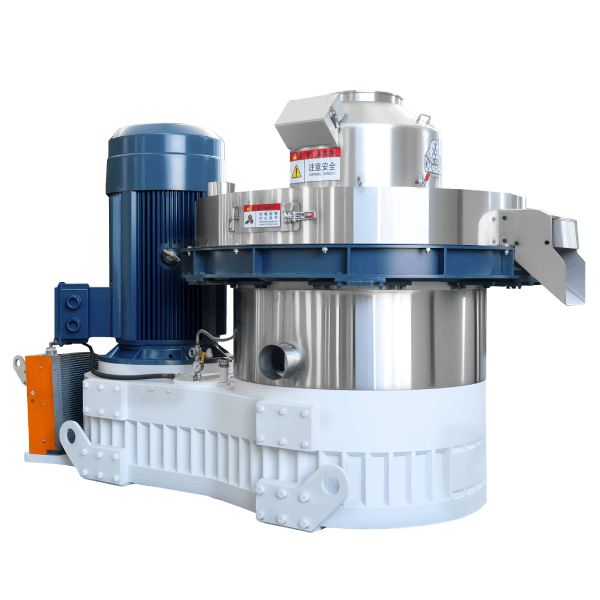
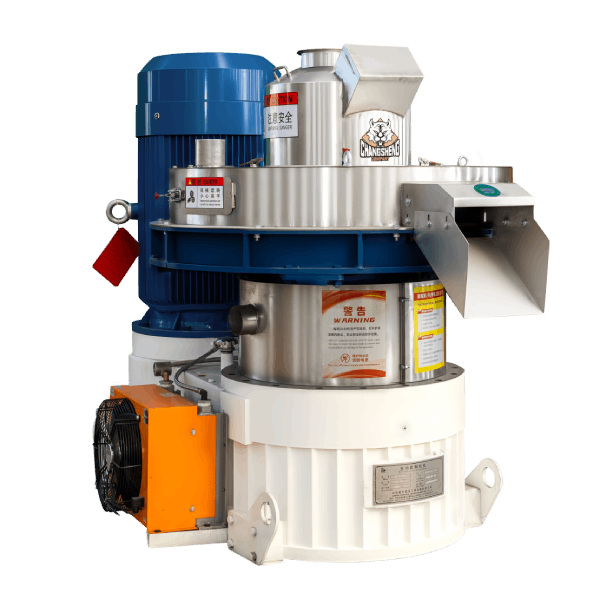
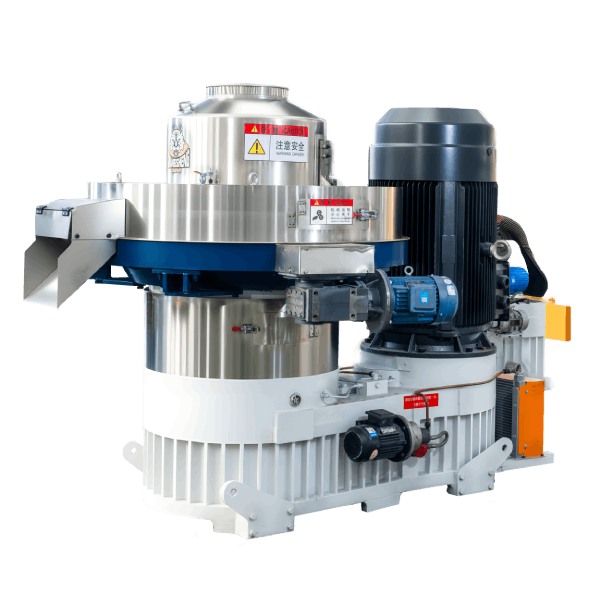
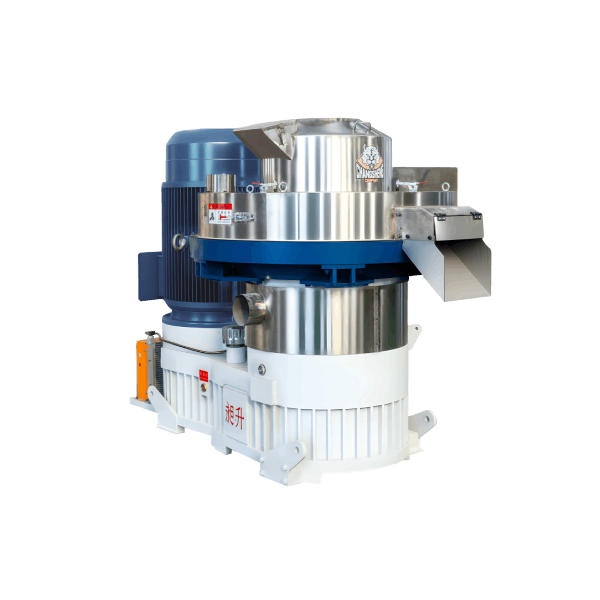
• Equipment: Ring die pellet mill
• Function: Compress conditioned material into dense pellets under pressure
Cooling System
• Equipment: Counterflow pellet cooler
• Function: Reduce pellet temperature and stabilize structure
Screening and Recycling
• Equipment: Vibrating screen
• Function: Separate fines and recycle them back to pelletizing
Packaging or Bulk Handling
• Equipment: Automatic bagging machine, palletizer, bulk silo
• Function: Prepare finished pellets for logistics or storage
Electrical and Control System
• Equipment: PLC cabinet, VFD drives
• Function: Coordinate process flow, safety, and automation
Structure and Material Composition
High-quality pellet production line machines are typically constructed using:
Structural Framework
• Carbon steel frames with anti-corrosion coating
Wear Components
• Forged alloy steel hammer mill hammers
• Hardened steel pellet dies and rollers
Thermal Components
• Heat-resistant steel dryer shells
• Insulated hot air ducts
Filtration and Safety
• Industrial fabric filter bags
• Explosion relief panels (where required)
Material selection directly affects wear rate, spare parts cost, and uptime.
Manufacturing Process (Engineering Workflow)
Step 1: Material Feeding
Controlled conveying ensures stable load on downstream machines.
Step 2: Crushing
Proper hammer mill sizing avoids excessive power draw.
Step 3: Drying
Dryer evaporation capacity is calculated based on moisture differential, not throughput alone.
Step 4: Pelletizing
Die compression ratio is matched to raw material fiber structure.
Step 5: Cooling
Counterflow cooling prevents pellet cracking and fines.
Step 6: Screening and Packaging
Yield optimization minimizes product loss and rework.
Industry Comparison (Process Integration Level)
| Production System | Machine Integration | Automation | Operating Stability |
|---|---|---|---|
| Integrated Pellet Line | High | High | Strong |
| Semi-Manual Line | Medium | Low | Medium |
| Discrete Machines | Low | Low | Weak |
| Mobile Pellet Units | Very Low | Very Low | Poor |
A complete, engineered pellet production line machine list ensures predictable industrial performance.
Application Scenarios
Distributors and Importers
• Long-term pellet supply contracts
• Export-oriented fuel pellet operations
EPC Contractors
• Biomass energy projects
• Industrial fuel conversion systems
Engineering Firms
• Waste-to-energy feasibility studies
• Industrial decarbonization projects
Core Pain Points and Solutions
Pain Point 1: Missing or Undersized Machines
Solution: Validate machine list against material properties and capacity target.
Pain Point 2: Excessive Energy Consumption
Solution: Optimize dryer and pellet mill matching.
Pain Point 3: High Wear and Maintenance Cost
Solution: Specify alloy steel wear parts and standardized components.
Pain Point 4: Low Automation Level
Solution: Integrate PLC-based control and automatic feeding.
Risk Warnings and Mitigation Advice
Omitting dust collection increases fire and explosion risk.
Improper dryer sizing causes unstable moisture and pellet quality.
Overloaded pellet mills reduce die life and raise cost per ton.
Lack of spare parts planning leads to prolonged downtime.
Procurement and Selection Guide
- Define raw material type and moisture range
- Specify target pellet size and application
- Match machine capacity to continuous output, not peak rating
- Request full machine list with power and material specs
- Evaluate lifecycle cost, not just purchase price
- Verify reference projects with similar configurations
- Confirm commissioning and training scope
Engineering Case Example
A 6 t/h wood pellet plant implemented a fully integrated machine list including rotary drying, ring die pelletizing, and automated bagging. After commissioning, the plant achieved stable output within 25 days and reduced unplanned downtime by approximately 15% compared to a previous semi-manual setup.
FAQ
- Is the machine list the same for feed and fuel pellets?
No, conditioning and pelletizing requirements differ. - Which machine consumes the most energy?
The drying system typically dominates energy use. - Is a secondary grinder always required?
Only for hard or fibrous materials. - Can machines be sourced from different suppliers?
Yes, but integration risk increases. - What is the most critical machine?
The pellet mill and dryer together define system performance. - How long does installation take?
Typically 2–4 months depending on scale. - Is automation optional?
Technically yes, economically not recommended. - What determines pellet quality most?
Moisture control and die configuration. - Are mobile pellet lines suitable for industry?
Generally no, due to stability limitations. - Should spare parts be ordered with the line?
Yes, especially for wear components.
CTA
To obtain a project-specific pellet production line machine list and function analysis, request detailed equipment configuration, process flow diagrams, and technical documentation from an experienced pellet production system supplier.
E-E-A-T Author Credentials
This article is written by an industrial pellet production systems engineer with more than 12 years of experience in pellet line design, equipment integration, EPC project execution, and lifecycle optimization for commercial and industrial pellet plants worldwide.