Material Builds Up Around Rollers: Causes, Diagnosis and Prevention
News 2026-11-13
Material building up around the rollers is usually a sign that the rollers are not drawing material in evenly, not that the mill has failed. The cause is normally one of three things: the roller gap is wrong or uneven, the scraper or deflector is worn or misaligned, or the material is too wet, too fine or too oily to be gripped cleanly.
The fastest way to narrow it down is to look at where the buildup sits. Buildup in front of the rollers, at the side of the rollers, and between the rollers and the die have different causes and different fixes. This article covers how to tell normal feed-layer buildup from a real fault, how to diagnose by position, how ring die and flat die machines differ, what buildup does to the machine, how to clear it safely, and what to confirm when buying equipment.
Normal Buildup vs a Real Fault
Some material always sits in front of the rollers. That is the feed layer the rollers draw from. It becomes a problem only when it stops moving.
Normal buildup:
- A shallow, moving layer of material in front of each roller
- Material is continuously drawn in and replaced
- Roller and die load are stable
- Pellet quality is consistent
Abnormal buildup:
- Material cakes or hardens in front of or beside the rollers
- The layer stops moving and material backs up toward the inlet
- Roller and die load become uneven or drop
- Pellets become soft, cracked or inconsistent
- The buildup grows over a shift instead of staying level
If the layer moves and output is stable, it is normal. If it stops moving and output or quality drops, it is a fault.
Diagnosing by Position
The position of the buildup is the fastest way to narrow the cause.
Buildup in front of the rollers
Material collects in front of the rollers and is not drawn into the gap. Typical causes:
- Roller gap too large, so the roller cannot grip the material
- Material too wet or too sticky to be drawn in
- Material too fine, so it packs instead of flowing
- Feed rate too high for the die to consume, so material backs up
On the machine, gap-too-large usually shows as a loose, powdery heap in front of the roller, thin or soft pellet sheets, and a main motor load that sits lower than normal. That combination points to the gap before it points to the material.
Buildup at the side of the rollers
Material packs between the roller edge and the die or housing. Typical causes:
- Scraper or deflector worn, bent, misaligned or missing, so material is not directed into the pressing zone
- Roller not seated correctly or roller shaft worn, allowing the roller to sit off-center
- Uneven feed distribution across the die surface
Side buildup on a multi-roller machine that appears on only one roller is a strong signal of a seating or scraper problem on that station, not of a material problem affecting the whole die.
Buildup between the rollers and the die
Material is pressed but not forced through the die holes, so it packs around the roller contact area. Typical causes:
- Die holes blocked or worn, so open area is reduced
- Material too wet, so it compresses but does not extrude
- Roller gap too small, so material is over-compacted and load rises without matching output
- Die and roller configuration mismatched, for example a die with too little open area for the material
Gap-too-small shows differently from gap-too-large. Expect a hard, dense cake between roller and die, main motor current noticeably higher than the normal value for that material, and pellets that are dark or over-compressed. If current is high and output is not rising with it, the gap is a likely cause.
What Causes It: Material, Adjustment or Wear
Material condition
Moisture is the most common material cause. Wet material becomes sticky and is not drawn into the gap cleanly. Very fine material packs and bridges instead of flowing. Material with high oil or fat content can become slippery and resist being gripped by the rollers.
The acceptable moisture range depends on the material and the die. It is not a single number. Material that ran well last month can build up this month if the batch changed. Where the cause is not obvious, a material test through the actual die is more reliable than adjusting the machine by trial.
Roller gap and roller condition
The roller gap controls how much material the roller can grip and compress. Set it too large and material is not drawn in; set it too small and material is over-compacted and load rises without a matching output gain. The correct gap depends on the die, the material and the target pellet quality, and it should be set according to the manufacturer’s procedure, not by feel.
Worn roller surfaces, flat spots or a worn roller shaft change how the roller contacts the die and how it draws material. A roller that no longer sits correctly will always build up material on one side, regardless of gap setting.
Scraper and deflector
The scraper or deflector directs material from the feed inlet into the pressing zone. If it is worn, bent, misaligned or missing, material is not guided correctly and accumulates at the side of the rollers or in dead zones. This is a common and often overlooked cause of side buildup, and it is cheap to correct compared with a die or roller change.
Feed rate and distribution
If the feeder delivers more material than the die can consume, material backs up in front of the rollers. If feed is uneven across the die surface, some rollers build up while others run light. Feed rate should be matched to the die’s capacity for the current material, and distribution should be checked across the full die width.
Startup and cold-die conditions
Buildup that appears at startup, before the die has warmed, is usually a different problem from buildup that develops mid-shift. A cold die accepts material poorly, so material can pack in front of the rollers until the die reaches working temperature. If startup buildup clears once the die warms and load stabilizes, the cause is temperature, not gap or material. If it persists after warm-up, treat it as a normal fault and work through the position-based diagnosis above.
Ring Die and Flat Die Differences
The position logic applies to both machine types, but the hardware around the rollers differs.
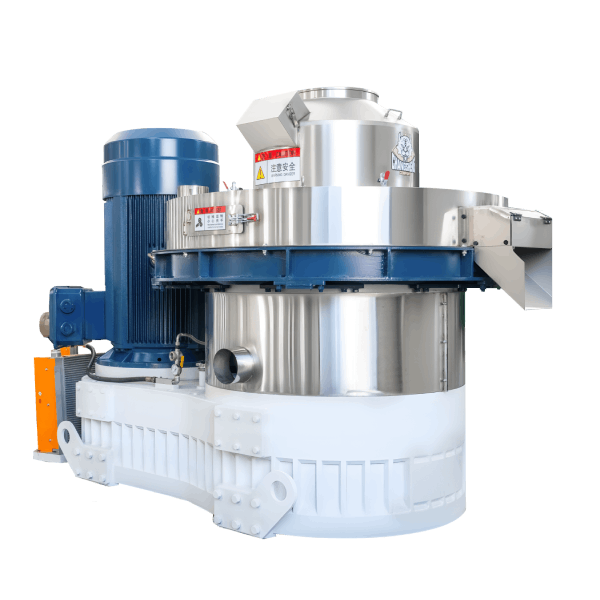
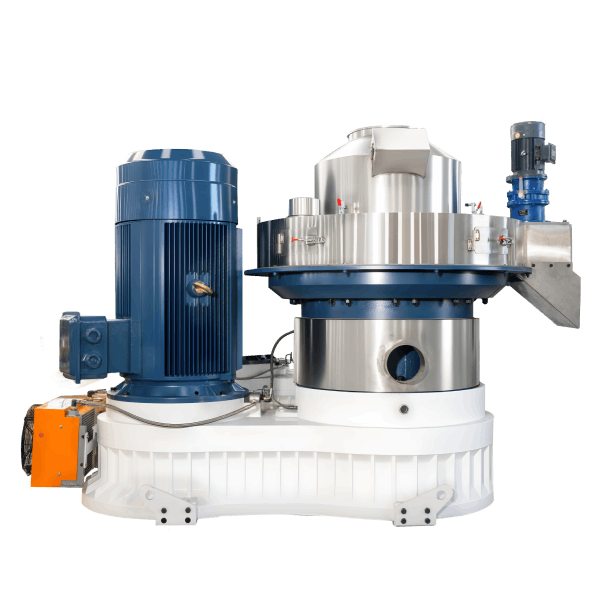
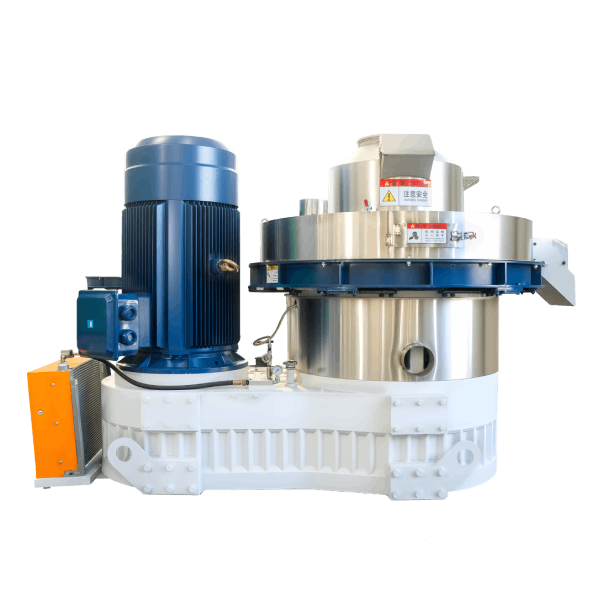
On a ring die mill, material is fed to the inside of the die and distributed across the roller stations as the die rotates. Side buildup is commonly linked to the scraper or deflector and to feed distribution around the die circumference.
On a flat die mill, material sits above the die and is drawn down between the rollers and the die plate. Feed distribution and the condition of the levelling or guide components have a stronger influence on where material accumulates, and buildup tends to appear in the same sector of the die if the feed is not spread evenly.
Multi-roller configurations in either type make the one-sided buildup signal more useful. When only one roller station builds up, the cause is local to that station, not a general material or feed-rate problem.
What Buildup Does to the Machine
Not all buildup damages equipment, but some does. Knowing the difference decides whether you can finish the shift or must stop.
- A moving feed layer in front of the rollers is normal and does not damage anything.
- Hardened side buildup can score the die working surface and wear the roller edges. A scored die surface draws material less evenly afterward, which makes further buildup more likely.
- Material packed between roller and die increases load on the roller shaft and bearings, and can cause overheating.
- Running with uneven buildup causes uneven die wear, which shortens die life.
- Forcing a mill to run with heavy buildup can damage the roller assembly and, in severe cases, the main shaft.
If buildup is hardening, growing or causing uneven load, stop and correct it before continuing.
How to Clear Buildup Safely
Before clearing:
- Stop the feeder and the main mill motor. Never clear buildup with the mill running.
- Isolate and lock out the drives and confirm zero energy before opening the die chamber.
- Expect the die and rollers to be hot after running. Allow cooling time and use suitable gloves.
- Use non-sparking tools where dust is present.
Clearing procedure:
- Open the die chamber access according to the manufacturer’s procedure.
- Remove loose material first, then work on hardened buildup from the outer edge inward. Do not pry against the die working surface or the roller face. A scored die surface changes how material is drawn in and makes future buildup more likely, so protect it during cleaning.
- Inspect the roller gap after clearing. Reset it to the correct setting before restarting.
- Inspect the scraper or deflector for wear, bending or misalignment, and correct or replace it.
- Check the die holes in the buildup area for blockage or wear. Clear blocked holes with the correct tool, not by forcing material through.
- Restart in sequence: start the mill, confirm normal no-load condition, then start the feeder at reduced rate and raise it gradually while watching load and observing the roller area.
Prevention: What to Control Day to Day
- Control material moisture before it reaches the mill, and verify it whenever raw material batches change.
- Keep the roller gap set to the manufacturer’s procedure for the current die and material, and check it after any die or roller change.
- Inspect the scraper and deflector regularly for wear and alignment, and replace worn parts before they cause side buildup.
- Match feed rate to the die’s capacity for the current material, and check feed distribution across the die width.
- Monitor roller and die load for uneven trends, which often appear before visible buildup.
- Follow the correct warm-up sequence at startup so cold-die packing is not mistaken for a fault.
- Clean the die chamber at defined intervals rather than only when output drops.
What to Confirm When Buying or Upgrading
Roller area performance is partly a purchasing decision. When evaluating a pellet mill or a complete line, confirm:
- The roller gap adjustment method is clear, repeatable and accessible without dismantling the die chamber.
- The scraper or deflector design suits the intended material and is easy to inspect and replace.
- The roller and die configuration, including roller count, suits the material’s bulk density and required throughput, not only the rated output.
- Roller and die wear parts are available and reasonably priced, since buildup and uneven wear increase consumption.
- Acceptance testing includes running the mill with your material or a representative sample, and checking the roller area for buildup at the intended feed rate.
A roller and die configuration matched to the material reduces buildup far more effectively than any adjustment made after the problem appears.