Pellet Mill Roller Adjustment: Gap Setting, Symptoms and Checks
News 2026-11-04
Roller adjustment is the maintenance task that most directly controls whether a pellet mill runs steadily or fights the operator all shift. The gap between the rollers and the die decides how much material is pressed into the holes, how much load the main motor carries, how evenly the die wears, and how consistent the pellet quality is around the die face. A mill with a correct gap runs at a steady current and a stable die temperature; a mill with a wrong gap either slips and blinds the die or overloads and overheats.
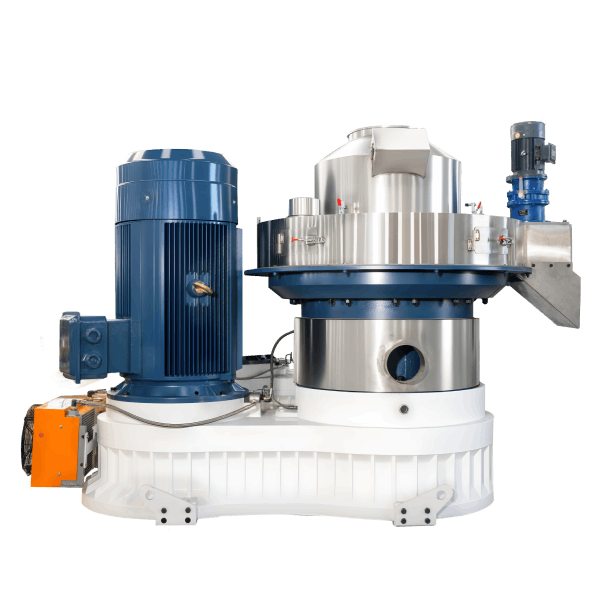
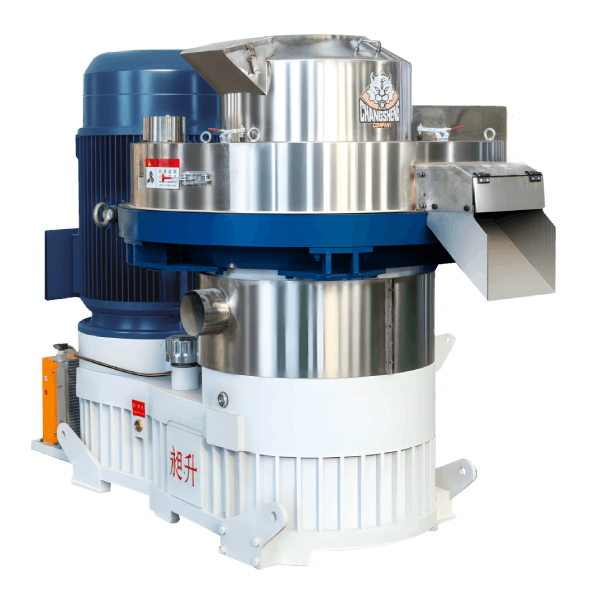
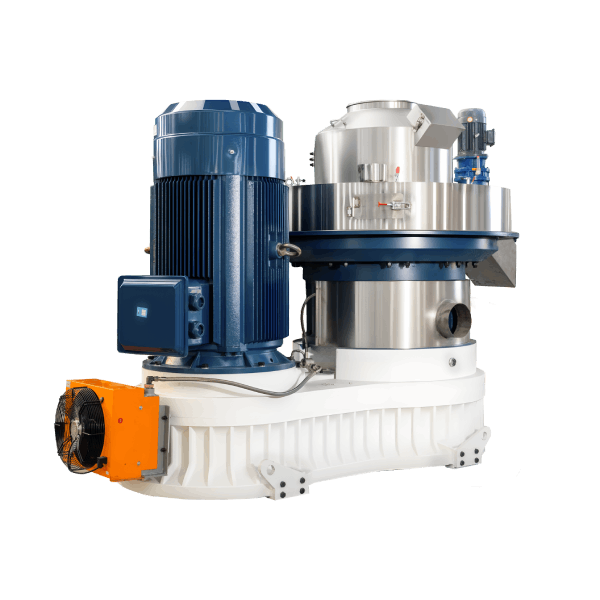
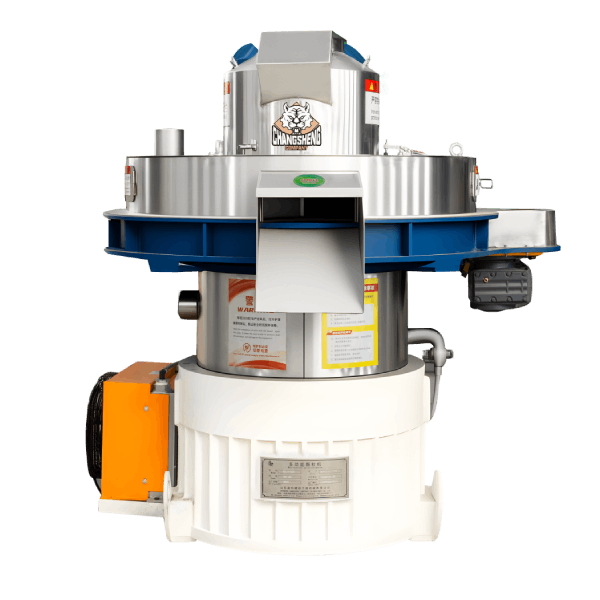
This page covers roller adjustment on an industrial ring die pellet mill: what the gap does, how to measure and set it on every roller, how to read the symptoms of a gap that is too wide or too tight, when the problem is wear rather than adjustment, and what to check after the adjustment. Shandong Changsheng Machinery supplies ring die pellet mills and roller assemblies, and the guidance below reflects how these machines are maintained in service. It is written for the maintenance technician and for the operator who has to decide whether the mill needs an adjustment or a stop.
The short answer
Roller adjustment sets the clearance between each roller and the die. The gap should be set to the manufacturer’s specification for the material and the die, and it should be measured and set on every roller, because a single roller that is set differently will wear the die unevenly and produce a pellet quality that varies around the die face.
The practical rule: measure the gap along the full width of each roller with the specified gauge or method, set it cold, check every roller and record the values, run the mill and read the current and the die temperature against the previous good run, and adjust again only if the running behaviour shows the gap is wrong for the material. If the gap cannot be held because the roller or the die is worn, replace the worn part rather than tightening the adjustment.
What the roller gap does
The gap is the distance between the roller surface and the die surface. The roller presses the material into the die holes as the die turns, and the size of the gap determines how much material is trapped and compressed. A smaller gap traps more material and presses it harder; a larger gap lets material pass without being pressed firmly into the holes.
The gap also controls the load. A smaller gap raises the pressure and the friction between the roller, the material, and the die, which raises the current and the die temperature. A larger gap lowers the load but reduces the compression and the pellet quality.
The gap should not be confused with the die compression ratio. The compression ratio is a property of the die and is set when the die is made; the roller gap is an operating setting that the technician adjusts. Both affect the pressure on the material, but only the roller gap can be changed on the running machine.
Preparing to adjust the rollers
The adjustment should be made with the mill stopped and locked out, and with the die cleared of material from the last run so that the gap can be measured against the die surface rather than against set material.
The adjustment mechanism, the gauge or the method specified by the manufacturer, and the tools should be on hand before the work starts. The specification for the gap should be taken from the manufacturer’s manual for the material and the die, not from a general figure, because the correct gap depends on the die specification and the material.
How the gap is measured
The gap is normally measured with a feeler gauge or by pressing lead wire between the roller and the die and measuring the compressed wire, depending on the method the manufacturer specifies for the machine. Either method measures the clearance at a point, so it has to be repeated at several positions along the width of the roller rather than at a single point in the middle.
The reason for measuring at several points is that the roller and the die surface are not perfectly parallel in service, and a gap that is correct at one end of the roller can be too tight or too wide at the other. The setting is judged on the tightest point along the roller, because the tightest point is the one that carries the load and controls the compression, and the other points follow from it.
The measured values for each roller, and the position at which each measurement was taken, should be recorded, because the record is what makes the next adjustment comparable.
Setting the gap on every roller
The gap is set roller by roller. For each roller, the adjustment mechanism is used to bring the roller towards the die until the specified gauge fits at the tightest point along the roller, or until the method specified by the manufacturer indicates the correct clearance. The adjustment is then locked, and the roller is measured again after locking, because tightening the lock can move the setting.
The same procedure is repeated on every roller. The check is not complete until each roller has been measured and recorded, because a single roller set differently from the others will carry more load, wear faster, and produce a band of poor-quality pellet on the part of the die it works.
Symptoms of a gap that is too wide
A gap that is too wide shows up as slipping rather than pressing. The material passes under the roller without being forced into the holes, the die temperature falls, and the current drops. Pellets come out soft, with a rough surface and a high fines content, and the die can blind over because the holes are not being filled.
The operator often responds to these symptoms by increasing the feed, which raises the load without raising the compression, and the mill ends up running hot and producing poor pellets at a higher current than it should. The correct response is to check the gap rather than to increase the feed.
Symptoms of a gap that is too tight
A gap that is too tight raises the load sharply. The current rises above the range recorded on the previous good run on this material, the die temperature climbs, and the mill can stall or trip on overload. The rollers and the die wear faster, and the pellet can come out scorched or discoloured where the material has been overheated at the die face.
The operator often responds by reducing the feed, which lowers the current but also lowers the die temperature, and the mill ends up running below its capacity with an unstable temperature. The correct response is to check the gap and reset it to the specification rather than to compensate with the feed.
How to read the running behaviour
The gap is set cold, but its effect is read hot. After the adjustment, the mill should be run at the normal feed and moisture, and the current and the die temperature should be compared with the values recorded on the previous good run on the same material.
A current and temperature that sit close to the recorded values indicate that the gap is correct for the material. A current that is higher and a temperature that is higher indicate that the gap is too tight, or that the die or the rollers have worn. A current that is lower and a temperature that is lower indicate that the gap is too wide, or that the feed or the moisture has changed.
The two combinations that are most often misread are the ones where the current and the temperature move in different directions. A high current with a falling die temperature usually indicates that the material is slipping under the rollers, which happens when the feed is too high for the die or when the moisture is too high for the die to grip the material. A high current with a rising die temperature usually indicates a gap that is too tight or a partial blockage in the die. The direction of the temperature tells the operator which of the two to check first.
The reading is only meaningful if the material and the moisture are the same as on the previous run. If the material has changed, the comparison should be made against a run on the new material, not against the old record.
When the problem is wear, not adjustment
Roller adjustment cannot compensate for worn parts. A roller with a worn surface, a roller bearing that does not turn freely, or a die with worn or blocked holes will not hold a correct gap, and tightening the adjustment to compensate simply raises the load without restoring the compression.
The signs that the problem is wear rather than adjustment are a gap that will not hold after setting, a roller that turns unevenly or with noise, visible flat spots or grooves on the roller surface, and a die with holes that are worn unevenly or that have to be reamed repeatedly. In those cases the worn part should be replaced, and the adjustment reset on the new part.
A new roller or a new die should be checked again after the first few hours of running, because the parts settle under the initial load and the gap can change from the value set on the bench. The interval for that first check should follow the manufacturer’s recommendation.
Checks after the adjustment
After the adjustment, the following should be confirmed. Every roller has been measured at several points along its width, and the values have been recorded against the specification. The adjustment locks are tight and the setting has not moved after locking. The guards are refitted and the lock-out has been removed by the person who applied it. The lubrication has been restored. The die has been loaded and the mill has been run at the normal feed and moisture, and the current and the die temperature have been compared with the previous good run.
The record of the gap setting and the running values should be kept, because it is the baseline for judging the next adjustment and for deciding when a roller or a die has reached the end of its life.
Common mistakes in roller adjustment
Setting the gap on one roller and assuming the others are the same. The die wears unevenly and the pellet quality varies around the die face.
Measuring at a single point in the middle of the roller. The measurement misses the tightest point along the roller, and the setting is too loose or too tight in service.
Setting the gap with material in the die. The measurement is taken against set material rather than the die surface, and the gap is wrong.
Tightening the adjustment to compensate for a worn roller. The load rises without the compression being restored, and the die and the roller wear faster.
Judging the gap from the current alone without checking the die temperature. The direction of the temperature change distinguishes a slipping feed from a tight gap, and without it the operator adjusts the wrong thing.
Changing the gap and the feed at the same time. The effect of each change cannot be separated, and the next adjustment is made blind.
These mistakes have the same root: treating the gap as a setting to be estimated from the sound of the mill, rather than as a measured clearance that is set to a specification and read against a record. Once the gap is measured, recorded, and compared with the previous run, most of these mistakes stop happening.
Bottom line
Roller adjustment sets the clearance between each roller and the die, and it should be measured along the width of every roller and set to the manufacturer’s specification for the material and the die. Set the gap cold with the specified gauge or method, record the values for every roller, run the mill at the normal feed and moisture, and compare the current and the die temperature with the previous good run. A high current with a high temperature indicates a gap that is too tight; a low current with a low temperature indicates a gap that is too wide; and a high current with a falling temperature indicates a feed or a moisture problem rather than a gap problem. If the gap will not hold after setting, the problem is wear in the roller or the die, and the worn part should be replaced rather than compensated for with the adjustment. Re-check a new roller or a new die after the first hours of running, and keep the record of the gap and the running values, because it is the baseline for the next adjustment.
If you are commissioning a ring die pellet mill or resolving a roller gap problem on a running line, send the material type, the die specification, the pellet diameter, and the current and temperature readings you are seeing, and the Shandong Changsheng Machinery team can review the roller adjustment and the die specification for that configuration.