Pellet Mill Conveyor Belt Feeder 0.5-5t/h | Feeding System Guide
News 2026-06-24
Product Definition
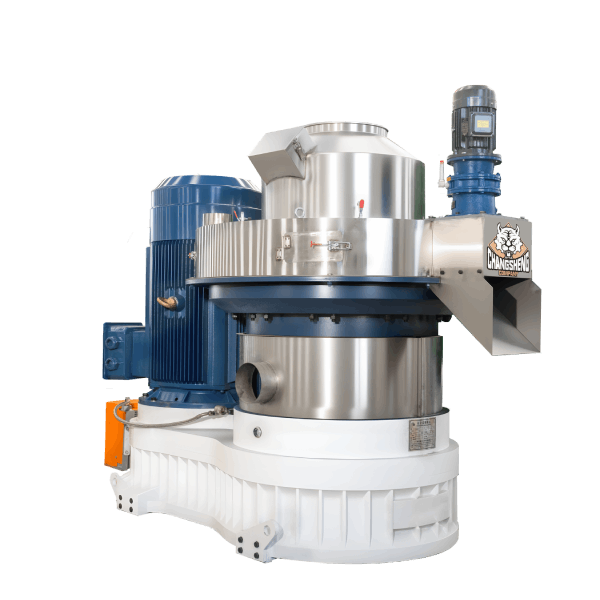
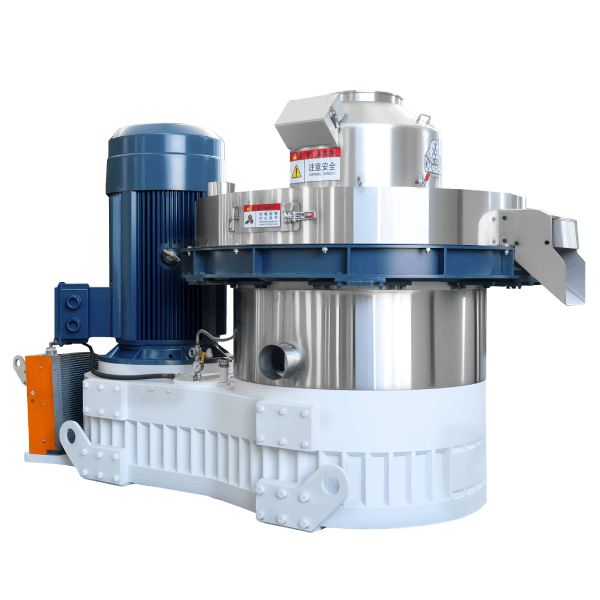
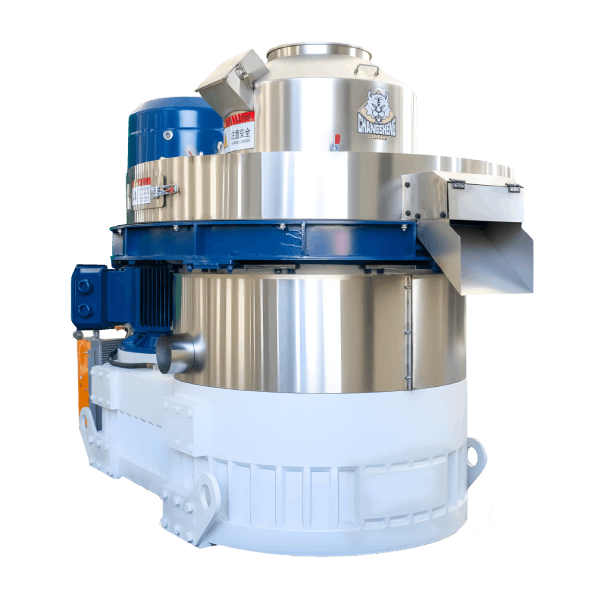
A pellet mill conveyor belt feeder is a controlled feeding system that delivers conditioned mash or biomass material from storage to the pellet mill inlet at a regulated, adjustable rate. The belt feeder ensures consistent material flow to the pelletising chamber, preventing overfeeding or starvation that causes production variability and equipment stress.
Technical Specifications & Performance Parameters
| Parameter | Value Range / Specification |
|---|---|
| Feeding capacity | 0.5 – 5.0 t/h (feedstock-dependent) |
| Belt width | 300 – 800 mm |
| Belt length (centre-to-centre) | 1,500 – 4,000 mm |
| Belt speed | 0.1 – 1.0 m/s (variable via VFD) |
| Drive motor power | 0.75 – 4.0 kW (IE3) |
| Inlet hopper capacity | 0.5 – 2.0 m³ |
| Material temperature (max) | 95°C (for hot conditioned mash) |
| Belt material | Food-grade rubber or PVC (EPDM for high temperature) |
| Frame material | Mild steel (painted) or stainless steel (food-grade) |
| Accuracy | ±3% of set feed rate |
| Control interface | 4–20mA or MODBUS RTU |
Pellet Mill Compatibility
| Parameter | Value |
|---|---|
| Compatible pellet mill power | 30 – 160 kW |
| Compatible throughput | 0.5 – 5.0 t/h |
| Material type | Mash, meal, conditioned feed, biomass |
Structural Composition & Material Selection
The pellet mill conveyor belt feeder integrates four functional subsystems with defined material grades:
Mechanical System
- Belt: Rubber/PVC with fabric reinforcement – food-grade (FDA compliant) or standard grade
- Head and tail pulleys: Steel with rubber lagging for traction
- Idler rollers: Steel or plastic, self-aligning or fixed
- Drive system: Gearmotor with VFD for speed control
- Belt scraper: Polyurethane blade at discharge end
Hopper & Flow Control
- Feed hopper: Steel plate (3–6mm) with flow-promoting design
- Level sensor: Capacitance or ultrasonic for hopper level control
- Agitator: Optional slow-speed paddle to prevent material bridging
Support System
- Frame: Welded structural steel with adjustable feet
- Guarding: Perforated steel panels at drive and tail ends (EN 953 compliant)
Control System
- PLC integration: Speed control via 4–20mA signal from pellet mill
- VFD: 0.75–4.0kW with local/remote control
- Interlock: Feeder stops when pellet mill stops or hopper is empty
- Load cell option: Weight-based feed rate control
Manufacturing Process – Engineering Workflow
Step 1 – Raw Material Storage & Conditioning
Conditioned mash (80–95°C, 14%–16% moisture) discharges from conditioner into surge hopper or direct to conveyor belt feeder.
Step 2 – Metered Material Delivery
Belt feeder conveys material at set rate (0.5–5.0 t/h). VFD controls belt speed based on pellet mill load (amperage feedback). Hopper level sensor ensures consistent material head pressure.
Step 3 – Material Guide & Entry
Material discharges from belt into pellet mill feed chute. Guide plates direct material uniformly across die face for even compaction.
Step 4 – Integrated Flow Control
Pellet mill motor current (amperage) provides feedback to VFD – feeder speed adjusts to maintain target motor load (85%–95% of FLA).
Step 5 – System Automation
PLC coordinates feeder operation with pellet mill and upstream equipment. Feeder automatically stops if pellet mill stops or hopper is empty. Alarm for low material level.
Industry Comparison – Feeding Systems
| Feed System Type | Feed Accuracy | Maintenance | Cost | Typical Application |
|---|---|---|---|---|
| Conveyor Belt Feeder | ±3% | Low | Moderate | All pellet mills, versatile |
| Screw Feeder (Auger) | ±5% | Moderate | Low-Medium | Dry powders, cereals |
| Vibratory Feeder | ±8% | Low | Low | Free-flowing dry materials |
| Gravity Drop (No Feeder) | ±20% | None | Low | Manual feeding, small scale |
| Rotary Valve Feeder | ±4% | Moderate | Moderate | Pneumatic conveying systems |
Differentiation (Shandong Changsheng Machinery):
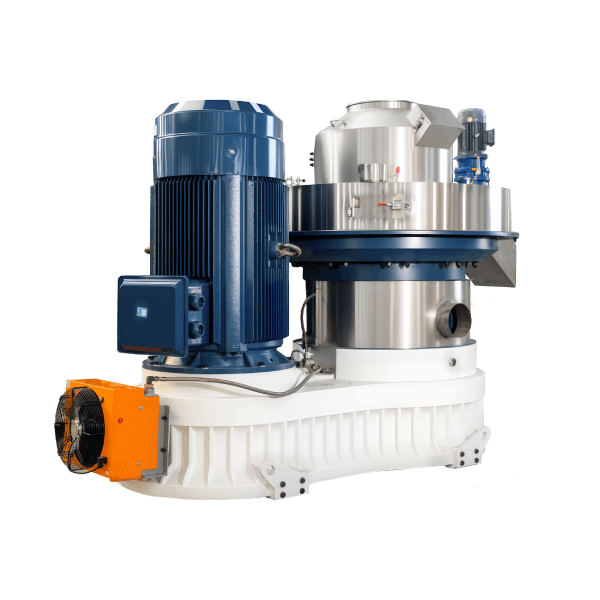
Our conveyor belt feeder provides superior feed accuracy (±3%) compared to screw or vibratory alternatives – ensuring consistent pellet mill operation. The VFD integration with pellet mill amperage feedback automatically adjusts feed rate to maintain optimal load. The belt design handles hot conditioned mash (up to 95°C) without material sticking or degradation, unlike screw feeders which can compact and bridge.
Application Scenarios by Buyer Role
Distributors / Importers
Focus on feeder compatibility with various pellet mill models. Require control integration documentation for customer site installation.
EPC Contractors
Integrating the conveyor belt feeder into complete production lines. Need control schematics, dimension drawings, and interlock specifications for system design.
Engineering Consultants / Technical Advisors
Evaluate feed accuracy impact on pellet quality and motor efficiency. Require VFD control data for energy optimisation studies.
End-user Production Facilities
Operating pellet mills with variable feedstock. Demand consistent feed rate to maintain pellet quality and prevent motor overload or starvation.
Core Pain Points & Engineering Solutions
Pain Point 1 – Inconsistent feed rate causing motor load fluctuation
Root cause: Manual feeding or uncontrolled gravity feed results in varying material flow to pellet mill, causing motor amperage to fluctuate 10%–20%.
Solution: VFD-controlled belt feeder with amperage feedback maintains feed rate within ±3%. Motor load stabilised at 85%–95% FLA.
Pain Point 2 – Material bridging in hopper
Root cause: Moist or sticky conditioned mash adheres to hopper walls, causing irregular flow and feed interruptions.
Solution: Hopper design with steep wall angle (>60°). Optional agitator prevents bridging. Hopper vibration option for difficult materials.
Pain Point 3 – Hot material damaging belt
Root cause: Conditioned mash at 80–95°C exceeds belt temperature rating.
Solution: EPDM belt (heat-resistant to 100°C) for hot applications. Optional water-cooled belt for extremely high temperatures.
Pain Point 4 – Overfeeding causing pellet mill overload
Root cause: No interlock between feeder and pellet mill – feeder continues when pellet mill stops.
Solution: Integrated control system stops feeder automatically when pellet mill stops or amperage exceeds setpoint. Alarm for high motor load.
Critical Risk Warnings & Mitigation Measures
Risk 1 – Belt misalignment causing edge damage
Mitigation: Install belt tracking sensors or self-aligning idlers. Weekly belt tracking inspection. Replace belts showing edge wear.
Risk 2 – Material accumulation at discharge
Mitigation: Install belt scraper at head pulley. Schedule daily cleaning of discharge area. Use anti-stick belt coating for sticky materials.
Risk 3 – Overloading from hopper level loss
Mitigation: Install low-level sensor to stop feeder if hopper level drops below minimum. Manual feed check required before restart.
Procurement Selection Guide – 7 Executable Steps
Step 1 – Determine required feed rate range
Match feeder capacity to pellet mill throughput. Feeder capacity should be 20%–30% above maximum pellet mill requirement.
Step 2 – Analyse material characteristics
Temperature, moisture, bulk density, flowability. Select belt material (standard rubber, EPDM, or food-grade) accordingly.
Step 3 – Specify control integration method
Pellet mill amperage feedback (4–20mA) or speed setpoint (remote potentiometer). Confirm PLC compatibility (MODBUS RTU or hardwired).
Step 4 – Determine belt width and length
Belt width 300–800mm. Length determined by hopper location to pellet mill inlet. Standard lengths available.
Step 5 – Verify hopper compatibility
Inlet hopper size 0.5–2.0m³. Ensure hopper clearance above feeder. Confirm material flow angle (>60°).
Step 6 – Evaluate safety requirements
Specify emergency stop pull cord. Guards per EN 953. Optional interlock with pellet mill guard door.
Step 7 – Plan for installation access
Allocate space for belt maintenance (minimum 1m at tail end). Verify floor level for adjustable feet. Allow 500mm side clearance.
Engineering Case Study – Feed Mill in Malaysia
Project Background
A swine feed mill in Johor operates a 90kW pellet mill at 2.5–3.0 t/h. Previous manual feeding caused significant load variation and occasional motor overload trips.
Initial Problem
Manual feeding resulted in motor amperage fluctuating ±15% (from 70% to 100% FLA). Overload trips occurred 3–4 times weekly – each causing 15–30 minutes downtime. Pellet quality varied with feed rate.
Root Cause Analysis
No controlled feeding system. Operators manually adjusted feed rate based on visual estimation – inconsistent and unreliable. Pellet mill starved at times, overloaded at others.
Solution Implemented
Installed Shandong Changsheng conveyor belt feeder (500mm belt, 3.0 t/h capacity, VFD control). Integrated feeder speed control with pellet mill amperage feedback. Hopper agitator for conditioned mash.
Final Data Results (12-month average)
| Metric | Before (Manual Feeding) | After (Conveyor Belt Feeder) |
|---|---|---|
| Motor load variation | ±15% | ±3% |
| Overload trips (weekly) | 3.8 | 0.2 |
| Pellet PDI variation | ±3.5% | ±0.8% |
| Specific energy consumption | 33.2 kWh/t | 29.8 kWh/t |
| Annual downtime (overload events) | 65 h | 3 h |
Frequently Asked Questions (FAQ)
1. What is a conveyor belt feeder for a pellet mill?
A controlled feeding system that delivers conditioned mash to the pellet mill at a regulated, adjustable rate to maintain optimal motor load.
2. What feed rate accuracy can I expect?
±3% of set feed rate with VFD control and amperage feedback – significantly better than manual feeding.
3. What material can the belt feeder handle?
Conditioned mash, meal, ground biomass, and other pellet mill feedstocks at temperatures up to 95°C.
4. What belt material is recommended for hot feed?
EPDM rubber (heat-resistant to 100°C) for hot conditioned mash. Standard rubber or PVC for ambient temperature materials.
5. How is the feeder controlled?
VFD with 4–20mA signal from pellet mill amperage feedback. Also supports MODBUS RTU for PLC integration.
6. Does the feeder include a hopper?
Yes – standard feed hopper capacity 0.5–2.0m³. Optional agitator available for sticky materials.
7. What happens if the pellet mill stops?
Feeder interlock stops automatically. Alarm indicates feed interruption.
8. Can the feeder be retrofitted to existing pellet mills?
Yes – available in various widths and lengths. Consult factory for compatibility.
9. What maintenance is required?
Weekly: Belt tracking check, scraper inspection. Monthly: Bearing lubrication, belt tension. Annually: Belt replacement.
10. What is the energy consumption of the feeder motor?
0.75–4.0 kW depending on model – small compared to pellet mill motor (30–160 kW).
11. Can the feeder handle sticky or wet materials?
Yes – with optional agitator and anti-stick belt coating. Steep hopper angle prevents bridging.
12. What is the typical payback period?
12–18 months – based on reduced downtime, improved pellet quality, and energy savings.
Author & E-E-A-T Credentials
Author: Dr. Chen Wei
Title: Senior Mechanical Engineer, Pelletising Systems Division
Experience: 14 years in biomass densification and feed processing equipment design
Notable Projects:
- Commissioned 25+ conveyor belt feeder systems across Southeast Asia and Africa (2015–2025)
- Developed feed rate optimisation protocol for variable feedstock applications
- Co-author of “Industrial Pellet Mill Maintenance and Optimisation” (Engineering Press, 2022)
Affiliation: Shandong Changsheng Machinery Co., Ltd.