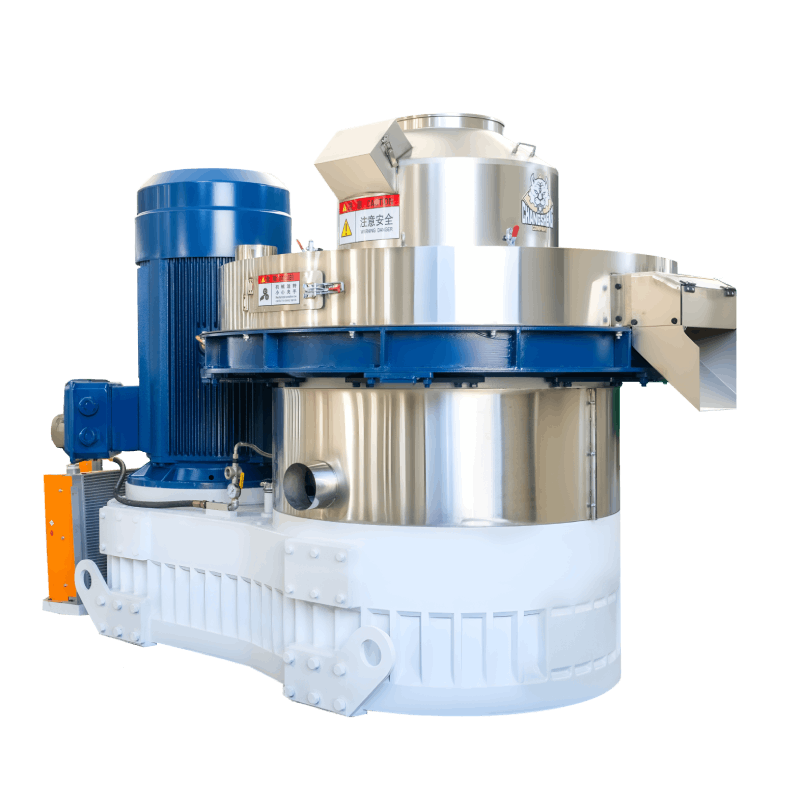
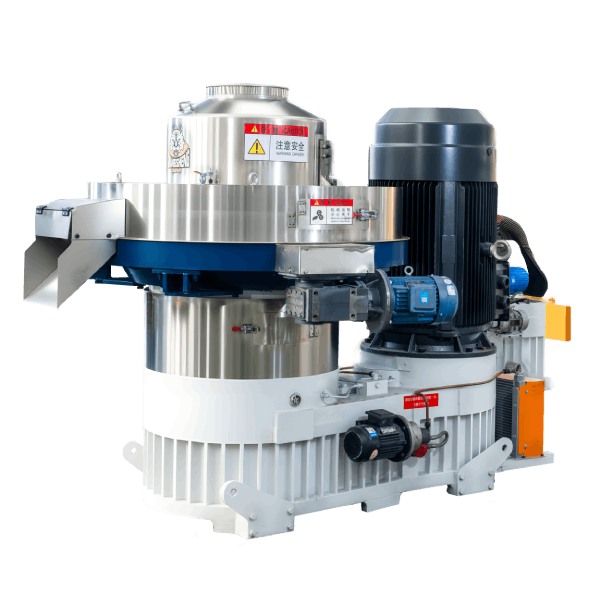
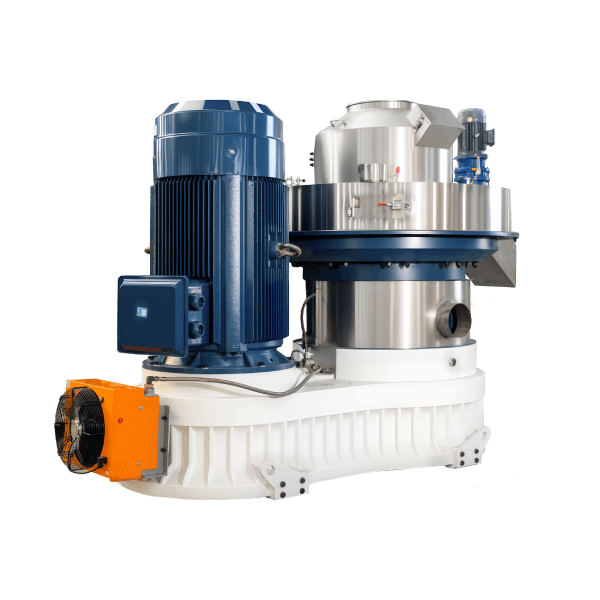
Pellet Machine with Stainless Steel Body: Complete Selection Guide
News 2026-07-18
Page SEO Summary: This technical guide helps procurement professionals evaluate pellet machines with stainless steel bodies—covering material advantages, corrosion resistance, application requirements, cost-benefit analysis, and selection criteria for specialized processing.
A pellet machine operating in a salt-laden coastal environment shows signs of corrosion within months. A feed mill producing high-moisture or acidic formulations faces rust and contamination issues with standard carbon steel equipment. A food-grade processing facility cannot meet hygiene standards without stainless steel surfaces.
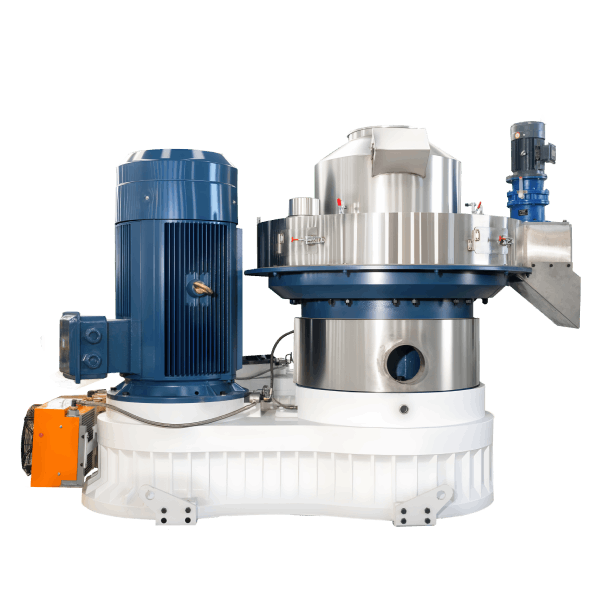
The choice of material for a pellet machine’s body and contact surfaces is not merely an engineering detail—it is a decision that affects equipment life, product quality, regulatory compliance, and total cost of ownership. A pellet machine with stainless steel body represents a significant investment in durability, hygiene, and long-term reliability.
This guide provides a comprehensive framework for understanding the advantages, applications, and cost considerations of stainless steel pellet machines, enabling informed procurement decisions.
Stainless Steel vs. Carbon Steel: The Basics
Material Comparison
| Property | Carbon Steel | Stainless Steel (304) | Stainless Steel (316) |
|---|---|---|---|
| Corrosion resistance | Low (rusts readily) | High | Very high |
| Chemical resistance | Poor | Good (acid, alkali) | Excellent |
| Hygiene/sanitation | Moderate | Excellent | Excellent |
| Strength | High | High | High |
| Weight | Standard | Slightly higher | Slightly higher |
| Cost multiplier (vs. carbon) | 1.0× | 2.0-2.5× | 2.5-3.5× |
| Appearance | Requires painting | Natural; bright | Natural; bright |
| Weldability | Excellent | Good (requires proper technique) | Good (requires proper technique) |
| Magnetic properties | Magnetic | Usually non-magnetic | Non-magnetic |
Common Stainless Steel Grades
| Grade | Composition | Key Features | Best For |
|---|---|---|---|
| 304 (18/8) | 18% Cr, 8% Ni | General-purpose; good corrosion resistance | Most food/feed applications |
| 304L | 18% Cr, 8% Ni (low carbon) | Better weldability than 304 | Welded structures |
| 316 | 16% Cr, 10% Ni, 2% Mo | Excellent corrosion resistance; chloride resistant | Saltwater; chemical exposure |
| 316L | 16% Cr, 10% Ni, 2% Mo (low carbon) | Best corrosion resistance; weldable | High-corrosion environments |
| 430 | 17% Cr | Magnetic; less expensive | Less demanding applications |
Advantages of Stainless Steel Pellet Machines
1. Corrosion Resistance
| Exposure | Carbon Steel | Stainless Steel | Advantage |
|---|---|---|---|
| Moisture/humidity | Rusts quickly | No rust | Significant |
| Salty air | Severe corrosion | Resistant | Critical |
| Acidic materials | Corrodes | Resistant | Significant |
| Alkaline materials | Corrodes | Resistant | Significant |
| High-temperature moisture | Rapid corrosion | Resistant | Critical |
2. Hygiene and Sanitation
| Aspect | Carbon Steel | Stainless Steel | Importance |
|---|---|---|---|
| Cleanability | Difficult (rough surface) | Easy (smooth surface) | Food/feed safety |
| Bacterial growth | More likely | Less likely | Health compliance |
| Product contamination | Rust particles | No rust | Quality assurance |
| Cleaning chemicals | Can corrode | Resistant | Effective sanitation |
3. Aesthetic and Longevity
| Aspect | Carbon Steel | Stainless Steel |
|---|---|---|
| Appearance | Requires painting; may flake | Natural bright finish; no painting |
| Paint maintenance | Regular repainting needed | None required |
| Rust stains | Common | None |
| Equipment life (coastal) | 3-5 years | 15-20+ years |
4. Regulatory Compliance
| Regulation | Carbon Steel | Stainless Steel | Requirement |
|---|---|---|---|
| Food-grade (FDA/EC) | May not meet | Meets (304/316) | Required for food/feed |
| Pharmaceutical | Does not meet | Meets (316L) | Required |
| Chemical processing | Often fails | Meets | Required |
Applications Requiring Stainless Steel
Feed Industry
| Application | Need for Stainless | Reason |
|---|---|---|
| Aquafeed | High | High moisture; salty ingredients |
| Pet food | Medium-High | Hygiene standards; varied ingredients |
| Premium feed | Medium | Quality; contamination risk |
| Standard animal feed | Low-Medium | Less critical; lower cost option |
Biomass Industry
| Application | Need for Stainless | Reason |
|---|---|---|
| Coastal locations | High | Salt air corrosion |
| High-silica biomass | Low-Medium | Wear is primary issue, not corrosion |
| High-moisture biomass | Medium | Corrosion risk |
| Acidic biomass | High | Chemical corrosion |
| Alkaline biomass | High | Chemical corrosion |
Food Processing
| Application | Need for Stainless | Reason |
|---|---|---|
| Food ingredient pelleting | Very High | Regulatory; hygiene |
| Spice processing | Very High | Quality; contamination |
| Organic products | High | Purity; hygiene |
| Conventional food | High | Hygiene |
Environmental Conditions
| Condition | Need for Stainless | Reason |
|---|---|---|
| Coastal (salt air) | High | Corrosion |
| High humidity | Medium-High | Corrosion |
| Industrial environment | Medium | Corrosion from chemicals |
| Clean/controlled environment | Low-Medium | Less corrosive |
Cost Analysis
Initial Investment Comparison
| Component | Carbon Steel Cost | Stainless 304 Cost | Stainless 316 Cost |
|---|---|---|---|
| Pellet mill body | 1.0× | 2.0-2.5× | 2.5-3.5× |
| Contact surfaces | 1.0× | 2.0-2.5× | 2.5-3.5× |
| Fasteners/hardware | 1.0× | 2.0-3.0× | 3.0-4.0× |
| Welding/fabrication | 1.0× | 1.5-2.0× | 1.5-2.0× |
Total Cost of Ownership Comparison
Example: 5 t/h pellet mill in coastal environment
| Cost Element | Carbon Steel | Stainless 304 | Difference |
|---|---|---|---|
| Initial cost | $50,000 | $95,000 | +$45,000 |
| Annual maintenance | $5,000 | $2,000 | -$3,000 |
| Annual repainting | $2,000 | $0 | -$2,000 |
| Equipment life | 5 years | 15 years | +10 years |
| Replacement cost | $50,000 (year 5) | $0 (within 15 years) | -$50,000 |
| Total 15-year cost | ~$165,000 | ~$125,000 | -$40,000 |
Material Selection Decision Framework
Factors to Consider
| Factor | Weight | Decision Guidance |
|---|---|---|
| Corrosion risk | High | Salt, moisture, chemicals = stainless |
| Hygiene requirements | High | Food/feed contact = stainless |
| Regulatory requirements | High | Mandatory for some applications |
| Climate/location | Medium-High | Coastal = stainless |
| Product value | Medium | Premium products = stainless |
| Budget | Medium | Initial cost vs. long-term TCO |
| Service life expectation | Medium | Long life = stainless |
Decision Matrix
| Scenario | Recommended Material | Rationale |
|---|---|---|
| Food-grade pelleting | 304 or 316 stainless | Hygiene + regulation |
| Feed with high moisture | 304 or 316 stainless | Corrosion + hygiene |
| Coastal environment | 304 or 316 stainless | Salt corrosion |
| Acidic/alkaline materials | 316 stainless | Chemical resistance |
| Standard animal feed | Carbon steel + coating | Cost-effective |
| Clean/dry environment | Carbon steel + coating | Sufficient |
| Budget constraints | Carbon steel + coating | Lower initial cost |
Procurement Checklist
Material Assessment
- Material being processed identified
- Moisture content understood
- Acidity/alkalinity (pH) of material assessed
- Salt/chloride exposure considered
- Hygiene requirements identified
Equipment Specifications
- Stainless steel grade specified (304, 316, etc.)
- All contact surfaces specified
- Fasteners/hardware specified (stainless)
- Welding material specified
- Surface finish specified
- Certification/test reports required
Regulatory Compliance
- Relevant standards identified (FDA, EC, etc.)
- Certification requirements known
- Documentation requirements identified
- Traceability requirements considered
Cost Analysis
- Initial cost premium quantified
- Maintenance cost differential calculated
- Expected service life estimated
- TCO analysis completed
- Payback period calculated
Supplier Evaluation
- Supplier experience with stainless steel fabrication
- Material certification capabilities
- References in similar applications
- Quality control procedures
Frequently Asked Questions
1. Why use stainless steel for a pellet machine?
Stainless steel provides corrosion resistance, superior hygiene, and longer service life compared to carbon steel. It is essential for food/feed applications, coastal environments, and processing corrosive materials.
2. What is the difference between 304 and 316 stainless steel?
304 stainless (18% Cr, 8% Ni) is general-purpose with good corrosion resistance. 316 stainless (16% Cr, 10% Ni, 2% Mo) has excellent corrosion resistance, particularly against chlorides (salt), and is used in harsh environments.
3. How much more does a stainless steel pellet machine cost?
A stainless steel pellet machine typically costs 2.0-3.5 times more than a carbon steel equivalent. However, the long-term TCO (total cost of ownership) may be lower due to longer service life and reduced maintenance.
4. Is stainless steel necessary for feed pellet production?
For standard animal feed in dry environments, carbon steel is often sufficient. For aquafeed, pet food, high-moisture feed, or operations near saltwater, stainless steel is strongly recommended.
5. Does stainless steel provide better hygiene?
Yes. Stainless steel has a smooth, non-porous surface that is easy to clean and does not harbor bacteria. Carbon steel can rust and develop pits that trap contaminants.
6. Does stainless steel pellet machine require less maintenance?
Yes. Stainless steel does not require painting or rust removal. Maintenance is focused on mechanical components (bearings, rollers, die) rather than body and surface preservation.
7. Can carbon steel pellet machines be used in coastal environments?
With proper painting and corrosion protection, carbon steel can be used in coastal environments, but the service life is significantly reduced. Stainless steel is recommended for long-term reliability.
8. What is the payback period for stainless steel compared to carbon steel?
The payback period depends on the environment and application. In coastal or corrosive conditions, the payback is often 3-5 years. In standard dry environments, the payback may be longer or may never occur.
About the Author
Zhang Wei – Senior International Sales Engineer, Shandong Changsheng Machinery Co., Ltd.
Zhang Wei has over 12 years of experience in the biomass and feed pellet mill industry, with a background in mechanical engineering and international project execution. He has managed pellet mill supply projects for clients across Southeast Asia, the Middle East, Africa, Europe, and Latin America, including extensive experience in material selection for corrosive, food-grade, and hygiene-critical applications.
With hands-on experience in both the manufacturing workshop and client-side operations, Zhang brings practical insights into successful equipment procurement—from the factory floor to the customer’s production site.