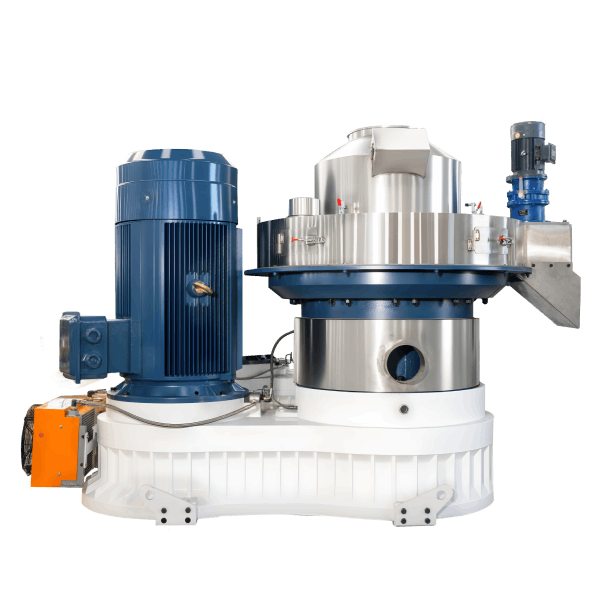
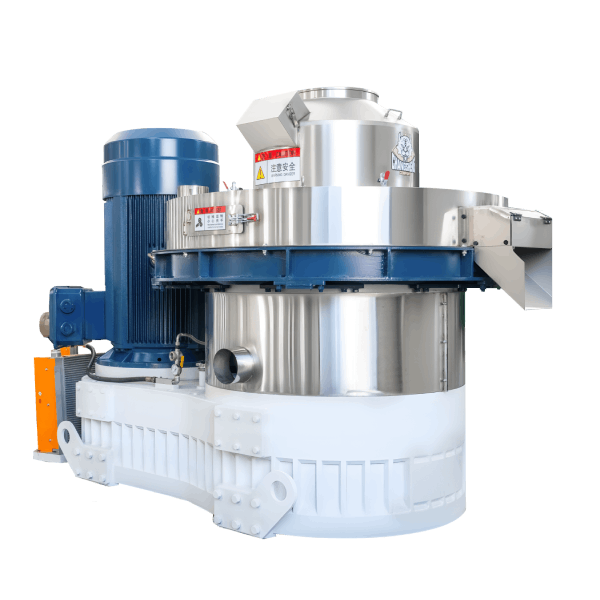
Pellet Mill Emergency Stop Stuck: Causes and Safe Checks
News 2026-10-28
A pellet mill emergency stop that is stuck is usually a safety circuit problem, and it should be treated as a safety circuit problem before it is treated as a production problem. In a case where the button is only mechanically latched and the circuit itself is healthy, the problem can be treated as a mechanical one, and the circuit diagram and the test result decide which case applies. The button may be mechanically latched, the contact block may be welded or jammed, the circuit may be held open by a downstream interlock, or the control relay may have failed. The four causes are checked against the button state, the circuit continuity, and the control status, and none of them should be assumed from the symptom alone. The one response that is never correct is to bypass the emergency stop to keep the machine running.
The emergency stop is part of the machine’s safety function, and its purpose is to remove power from the drive and stop the machine when the button is pressed. A stuck button means the safety function is either held open, so the machine cannot start, or is bypassed, so the machine can start without the safety function. Both conditions are unsafe, and the second is worse than the first.
This article covers how to tell a mechanical latch from a contact fault and a control fault, how the button type and the safety relay change what you see, what checks are made before and after the power is isolated, what the correct reset procedure is, when to stop rather than keep resetting, and what to record before contacting a supplier.
Mechanical Latch, Contact Fault, or Control Fault
The three groups are separated by the button behaviour, the continuity, and the control status.
| What you observe | Likely group | First check |
|---|---|---|
| Button is pressed in and does not release when twisted or pulled | Mechanical latch, or a release method that does not match the button type | The button mechanism and the release direction stated in the manual |
| Button releases, but the machine does not restart | Contact block or circuit fault | Continuity across the contact block, with the power isolated |
| Button releases, the circuit is closed, but the control does not reset | Control relay or interlock fault | The safety relay, the control relay, and the interlock status |
| Button releases, the machine restarts, and the button does not latch when pressed again | Mechanical latch fault | The button mechanism and the contact block |
| Button is stuck and the machine can still be started | Bypassed safety circuit | The wiring and the bypass, and stop the machine |
A button that does not release may be a mechanical latch, a release method that does not match the button type, or a contact block that is jammed, and the button type and the release method decide which. A button that releases but does not restore the circuit is a contact, wiring, or terminal problem. A button that releases and restores the circuit, but the control does not reset, is a control, safety relay, or interlock problem. A button that is stuck while the machine can still start is a bypassed safety circuit, and the machine should be stopped.
Button Type, Safety Relay and Interlock
The button type, the safety relay, and the interlock type each change what you see and how the check is made. The machine manual and the control cabinet documentation take precedence over this section.
| Button type | Release method | What to check when it sticks |
|---|---|---|
| Mushroom head, twist release | Twist the head in the direction marked on the button | The head mechanism, the contact block, and the release direction |
| Mushroom head, pull release | Pull the head out to the release position | The head mechanism and the return spring |
| Palm button, key release | Insert the key and turn it to the release position | The key mechanism and the contact block |
| Pull cord | Pull the cord to the reset position | The cord tension, the reset lever, and the end switch |
| Foot switch | Release the pedal and reset the switch | The pedal mechanism and the switch |
A safety relay is not a general control relay. It has redundant contacts, a self-check function, and a reset requirement that a general relay does not have, and the reset should follow the relay documentation. An interlock can be mechanical, electrical, a light curtain, or a laser scanner, and each type holds the circuit open in a different way and should be checked with the method stated for that type.
The Correct Reset Procedure
The emergency stop should be reset according to the machine manual, and the reset should be done only after the reason for the stop has been checked.
- Confirm the machine is stopped and the drive is de-energised.
- Identify the button that was pressed, and confirm the button type and the release method from the manual.
- Release the button using the method stated for the button type, without force.
- Check whether the button has returned to its normal position, and whether it latches when pressed again.
- Reset the control circuit and the safety relay according to the manual, and confirm the machine does not start until the start command is given.
- Test the emergency stop function again before returning to production.
A button that is forced past its release position can be damaged, and a button that is reset without checking the cause can hide a fault that will repeat.
Checks Before the Power Is Isolated
These checks are made with the power on, by a qualified electrical person, and they narrow the cause before the power is isolated.
| Check | What to record | What it tells you |
|---|---|---|
| Button position | Pressed in, released, or latched | Confirms the mechanical state |
| Button type and release method | Twist, pull, key, cord, or foot, as stated in the manual | Confirms the correct release method |
| Control status | Emergency stop active, or reset | Confirms whether the control sees the stop |
| Machine start | Whether the machine can be started while the button is pressed | Confirms whether the safety circuit is bypassed |
| Other emergency stops | Whether more than one button is pressed | A second button can hold the circuit open |
| Interlock status | Whether a guard, a door interlock, a light curtain, or a scanner is open | An interlock can hold the circuit the same way |
A second emergency stop on the same circuit can hold the circuit open even when the first button has been released. The check should cover every button on the circuit, not only the one the operator pressed.
Checks That Require the Power to Be Isolated
These checks are made with the power isolated and locked out.
| Check | What to record | What it tells you |
|---|---|---|
| Contact block continuity | Open when the button is pressed, closed when it is released | Confirms the contact block function |
| Contact block condition | Welded, burnt, or mechanically jammed | Confirms whether the block needs replacement |
| Wiring continuity | Continuity on each conductor | Detects a broken wire or a loose terminal |
| Terminal tightness | Loose or tight | Detects a connection fault |
| Safety relay status | Fault indicator, reset status | Confirms whether the safety relay has operated |
| Bypass check | A wire link, a jumper, a forced contact, or a disabled safety relay | Confirms whether the safety circuit has been bypassed |
The contact block continuity test is made with a meter, with the button in the pressed state and then in the released state, and the two readings are compared with the circuit diagram. The bypass check looks for a wire link, a jumper, a forced contact, or a disabled safety relay, and any of these means the safety circuit is not intact.
When to Stop Rather Than Keep Resetting
Stop the machine and do not reset the emergency stop when any of the following applies.
| Condition | Action |
|---|---|
| The machine can be started while the emergency stop is pressed | Stop immediately. The safety circuit is bypassed. |
| The button does not latch when pressed | Stop. The button or the contact block must be replaced. |
| The contact block is welded or burnt | Stop. Replace the block before restart. |
| The safety relay shows a fault | Stop. Have the relay inspected by a qualified electrical person. |
| A second emergency stop is pressed and the cause is not known | Stop. Find the reason before resetting. |
| The reset does not restore the circuit | Stop. The cause is a contact, wiring, or control fault. |
Repeated resetting of an emergency stop that does not restore the circuit hides a fault, and a bypassed emergency stop removes the protection from every operator on the machine.
After the Emergency Stop Is Restored
Confirm the following before returning to production.
| Acceptance item | What to confirm |
|---|---|
| Button function | The button latches when pressed and releases when reset |
| Circuit function | The circuit opens when the button is pressed and closes when it is reset |
| Machine start | The machine cannot start while the button is pressed |
| Other emergency stops | Every button on the circuit is released and functional |
| Interlocks | Every interlock is closed and functional |
| Safety relay | No fault indication, and the reset is complete |
| Test | The emergency stop function is tested before production |
A machine that restarts after the reset is not the same as a machine that is safe. The safety function is confirmed by the emergency stop test, the interlock test, and the safety relay test, and the test result should be recorded against the machine manual and the applicable safety standards.
Testing the Emergency Stop
The test should confirm that the machine stops when the button is pressed, that the drive is de-energised, and that the machine cannot be restarted until the circuit is reset. The test interval should come from the machine manual and the site’s safety programme, and a common practice is to test the function at each shift start. The test result should be recorded with the date, the button tested, and the machine response.
Frequently Asked Questions
How often should the emergency stop be tested?
The test interval should come from the machine manual and the site’s safety programme. A common practice is to test the function at each shift start, and the test should confirm that the machine stops when the button is pressed and cannot be restarted until the circuit is reset.
When should I call an electrician instead of a mechanic?
When the button releases but the circuit does not restore, when the contact block is welded or burnt, when the safety relay shows a fault, or when the wiring or the bypass is in question. These are electrical safety causes and should be inspected by a qualified electrical person.
Why does the emergency stop not release when I twist it?
The button may be a pull-release or a key-release type rather than a twist-release type, or the mechanism may be jammed. The release method should be taken from the machine manual, and the button should not be forced past its release position.
Can I bypass the emergency stop to keep production running?
No. A bypassed emergency stop removes the protection from every operator on the machine, and a machine that can start with the button pressed is unsafe. The machine should be stopped until the circuit is repaired.
Why does the machine not restart after the emergency stop is released?
The contact block may not be closing, the circuit may have a broken wire or a loose terminal, the safety relay may be in a fault state, or a second emergency stop or an interlock may be open. Each is checked in order, with the power isolated where the check requires it.
Request Diagnostic Support for Your Pellet Mill
Send the machine model, the emergency stop type and release method, the button and contact block condition, the control and safety relay status, the interlock type, the circuit diagram, and the test result. A diagnostic review can be prepared against the machine and the site conditions rather than against a general checklist.
Emergency stop function, reset procedure, contact block condition, and acceptance criteria in this article must be confirmed against the machine manual, the control cabinet documentation, and the applicable safety standards. This article does not provide universal values for these items.