Equipment to Make Pellets: How to Choose the Right Line for Your Feedstock and Production Scale
News 2026-10-08
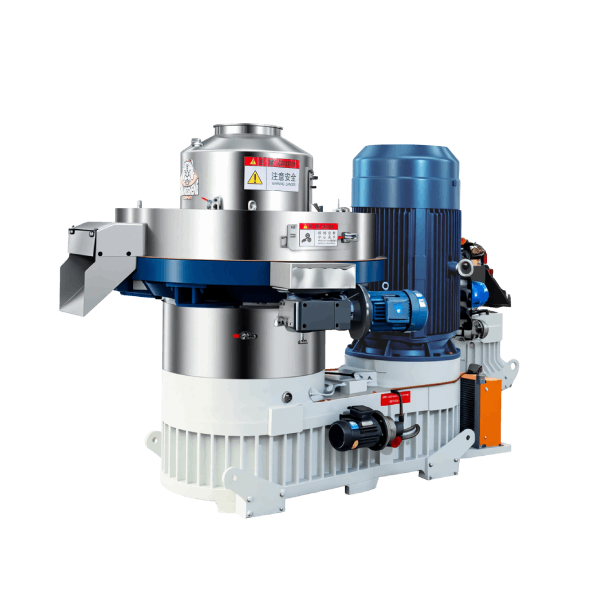
Equipment to make pellets is not a single machine. It is a production line made up of several stages, each of which must be matched to the next. The pellet mill is the core of the line, but the line also includes material receiving, size reduction, drying, conditioning, cooling, screening, packing, and dust collection, depending on feedstock and target pellet quality.
The practical question for a buyer is not which machine is the cheapest. The real question is which combination of equipment fits your feedstock, your moisture, your particle size, your target capacity, your power supply, and your operating pattern, and what must be confirmed before ordering.
This guide explains the equipment used to make pellets, how each stage works, how capacity is matched across the line, how feedstock affects equipment selection, what determines cost, and what to confirm with the supplier before purchase. For machine selection without a full line focus, see the pellet making machine page on this site. For wood-specific line configuration, see the machine to make wood pellets page on this site. For the industrial-scale line concept, see the industrial biomass pellet line page on this site.
What “Equipment to Make Pellets” Includes
A complete pellet production line usually includes:
Receiving and storage equipment for raw material.
A chipper or crusher for large pieces.
A hammer mill for grinding to consistent particle size.
A dryer for reducing moisture when it is above the suitable range.
A conditioner for adding heat and moisture, especially for feed pellets.
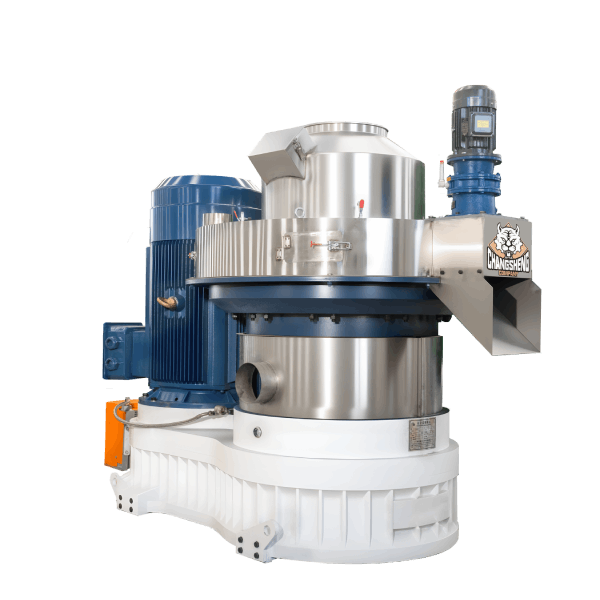
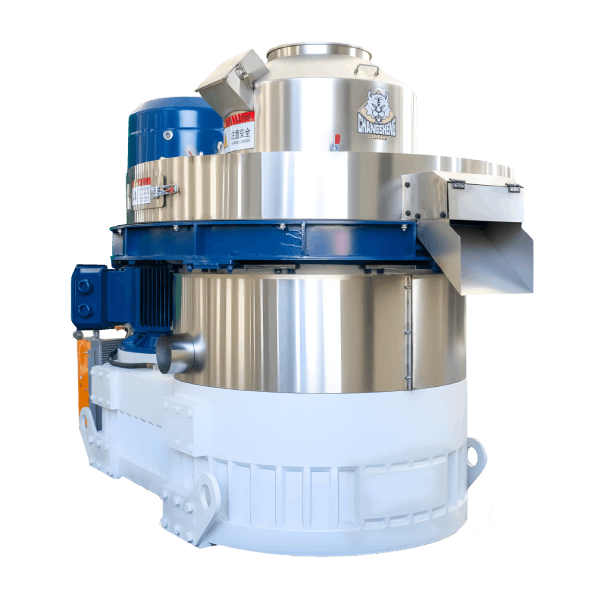
A pellet mill for forming pellets.
A cooler for hardening pellets and reducing fines.
A screener for removing fines and oversize.
A packing machine for bagging or bulk loading.
Dust collection for health and explosion protection.
Not every project needs every piece. A project using dry sawdust may need only a pellet mill, cooler, and screener. A project using wet wood chips may need a complete line with chipping, grinding, and drying. A feed pellet line may need conditioning and finer grinding. The correct scope depends on feedstock and target pellet quality, not on a fixed template.
Feed Pellet Line vs Biomass Pellet Line
The same equipment list applies to feed pellets and biomass pellets, but the configuration is not the same. Buyers should decide the target application before comparing equipment.
Feed Pellet Line
Feed pellet lines are configured for animal feed materials such as corn, soybean meal, and formulated feed ingredients. Key configuration points:
Finer grinding, often in the range of 1 to 3 mm, depending on animal type and feed formulation.
Steam conditioning before pelletizing to raise temperature and moisture, which improves protein and starch binding.
Lower die compression ratio than biomass, because the goal is durability without excessive density.
Moisture recovery after cooling to bring pellets to the target moisture.
Pellet durability index testing as a standard quality check.
Biomass Pellet Line
Biomass pellet lines are configured for wood waste, agricultural residues, and other organic materials. Key configuration points:
Grinding to the range suitable for the die, usually 2 to 5 mm for biomass.
Drying when moisture is above the suitable range.
Higher die compression ratio than feed, to reach target density and durability.
Wear-resistant die and roller material for abrasive feedstocks such as rice husk, straw, and bark-containing wood.
Dust explosion protection, including explosion venting, spark detection, and grounding.
Ash content and boiler compatibility as key quality considerations for fuel pellets.
How Capacity Is Matched Across the Line
Each stage in the line must be matched to the next. If one stage is undersized, the line runs below capacity. If one stage is oversized, energy cost rises unnecessarily.
A typical matching rule is to size each stage for the design capacity plus a margin of about 10 to 20 percent, except for drying, which is usually sized for the worst realistic moisture condition, not the average. The exact margin depends on feedstock consistency, operating hours, and maintenance planning.
Stage matching example for a 2 t/h line:
Crushing and grinding: sized for 2 to 2.4 t/h of raw material, depending on feedstock.
Drying: sized for the highest realistic incoming moisture, not the average.
Pelletizing: one or more pellet mills sized for 2 t/h under stated feedstock conditions.
Cooling: sized for 2 t/h of hot pellets at design pellet diameter.
Screening: sized for 2 t/h plus fines recirculation.
Packing: sized for 2 t/h plus buffer storage.
If drying is undersized, moisture varies and pellet quality fluctuates. If cooling is undersized, pellets stay hot and produce more fines. If screening is undersized, fines carry into the finished product. If packing is undersized, the line stops when the packing buffer is full.
Receiving and Storage Equipment
Receiving and storage equipment includes hoppers, conveyors, and storage areas for raw material and finished pellets. Storage must be covered and ventilated. For high-moisture feedstocks, storage time should be minimized to reduce mold and material degradation. For finished pellets, storage must protect against moisture regain and self-heating.
Size Reduction Equipment
Size reduction equipment includes chippers, crushers, and hammer mills.
A chipper or crusher reduces large wood pieces, branches, or offcuts to a size suitable for hammer milling. A hammer mill reduces material to a consistent particle size for stable feeding and compression. Screen size determines final particle size.
Grinding energy depends on feedstock hardness, moisture, and target particle size. Hardwood and abrasive residues require more grinding energy than softwood or sawdust. A hammer mill with suitable screen size and correctly sized motor is required. For fibrous feedstocks such as straw, shredding before grinding improves feeding stability.
Drying Equipment
Drying equipment reduces moisture to the range suitable for pelletizing. A rotary dryer is commonly used for industrial lines. Drying capacity must be matched to the highest realistic incoming moisture, not the average. If drying capacity is too small, moisture varies and pellet quality fluctuates. If drying capacity is too large, energy cost rises unnecessarily.
Dryer heat source options include biomass-fired hot air generators, diesel or gas burners, and waste heat from nearby industrial processes. The heat source affects both capital cost and operating cost. A biomass-fired heat source may reduce operating cost if feedstock is available, while diesel or gas may be simpler to install but more expensive to run.
Conditioning Equipment
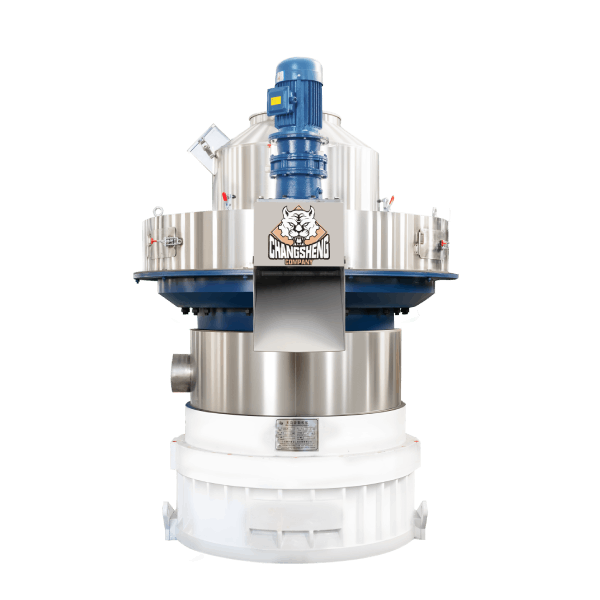
Conditioning equipment adds heat and moisture to the material before pelletizing. It is used mainly for feed pellets, where steam conditioning improves protein and starch binding and increases pellet durability. Conditioning parameters depend on feed formulation and target durability, and should be confirmed with the supplier and with feed formulation specialists.
For biomass fuel pellets, conditioning is used less often. Fuel pellets rely mainly on lignin and friction heat. In cold climate or dry material conditions, light conditioning can improve binding, but it should be confirmed with a pelletizing test.
Pellet Mills
Pellet mills are the core of the line. Ring die and flat die are the two main types.
Flat die machines are simpler, lower in cost, and easier to maintain. They suit small capacity, varied feedstock, and intermittent operation.
Ring die machines provide higher capacity, more stable pellet quality, and better energy efficiency at scale. They suit commercial and industrial production. Ring die machines require more specialized maintenance and may need lifting equipment for die change.
Larger lines often use two or more pellet mills in parallel. This allows maintenance on one mill while the rest of the line continues to run, and reduces the impact of a single mill stoppage. Parallel operation requires balanced feed distribution to keep motor load on each mill within the target range.
Cooling Equipment
Cooling equipment hardens pellets and reduces fines. Cooling capacity depends on pellet diameter, initial pellet temperature, and ambient conditions. Counterflow coolers are common in industrial lines. Cooling time should be sufficient to bring pellets to stable temperature and moisture before screening and packing.
Screening Equipment
Screening equipment removes fines and oversize particles. Fines can be returned to the pellet mill. Oversize is removed from the product stream. Screening capacity should be matched to line capacity plus fines recirculation. Screen condition and screen size affect product quality.
Packing Equipment
Packing equipment prepares pellets for storage or sale. Bulk loading may be used for industrial customers. Bagging is used for retail or export markets. Packing capacity should be matched to line capacity plus buffer storage, so that short packing interruptions do not stop the line.
Dust Collection and Explosion Protection
Biomass and feed dust is fine and poses both health and explosion risks. Dust collection with high-efficiency cyclone and filters is required. Explosion venting, spark detection, grounding, and where applicable ATEX-rated equipment are recommended for commercial lines. In regions where NFPA standards apply, reference should be made to NFPA 652 for general combustible dust requirements and NFPA 664 for wood and biomass processing facilities. ATEX applies mainly in the European Union and in some other regions that adopt ATEX requirements. Local regulations should always be confirmed.
How Feedstock Affects Equipment Selection
Feedstock determines equipment selection at every stage. The same line cannot be configured identically for all feedstocks.
Wood and sawdust are usually the easiest to pelletize. Wood chips and shavings require grinding. Hardwood requires higher compression ratio and more wear-resistant die material. Bark-containing material increases die and roller wear.
Agricultural residues such as straw, rice husk, and corn stover are more abrasive and often have lower lignin content. They usually require higher compression ratio and wear-resistant die and roller material.
Animal feed materials usually pelletize more easily but require feed-grade hygiene, formulation control, and steam conditioning.
Palm fiber, EFB, coffee husk, peanut shell, cotton stalk, and coconut husk are more abrasive or have higher oil or mineral content. They require specific configuration and, in some cases, additional preprocessing.
Feedstock Switching and Configuration Change
When a line switches between feedstocks, the configuration is not identical. Wood, straw, rice husk, and bagasse each require different die compression ratio, feeder setting, moisture control, and in some cases different grinding screen size.
For switching between two feedstocks, common approaches include a fixed mix ratio with a die selected for the more challenging component, or dual die configuration with separate dies for each feedstock. Dual die configuration requires more spare parts and more planned changeover time, but gives better performance on each feedstock.
Changeover time depends on die change, roller clearance adjustment, feeder setting, moisture control, and first production stabilization. Changeover should be planned as part of the operating schedule, not treated as an emergency.
Moisture and Particle Size Across the Line
Typical target moisture before pelletizing is around 10 to 15 percent for most wood and biomass feedstocks, and around 12 to 14 percent for many feed formulations. The exact range depends on feedstock and die specification, and should be confirmed with a pelletizing test.
Particle size affects feeding stability, compression, pellet density, and die wear. Target particle size is usually in the range of 2 to 5 mm for biomass. Feed pellets usually require finer particle size, often in the range of 1 to 3 mm, depending on animal type and feed formulation.
Die Selection and Pellet Diameter
Die compression ratio is the ratio of die hole length to die hole diameter. It determines how much resistance the material meets as it passes through the die. Higher compression ratio increases pellet density but also increases power demand and die wear. The correct compression ratio depends on feedstock density, fiber content, moisture, and target pellet quality.
Die hole diameter determines pellet diameter. Common pellet diameters are 2 to 4 mm for small feed, 4 to 6 mm for poultry and cattle feed, and 6 to 8 mm for biomass fuel, with 10 mm and 12 mm available for some industrial applications. Pellet diameter should be selected against the boiler, stove, or feed system, not chosen independently.
Automation and Control
A pellet line may be manual, semi-automatic, or automatic. Automation level affects both initial cost and labor cost. A manual line requires more operators for feeding, monitoring, and bagging. A semi-automatic line uses variable frequency feeding and basic monitoring. An automatic line includes PLC control, automatic lubrication, and remote monitoring.
Automation also affects process stability. A line with automatic feed rate control and motor current monitoring keeps die temperature and motor load within the target range more reliably than a manual line. The right level depends on local labor cost, operating hours, and maintenance capability. A manual line has the lowest initial cost, a semi-automatic line is in the middle, and a full PLC line with remote monitoring is the highest.
Energy Consumption and Operating Cost
Energy consumption per ton depends on feedstock type, moisture, particle size, die specification, compression ratio, feed rate, and motor efficiency. Abrasive and high-moisture feedstocks usually require more energy per ton than dry, low-density materials. Energy consumption should be confirmed with the supplier at your actual feedstock condition, not assumed from a catalog figure.
Operating cost includes raw material, power, labor, maintenance, spare parts, and downtime. Cost per ton of pellets is the figure that matters, not equipment price alone. For abrasive feedstocks, spare parts and downtime often dominate total cost. Die change frequency and downtime cost also affect cost per ton: a project without a spare die on site will face long downtime when the first die wears out, even if the die price itself was low.
Pellet Quality Standards
Pellet quality requirements differ by application.
For biomass fuel pellets, key parameters include moisture, ash content, durability, fines, and pellet diameter. For export or higher-grade markets, pellet quality may need to meet standards such as ISO 17225 for solid biofuels. Some markets also use certification schemes such as ENplus, and some North American markets use PFI specifications.
For feed pellets, key parameters include protein content, moisture, durability, and hygiene. Feed pellets may be subject to feed safety and hygiene regulations in the destination market.
Ash content in biomass fuel pellets depends on feedstock and bark content. Boilers with ash removal systems can accept higher-ash pellets; home pellet stoves usually require low-ash pellets. Ash content should be confirmed by laboratory test for the specific feedstock. Exact grade limits should be confirmed against the current official standard or regulation, not assumed from a general figure.
Containerized and Mobile Line Configurations
A pellet line may be supplied in containerized or mobile configuration. A containerized line is built into one or more shipping containers and is used for export projects, remote sites, or projects where site construction is limited. A mobile unit is mounted on a trailer or truck frame and is used where feedstock is scattered or where production is seasonal. These configurations are useful in remote locations such as islands, mountain sites, and off-grid farms, where fixed site construction is not practical.
Maintenance and Spare Parts
Dies and rollers are wear parts. Their life depends on feedstock abrasiveness, moisture, compression ratio, and operating conditions. For abrasive feedstocks, die and roller life may be shorter than for clean wood. Expected die and roller life should be confirmed with the supplier based on similar material, not assumed from a general figure.
A practical spare parts plan includes at least one spare die per pellet mill, one or two spare roller shell sets per mill, bearings, belts, seals, lubricants, and critical electrical spares. A maintenance area with tools, spare parts, and workspace is required.
Daily checks include lubrication, roller clearance, feeder condition, and motor current. Weekly checks include die and roller wear, belt tension, and electrical connections. Monthly checks include lubrication system condition, bearing temperature, and control panel inspection.
What Determines Equipment Cost
Cost depends on capacity, feedstock, drying requirement, automation, cooling and screening scope, packing, electrical system, dust collection, civil works, installation, and spare parts.
Equipment cost is only one part. Auxiliary equipment, drying, electrical infrastructure, and civil works often represent a significant part of total project cost. A complete line and a machine-only quotation are in different cost categories.
Buyers comparing quotations should compare scope of supply and landed project cost, not equipment price alone.
Packing, Shipping and Destination Compliance
Pellet line equipment is heavy and may require frame container loading, reinforced crating, and moisture barrier film. The largest single piece should be identified before shipment so that lifting equipment at the destination can be planned. Shipping marks, case numbers, weight, and dimensions should match the packing list. Installation tools and special fixtures should be included. For overseas projects, documentation should include operation manual, electrical diagram, foundation drawing, and spare parts list.
For export projects, destination country compliance may apply. This can include certification, labeling, electrical standards, and documentation. Electrical standards such as voltage, phase, and frequency must match the destination country. Additional certification may be required by the destination country. All compliance and documentation requirements should be confirmed with the supplier and with the import agent in the destination country before shipment.
Typical Project Scenario
The following summarizes typical project parameters from pellet line projects. Specific customer names, locations, and contact details are not included.
Typical project: wood and agricultural residue pellet production.
Raw material: mixed wood waste and agricultural residues in controlled mix ratio.
Capacity: 2 t/h.
Configuration: ring die pellet mill with hammer mill, dryer, cooler, screener, and packing.
Application: industrial fuel pellets and local fuel market supply.
Acceptance: trial run with actual material, output and pellet quality recorded before shipment.
The parameters above are typical ranges and should be confirmed with actual test records.
Procurement Checklist
Before signing a contract, confirm the following with the supplier:
Capacity with stated feedstock, moisture, particle size, and pellet diameter.
Die compression ratio and die material.
Die hole diameter and pellet diameter.
Roller shell material and hardness.
Drive system, gearbox or belt drive.
Feeder type and whether variable frequency control is included.
Grinding, conditioning, and drying scope.
Cooling, screening, and packing scope.
Dust collection and explosion protection scope, including reference to applicable NFPA or local standards where relevant.
Motor power, total connected load, voltage, phase, and frequency.
Automation level and control system scope.
Feed distribution and mill balancing provisions for multiple mills.
Spare parts list with part numbers and recommended first order.
Warranty scope, wear part definition, and response process.
Inspection and acceptance method before shipment.
Frequently Asked Questions
What equipment is needed to make pellets?
A complete pellet line usually includes receiving and storage, size reduction, drying, conditioning, pellet mill, cooling, screening, packing, and dust collection. The exact scope depends on feedstock and target pellet quality.
How do I match capacity across the line?
Each stage should be sized for the design capacity plus a margin of about 10 to 20 percent, except for drying, which is usually sized for the worst realistic moisture condition. The exact margin depends on feedstock consistency, operating hours, and maintenance planning. If one stage is undersized, the line runs below capacity.
Do I need a dryer for pellet production?
Drying is required when feedstock moisture is above the suitable range for pelletizing. Dry sawdust may not need a dryer. Wet wood chips, green wood, and high-moisture agricultural residues usually do.
Should I use one pellet mill or multiple mills?
Smaller lines may use one pellet mill. Larger lines often use two or more mills in parallel to reach target capacity and to allow maintenance without stopping the whole line. Parallel operation requires balanced feed distribution and motor current monitoring on each mill.
What power supply does a pellet line need?
Power supply depends on capacity and equipment scope. Smaller lines may use single-phase or three-phase power. Larger lines require three-phase power, dedicated transformer capacity, and protection for starting current. Voltage, phase, frequency, and transformer capacity must be confirmed before ordering.
How much does equipment to make pellets cost?
Cost depends on capacity, feedstock, drying requirement, automation, cooling and screening scope, packing, electrical system, dust collection, civil works, installation, and spare parts. Equipment cost is only one part of landed project cost. Final cost should be confirmed against a written scope of supply.