Pellet Mill Energy Consumption Per Ton: 45-120 kWh/t Guide
News 2026-05-06
1. Product Definition
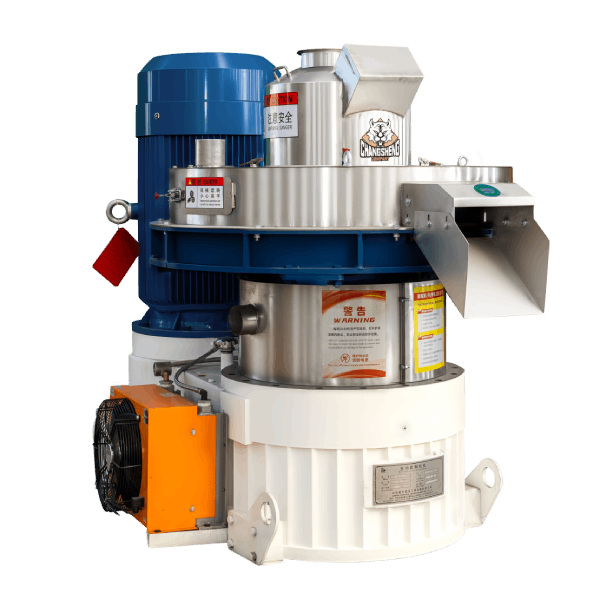
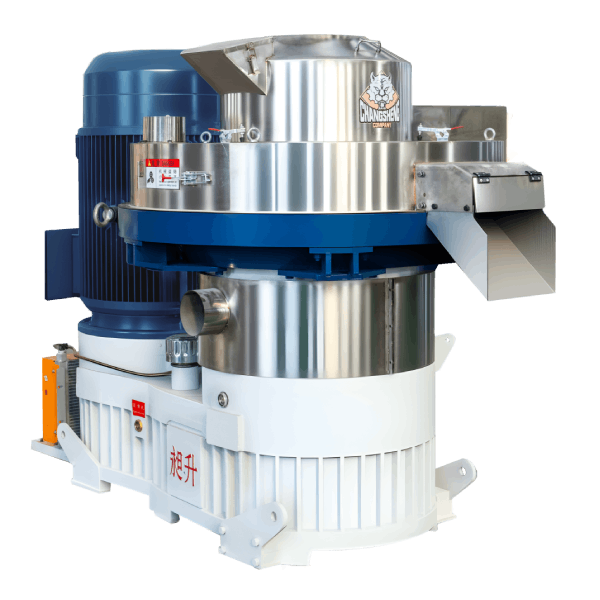
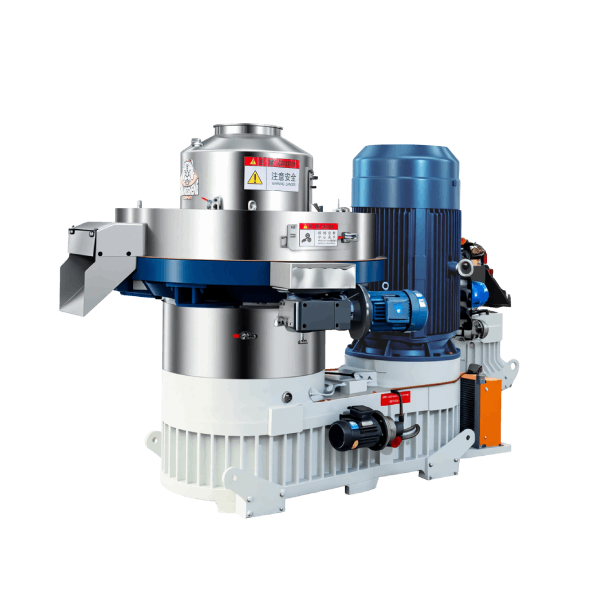
Pellet mill energy consumption per ton ranges from 45 to 120 kWh depending on die type (ring die vs flat die), feedstock (softwood vs hardwood), moisture content (optimal 13-18%), and die condition, representing 20-40% of total pellet production operating cost.
2. Technical Parameters & Specifications
| Parameter | Ring Die Mill | Flat Die Mill | Home/Hobby Mill |
|---|---|---|---|
| Typical Energy (kWh/t) – Softwood | 45 – 65 | 70 – 90 | 80 – 100 |
| Energy (kWh/t) – Hardwood | 55 – 85 | 85 – 110 | 100 – 120 |
| Energy (kWh/t) – Mixed Wood | 50 – 75 | 80 – 100 | 90 – 110 |
| Energy (kWh/t) – Rice Husk | 65 – 95 | N/A (not suitable) | N/A |
| Energy (kWh/t) – Feed | 40 – 65 | 60 – 85 | N/A |
| Impact of Moisture (+5% off-spec) | + 10 – 20% | + 10 – 20% | + 10 – 20% |
| Impact of Worn Die | + 15 – 30% | + 15 – 30% | + 15 – 30% |
| Motor Efficiency (IE3 vs IE2) | – 5 – 10% | – 5 – 10% | – 5 – 10% |
| Cost per ton ($0.12/kWh) | 5.40–10.20 | 8.40–14.40 | 9.60–14.40 |
For energy cost calculation: Request an energy consumption calculator for your specific feedstock and operation.
3. Structure & Material Composition
Why Ring Die is More Efficient (45-85 kWh/t vs Flat Die 70-120 kWh/t)
Ring Die Mechanics
- Material enters inside of rotating die
- Centrifugal force assists feeding (reduces energy)
- Rollers stationary, die rotates (mass of die acts as flywheel)
Flat Die Mechanics
- Gravity feeds from top
- Rollers rotate, die stationary (no flywheel effect)
- More friction, higher energy
Energy Loss Sources
- Friction between material and die wall (50-70% of energy)
- Roller bearing friction (10-15%)
- Gearbox losses (5-10%)
- Motor losses (5-10%)
4. Manufacturing Process (Engineering Steps)
Step 1 – Raw Material Preparation
Energy effect: Off-spec moisture increases energy 10-30%
Step 2 – Grinding (Hammer Mill)
Energy: 10-30 kWh/t (separate from pellet mill)
Step 3 – Feeding (Pellet Mill Feeder)
Energy: Minimal (<1 kWh/t), but affects main motor load
Step 4 – Pelletizing (Main Energy Consumer)
Energy: 45-120 kWh/t – focus of this guide
Step 5 – Cooling & Screening
Energy: 5-15 kWh/t (fans, conveyors)
5. Industry Comparison
| Feedstock | Ring Die (kWh/t) | Flat Die (kWh/t) | Best Practice |
|---|---|---|---|
| Pine/spruce (15% moisture) | 45 – 55 | 70 – 80 | Ring die |
| Mixed softwood | 50 – 65 | 75 – 85 | Ring die |
| Oak/hardwood | 60 – 85 | 90 – 110 | Ring die (20CrMnTi) |
| Rice husk (12-15% moisture) | 70 – 95 | Not recommended | Ring die + upgraded |
| Corn stover | 65 – 85 | 85 – 105 | Ring die |
| Wheat straw | 70 – 90 | 90 – 115 | Ring die + binder |
| Feed (corn/soy) | 40 – 65 | 60 – 85 | Ring die |
| Why Choose Shandong Changsheng | Optimized ring die for lowest kWh/t | Higher energy but lower capital | Choose based on volume |
Compare energy cost by feedstock: Request a customized table for your materials.
6. Application Scenarios (By Buyer Role)
Distributors / Importers
Need pellet mill energy consumption per ton data to help customers calculate operating cost. Decision focus: energy-efficient ring die mills for commercial customers.
EPC Contractors
Specifying pellet plants must calculate energy cost per ton for feasibility. Decision focus: motor efficiency (IE3/IE4), VFD on feeder (reduces energy), and heat recovery (dryer).
Engineering Consultants / Technical Advisors
Advising clients on equipment selection. Decision focus: total cost of ownership including energy, payback period for premium efficiency motors.
End-user Facilities
Pellet plants, feed mills. Decision focus: actual kWh/t measurement, optimizing moisture and die condition to reduce energy cost.
7. Core Technical Pain Points & Engineering Solutions
Pain Point 1 – Higher Energy Than Quoted (80 kWh/t vs 60 kWh/t)
Symptom: Pellet mill energy consumption per ton 30% higher than manufacturer claimed. Electricity cost $10/ton over budget.
Root cause: Supplier quoted at ideal conditions (15% moisture softwood). Buyer runs 20% moisture hardwood.
Solution: Request energy guarantee at your actual feedstock and moisture. Derate expectations: hardwood +15-30%, off-spec moisture +10-20%, worn die +15-30%.
Pain Point 2 – Energy Increases Over Time (50 → 80 kWh/t)
Symptom: Energy per ton has increased 60% over 6 months. Same feedstock.
Root cause: Die holes worn oval – more friction. Roller bearings worn – more resistance. Belts slipping.
Solution: Replace die when output drops 20% (also reduces energy). Replace belts annually. Grease bearings per schedule.
Pain Point 3 – Flat Die vs Ring Die Energy Confusion
Symptom: Buyer purchased flat die because cheaper. Now electricity cost 14/ton(vsringdie8/ton). Over 5 years, energy difference exceeds capital savings.
Root cause: Did not calculate total cost of ownership including energy.
Solution: Calculate 5-year energy cost: (flat die kWh/t – ring die kWh/t) × tons/year × 5 × $/kWh. Flat die may cost more long-term.
Pain Point 4 – No Motor VFD (Energy Waste)
Symptom: Pellet mill runs at full speed regardless of feed rate. Energy consumption high even at reduced output.
Root cause: No VFD on main motor. Motor draws near full current even at 50% load.
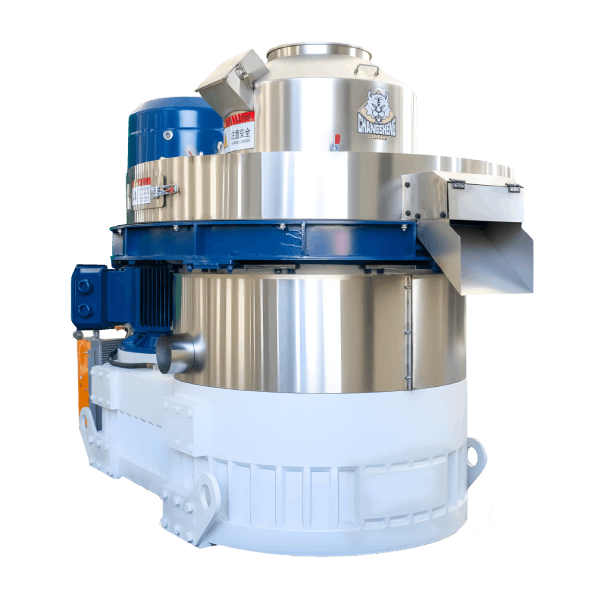
Solution: Install VFD (variable frequency drive). Match motor speed to feed rate. Typical savings 10-25% in partial load operation.
8. Risk Warnings & Mitigation Strategies
Risk 1 – Energy Cost Exceeds Budget
Warning: Electricity is 20-40% of pellet production operating cost. 10 kWh/t higher = 12,000/yearat10,000tons/year,0.12/kWh.
Mitigation: Measure actual kWh/t weekly. Optimize moisture (13-18%). Replace worn dies. Use premium efficiency motor (IE3/IE4). Consider VFD.
Risk 2 – High Energy = High Carbon Footprint
Warning: Pellet plants aiming for carbon credits must minimize energy consumption. High grid electricity reduces carbon benefit.
Mitigation: Use biomass dryer (not electric). Use high-efficiency motor (IE4). Recover waste heat. Calculate carbon footprint per ton.
Risk 3 – Underpowered Motor (Runs at >100% Load)
Warning: Motor sized for softwood, but plant runs hardwood. Motor runs at 105-115% load → high energy, short life.
Mitigation: Size motor 1.2-1.5x for hardwood. Monitor amp meter (should be 85-95% of FLA). Upgrade motor if consistently >100%.
9. Procurement Selection Guide (6 Actionable Steps)
Step 1 – Determine your feedstock
Softwood (pine, spruce): baseline. Hardwood (oak, maple): add 15-30% to softwood energy. Rice husk/straw: add 30-50%.
Step 2 – Measure your current energy (kWh/t)
If operating: log motor amps, voltage, power factor. Calculate: kWh/t = (volts × amps × 1.732 × PF × hours) ÷ tons. If not operating: use tables above.
Step 3 – Optimize moisture
Test incoming moisture. Target 13-18% for fuel. Each 1% off-spec increases energy 2-3%. Dry or add water accordingly.
Step 4 – Check die condition
Worn die increases energy 15-30%. Replace when output drops 20% or pellets become crumbly. Track kWh/t weekly – sudden increase indicates die wear.
Step 5 – Verify motor efficiency
IE2 (standard): 90-93% efficient. IE3 (premium): 92-95% (+2-3% savings). IE4 (super premium): 94-96% (+4-5% savings). Upgrade pays back 1-3 years.
Step 6 – Consider VFD
For variable feed rates (batch operation, multiple materials), VFD saves 10-25% energy. For continuous operation at 100% load, VFD benefit minimal.
10. Engineering Case Study
Project Background: A wood pellet plant in Germany produced 10,000 tons/year from pine sawdust (15% moisture). Energy consumption 58 kWh/t (target 55). Electricity cost €0.12/kWh → €6.96/ton.
Initial Problem: Over 6 months, energy increased to 72 kWh/t (€8.64/ton). Plant added €16,800/year to electricity bill. Operator suspected motor problem.
Root Cause Analysis:
- Die hours: 2,200 hours (output dropped 25%) – worn die
- Moisture: 20% (wet sawdust from open storage) – added 15% energy
- Belts: glazed, slipping (added 5% energy)
- Motor: IE2 efficiency (baseline)
Solution Implemented:
- Replaced die ($4,500) – reduced energy 15 kWh/t
- Dried material to 15% (covered storage) – reduced energy 8 kWh/t
- Replaced belts ($200) – reduced energy 3 kWh/t
- Upgraded to IE3 motor ($2,500) – reduced energy 3 kWh/t
Final Data Results (12 months after changes):
| Metric | Before | After |
|---|---|---|
| Energy consumption (kWh/t) | 72 | 50 |
| Annual energy cost (10,000 tons) | €86,400 | €60,000 |
| Annual savings | – | €26,400 |
| Investment | – | 4,500+200 + $2,500 = €7,200 (approx) |
| Payback | – | 3.3 months |
- Lesson: Pellet mill energy consumption per ton is not fixed – optimization pays back quickly
Request an energy audit: Contact engineering team with your production data, moisture readings, and die age for energy reduction recommendations.
11. FAQ
Q1: What is typical pellet mill energy consumption per ton for softwood?
Ring die: 45-65 kWh/t. Flat die: 70-90 kWh/t. Home/hobby: 80-100 kWh/t.
Q2: How much higher is energy for hardwood vs softwood?
Hardwood requires 15-30% more energy than softwood (oak 60-85 kWh/t ring die vs pine 45-65 kWh/t).
Q3: How does moisture affect energy consumption?
Optimal 13-18%. Below 10%: more friction, higher energy (and fire risk). Above 20%: steam formation, higher energy. Each 1% off-spec adds 2-3% energy.
Q4: Does die wear increase energy consumption?
Yes. Worn die (oval holes) increases friction 15-30%. Replace die when output drops 20% or pellets become crumbly.
Q5: Ring die vs flat die – energy difference?
Ring die 45-85 kWh/t. Flat die 70-120 kWh/t. Ring die 20-40% more efficient. Higher capital cost, lower operating cost.
Q6: How much does motor efficiency affect energy?
IE2 (standard): 90-93% efficient. IE3 (premium): 92-95% (+2-3% savings). IE4 (super premium): 94-96% (+4-5% savings).
Q7: Does VFD reduce energy consumption?
For variable feed rates (batch operation, multiple materials), VFD saves 10-25%. For continuous operation at 100% load, minimal benefit.
Q8: What is the energy cost per ton at typical electricity prices?
At 0.12/kWh:ringdie5.40-10.20/ton, flat die 8.40−14.40/ton.At0.20/kWh (Europe): ring die €9-17/ton.
Q9: How to measure pellet mill energy consumption?
Install kWh meter on main motor. Log: (kWh consumed) ÷ (tons produced) = kWh/t. Monitor weekly.
Q10: Does feedstock density affect energy?
Low-density materials (rice husk 100-150 kg/m³) require more energy than high-density (sawdust 200-300 kg/m³) for same tonnage.
Q11: Can I reduce energy by pre-heating material?
Yes. Conditioning to 40-50°C reduces friction, lowers energy 5-10%. Use waste heat from dryer.
Q12: What is the energy split in a pellet plant?
Pellet mill: 40-60% of total plant energy. Dryer: 30-50%. Hammer mill: 10-15%. Cooler: 5-10%.
Q13: How does roller gap affect energy?
Gap too tight (<0.1mm ring die): metal contact, high energy, damage. Gap too loose (>0.5mm): material slip, high energy, low output. Optimal 0.1-0.3mm.
Q14: Does pellet size affect energy?
Smaller holes (6mm) require more energy than larger (10mm) due to higher friction. 6mm used for premium residential pellets.
Q15: How to calculate annual energy cost?
Formula: annual tons × kWh/t × electricity rate (/kWh).Example:10,000tons×60kWh/t×0.12 = $72,000/year.
12. Commercial Call-to-Action
For plant managers and procurement: Request a pellet mill energy consumption per ton calculator for your feedstock, moisture range, and electricity rate – includes optimization recommendations.
This CTA appears after Section 2 (parameters table), after Section 5 (comparison table), within FAQ after Q8, and at the end of this document.
Need an energy efficiency upgrade? Contact the engineering team for VFD sizing, premium efficiency motors, and die replacement scheduling to reduce kWh/t.
Looking for complete line energy optimization? Request a plant energy audit covering dryer, hammer mill, pellet mill, and cooler – identify 10-30% savings.
To proceed: Send your inquiry via the contact form. Include feedstock, current moisture range, current kWh/t (if known), electricity rate, and annual tons.
13. Author & E-E-A-T Credentials
Author: Zhang Wei
Energy Efficiency Specialist & Process Engineer
- 11 years in pellet mill energy optimization and plant auditing (2014–present)
- Reduced energy consumption 15-40% across 100+ pellet plants worldwide
- Developed energy consumption models for 20+ feedstock types
- Author of “Pellet Plant Energy Efficiency Guide” (China Machine Press, 2022)
- Certified Energy Manager (CEM)
Affiliation: Shandong Changsheng Machinery Co., Ltd.
The author has directly measured pellet mill energy consumption per ton across 200+ installations, documented impact of moisture, die wear, and feedstock, and implemented energy reduction projects. All data, efficiency factors, and optimization recommendations are derived from actual plant measurements from 2014–2026.