Pellet Mill Purchase Checklist: 25 Checks Before You Buy
News 2026-09-19
Pellet Mill Purchase Checklist: What to Confirm Before You Place an Order
A pellet mill is a long-life asset. Once it is shipped, correcting a wrong voltage, wrong die, wrong capacity, or wrong interface becomes expensive and slow. Most purchase problems are not caused by bad machines. They are caused by missing confirmation before the order is placed.
This pellet mill purchase checklist is written for procurement managers, importers, EPC contractors, and end users. It follows the real sequence of a purchase project, from inquiry to arrival, and lists what should be confirmed, why it matters, and what happens if it is missed.
How to Use This Checklist
The checklist is organized in five stages:
Stage 1: Before inquiry
Stage 2: During quotation and technical clarification
Stage 3: Before order confirmation
Stage 4: Before shipment and inspection
Stage 5: After arrival and during commissioning
Each stage has its own confirmation items. Items marked as critical should always be confirmed in writing. If a supplier cannot or will not confirm an item in writing, treat it as a risk.
Stage 1: Before Inquiry
The purpose of this stage is to prepare clear input data so that quotations are comparable.
Confirm your raw material type and mix ratio. Different materials require different die compression ratios, feeder settings, and moisture control. Mixed or variable material is harder to pelletize than a single uniform material.
Confirm raw material moisture content after drying or conditioning. Most pelletizing runs best within a specific moisture band, and the exact band depends on material. If moisture is not controlled, capacity, pellet quality, and die life will all vary.
Confirm target pellet size and application. Feed pellets, fuel pellets, and bedding pellets have different density, durability, and size requirements. State the target size in millimeters.
Confirm required output. State output in kg per hour or tons per hour, and clarify whether this is the rated capacity under ideal conditions or the expected capacity under your actual material.
Confirm local power supply. Voltage, phase, frequency, and available transformer capacity must be stated clearly. This is one of the most common causes of import problems.
Confirm site conditions. Indoor or outdoor installation, ambient temperature, humidity, dust level, and available space all affect configuration and foundation design.
Critical items in Stage 1: raw material, moisture, target pellet size, required output, power supply.
Stage 2: During Quotation and Technical Clarification
The purpose of this stage is to make quotations comparable and to separate real technical data from marketing statements.
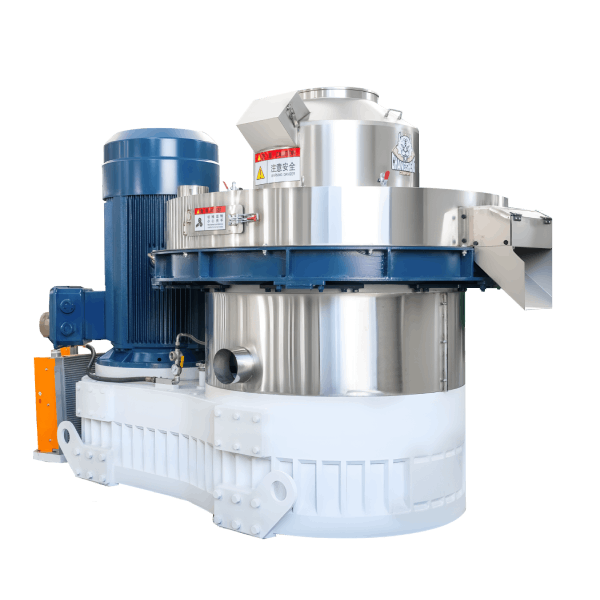
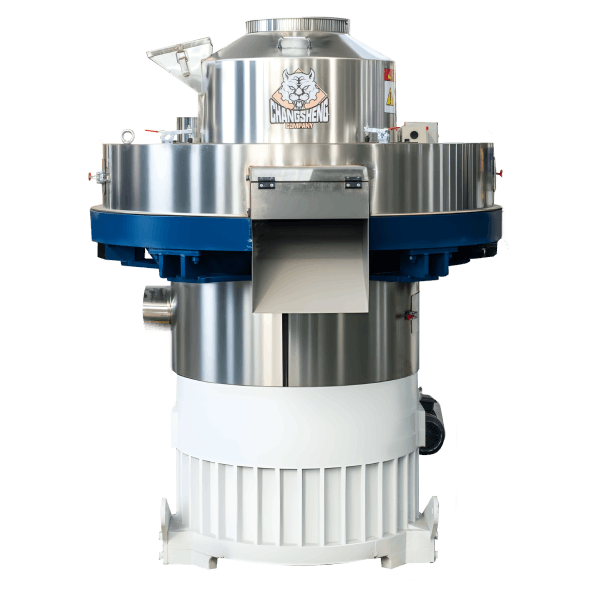
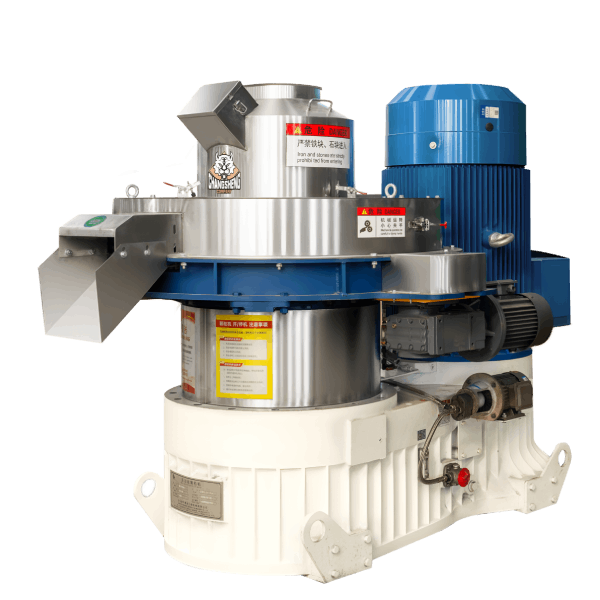
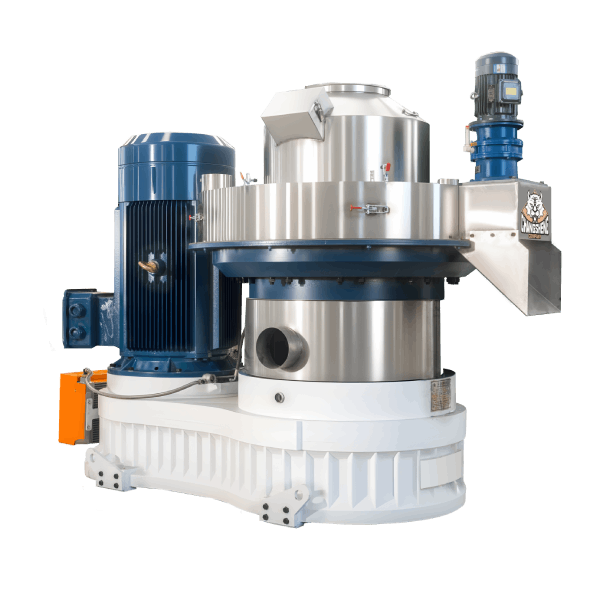
Confirm the machine type and model. Flat die and ring die machines have different capacity ranges, material adaptability, and maintenance profiles. Do not compare them only on price.
Confirm rated capacity and the conditions attached to it. Ask the supplier to state the material, moisture, pellet size, and die specification used to define the rated capacity. A capacity figure without conditions is not a technical commitment.
Confirm main motor power and total connected load. The main motor power is not the same as total connected load. Auxiliary equipment such as feeder, conditioner, fan, and conveyor also consume power.
Confirm die specification. Die diameter, hole diameter, compression ratio, material, and heat treatment all affect pellet quality and wear life. Ask for the recommended die for your specific material.
Confirm roller specification and clearance adjustment method. Roller hardness, bearing type, and clearance adjustment affect stability and maintenance frequency.
Confirm feeding and conditioning configuration. Whether a conditioner, steam system, or variable frequency feeder is included affects pellet quality and operation stability.
Confirm pellet size range and changeover method. Confirm whether changing pellet size requires a die change, and how long that change takes.
Confirm auxiliary equipment scope. Crusher, dryer, mixer, conveyor, cooler, sieving, packing, and dust collection are often quoted separately. Clarify what is included and what is excluded.
Confirm voltage, phase, frequency, and control voltage. Also confirm motor brand class, insulation class, protection class, and whether local certification is required.
Confirm foundation and installation requirements. Foundation drawing, anchor bolt layout, and load data should be available before shipment.
Confirm spare parts list and recommended first order. Dies, rollers, bearings, belts, and seals should be listed with part numbers and prices.
Confirm warranty scope, wear part definition, and response method. Clarify what is covered, what is excluded, and how claims are handled.
Critical items in Stage 2: rated capacity conditions, die specification, motor and total load, auxiliary scope, voltage and frequency, warranty and wear part definition.
Stage 3: Before Order Confirmation
The purpose of this stage is to lock down technical and commercial terms so that both sides have the same understanding.
Confirm the final technical agreement as an attachment to the contract. The technical agreement should include model, capacity, power, voltage, die specification, pellet size, auxiliary scope, and control mode.
Confirm the scope of supply line by line. Use a table with item, quantity, unit, specification, and remarks. Ambiguous scope is a common source of dispute.
Confirm delivery time and milestones. Clarify production time, inspection time, packing time, and shipping time separately. A single delivery date without milestones is difficult to manage.
Confirm packing method and shipping terms. Confirm sea worthy packing, moisture protection, rust protection, and container or frame loading method.
Confirm payment terms and currency. Common methods include telegraphic transfer and letter of credit. Clarify deposit ratio, balance trigger, and document requirements.
Confirm inspection and acceptance method. Pre-shipment test run, video inspection, third-party inspection, and document review should be agreed before production is completed.
Confirm document list. Operation manual, electrical diagram, foundation drawing, wear parts list, packing list, and certificate of conformity should be listed.
Confirm warranty start date. Clarify whether warranty starts from shipment date, arrival date, or commissioning date.
Critical items in Stage 3: technical agreement, scope of supply table, delivery milestones, inspection method, document list, warranty start date.
Stage 4: Before Shipment and Inspection
The purpose of this stage is to verify that the machine matches the agreed specification before it leaves the factory.
Confirm the test run material and conditions. The test should use material similar to your actual raw material in type and moisture, so the result is meaningful.
Confirm test run output and pellet quality. Record output, pellet size, pellet density, fines rate, and power consumption during the test.
Confirm die and roller installation condition. Check clearance, fastening, and lubrication before shipment.
Confirm electrical configuration. Check motor nameplate, voltage, frequency, phase, control voltage, and wiring markings against the technical agreement.
Confirm spare parts and tools are packed. Dies, rollers, bearings, belts, and special tools should be packed and listed.
Confirm documentation is complete and correct. Manuals and drawings should match the shipped configuration, not an earlier version.
Confirm packing and marking. Shipping marks, case numbers, weight, and dimensions should match the packing list.
Confirm photos and videos are recorded. Photos of the machine, nameplates, packing, and container loading help resolve later disputes.
Critical items in Stage 4: test run conditions and results, electrical nameplate, spare parts packing, document accuracy, packing and marking.
Stage 5: After Arrival and During Commissioning
The purpose of this stage is to ensure the machine is installed, commissioned, and operated correctly.
Confirm inspection on arrival. Check for shipping damage, moisture damage, and missing items against the packing list.
Confirm foundation and installation quality. Check levelness, anchor bolt tightening, alignment, and clearance according to the foundation drawing.
Confirm electrical connection and protection. Check voltage, phase sequence, grounding, overload protection, and emergency stop function.
Confirm no-load and load test. Start with no-load running, then gradually increase load while monitoring current, temperature, vibration, and noise.
Confirm operator training and handover. Operators should understand feeding control, moisture control, die change, clearance adjustment, and shutdown procedure.
Confirm maintenance schedule. Daily, weekly, and monthly maintenance items should be recorded in a logbook.
Confirm spare parts stock. Keep a minimum stock of dies, rollers, bearings, and belts based on expected wear rate.
Confirm warranty registration. Submit warranty registration and keep inspection records for future claims.
Critical items in Stage 5: arrival inspection, electrical protection, load test, operator training, maintenance log, spare parts stock.
Common Risks and How to Reduce Them
Risk: Capacity mismatch. Cause: rated capacity quoted under ideal conditions. Prevention: require capacity to be stated with material, moisture, and pellet size conditions.
Risk: Voltage mismatch. Cause: unclear power supply data. Prevention: confirm voltage, phase, frequency, and control voltage in the technical agreement.
Risk: Die life shorter than expected. Cause: die compression ratio not matched to material. Prevention: confirm recommended die for your specific material and keep a spare die.
Risk: Frequent blockage. Cause: moisture too high or feeding too fast. Prevention: control moisture before pelletizing and use a variable frequency feeder.
Risk: Spare parts delay. Cause: non-standard parts or unclear part numbers. Prevention: require a spare parts list with part numbers and recommended stock.
Risk: Acceptance dispute. Cause: no agreed inspection standard. Prevention: agree test run material, output record, and inspection method before shipment.
Risk: Document mismatch. Cause: manual or drawing not updated to shipped configuration. Prevention: require final document review before shipment.
Risk: Installation delay. Cause: foundation drawing or load data missing. Prevention: request foundation drawing and anchor bolt layout before shipment.
Decision Guide: When to Buy and When to Wait
Buy when raw material supply is stable, moisture can be controlled, power supply is confirmed, and daily demand justifies continuous operation.
Wait when raw material type or moisture varies widely, power supply is unstable, or daily demand is too low to justify continuous operation.
Consider a smaller machine first when you are new to pelletizing, when material is not yet fully tested, or when budget is limited. A smaller machine reduces initial risk and allows you to learn the process before scaling up.
Frequently Asked Questions
What is the most important item in a pellet mill purchase checklist?
The most important item is the technical agreement. It should state capacity, power, voltage, die specification, pellet size, auxiliary scope, and warranty terms. Without a written technical agreement, later disputes are difficult to resolve.
Should I choose flat die or ring die for my project?
Flat die machines suit small capacity and varied materials. Ring die machines suit higher capacity and consistent material. The choice depends on your raw material, daily output, and budget, not on price alone.
How do I confirm the rated capacity is realistic?
Ask the supplier to state the material, moisture, pellet size, and die specification used to define the rated capacity. Then compare with similar projects using your material.
What voltage information should I provide?
Provide voltage, phase, frequency, and available transformer capacity. Also state whether the local grid is stable, and whether a voltage stabilizer is needed.
What spare parts should I order with the machine?
Order at least one spare die and one set of rollers, plus bearings, belts, and seals. Confirm part numbers and prices so future orders are consistent.
How should inspection be arranged before shipment?
Agree the test run material and conditions in advance. Record output, pellet quality, power consumption, and take photos of nameplates and packing. Third-party inspection can be arranged if needed.
What should be included in the warranty terms?
Warranty should state the coverage period, start date, covered parts, excluded wear parts, and response method. Wear parts such as dies and rollers are usually excluded or covered under separate terms.
How do I reduce import risk?
Confirm voltage and certification requirements, packing method, shipping terms, document list, and spare parts availability before shipment. Keep all technical agreements and inspection records.
Author Introduction
This article was prepared by a technical content specialist with over ten years of experience in industrial equipment, biomass and feed processing machinery, and B2B export projects. The author has worked with pellet mill projects in feed, biomass, and agricultural processing, and understands the practical challenges buyers face in technical clarification, supplier selection, contract terms, inspection, and import.
The content reflects real engineering practice in pellet mill selection, technical confirmation, cost analysis, and international procurement. It is intended to help procurement managers, importers, EPC contractors, and end users make informed decisions and reduce purchase risk.
Call to Action
If you are preparing a pellet mill purchase and need help confirming technical data, comparing configurations, or preparing an inquiry sheet, you can request a technical proposal based on your raw material and required output. Share your material type, moisture, target pellet size, local power supply, and daily demand, and a suitable configuration can be recommended. You can also request a quotation, ask for general arrangement drawings, or arrange a video factory inspection before making a final decision.