Page SEO Summary: This technical guide helps buyers select a 250kW pellet machine—covering specifications, capacity expectations, infrastructure requirements, and procurement considerations for heavy industrial production.
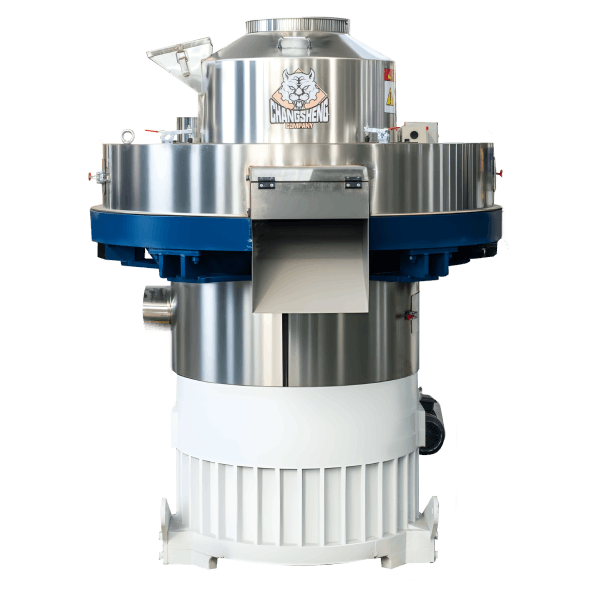
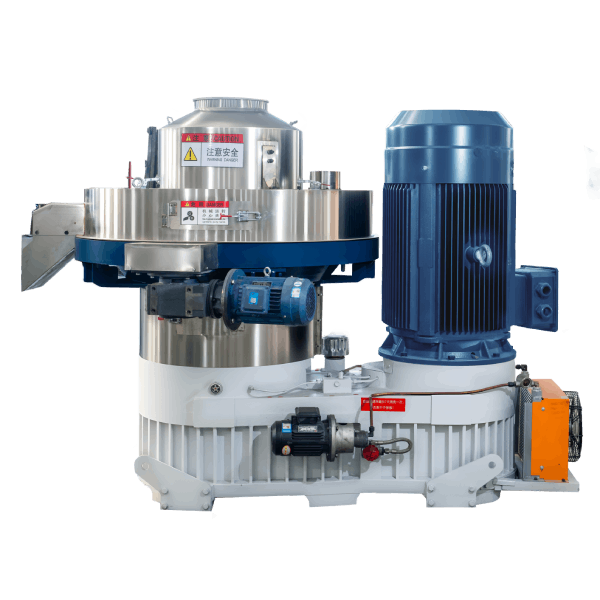
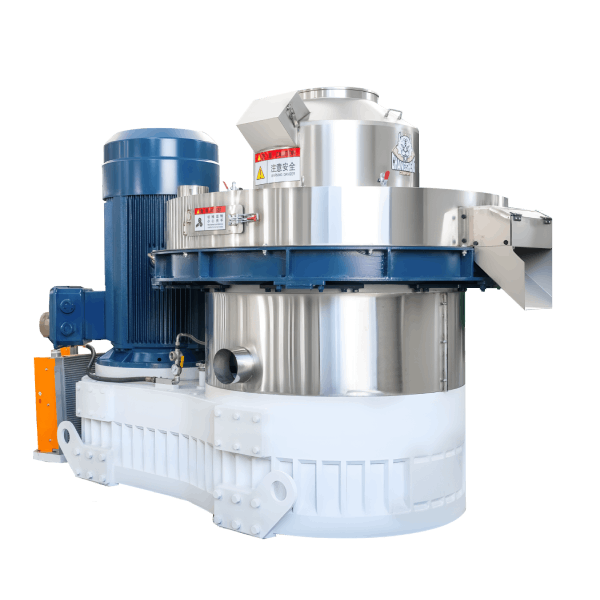
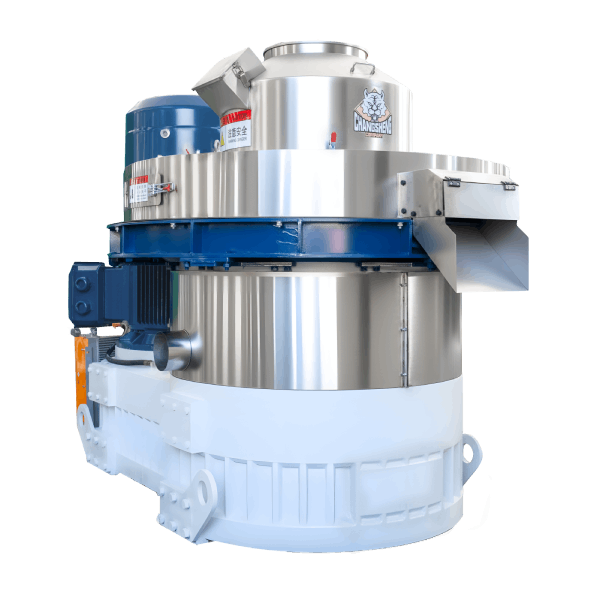
A 250kW pellet machine represents the upper tier of industrial pellet production. This is mega-scale equipment designed for 24/7 operation, processing challenging materials at high throughput for export markets, power generation, and large industrial applications. Manufacturers like Shandong Changsheng Machinery Co., Ltd. offer 250kW configurations as their premium heavy-duty product line.
This guide provides a comprehensive overview of 250kW pellet machines, helping you understand the specifications, capabilities, and investment considerations for this power class.
What Is a 250kW Pellet Machine?
Power Class Positioning
Motor Power
Typical Capacity
Classification
Typical Users
90-110 kW
2-3 t/h
Mid-industrial
Regional producers
132-160 kW
3-5 t/h
Large industrial
Export producers
160-200 kW
4-6 t/h
Heavy industrial
Large plants
200-250 kW
5-8 t/h
Mega-scale
Mega-plants
250-315 kW
7-10+ t/h
Ultra-scale
Very large operations
250kW Positioning
Aspect
Detail
Position
Mega-scale industrial
Typical capacity
5-8 t/h (wood)
Typical users
Export mega-plants, power generation
Operation
24/7 continuous
Market
International export
Technical Specifications
Core Parameters
Parameter
Typical Value
Notes
Motor power
250 kW (335 HP)
Main drive
Motor efficiency
IE3 or IE4
Premium efficiency required
Die diameter
610-710 mm
Large ring die
Die width
200-250 mm
High capacity
Die speed
200-300 RPM
Heavy-duty operation
Pellet diameter
6-12 mm
Application dependent
Machine weight
14,000-20,000 kg
Varies by manufacturer
Dimensions
3.2 × 2.2 × 3.2 m
Approximate
Gearbox Specifications
Parameter
Typical Value
Notes
Type
Planetary or heavy helical
Highest duty
Service factor
2.5+
Premium design
Gear type
Hardened and ground
Maximum life
Bearing brand
SKF/FAG/NSK oversized
Premium only
Cooling
Forced oil cooling
Required
A 250kW pellet machine from a manufacturer like Shandong Changsheng Machinery Co., Ltd. represents the highest tier of engineering, featuring planetary gearboxes, oversized bearings, and forced oil cooling systems designed for uninterrupted 24/7 operation.
A 250kW (335 HP) pellet machine is a mega-scale industrial pelletizer designed for high-capacity production, capable of producing 5-8 t/h of wood pellets depending on the material.
2. What capacity can a 250kW pellet machine achieve?
Softwood: 6.0-8.0 t/h. Hardwood: 5.0-6.5 t/h. Mixed wood: 5.5-7.0 t/h. Capacity depends on moisture, particle size, and die specification.
3. What power supply is needed?
3-phase power, typically 380V/400V/415V/460V depending on region. Transformer capacity of 400-600 kVA is recommended.
4. What is the starting current?
Direct-on-line is not recommended. Star-delta or soft starter reduces starting current to 2-4× full load current. VFD provides the best control.
5. How much does a 250kW pellet machine cost?
Pellet machine only: $120,000-200,000. Complete line: $450,000-800,000 depending on configuration.
6. What is the typical die size?
Die diameter is typically 610-710 mm with a width of 200-250 mm, depending on the manufacturer.
7. What is the annual production?
With 8,000 operating hours/year, a 250kW pellet machine produces approximately 40,000-64,000 tons/year depending on material.
8. What infrastructure is required?
Substantial electrical supply (400-600 kVA transformer), heavy concrete foundation, adequate space (35-60 m² equipment area), and proper ventilation.
Zhang Wei has over 12 years of experience in the biomass and feed pellet mill industry, with a background in mechanical engineering and international project execution. He has worked with clients across Southeast Asia, the Middle East, Africa, Europe, and Latin America on 250kW and similar mega-scale projects, providing complete solutions from specification to commissioning.
With hands-on experience in both the manufacturing workshop and client-side operations, Zhang brings practical insights into successful heavy industrial equipment procurement—from the factory floor to the customer’s mega-plant.