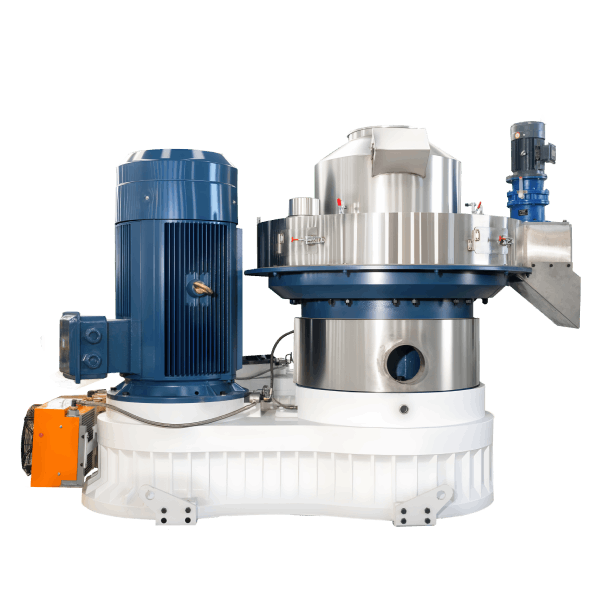
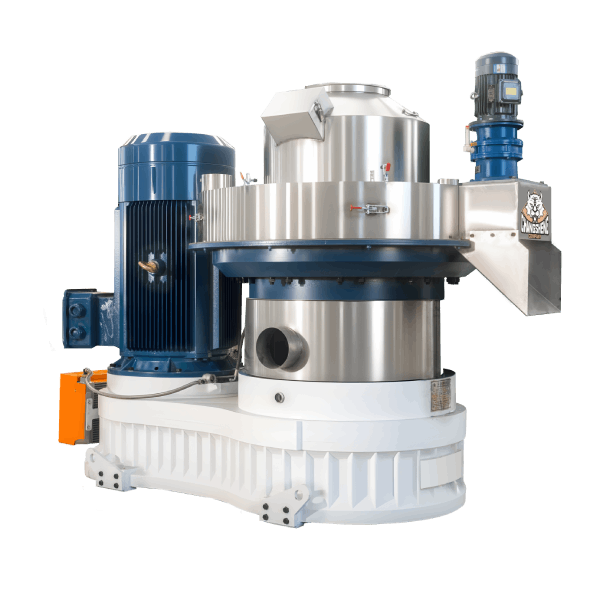
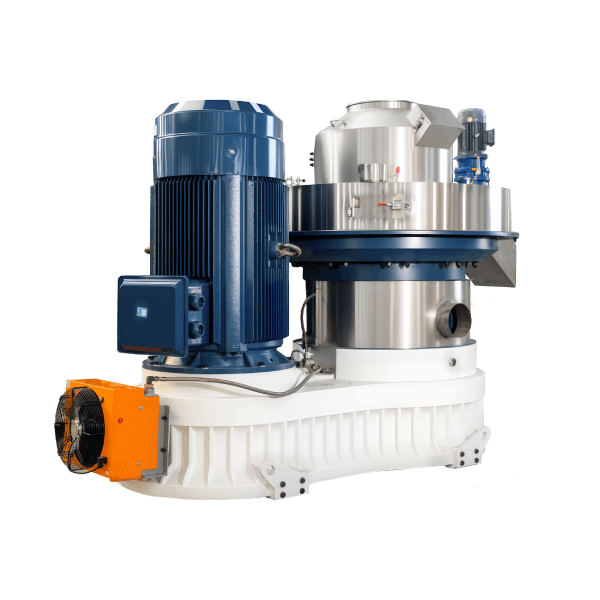
10 ton per hour pellet production line cost: Engineering Cost Breakdown
News 2026-02-10
Product Definition
A 10 ton per hour pellet production line is an industrial-scale system designed to convert biomass or agricultural residues into standardized fuel pellets at continuous high output. It integrates size reduction, drying, pelletizing, cooling, screening, and packaging under controlled mechanical and thermal conditions to ensure stable production and consistent pellet quality.
Technical Parameters and Specifications
Typical engineering parameters for a 10 t/h pellet production line are as follows. Actual values depend on raw material, moisture, and regional standards.
Nominal capacity:
8.5–10.5 tons/hour (net pellet output)
Raw material moisture (input):
15%–30% (after drying ≤12%)
Pellet diameter:
6 mm / 8 mm / 10 mm (optional)
Main pellet mill power:
250–315 kW per unit (usually dual mills)
Total installed electrical power:
900–1,200 kW
Thermal energy source:
Biomass furnace or gas burner, 2.5–3.5 MW
Operating mode:
24 hours continuous operation
Annual operating hours:
6,000–7,500 hours
Pellet bulk density:
600–750 kg/m³
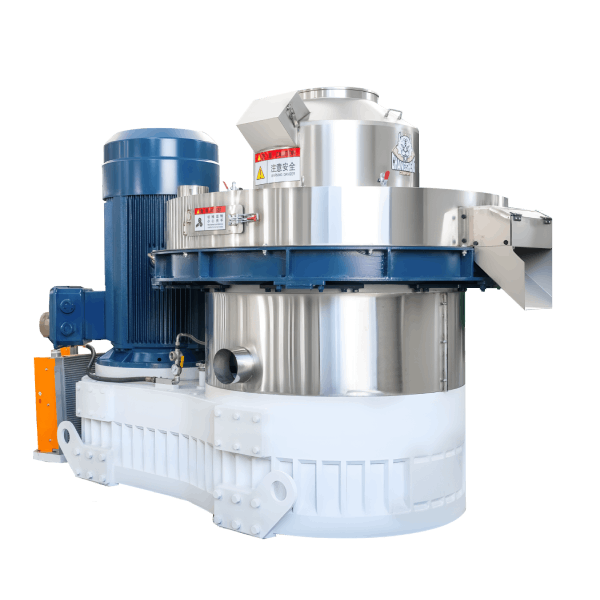
Structure and Material Composition
A standard 10 t/h pellet line is composed of the following engineered subsystems:
Raw Material Handling
• Heavy-duty belt conveyors (Q235 or Q345 steel)
• Buffer bins with wear-resistant liners
Size Reduction
• Hammer mill with alloy steel hammers
• Replaceable screen plates
Drying System
• Rotary drum dryer (carbon steel shell)
• High-temperature insulation layer
• Cyclone and dust separation units
Pelletizing Section
• Ring die pellet mills (forged alloy steel dies)
• SKF or equivalent bearing systems
Cooling and Screening
• Counterflow cooler (galvanized steel)
• Vibrating screen with spring isolation
Packaging and Storage
• Automatic weighing and bagging system
• Finished pellet silos
Electrical and Control
• PLC control cabinet
• Frequency converters
• Centralized monitoring interface
Manufacturing Process (Engineering Workflow)
- Raw Material Feeding
Bulk biomass is conveyed into a buffer system to stabilize feeding rate and avoid overload. - Crushing
Oversized material is reduced to ≤5 mm particle size to ensure uniform pellet compression. - Drying
Moisture is reduced to target range using a rotary dryer, with temperature and airflow precisely controlled. - Pelletizing
Conditioned material enters ring die pellet mills, where pressure, temperature, and die speed determine pellet quality. - Cooling
Fresh pellets are cooled from 70–90°C to near ambient temperature to improve hardness and storage stability. - Screening and Recycling
Fines are separated and automatically returned to the pellet mill inlet. - Packaging or Bulk Storage
Pellets are bagged or conveyed to silos depending on logistics strategy.
Industry Comparison (Cost-Oriented Table)
Comparison of pellet line capacities and cost structure:
Capacity | Typical CAPEX Range | Footprint | Energy Demand | Cost per Ton
5 t/h | Medium | Small | Moderate | Higher
10 t/h | Optimized | Medium | High | Balanced
15 t/h | High | Large | Very High | Lower
This comparison shows that a 10 t/h system often represents the optimal balance between investment cost and production efficiency for mid-to-large investors.
Application Scenarios
Distributors and Importers
• Centralized pellet manufacturing for regional markets
• Export-oriented pellet plants
EPC Contractors
• Turnkey biomass energy projects
• Industrial fuel replacement programs
Engineering Firms
• Waste-to-energy system integration
• Industrial decarbonization projects
Core Pain Points and Engineering Solutions
Pain Point 1: High Initial Investment
Solution: Modular system design allows phased installation and staged CAPEX deployment.
Pain Point 2: Unstable Pellet Quality
Solution: Dual pellet mill configuration ensures load balancing and consistent compression ratio.
Pain Point 3: Excessive Energy Consumption
Solution: Heat recovery from dryer exhaust and optimized airflow control.
Pain Point 4: Maintenance Downtime
Solution: Quick-change die systems and predictive maintenance scheduling.
Risk Warnings and Mitigation Strategies
Raw material variability can significantly affect output and cost. Always conduct material testing before final equipment selection.
Underestimating dust control may lead to safety and compliance issues. Proper filtration systems are mandatory.
Inadequate operator training increases failure risk. Commissioning must include on-site technical training.
Procurement and Selection Guide (Actionable Steps)
- Define raw material type, moisture, and annual volume
- Confirm target pellet standards and diameter
- Evaluate local energy and fuel costs
- Request detailed power and heat balance diagrams
- Verify supplier references for ≥10 t/h projects
- Analyze lifecycle cost, not only equipment price
- Clarify spare parts availability and lead time
Engineering Case Example
A Southeast Asian biomass plant installed a 10 ton per hour pellet production line to process rubber wood residues. The system operates two 250 kW ring die pellet mills with a biomass-fueled rotary dryer. Annual output exceeds 60,000 tons, with stable pellet density and less than 3% fines, supporting both domestic power plants and export contracts.
FAQ
- What is the typical cost range of a 10 t/h pellet line?
Usually mid to high six-figure USD, depending on configuration and automation. - Does cost include civil works?
No. Civil construction is normally excluded. - How many pellet mills are required?
Most systems use two mills for redundancy and stability. - What raw materials are suitable?
Wood chips, sawdust, agricultural residues, and similar biomass. - Is customization necessary?
Yes. Raw material properties require tailored design. - What is the average ROI period?
Typically 2–4 years, depending on market and feedstock cost. - How much land is required?
Approximately 3,000–5,000 m². - Can the line run continuously?
Yes, designed for 24-hour industrial operation. - What maintenance level is required?
Daily inspection plus scheduled part replacement. - Is automation optional?
PLC automation is strongly recommended for this capacity.
CTA
For a detailed quotation, engineering layout, or technical documentation for a 10 ton per hour pellet production line cost analysis, contact our technical team to request project-specific data and configuration options.
E-E-A-T Author Credentials
This article is written by an industrial systems engineer specializing in biomass pellet production lines, with over 10 years of experience in EPC project evaluation, equipment selection, and commissioning of large-scale pellet plants across Asia, Europe, and emerging markets.