High Output Pellet Production Line: Complete System Guide
News 2026-08-29
Page SEO Summary: This guide helps buyers design high output pellet production lines—covering capacity options, equipment configuration, investment costs, and implementation guidance.
“High output” in pellet production is not just about a larger machine. It is about a complete system designed for efficiency, redundancy, and continuous operation. A high output pellet production line is an industrial asset that operates 24/7, producing thousands of tons annually.
This guide provides the framework for understanding, designing, and procuring a high output pellet production line.
What Is a “High Output” Pellet Production Line?
Capacity Classification
| Output Level | Capacity (t/h) | Annual Production (8,000 hrs) | Classification |
|---|---|---|---|
| Small | 0.5-2 | 4,000-16,000 tons | Entry |
| Medium | 2-5 | 16,000-40,000 tons | Commercial |
| High Output | 5-15 | 40,000-120,000 tons | Industrial |
| Very High | 15+ | 120,000+ tons | Mega-scale |
High Output Definition
For this guide, high output means production lines with capacity exceeding 5 tons per hour, operating continuously (24/7/365), producing 40,000+ tons annually.
Equipment Configuration
Complete System Components
| Stage | Equipment | Function | Scale Consideration |
|---|---|---|---|
| 1. Raw material | Receiving, storage, conveyors | Intake | Multiple receiving points |
| 2. Preparation | Screening, drying, grinding | Prep | Multiple lines |
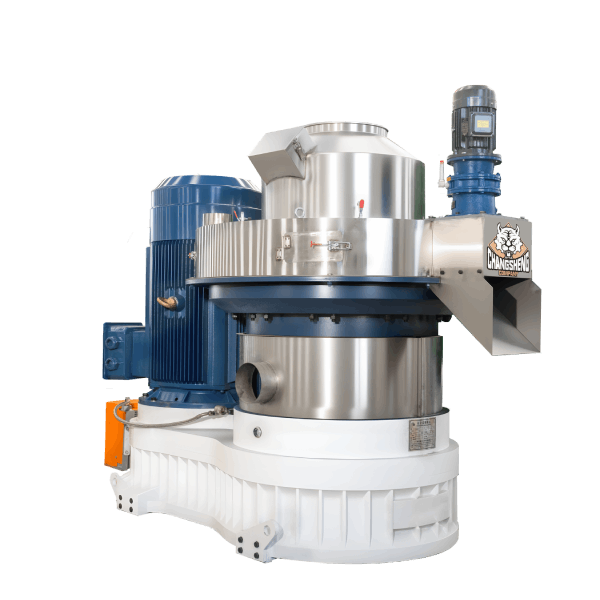
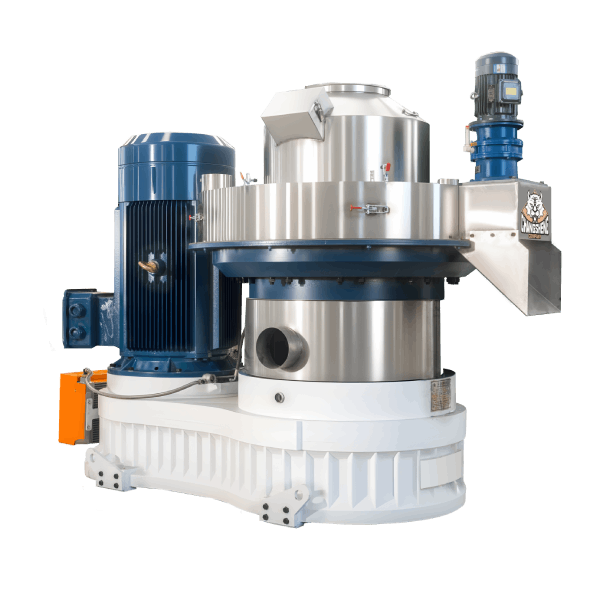
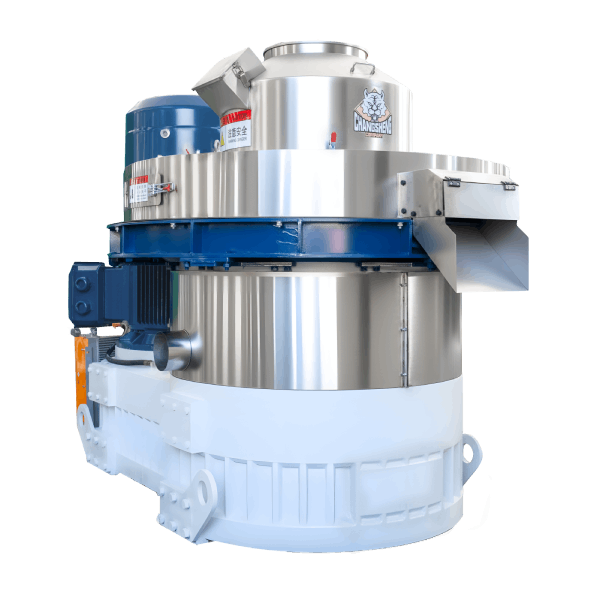
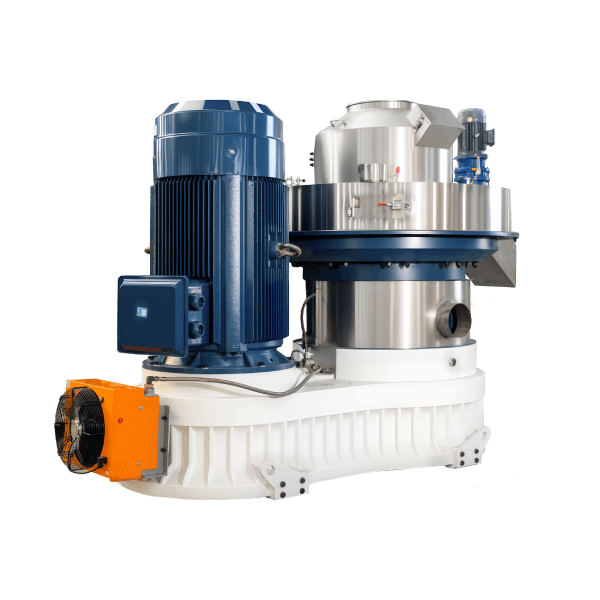
| 3. Pelletizing | Conditioning, pellet mills | Core process | Multiple mills |
| 4. Post-processing | Cooling, screening, storage | Finishing | Multiple coolers |
| 5. Packaging | Bagging or bulk | Final product | Bulk focus |
| 6. Control | SCADA/DCS | Automation | Integrated control |
Multi-Line Configuration
| Total Output | Number of Lines | Individual Line Size |
|---|---|---|
| 5-8 t/h | 2-3 | 2.5-3 t/h each |
| 8-12 t/h | 3-4 | 3 t/h each |
| 12-20 t/h | 4-6 | 3-4 t/h each |
| 20+ t/h | 6+ | 3-4 t/h each |
Capacity Design Considerations
Key Factors Affecting Output
| Factor | Impact | Optimization |
|---|---|---|
| Raw material quality | 10-20% output variation | Consistent supply |
| Moisture control | 15-25% variation | Precise drying |
| Particle size | 10-15% variation | Proper grinding |
| Die condition | 10-20% variation | Regular maintenance |
| Operator skill | 5-10% variation | Training |
Achieving Nameplate Capacity
| Requirement | Why Important |
|---|---|
| Consistent feedstock | Prevents production interruptions |
| Proper drying | Critical for throughput |
| Maintenance schedule | Prevents unplanned downtime |
| Operator training | Optimizes performance |
| Quality control | Maintains output quality |
Investment Costs
Capital Investment by Scale
| Output | Equipment Cost | Installation | Building | Total Investment |
|---|---|---|---|---|
| 5-8 t/h | $2-4 million | $0.5-1 million | $1-2 million | $3.5-7 million |
| 8-12 t/h | $4-7 million | $1-2 million | $2-3 million | $7-12 million |
| 12-20 t/h | $7-12 million | $2-3 million | $3-5 million | $12-20 million |
Cost Breakdown
| Component | % of Equipment Cost | Notes |
|---|---|---|
| Drying system | 20-30% | Multiple dryers |
| Pellet mills | 20-30% | Multiple units |
| Material handling | 15-20% | Conveyors, elevators |
| Grinding | 10-15% | Hammer mills |
| Cooling/screening | 10-15% | Post-processing |
| Control system | 5-10% | SCADA/DCS |
Operating Costs
Annual Operating Cost Components (10 t/h plant)
| Cost Category | % of Total | Annual Cost (Est.) |
|---|---|---|
| Raw material | 45-55% | $5-10 million |
| Energy (electricity) | 15-20% | $2-3 million |
| Labor | 10-15% | $1-2 million |
| Maintenance | 5-8% | $0.5-1 million |
| Other | 5-10% | $0.5-1 million |
Cost per Ton
| Cost Category | Cost per Ton ($) |
|---|---|
| Raw material | 40-80 |
| Energy | 15-25 |
| Labor | 8-15 |
| Maintenance | 5-10 |
| Total operating cost | 70-130 |
Key Design Factors for High Output
1. Redundancy
| Component | Why Redundancy Matters | Implementation |
|---|---|---|
| Pellet mills | Maintains output during maintenance | N+1 configuration |
| Dryers | Prevents production stop | Multiple units |
| Conveyors | Avoids bottlenecks | Bypass systems |
| Silos | Buffer supply | Multiple storage |
2. Material Flow
| Consideration | Why Important | Best Practice |
|---|---|---|
| Buffer storage | Balances production stages | 30-60 minutes capacity |
| Flow rates | Match between stages | Rate-matched |
| Bottlenecks | Prevent restrictions | Wide conveyors |
3. Automation
| Feature | Why Important | Benefits |
|---|---|---|
| SCADA/DCS | Central control | Consistent operation |
| Process monitoring | Real-time optimization | Efficiency |
| Alarm systems | Issue detection | Reduced downtime |
| Data logging | Performance tracking | Continuous improvement |
Project Implementation
Timeline
| Phase | Activities | Duration |
|---|---|---|
| 1. Feasibility | Market, raw materials, business case | 3-6 months |
| 2. Design | Process design, equipment selection | 6-12 months |
| 3. Procurement | Equipment, contracting | 3-6 months |
| 4. Construction | Building, installation | 12-18 months |
| 5. Commissioning | Testing, start-up | 2-4 months |
| Total | 26-46 months |
Key Milestones
| Milestone | Description | Success Factor |
|---|---|---|
| Feasibility complete | Business case confirmed | Project viability |
| Design freeze | Final specifications | No scope creep |
| Equipment ordered | Contracts signed | Supplier selection |
| Construction complete | Building ready | Project progress |
| Commissioning | Production starts | Project completion |
Procurement Checklist
Project Definition
- □ Output target confirmed (t/h)
- □ Raw material source confirmed
- □ Market identified
- □ Budget established
System Design
- □ Complete equipment list developed
- □ Line configuration determined
- □ Redundancy planned
- □ Automation level defined
Supplier Evaluation
- □ Multiple suppliers compared
- □ References from similar projects
- □ Factory visits completed
- □ Proposals evaluated
Project Management
- □ Implementation timeline developed
- □ Milestones established
- □ Risk assessment completed
- □ Project team identified
Frequently Asked Questions
1. What is considered a high output pellet production line?
High output means capacity exceeding 5 tons per hour, continuous 24/7 operation, producing 40,000+ tons annually.
2. How many pellet mills are needed?
A 10 t/h plant typically needs 4-6 pellet mills (2-3 t/h each), depending on individual mill capacity and redundancy requirements.
3. What is the investment cost?
5-8 t/h: $3.5-7 million. 8-12 t/h: $7-12 million. 12-20 t/h: $12-20 million.
4. What is the most expensive component?
Drying systems (20-30% of equipment cost) and pellet mills (20-30%) are the largest cost components.
5. How important is redundancy?
Very important. Redundancy prevents production stops during maintenance and equipment failure.
6. What automation level is needed?
High output lines require SCADA/DCS systems for central control, monitoring, and optimization.
7. What is the typical timeline?
26-46 months from feasibility to production, depending on scale and complexity.
8. What is the key success factor?
Consistent raw material supply and proper moisture control are the most critical success factors.
About the Author
Zhang Wei – Senior International Sales Engineer, Shandong Changsheng Machinery Co., Ltd.
Zhang Wei has over 12 years of experience in the biomass and feed pellet mill industry, with a background in mechanical engineering and international project execution. He has worked on high output pellet production line projects across Southeast Asia, the Middle East, Africa, Europe, and Latin America.
With hands-on experience in both the manufacturing workshop and client-side operations, Zhang brings practical insights into successful large-scale project execution—from the factory floor to the industrial plant.