Large Scale Pellet Production: Complete Project Planning Guide
News 2026-08-21
Page SEO Summary: This comprehensive guide helps you plan large scale pellet production—covering system requirements, equipment, investment costs, operational considerations, and project implementation.
Large scale pellet production is a significant industrial undertaking. Whether producing wood pellets for export, biomass fuel for power generation, or feed pellets for commercial livestock operations, large-scale production requires careful planning, substantial investment, and professional operation.
This guide provides a comprehensive framework for planning and implementing large scale pellet production.
What Is Large Scale Pellet Production?
Definition
Large scale pellet production refers to industrial-scale pellet manufacturing with capacities typically exceeding 5 tons per hour, often operating 24/7/365, producing tens of thousands to hundreds of thousands of tons annually.
Scale Classification
| Scale | Capacity (t/h) | Annual Output | Typical Use |
|---|---|---|---|
| Small industrial | 2-5 t/h | 10,000-25,000 tons | Regional market |
| Medium industrial | 5-10 t/h | 25,000-50,000 tons | Export/industrial |
| Large industrial | 10-20 t/h | 50,000-100,000 tons | Export/power |
| Very large | 20+ t/h | 100,000+ tons | Power generation |
Equipment System
Complete Equipment List
| Stage | Equipment | Function | Scale Consideration |
|---|---|---|---|
| Raw material | Receiving, storage, conveyors | Intake and storage | Large capacity |
| Preparation | Screening, drying, grinding | Material prep | Multiple lines |
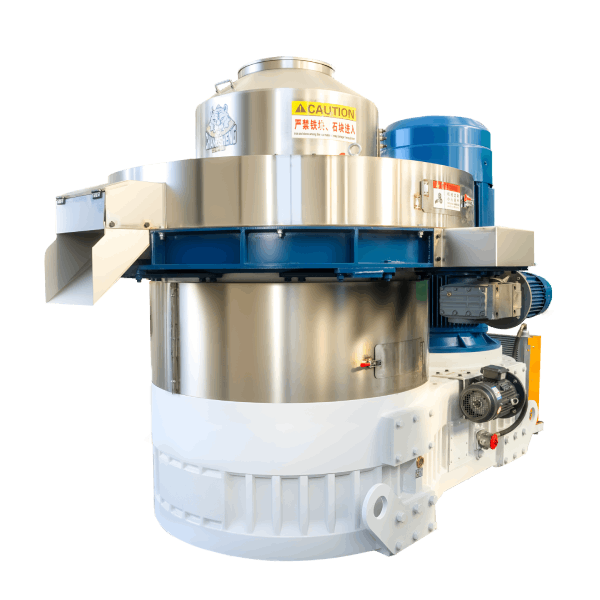
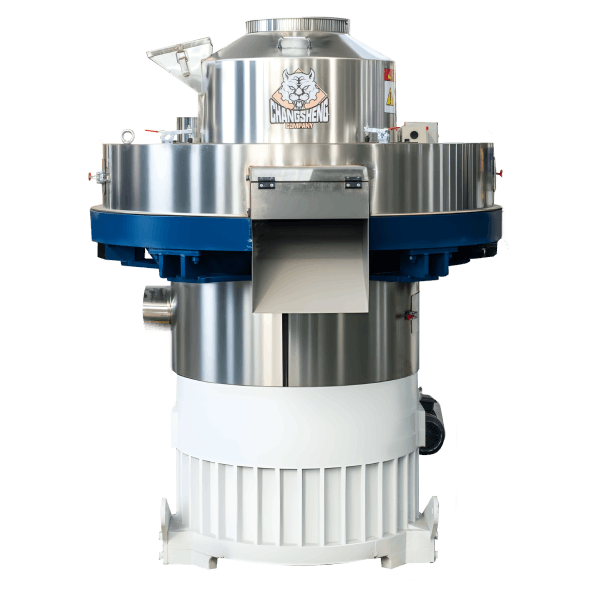
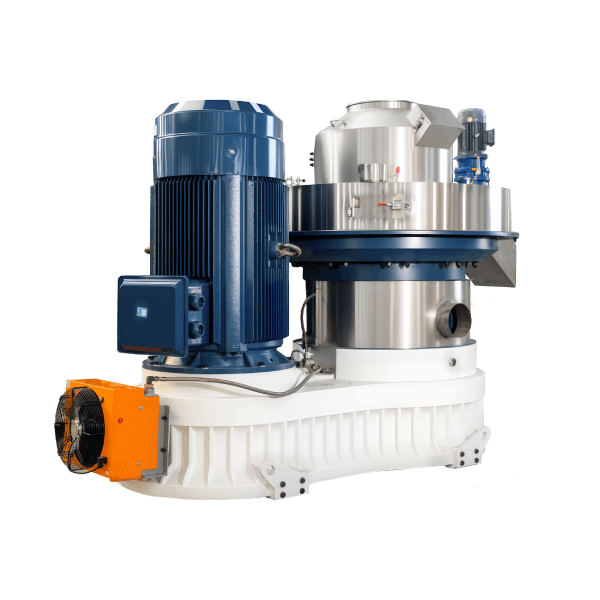
| Pelletizing | Conditioning, pellet mills | Core process | Multiple mills |
| Post-processing | Cooling, screening, storage | Finishing | Multiple coolers |
| Packaging | Bagging or bulk | Final product | Bulk focus |
| Control | SCADA/DCS | Automation | Integrated control |
Equipment Scale
| Equipment | 5-10 t/h Line | 10-20 t/h Line | 20+ t/h Line |
|---|---|---|---|
| Dryer | 1 large | 1-2 large | 2+ large |
| Pellet mills | 2-4 | 4-8 | 8+ |
| Coolers | 2-4 | 4-8 | 8+ |
| Conveyors | Multiple | Multiple | Extensive |
Production Process
Process Flow
| Stage | Equipment | Parameters | Purpose |
|---|---|---|---|
| 1. Receiving | Hopper; conveyor | — | Raw material intake |
| 2. Screening | Vibrating screen | Remove debris | Protect equipment |
| 3. Drying | Dryer | 8-12% moisture | Reduce moisture |
| 4. Grinding | Hammer mill | 2-5 mm | Size reduction |
| 5. Conditioning | Conditioner | 80-100°C | Heat activation |
| 6. Pelletizing | Pellet mill | High pressure | Form pellets |
| 7. Cooling | Cooler | Ambient | Stabilize pellets |
| 8. Screening | Fines screen | — | Remove fines |
| 9. Storage | Silos | — | Bulk storage |
| 10. Loading | Bulk loader | — | Shipment |
Capacity and Scale
Production Capacity
| Capacity | Annual Output (8,000 h) | Typical Operation |
|---|---|---|
| 5 t/h | 40,000 tons/year | 2 shifts |
| 10 t/h | 80,000 tons/year | 3 shifts |
| 15 t/h | 120,000 tons/year | 3 shifts |
| 20 t/h | 160,000 tons/year | 3 shifts |
Line Configuration
| Total Capacity | Number of Lines | Line Size |
|---|---|---|
| 5-10 t/h | 2-4 | 2.5 t/h each |
| 10-15 t/h | 3-5 | 3 t/h each |
| 15-20 t/h | 4-6 | 3-4 t/h each |
| 20+ t/h | 5-8+ | 4+ t/h each |
Investment Costs
Capital Investment by Scale
| Scale | Equipment Cost | Installation | Total Investment |
|---|---|---|---|
| 5-10 t/h | $5-10 million | $2-4 million | $7-14 million |
| 10-20 t/h | $10-20 million | $4-8 million | $14-28 million |
| 20+ t/h | $20-40 million+ | $8-16 million+ | $28-56 million+ |
Cost Breakdown
| Component | % of Total | Notes |
|---|---|---|
| Drying system | 20-30% | Largest single cost |
| Pellet mills | 15-25% | Multiple lines |
| Material handling | 10-15% | Conveyors; elevators |
| Building/infrastructure | 15-20% | Facility |
| Electrical/control | 10-15% | Power; automation |
| Land/permits | 5-10% | Site preparation |
Operating Costs
Annual Operating Cost Components
| Cost Category | % of Total | Annual Cost (10 t/h plant) |
|---|---|---|
| Raw material | 40-60% | $5-10 million |
| Energy (electricity) | 15-25% | $2-4 million |
| Labor | 10-15% | $1-2 million |
| Maintenance | 5-10% | $0.5-1 million |
| Other (overhead) | 5-10% | $0.5-1 million |
Cost per Ton
| Cost Category | Cost per Ton ($) |
|---|---|
| Raw material | 40-80 |
| Energy | 15-25 |
| Labor | 8-15 |
| Maintenance | 5-10 |
| Total operating cost | 70-130 |
Key Success Factors
Critical Factors
| Factor | Why Critical |
|---|---|
| Raw material supply | Must be reliable and cost-effective |
| Product quality | Must meet market standards |
| Operational efficiency | Affects profitability |
| Market demand | Must exist |
| Logistics | Distribution is key |
| Financial management | Capital intensive |
Risk Mitigation
| Risk | Mitigation |
|---|---|
| Raw material shortage | Long-term contracts; multiple sources |
| Price volatility | Hedging; long-term contracts |
| Equipment failure | Redundancy; maintenance |
| Market downturn | Diversification; quality focus |
| Regulatory changes | Compliance monitoring |
Market Considerations
Major Markets
| Market | Product | Volume | Price Sensitivity |
|---|---|---|---|
| Export (Europe) | Wood pellets | Very large | Medium |
| Export (Asia) | Wood pellets | Large | Medium |
| Power generation | Industrial pellets | Very large | High |
| Residential heating | Premium pellets | Large | Low |
Pricing Trends
| Factor | Trend |
|---|---|
| Supply-demand balance | Generally tight |
| Raw material costs | Rising |
| Energy costs | Volatile |
| Regulatory support | Positive |
| Competition | Increasing |
Project Implementation
Timeline
| Phase | Activities | Duration |
|---|---|---|
| 1. Feasibility | Market study; raw materials; business case | 3-6 months |
| 2. Design | Process design; equipment selection; permits | 6-12 months |
| 3. Procurement | Equipment; contracting | 3-6 months |
| 4. Construction | Building; installation | 12-18 months |
| 5. Commissioning | Testing; start-up | 2-4 months |
| Total | 26-46 months |
Key Milestones
| Milestone | Description | Success Factor |
|---|---|---|
| Feasibility complete | Business case confirmed | Project viability |
| Permits obtained | Regulatory approval | Project start |
| Equipment ordered | Contracts signed | Supplier selection |
| Construction complete | Building ready | Installation |
| Commissioning | Production starts | Operational start |
| Performance accepted | Guaranteed output | Project complete |
Procurement Checklist
Project Definition
- □ Capacity target confirmed (t/h)
- □ Raw material source confirmed
- □ Market identified
- □ Budget established
- □ Timeline defined
Equipment Planning
- □ Complete equipment list developed
- □ Multiple line configuration confirmed
- □ Redundancy planned
- □ Utilities confirmed
Project Management
- □ Implementation timeline developed
- □ Milestones established
- □ Risk assessment completed
- □ Project team identified
Frequently Asked Questions
1. What is large scale pellet production?
Large scale pellet production refers to industrial-scale manufacturing with capacities typically exceeding 5 tons per hour, producing tens of thousands of tons annually.
2. What capacity is considered large scale?
Typically 5+ t/h, producing 40,000+ tons/year. Very large scale is 20+ t/h, producing 160,000+ tons/year.
3. How much does a large scale pellet plant cost?
5-10 t/h plant: $7-14 million. 10-20 t/h plant: $14-28 million. 20+ t/h plant: $28-56+ million.
4. What are the operating costs?
Total operating costs typically $70-130 per ton, with raw material being the largest component (40-60% of total).
5. How many pellet mills are needed?
A 10 t/h plant typically needs 4-8 pellet mills (2.5-3 t/h each). Multiple lines provide redundancy.
6. What is the typical timeline?
From feasibility to production: 26-46 months depending on scale and complexity.
7. What are the main risks?
Raw material supply, price volatility, equipment reliability, market demand, and regulatory changes.
8. What is the most important success factor?
Reliable, cost-effective raw material supply is the most critical success factor for large scale production.
About the Author
Zhang Wei – Senior International Sales Engineer, Shandong Changsheng Machinery Co., Ltd.
Zhang Wei has over 12 years of experience in the biomass and feed pellet mill industry, with a background in mechanical engineering and international project execution. He has worked on large scale pellet production projects across Southeast Asia, the Middle East, Africa, Europe, and Latin America.
With hands-on experience in both the manufacturing workshop and client-side operations, Zhang brings practical insights into successful large scale project execution—from the factory floor to the industrial plant.