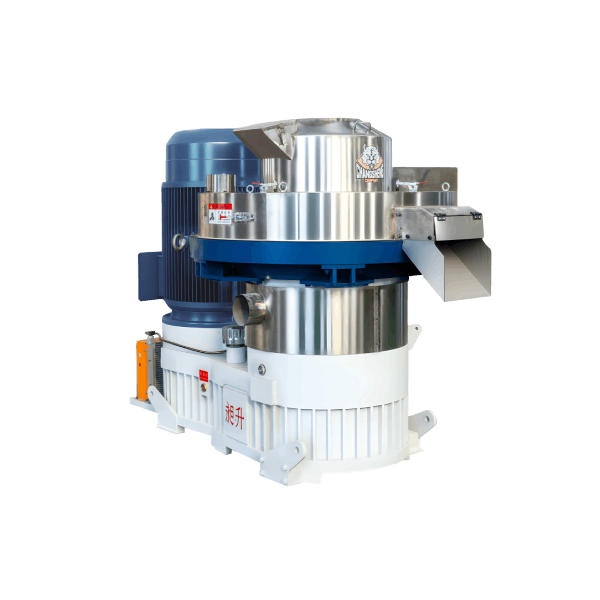
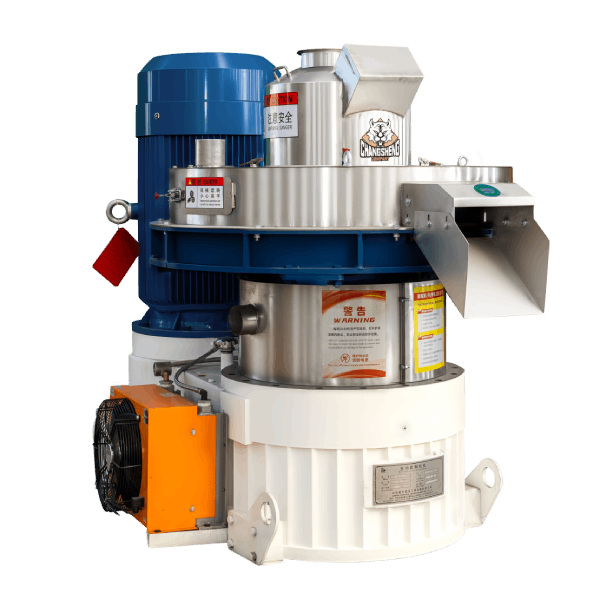
Pellet Mill with 90kW Motor Power: Complete Selection Guide
News 2026-07-21
Page SEO Summary: This technical guide helps procurement professionals and engineers evaluate pellet mills with 90kW motor power—covering specifications, capacity by material, selection criteria, and operational considerations.
The 90kW (approximately 125 HP) pellet mill occupies a prominent position in the industrial pellet equipment spectrum. It is powerful enough for serious commercial production across a wide range of materials, yet remains within the capabilities of many power supply systems. It represents the “workhorse” configuration for mid-sized pellet operations.
Whether you’re processing wood for biomass pellets, feed for livestock, or agricultural residues for energy, a 90kW pellet mill delivers the torque and capacity needed for reliable, continuous operation. But what exactly does a 90kW pellet mill offer? What capacity can you expect? And how does it compare to other power options?
This guide provides a comprehensive technical and procurement framework for evaluating and selecting a pellet mill with 90kW motor power.
Why 90kW?
The Positioning
| Power | Equivalent HP | Position | Typical Application |
|---|---|---|---|
| 75 kW | 100 HP | Lower mid-range | Smaller operations; soft materials |
| 90 kW | 125 HP | Mid-range workhorse | Most commercial applications |
| 110 kW | 150 HP | Upper mid-range | Harder materials; higher output |
| 132 kW | 180 HP | Large industrial | High-capacity; challenging materials |
| 160+ kW | 200+ HP | Heavy industrial | Very large operations |
Why 90kW Is Popular
| Reason | Explanation |
|---|---|
| Balanced capability | Handles most materials effectively |
| Power availability | 90kW is commonly available in industrial settings |
| Cost-effective | Good value for the capacity delivered |
| Compact footprint | Reasonable size for the power |
| Versatile | Suitable for feed, wood, and biomass |
Technical Specifications
Motor and Drive
| Parameter | Value | Notes |
|---|---|---|
| Motor power | 90 kW (125 HP) | Typical configuration |
| Motor speed | 1,500 RPM (50Hz) / 1,800 RPM (60Hz) | Depending on supply |
| Voltage options | 380V/50Hz; 400V/50Hz; 460V/60Hz | Customizable |
| Efficiency class | IE3 (standard); IE4 (optional) | Energy saving option |
| Gearbox | Heavy-duty helical or planetary | High torque capacity |
| Reduction ratio | ~6:1 to 8:1 | Based on die speed |
Die Specifications
| Parameter | Typical Value | Notes |
|---|---|---|
| Die diameter | 500-560 mm | Standard for this power |
| Die width | 160-200 mm | Affects capacity and die life |
| Die speed | 250-350 RPM | Adjustable based on material |
| Hole diameter | 2-12 mm | Application-dependent |
| Compression ratio (L/D) | 1:6 to 1:18 | Material-dependent |
Physical Dimensions
| Parameter | Approximate Value |
|---|---|
| Length | 2.2-2.8 m |
| Width | 1.6-2.2 m |
| Height | 1.9-2.6 m |
| Weight | 6,000-9,000 kg |
Electrical Requirements
| Parameter | Requirement |
|---|---|
| Supply voltage | As specified (380V/400V/460V) |
| Frequency | 50Hz or 60Hz |
| Phase | 3-phase |
| Full load current | ~160-180 A (at 380V) |
| Starting current | ~900-1,000 A (direct-on-line) |
| Transformer capacity | Minimum 150-200 kVA |
Capacity by Material
Expected Output Ranges
| Material | Expected Capacity (t/h) | Notes |
|---|---|---|
| Softwood (pine, spruce) | 3.0-4.0 | Easiest to pelletize |
| Hardwood (oak, beech) | 2.5-3.5 | Moderate difficulty |
| Mixed wood | 2.8-3.8 | Good performance |
| Feed (grain-based) | 4.0-5.0 | Higher output possible |
| Agricultural residues | 2.0-3.2 | Variable; fiber-dependent |
| Rice husk | 2.0-3.0 | Abrasive; moderate output |
| Straw | 1.8-2.8 | Challenging; high fiber |
| Wood chips | 2.5-3.5 | Depends on chip size |
Factors Affecting Capacity
| Factor | Impact on Capacity |
|---|---|
| Material density | Higher density = slightly lower output |
| Moisture content | >12% reduces output |
| Particle size | Proper size = better output |
| Die compression ratio | Higher ratio = lower output, higher quality |
| Die condition | Worn die = lower output |
| Operator skill | Experienced = optimal output |
90kW vs Other Power Options
Comparison Table
| Parameter | 75 kW | 90 kW | 110 kW | 132 kW |
|---|---|---|---|---|
| Typical softwood capacity | 2.5-3.0 t/h | 3.0-4.0 t/h | 3.5-4.5 t/h | 4.5-5.5 t/h |
| Typical hardwood capacity | 2.0-2.5 t/h | 2.5-3.5 t/h | 3.0-4.0 t/h | 4.0-5.0 t/h |
| Die diameter | 450-500 mm | 500-560 mm | 560-610 mm | 610-660 mm |
| Approximate weight | 4,500-6,000 kg | 6,000-9,000 kg | 8,000-12,000 kg | 10,000-15,000 kg |
| Relative cost | 0.8× | 1.0× | 1.2-1.3× | 1.4-1.6× |
Selection Guidance
| Situation | Recommended Power |
|---|---|
| Softwood only, moderate operation | 75 kW (may suffice) |
| Mixed wood, commercial production | 90 kW |
| Hardwood or biomass, consistent output | 90-110 kW |
| Challenging materials, high capacity | 110-132 kW |
| Agricultural residues, continuous operation | 90-110 kW |
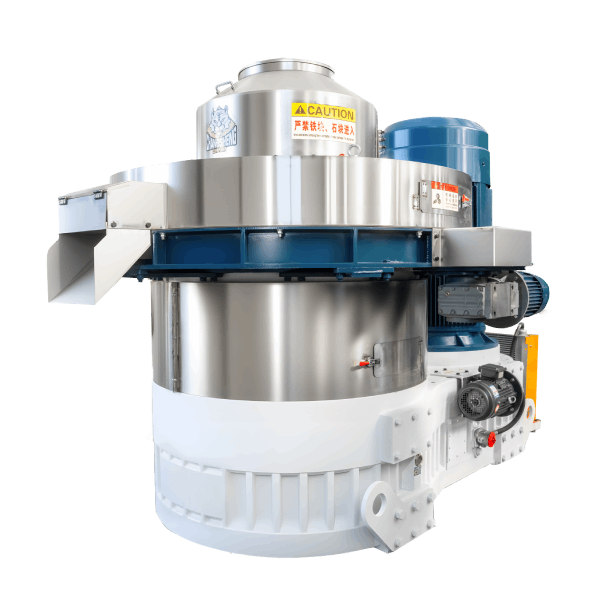
Application Suitability
By Material Type
| Material | Suitability | Notes |
|---|---|---|
| Softwood | Excellent | 90kW provides good capacity |
| Hardwood | Good | Requires proper die and operation |
| Biomass blends | Good | Depends on blend composition |
| Agricultural residues | Moderate-Good | May need higher power for some materials |
| Animal feed | Excellent | 90kW is ample for feed production |
| Aquafeed | Good | Proper die and conditioning required |
By Operation Type
| Operation | Suitability | Notes |
|---|---|---|
| Single shift (8-10h) | Excellent | Good capacity utilization |
| Double shift (16h) | Excellent | Reliable for continuous operation |
| 24/7 operation | Good | Requires proper cooling and maintenance |
| Variable materials | Good | Adjustable die and operation |
Supporting Equipment Requirements
Minimum Requirements
| Equipment | Specification | Purpose |
|---|---|---|
| Power supply | 150-200 kVA transformer | Sufficient capacity |
| Electrical panel | Rated for 90kW motor | Includes protection |
| Feeding system | Variable speed feeder | Controlled feed rate |
| Cooling system | 3-4 t/h capacity | Product cooling |
Recommended Equipment
| Equipment | Specification | Purpose |
|---|---|---|
| Hammer mill | 55-75 kW | Size reduction |
| Conditioner | 3-5 t/h | Pre-heating |
| Dust collection | Appropriate capacity | Environmental control |
| Surge bin | 2-3 ton capacity | Buffer feeding |
Investment and Operating Costs
Cost Estimates
| Item | Estimated Cost (USD) |
|---|---|
| 90kW pellet mill (equipment) | $35,000-55,000 |
| Complete line (with hammer mill, cooler) | $85,000-160,000 |
| Installation (labor + materials) | $10,000-25,000 |
| Annual electricity cost | $35,000-55,000 |
Annual Operating Cost (16h/day, 300 days/year)
| Cost Category | Estimated Annual Cost |
|---|---|
| Electricity (90kW avg) | $40,000-60,000 |
| Die replacement | $6,000-12,000 |
| Roller shells | $2,000-5,000 |
| Maintenance/parts | $3,000-8,000 |
| Labor | $15,000-30,000 |
| Total | $66,000-115,000 |
Procurement Checklist
Technical Specifications
- □ Motor power confirmed: 90 kW
- □ Voltage and frequency match site supply
- □ Motor efficiency class specified (IE3 or IE4)
- □ Starting method confirmed (DOL or star-delta)
- □ Transformer capacity verified
Application Requirements
- □ Material type and characteristics identified
- □ Target capacity (t/h) confirmed
- □ Die specification (diameter, holes, compression ratio)
- □ Operating hours per day confirmed
Supporting Equipment
- □ Electrical supply and control panel confirmed
- □ Feeding system specified
- □ Cooling system specified
- □ Additional equipment (hammer mill, conditioner) considered
Supplier Evaluation
- □ Supplier experience with 90kW configuration
- □ References from similar applications
- □ Warranty and support terms
- □ Spare parts availability
Frequently Asked Questions
1. What is the typical capacity of a 90kW pellet mill?
Capacity depends on the material. Softwood: 3.0-4.0 t/h; hardwood: 2.5-3.5 t/h; feed: 4.0-5.0 t/h; agricultural residues: 2.0-3.2 t/h. The exact capacity depends on die specification and operating conditions.
2. What materials can a 90kW pellet mill process?
A 90kW pellet mill can process wood (softwood and hardwood), animal feed, agricultural residues (straw, rice husk, corn stover), and biomass blends. It is suitable for most commercial pellet applications.
3. What is the die size for a 90kW pellet mill?
The die diameter is typically 500-560 mm with a width of 160-200 mm. The exact size depends on the manufacturer and the specific application.
4. How much does a 90kW pellet mill cost?
A 90kW pellet mill (equipment only) typically costs $35,000-55,000. A complete line including hammer mill, cooler, and supporting equipment costs $85,000-160,000.
5. What is the electrical requirement for a 90kW pellet mill?
The motor draws approximately 160-180 A at 380V (full load). Starting current is 5-6 times full load current. A transformer capacity of 150-200 kVA is recommended.
6. Is 90kW enough for hardwood pellets?
Yes, 90kW is sufficient for hardwood with the proper die specification. Expected output is 2.5-3.5 t/h, depending on the specific hardwood and operating conditions.
7. How does 90kW compare to 110kW?
The 110kW provides about 15-20% more power, which translates to higher capacity for challenging materials. However, it requires larger electrical supply and higher investment. The 90kW is more cost-effective for most applications.
8. What is the annual electricity cost for a 90kW pellet mill?
With 16 hours/day, 300 days/year operation, and $0.12/kWh electricity cost, annual electricity cost is approximately $40,000-60,000.
About the Author
Zhang Wei – Senior International Sales Engineer, Shandong Changsheng Machinery Co., Ltd.
Zhang Wei has over 12 years of experience in the biomass and feed pellet mill industry, with a background in mechanical engineering and international project execution. He has managed pellet mill supply projects for clients across Southeast Asia, the Middle East, Africa, Europe, and Latin America, including numerous 90kW and similar power configurations.
With hands-on experience in both the manufacturing workshop and client-side operations, Zhang brings practical insights into successful equipment procurement—from the factory floor to the customer’s production site.