Biomass Pelletizing Machine: Process & Capacity Guide
News 2026-08-20
Biomass Pelletizing Machine: Process, Capacity & Equipment Guide
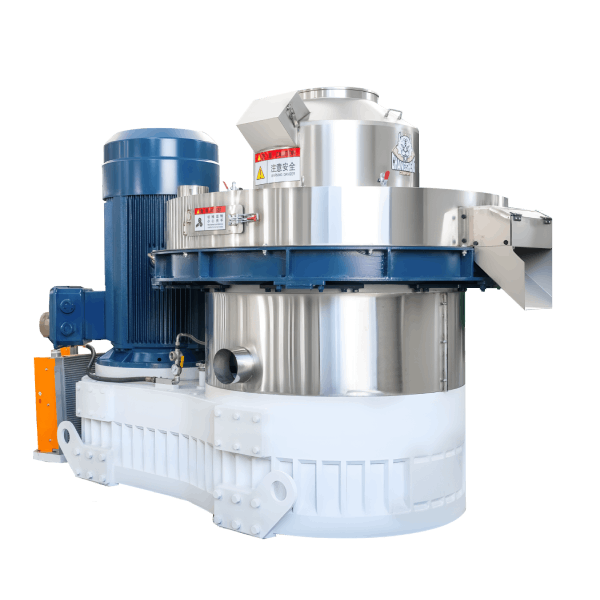
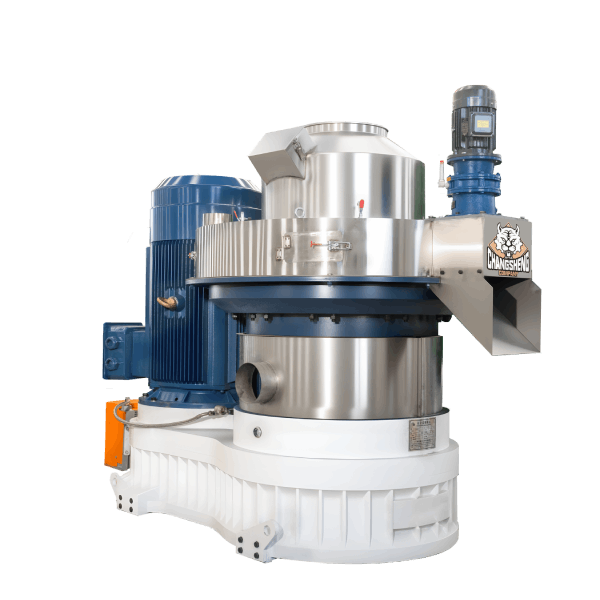
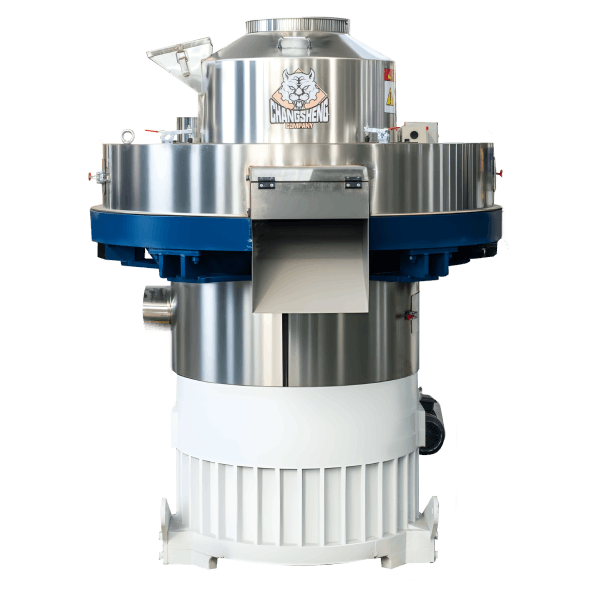
Biomass pelletizing is a continuous process that converts prepared biomass into uniform pellets through size reduction, moisture conditioning, compression, and cooling. The pelletizing machine is the core compression equipment in this process, but it is not the whole production line. A complete biomass pelletizing system may also include a grinder, dryer, pellet mill, cooler, screener, and packing machine, depending on raw material and target pellet quality.
This guide is written for procurement managers, importers, EPC contractors, project engineers, and end users who need to understand how biomass pelletizing works, how process parameters affect output and pellet quality, what equipment is needed before and after the pelletizing machine, and what determines system cost. For machine selection and supplier evaluation, see the separate biomass pellet machine buyer’s guide on this site.
What Is Biomass Pelletizing?
Biomass pelletizing is the process of compressing prepared biomass material into dense, uniform pellets. The process relies on pressure, friction heat, and the natural binding properties of the material, especially lignin. Lignin softens under heat and pressure, then binds particles together as the pellet cools.
Pelletizing is not a single step. It is the result of several upstream and downstream steps working together. If upstream preparation is poor, the pelletizing machine cannot compensate. If downstream cooling and screening are missing, pellet durability and storage life suffer.
Biomass Pelletizing Process Flow
A typical biomass pelletizing process follows this sequence: raw material receiving, crushing or chipping, hammer milling, drying, conditioning, pelletizing, cooling, screening, and packing.
Raw material receiving: material is collected, inspected, and stored.
Crushing and chipping: large pieces are reduced to a size suitable for hammer milling.
Hammer milling: material is ground to a consistent particle size for stable feeding and compression.
Drying: moisture is reduced to the range suitable for pelletizing.
Conditioning: moisture and temperature are adjusted to improve binding and pellet quality.
Pelletizing: material is pressed through the die to form pellets.
Cooling: hot, soft pellets are cooled and hardened.
Screening: fines and oversize particles are separated.
Packing: finished pellets are bagged or bulk-loaded.
The pelletizing machine is the core of this flow, but its performance depends on what happens before and after it.
How Does a Biomass Pelletizing Machine Work?
Inside the pelletizing machine, the process follows a defined sequence.
Feeding
Material enters the die chamber through a feeder. Feed rate must be stable. If feed rate is too high, the motor overloads and the die blocks. If feed rate is too low, output drops and pellet quality becomes inconsistent. A variable frequency feeder is often used to handle material variation.
Conditioning
If a conditioner is used, moisture and heat are added to the material before compression. Conditioning helps soften the material, improves binding, and reduces die wear. Not all materials require conditioning, but for dry or low-lignin materials it can improve pellet quality.
Roller Compression
Rollers press the material into the die holes. Roller pressure, roller clearance, and roller condition affect compression and pellet density. If roller clearance is too large, material slips and output drops. If clearance is too small, rollers and die wear faster.
Die Compression
The die determines pellet size and compression ratio. Die hole diameter determines pellet diameter. Die thickness and hole taper determine compression ratio. Higher compression ratio increases pellet density but also increases power demand and die wear. The correct compression ratio depends on material density, fiber content, and moisture. A mismatch causes soft pellets, blockage, or fast die wear.
Heat and Binding
Friction between material and die generates heat, typically in the range of 80 to 120 degrees Celsius. This range depends on material type, moisture, compression ratio, and feed rate. This heat softens lignin, which acts as a natural binder. If temperature is too low, pellets are weak. If temperature is too high, material may burn or the die may be damaged.
Pellet Formation and Discharge
Pellets exit the die and are cut to length by the cutter. Pellet length is controlled by cutter position. After cutting, pellets fall into the discharge chute and move to the cooler.
How Moisture Affects Biomass Pelletizing
Moisture is the single most important process variable in biomass pelletizing. It affects compression, binding, die wear, and pellet quality.
Too Dry
If material is too dry, binding is poor, pellets are weak, fines increase, and power demand may rise because the material does not compress well.
Too Wet
If material is too wet, compression is poor, the die may block, pellets are soft, throughput drops, and steam may form inside the die chamber.
Correct Moisture
The correct moisture range depends on raw material, particle size, and die compression ratio. A target range should be determined by a pelletizing test with your actual material, not by a fixed rule. Common practice is to test at two or three moisture levels and select the level that gives the best balance of pellet quality, output, and power consumption.
Why Particle Size Matters in Biomass Pelletizing
Particle size affects feeding stability, compression, pellet density, and die wear.
A hammer mill reduces material to a consistent particle size. Screen size in the hammer mill determines final particle size. If particle size is too coarse, feeding becomes uneven and pellets are weak. If particle size is too fine, material may bridge in the feeder and die blockage risk increases.
Fiber length also matters. Long fibers tend to tangle and bridge, while short fibers feed more evenly. For fibrous materials such as straw, a hammer mill with the correct screen size is important for stable pelletizing.
How Raw Material Characteristics Affect Pelletizing
Lignin
Lignin is the natural binder in biomass. Higher lignin content improves binding and pellet durability. Wood materials generally have higher lignin content than straw and grasses.
Fiber
Fiber content affects feeding, compression, and die wear. High-fiber materials require more compression force and may need higher compression ratio dies.
Ash
High ash content reduces pellet energy value and increases wear. Rice husk and some agricultural residues have higher ash content than wood.
Abrasiveness
Abrasiveness affects die and roller life. Rice husk, coconut shell, and palm kernel shell are more abrasive than sawdust. Abrasive materials require harder dies and more frequent inspection.
Bulk Density
Bulk density affects feeding and throughput. Low bulk density materials require larger feeder and die chamber volume for the same output. High bulk density materials require more motor power.
How Raw Material Affects Pelletizing Capacity
Material type, moisture, particle size, fiber length, and abrasiveness all affect actual capacity. A machine rated at a certain output under ideal conditions may produce less with high-fiber, high-moisture, or abrasive material. This is why a capacity figure must be stated together with the material and moisture conditions used to define it. For machine selection based on capacity, see the separate biomass pellet machine buyer’s guide on this site.
How to Calculate Biomass Pelletizing Capacity
Required hourly capacity equals annual production target divided by annual operating hours.
Example: annual target 2,000 tons, operating hours 6,000 per year, required hourly capacity is about 0.33 t/h. This is an illustrative example, not a fixed industry value.
In practice, a capacity margin of about 20 to 30 percent is a practical starting point. This margin absorbs material variation, moisture changes, maintenance time, and operator breaks. The exact margin depends on how consistent your material is, how many hours you can realistically operate, and how much maintenance downtime you expect.
Actual capacity depends on material type, moisture, particle size, pellet diameter, die specification, compression ratio, machine efficiency, and operating skill. A capacity figure without these conditions is not a technical commitment.
What Equipment Is Needed for Biomass Pelletizing?
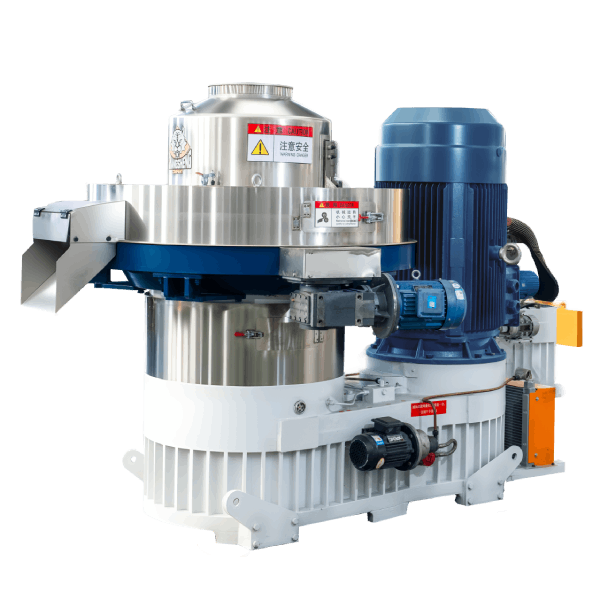
The equipment scope depends on material condition and target pellet quality.
Small Pelletizing System
A small system usually includes a hammer mill, a pellet mill, and a cooler. Drying may be done separately or by natural drying. This configuration suits small farms, pilot projects, and dry, uniform material.
Medium Pelletizing Line
A medium line usually includes a crusher or hammer mill, a dryer, a pellet mill, a cooler, a screener, and a packing machine. This configuration suits small commercial production and cooperatives.
Industrial Pelletizing Line
An industrial line includes full material receiving, crushing, grinding, drying, conditioning, pelletizing, cooling, screening, packing, and dust collection. Automation and control systems are usually included. This configuration suits commercial fuel production and export-oriented plants.
Process and Main Equipment
Process: Receiving
Main equipment: Hopper and conveyor
Process: Size reduction
Main equipment: Crusher or hammer mill
Process: Drying
Main equipment: Rotary dryer or belt dryer
Process: Conditioning
Main equipment: Conditioner
Process: Pelletizing
Main equipment: Pellet mill
Process: Cooling
Main equipment: Counterflow cooler
Process: Screening
Main equipment: Vibrating screen
Process: Packing
Main equipment: Packing machine
What Determines Biomass Pelletizing System Cost?
System cost is driven by capacity, raw material condition, drying requirement, automation level, cooling and screening scope, packing requirement, electrical system, and spare parts included. A small system with dry material and manual operation is in a different cost category from an industrial line with full automation, drying, dust collection, and packing. Final cost should be confirmed against a written scope of supply, not estimated from machine type alone. For detailed price factors, see the separate biomass pellet machine buyer’s guide on this site.
Biomass Pelletizing Project Preparation
Before requesting a process and equipment proposal, prepare the following information:
Raw material sample, including material type and mix ratio.
Moisture content after drying or conditioning.
Particle size and fiber length.
Target capacity in kg/h or t/h.
Target pellet diameter.
Working hours per day or per year.
Available power supply, including voltage, phase, frequency, and transformer capacity.
Final pellet application, such as heating, industrial fuel, or export.
This information allows a realistic process and equipment recommendation.
Common Biomass Pelletizing Problems
Die Blocking
Die blocking is usually caused by moisture too high, feed rate too fast, particle size too fine, or compression ratio mismatch. The solution is to control moisture, stabilize feed rate, adjust particle size, and confirm die selection.
Low Pellet Density
Low density is usually caused by low compression ratio, low moisture, low temperature, or poor material binding. Adjust die selection, moisture, and conditioning.
Weak Pellets
Weak pellets are usually caused by low lignin content, low compression ratio, low temperature, or excessive fines. Consider a binder, higher compression ratio, or improved conditioning.
Excessive Fines
Excessive fines are usually caused by weak pellets, poor cooling, or screening problems. Check die condition, cooling time, and screen condition.
Low Capacity
Low capacity is usually caused by moisture variation, particle size variation, worn die or rollers, or unstable feeding. Check each process step before adjusting the machine.
Biomass Pelletizing Machine FAQ
What is biomass pelletizing?
Biomass pelletizing is the process of compressing prepared biomass material into dense, uniform pellets using pressure, friction heat, and natural binding.
How does a biomass pelletizing machine work?
Material is fed into the die chamber, pressed through die holes by rollers, heated by friction, bound by softened lignin, and cut to length as pellets exit the die.
What steps are involved in biomass pellet production?
Receiving, crushing or chipping, hammer milling, drying, conditioning, pelletizing, cooling, screening, and packing.
What moisture is required before pelletizing?
The correct moisture range depends on material, particle size, and die compression ratio. Different materials have different suitable ranges, so the target should be determined by a pelletizing test with your actual material.
What particle size is suitable for biomass pelletizing?
Particle size should be consistent and suitable for the die and feeder. A hammer mill with the correct screen size is used to control particle size.
Why does biomass need drying before pelletizing?
If moisture is too high, compression is poor, the die may block, and pellets are soft. Drying reduces moisture to the range suitable for pelletizing.
What causes poor pellet quality?
Poor quality is usually caused by wrong moisture, wrong particle size, wrong compression ratio, low temperature, or worn die and rollers.
Why does a pellet die become blocked?
Blocking is usually caused by moisture too high, feed rate too fast, particle size too fine, or compression ratio mismatch.
How does die hole diameter affect pellet size?
Die hole diameter determines pellet diameter. Different applications require different pellet diameters, usually 6 to 12 mm for biomass pellets.
How does raw material affect pelletizing capacity?
Material type, density, fiber content, moisture, and abrasiveness all affect capacity. A capacity figure is only meaningful when these conditions are stated.
What equipment is needed before the pelletizing machine?
Usually a crusher or hammer mill, and a dryer if moisture is too high. A mixer or conditioner may also be needed.
Is a dryer always required?
No. A dryer is required when material moisture is above the suitable range for pelletizing. If material is already dry, drying may not be needed.
Why is cooling required after pelletizing?
Hot pellets are soft and fragile. Cooling hardens pellets, improves durability, and reduces fines. Cooling time depends on pellet diameter, initial pellet temperature, and ambient temperature and humidity.
Why are pellets screened before packing?
Screening removes fines and oversize particles so that the final product meets size and quality requirements.
How is biomass pelletizing capacity calculated?
Required hourly capacity equals annual production target divided by annual operating hours, plus a capacity margin of about 20 to 30 percent.
Can one pelletizing machine process multiple biomass materials?
Yes, but different materials may require different die compression ratios, feeder settings, and moisture control. In some cases, more than one die is needed.
How can I test whether my biomass is suitable for pelletizing?
Provide a material sample with moisture and particle size data. A pelletizing test can confirm pellet quality, output, and die selection.
About the Author
This article was prepared by a technical content specialist with over ten years of experience in industrial equipment, biomass and feed processing machinery, and B2B export projects. The author has worked with biomass pelletizing projects in Southeast Asia, the Middle East, Africa, Europe, and Latin America, and understands the practical challenges buyers face in material testing, process design, capacity planning, and international procurement.
The content reflects real engineering practice in biomass pelletizing process design, moisture and particle size control, capacity calculation, and line configuration. It is intended to help procurement managers, importers, EPC contractors, project engineers, and end users make informed decisions and reduce project risk. The author is affiliated with Shandong Changsheng Machinery Co., Ltd.
Call to Action
If you are planning a biomass pelletizing project and need help confirming process flow, moisture control, particle size, die selection, capacity, or line configuration, you can request a process and equipment proposal based on your raw material and required output. Share your material type, moisture, particle size, target capacity, pellet diameter, local power supply, and working hours, and a suitable configuration can be recommended.
You can also request a quotation, ask for a process flow diagram, request a spare parts list, or arrange a video factory inspection before making a final decision. If you already have a process design from another supplier, you can send the technical data for a comparison of process configuration and total cost of ownership.