Pellet Machine for Rubber Wood Processing: Complete Technical Guide
News 2026-07-17
Page SEO Summary: This technical guide helps project developers and procurement professionals evaluate pellet machines for rubber wood processing—covering material properties, processing parameters, equipment specifications, and market opportunities for converting rubber wood waste into high-quality biomass pellets.
The global rubber plantation industry, spanning Southeast Asia, Africa, and South America, generates millions of tons of wood biomass each year. When rubber trees reach the end of their productive life (typically after 25-30 years), they are felled and replanted, creating a substantial and renewable wood resource. In addition, rubber wood processing—furniture manufacturing, flooring, and construction—generates sawdust, shavings, and offcuts that are often underutilized.
Rubber wood (Hevea brasiliensis) offers unique advantages for pellet production: moderate density, good lignin content for binding, and excellent combustion characteristics. However, its specific properties—particularly the presence of latex residues and higher silica content compared to some temperate woods—require careful attention to equipment selection and processing parameters.
This guide provides project developers, engineers, and procurement professionals with a comprehensive technical framework for evaluating and specifying pellet machines for rubber wood processing applications.
Understanding Rubber Wood
The Resource
| Aspect | Details |
|---|---|
| Scientific name | Hevea brasiliensis |
| Primary growing regions | Southeast Asia (Thailand, Indonesia, Malaysia, Vietnam); Africa; South America |
| Rotation cycle | 25-30 years (rubber production); then felled for timber |
| Annual availability | Significant; tied to replanting cycles |
| Wood color | Pale cream to light brown |
| Density (air-dried) | 560-640 kg/m³ |
Rubber Wood Production by Country
| Country | Plantation Area (Million ha) | Annual Rubber Wood Availability (Est.) |
|---|---|---|
| Thailand | 3.0-3.5 | Significant; major exporter |
| Indonesia | 3.5-4.0 | Very large resource |
| Vietnam | 1.0-1.2 | Growing resource |
| Malaysia | 1.0-1.2 | Well-established |
| China | 1.0-1.5 (primarily in Yunnan, Hainan) | Growing domestic supply |
| India | 0.8-1.0 | Significant |
| Other countries | 1.0-1.5 | Variable |
Physical and Chemical Properties
| Property | Rubber Wood | Softwood (Pine) | Hardwood (Oak) | Relevance to Pelletizing |
|---|---|---|---|---|
| Density (kg/m³) | 560-640 | 400-500 | 600-750 | Moderate; good for pellets |
| Moisture (green, %) | 60-80 | 50-70 | 50-70 | Requires drying |
| Lignin content (%) | 25-30 | 25-30 | 20-25 | Good natural binder |
| Cellulose content (%) | 45-50 | 40-45 | 40-45 | Provides structure |
| Ash content (%) | 0.5-1.5 | 0.3-0.8 | 0.5-1.0 | Low; good for combustion |
| Silica content (%) | 1-2 | <0.5 | <0.5 | Moderate; some abrasiveness |
| Latex/resin content | Present (residual) | Low | Low | Requires caution in processing |
| Calorific value (MJ/kg) | 17-18.5 | 16.5-18 | 17-19 | Excellent energy content |
Rubber Wood vs. Other Woods for Pelletizing
Comparison Summary
| Aspect | Rubber Wood | Softwood | Hardwood | Advantage |
|---|---|---|---|---|
| Lignin content | 25-30% | 25-30% | 20-25% | Similar to softwood |
| Pellet binding | Good | Excellent | Good | Good natural binding |
| Abrasiveness | Moderate (1-2% silica) | Low | Low-Moderate | Somewhat more abrasive |
| Ash content | 0.5-1.5% | 0.3-0.8% | 0.5-1.0% | Acceptable for premium pellets |
| Calorific value | 17-18.5 | 16.5-18 | 17-19 | Comparable to good wood pellets |
| Drying requirement | Standard | Standard | Standard | No special requirement |
| Equipment wear | Moderate | Low | Moderate | Slightly more wear than softwood |
Key Advantages of Rubber Wood Pellets
| Advantage | Explanation |
|---|---|
| Good lignin content | Provides natural binding; reduces need for additives |
| Moderate density | Makes good, dense pellets |
| Low ash | Suitable for residential and industrial applications |
| Good calorific value | Comparable to premium wood pellets |
| Sustainable resource | Utilizes plantation by-product |
| Consistent quality | Rubber wood has relatively uniform properties |
Processing Parameters for Rubber Wood
Optimal Process Conditions
| Parameter | Recommended Range | Notes |
|---|---|---|
| Moisture content (feed) | 8-12% | Standard for wood pellets |
| Particle size | 2-4 mm | Standard for wood pellets |
| Die temperature | 80-100°C | Standard for wood; moderate heat |
| Die compression ratio (L/D) | 1:7 to 1:10 | Similar to softwood; moderate |
| Pressure | Standard wood pellet pressure | No special requirements |
| Additives | Generally not required | Lignin provides sufficient binding |
Typical Pellet Quality
| Property | Expected Value | Quality Assessment |
|---|---|---|
| Pellet diameter | 6-8 mm | Standard |
| Pellet density | 1.1-1.2 g/cm³ | Excellent |
| Durability (PDI) | 95-98% | Excellent (ENplus A1 possible) |
| Moisture | 8-10% | Good for storage |
| Ash content | 0.5-1.5% | Good (ENplus A1 ≤0.7% typically achievable) |
| Calorific value | 17-18.5 MJ/kg | Good |
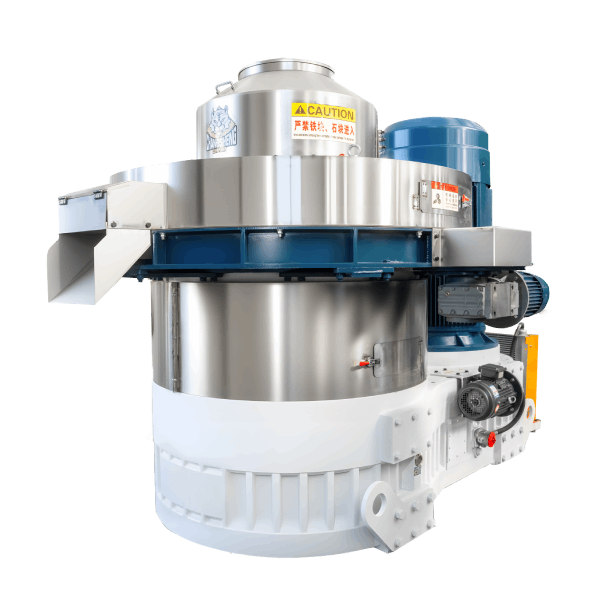
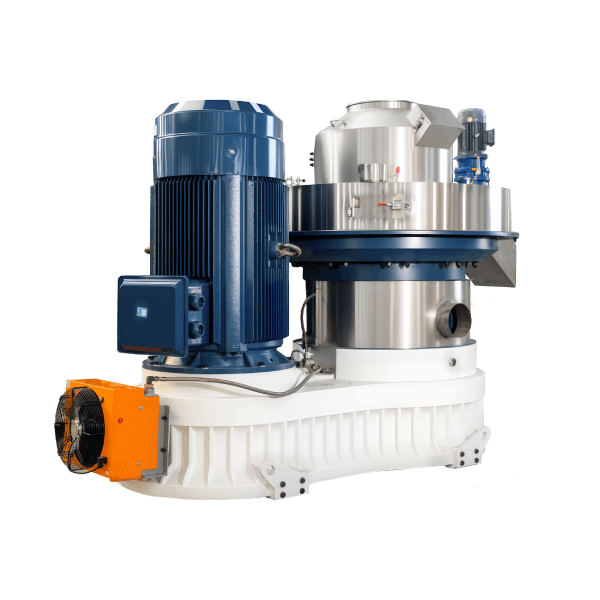
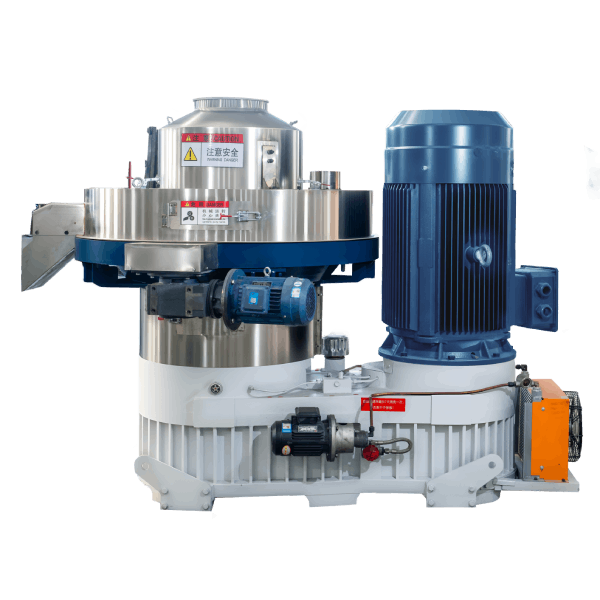
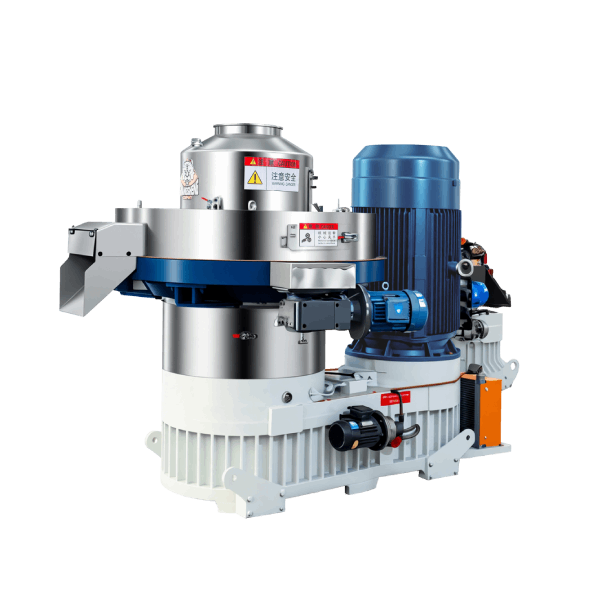
Equipment Requirements
Pellet Machine Specifications for Rubber Wood
| Specification | Recommendation | Rationale |
|---|---|---|
| Motor power | Standard for wood (per capacity) | Rubber wood has moderate hardness |
| Die material | Premium alloy (X46Cr13 or equivalent) | Moderate abrasiveness from silica |
| Die compression ratio (L/D) | 1:7 to 1:10 | Similar to softwood |
| Die hole diameter | 6-8 mm | Standard wood pellet size |
| Roller design | Standard heavy-duty | No special requirement |
| Pre-processing | Standard hammer mill | No special requirement |
Why Rubber Wood Is Different
| Factor | Rubber Wood Characteristic | Equipment Consideration |
|---|---|---|
| Silica content | 1-2% (higher than softwood) | Use wear-resistant components; premium die material |
| Latex/residues | Residual latex compounds | Ensure adequate conditioning temperature to soften |
| Moderate density | 560-640 kg/m³ | Standard wood pellet equipment works well |
| Lignin content | 25-30% | Provides good binding; no additives needed |
Complete Process Flow
Step-by-Step Process for Rubber Wood Pellets
| Stage | Equipment | Parameters | Purpose |
|---|---|---|---|
| Receiving | Intake, storage | — | Raw wood handling |
| Drying | Dryer | 8-12% moisture | Reduce moisture |
| Milling | Hammer mill | 2-4 mm particle size | Achieve pelletizing size |
| Conditioning | Conditioner (optional) | 80-90°C | Soften lignin |
| Pelletizing | Pellet mill | 80-100°C; proper compression | Form dense pellets |
| Cooling | Cooler | Ambient | Stabilize pellets |
| Screening | Fines screen | — | Remove fines |
| Packaging | Bagging system | — | Final product |
Typical Production Setup
| Scale | Equipment Configuration | Typical Capacity |
|---|---|---|
| Small pilot | Single pellet mill + hammer mill | 0.5-1 t/h |
| Commercial small | Complete line with dryer | 1-3 t/h |
| Commercial medium | Automated line | 3-6 t/h |
| Industrial large | Multi-line | 6-12 t/h |
Quality and Market Applications
Rubber Wood Pellet Quality
| Grade | Specification | Typical Use | Price Premium |
|---|---|---|---|
| Premium (ENplus A1) | Ash <0.7%; durability >97% | Residential heating; high-quality markets | Highest |
| Standard (ENplus A2) | Ash <1.5%; durability >96% | Industrial; residential | Moderate |
| Industrial | Ash <2.0%; durability >95% | Industrial combustion; power | Standard |
Market Comparison
| Material | Calorific Value (MJ/kg) | Ash Content | Market Position |
|---|---|---|---|
| Rubber wood pellets | 17-18.5 | 0.5-1.5% | Competitive premium |
| Softwood pellets | 16.5-18 | 0.3-0.8% | Premium |
| Hardwood pellets | 17-19 | 0.5-1.0% | Premium |
| Mixed wood pellets | 16-17.5 | 0.5-2.0% | Standard |
Target Markets
| Market | Suitability | Notes |
|---|---|---|
| Residential heating (Europe) | Good (with ENplus certification) | Premium pricing |
| Industrial combustion | Excellent | Bulk demand; lower specification acceptable |
| Power generation | Good | High volumes; consistent supply |
| Export (Asia) | Good | Growing demand in Japan, South Korea |
| Local/regional | Excellent | Lower transport costs |
Economic Considerations
Cost Factors
| Factor | Impact on Economics | Notes |
|---|---|---|
| Raw material cost | Significant | Rubber wood waste may be low cost |
| Transportation | Moderate to Significant | Proximity to rubber plantations matters |
| Drying | Significant | Moisture reduction is energy-intensive |
| Equipment wear | Moderate | Slightly higher than softwood |
| Market price | Significant | ENplus certification commands premium |
Estimated Costs (Indicative)
| Scale | Capital Investment (Est.) | Production Cost (Est., USD/ton) |
|---|---|---|
| 1-3 t/h | $150,000-400,000 | $80-150 |
| 3-6 t/h | $400,000-800,000 | $70-130 |
| 6-10 t/h | $800,000-1,500,000+ | $60-120 |
Procurement Checklist: Pellet Machine for Rubber Wood
Material Assessment
- Rubber wood source identified (plantation or processing waste)
- Moisture content measured
- Wood type and quality confirmed
- Supply volume and consistency confirmed
- Seasonality of supply understood
Equipment Specifications
- Pellet mill with premium die material specified
- Die compression ratio: 1:7 to 1:10
- Motor power adequate for capacity
- Hammer mill with appropriate screen size (2-4 mm)
- Drying system capacity matched to production
- Cooling system properly sized
Process Parameters
- Moisture target: 8-12%
- Particle size target: 2-4 mm
- Temperature target: 80-100°C
- Quality target (ENplus or ISO 17225) defined
Supplier Evaluation
- Supplier experience with rubber wood or similar wood types
- References from rubber wood projects
- Ability to supply complete line
- Understanding of quality requirements
Frequently Asked Questions
1. Can rubber wood be processed in a standard wood pellet mill?
Yes. Rubber wood has similar properties to softwood and hardwood, with moderate density and good lignin content. A standard wood pellet mill with appropriate die specifications works well for rubber wood. The only difference is slightly higher silica content (1-2%) that may cause moderate wear.
2. What moisture content is optimal for rubber wood pelletizing?
Rubber wood should be dried to 8-12% moisture before pelletizing. Green rubber wood typically contains 60-80% moisture and requires significant drying before processing.
3. What is the optimal die compression ratio for rubber wood?
Rubber wood typically requires a compression ratio (L/D) of 1:7 to 1:10. This is similar to softwood and moderate compared to hardwoods (which may require 1:10 to 1:14).
4. Does rubber wood require additives for pelletizing?
Generally no. Rubber wood has good lignin content (25-30%) that provides natural binding when heated. This is sufficient for making high-quality pellets without additives.
5. What is the calorific value of rubber wood pellets?
Rubber wood pellets typically have a calorific value of 17-18.5 MJ/kg. This is comparable to good quality wood pellets and slightly above average softwood pellets.
6. Are rubber wood pellets suitable for ENplus certification?
Yes. Rubber wood pellets can achieve ENplus A1 certification (ash <0.7%) with careful raw material selection and processing. The low ash content and good durability make them competitive in European markets.
7. Is rubber wood more abrasive than other woods?
Slightly. Rubber wood contains 1-2% silica, which is higher than softwood (<0.5%) but comparable to many hardwoods. Using premium die materials (X46Cr13 steel) and regular maintenance is recommended.
8. What are the main markets for rubber wood pellets?
The main markets are Europe (residential heating), Asia (Japan, South Korea for industrial and power generation), and local markets in rubber-producing countries (industrial boilers and co-firing).
About the Author
Zhang Wei – Senior International Sales Engineer, Shandong Changsheng Machinery Co., Ltd.
Zhang Wei has over 12 years of experience in the biomass and feed pellet mill industry, with a background in mechanical engineering and international project execution. He has managed pellet mill supply projects for clients across Southeast Asia, the Middle East, Africa, Europe, and Latin America, including extensive experience with various wood species and tropical timber processing.
With hands-on experience in both the manufacturing workshop and client-side operations, Zhang brings practical insights into successful equipment procurement—from the factory floor to the customer’s production site.