Pellet Mill CIF Price to Europe: Shipping, Import Duties and Total Cost
News 2026-07-31
European buyers comparing Chinese pellet mill suppliers usually start with the CIF price because it looks like a delivered number. It is not a delivered number. It is the equipment price plus the seller’s cost of carriage and insurance to a named European port, and it stops there. Everything after the port, including duty, import VAT, handling, clearance, inland transport, and installation, is still the buyer’s cost, and on a pellet mill it is often a large share of the total.
This page is written for procurement teams and project developers in Europe who need to understand what a CIF quotation actually commits the seller to, how the freight and insurance are built up, what the import charges look like, and how to compare two CIF quotations that may not cover the same thing. Shandong Changsheng Machinery quotes pellet mills and complete lines to European destinations, and the guidance below reflects how these quotations are structured and where buyers most often misread them.
The short answer
A CIF price covers the equipment, the seller’s carriage to the named destination port, and marine cargo insurance that meets the Incoterms minimum. It is not a delivered cost, and the buyer still pays duty, import VAT, port handling, clearance, inland transport, and installation.
Two CIF quotations are only comparable when the specification, the scope of supply, the named port, the packing dimensions, the freight quote date, and the insurance terms are stated. A CIF number without those items is an opening position, not a price.
What CIF price for pellet mills actually means
CIF is one of the Incoterms 2020 rules and applies to sea and inland waterway transport. The seller contracts and pays for carriage to the named destination port and arranges cargo insurance that complies with the minimum cover required under the rule. The buyer takes delivery at the destination port and handles import clearance, duties, taxes, and onward movement.
Risk passes at the point of loading on board at the port of shipment, not at the destination. A buyer who reads CIF as the seller carrying the risk until the goods arrive has misunderstood the term, and that misunderstanding matters when something is damaged in transit, because the claim runs through the insurance rather than through the seller’s liability.
The named port is part of the term. CIF Rotterdam and CIF Hamburg are different offers, with different freight and different inland routing at the destination. A quotation that says CIF Europe, or CIF European port, is not a complete term and should be clarified before comparison.
What CIF includes. The equipment, export packing, the seller’s carriage to the named destination port, and the minimum cargo insurance required under CIF. The exact scope of the packing and of any handling at origin should be confirmed in the quotation, because practice varies between suppliers and forwarders.
What CIF does not include. Import duty, import VAT or GST, destination port handling, customs brokerage, customs clearance costs at destination, inland transport in Europe, unloading at site, installation, and commissioning. The seller’s obligation under CIF ends at the destination port, and everything after that point belongs to the buyer unless separately agreed.
CIF compared with FOB and FCA
FOB places the goods on board at the port of shipment, with the buyer arranging and paying for the main carriage and insurance. CIF shifts the carriage and the insurance to the seller, but not the risk. FCA is used when the goods are handed over to the carrier at a named place, and it is often a better fit for containerized cargo that is handed over at a terminal rather than loaded on board a vessel. The right term depends on how the goods actually move and on how much of the logistics the buyer wants to control.
Pellet mill CIF price from China to Europe
Prices vary widely with specification, and a published range is only useful as orientation. The useful structure is to separate three purchase types, because they are not priced on the same basis.
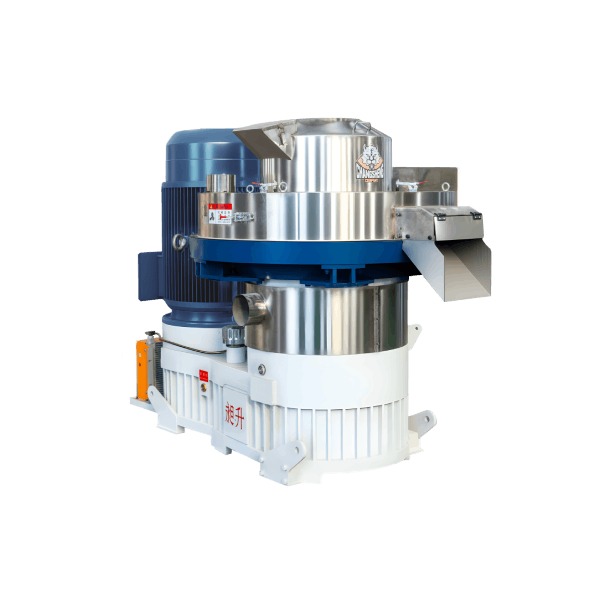
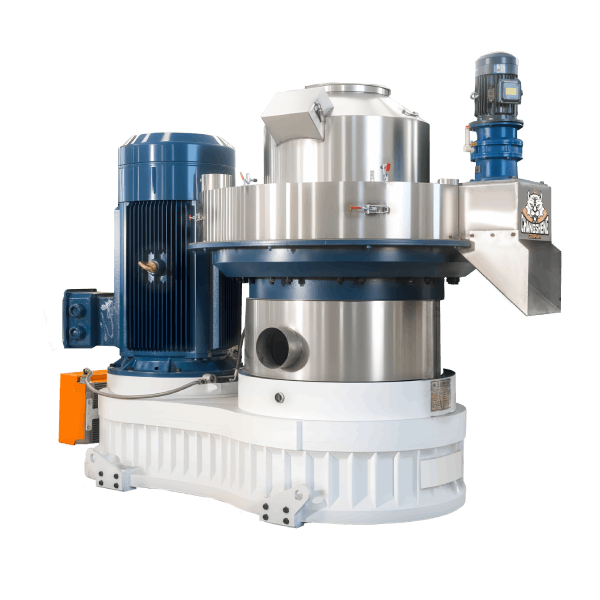
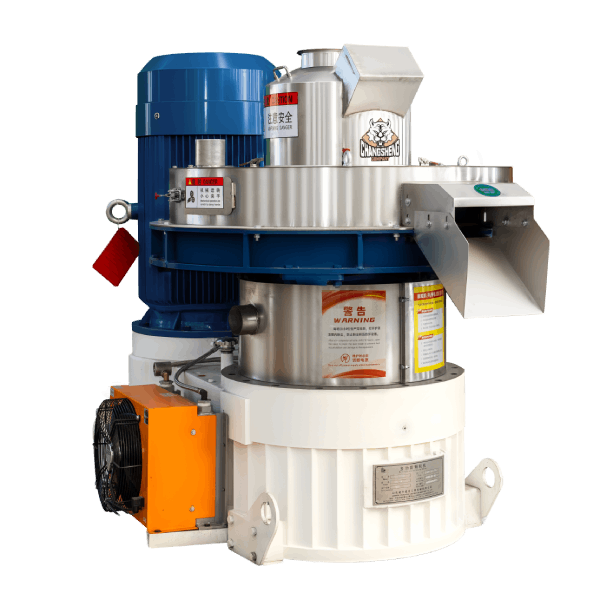
Industrial biomass pellet mill. A single industrial pellet mill quoted CIF to a European port includes the mill, its die and roller configuration for the intended material, the feeder, and whatever auxiliary items are in the stated scope. The price is driven by motor power and brand, gearbox configuration, die and roller material, control system, and the material the machine is specified for. A machine specified for clean wood is not the same machine as one specified for a high-silica agricultural residue, and the CIF price reflects that difference.
Complete biomass pellet production line. A complete line is priced as a system. The CIF price depends on which stages are included, whether drying is required and how large the dryer is, the capacity at each stage, the level of automation, the scope of dust collection and conveying, and the electrical and structural works included. Two lines quoted at the same nominal capacity can differ substantially because one includes drying and the other does not, and the CIF prices are not comparable until the scopes are aligned.
Auxiliary equipment. Feeders, hammer mills, dryers, coolers, screens, and packaging equipment are sometimes quoted separately. When they are, the CIF price of the main machine is not the CIF price of the line, and the comparison should be made on the full scope.
The useful way to read any CIF price is to ask what specification it is quoted against, what material it is intended for, what is included and excluded, which port it is quoted to, and the date of the freight quote. A number without those items is not a price.
What affects CIF prices of biomass pellet machines
Model, motor power, and capacity. Motor power is a cost driver, but it does not determine output by itself. Real capacity depends on the material, its moisture, the die specification, and how steadily the line is fed. Capacity should be quoted against a defined material and moisture and confirmed in trial.
Raw material and machine configuration. The material the machine is intended for drives the die specification, the feeder design, the conditioning requirement, and the wear protection. A machine specified for wood pellets is not the same machine as one specified for straw, rice husk, or a high-ash residue, and the CIF price reflects the changes in the die, the feeder, and the wear parts.
Die, roller, and gearbox. Die material and heat treatment, roller material and surface treatment, and the gearbox configuration are among the largest cost variables after the motor. Abrasion-resistant dies and heavy-duty gearboxes cost more and last longer, and the trade-off should be made against the intended material and duty cycle.
Automation and auxiliary equipment. PLC control, automatic lubrication, and a fuller scope of conveying, dust collection, and packaging change the price. Whether they are worth the cost depends on the duty cycle, the labor cost at the site, and the required consistency of production.
Packing dimensions and shipping. CIF pricing includes carriage, so the packed dimensions and gross weight of the equipment affect the freight and therefore the CIF price. Equipment that is oversized or overweight may need flat racks, open tops, or break-bulk shipping rather than standard containers, and that changes the freight cost substantially.
Scope of supply and exclusions. The most common reason two CIF quotations differ is that they cover different things. One may include the feeder, the conditioner, the cooler, and the spare parts package; another may quote the mill alone. The comparison should be made on a stated scope, with exclusions listed explicitly.
Shipping costs from China to European ports
Freight to Europe depends on the port pair, the container type, the cargo dimensions and gross weight, the shipping line and routing, the season, the fuel surcharge, and the booking date. It cannot be estimated from a fixed table that applies to all shipments, and it changes with market conditions. A freight figure should always be quoted with its valid date and the route it applies to, because a quote that is a month old may no longer reflect the market.
Main European destination ports. Rotterdam, Hamburg, Antwerp, Felixstowe, Le Havre, Genoa, Barcelona, and Gdansk are common destinations, and each has a different transit time, a different port cost structure, and a different inland routing. The right port for a shipment depends on the final site location, the inland transport cost, and the sailing schedules available at the time of booking.
Container and special cargo shipping. Standard 20-foot, 40-foot, and 40-foot high-cube containers cover most single machines and many lines, but a complete line often includes items that are oversized or overweight. Those items may need flat racks, open tops, or break-bulk shipping, and the freight planning should start from the packed dimensions and weights of the largest items rather than from a container count.
To price freight and plan the shipment, the buyer needs the packed dimensions and gross weight of each major item, the number of containers the shipment will require, whether any item needs special equipment, the loading photographs and packing list before shipment, and whether the shipment has to be split across more than one vessel or departure. Transit times quoted by a supplier are indicative and should be treated as a planning reference, not as a delivery commitment, because customs clearance and port congestion can add days at either end.
Marine insurance for pellet mill machinery
CIF requires the seller to arrange cargo insurance that meets the minimum cover in the rule. The minimum is not necessarily the cover a buyer wants. For industrial machinery, all-risks cover is normally more appropriate than the minimum, and the insured value is usually set at 110 percent of the invoice value to cover the buyer’s insurable interest.
Insurance cost is normally a percentage of the insured value, and the rate depends on the cargo, the route, and the insurer. The certificate and the terms should be checked by the buyer, because the minimum cover required by CIF may exclude risks that matter for a particular shipment, and additional cover can be arranged if needed.
Import duties and VAT in Europe
HS code and import duty. The tariff classification of a pellet mill depends on its specific function, structure, and use, and it should not be assumed from the general name of the machine. Classification errors are a common cause of unexpected duty and of clearance delays, and the classification should be confirmed with a customs broker or with the customs authority in the importing country before the shipment is booked.
Duty rates depend on the classification and on the origin of the goods, and some machinery may qualify for a reduced rate under an applicable trade agreement. The rate that applies to a particular shipment should be confirmed for that shipment, not taken from a general table.
Import VAT in European markets. Import VAT is charged at the rate of the importing country and is calculated on a base that normally includes the customs value, the duty, and certain other charges. The rates differ between EU member states, and the United Kingdom is not part of the EU and does not follow the same import process, so the two should not be treated as interchangeable.
For VAT-registered businesses, import VAT is often recoverable under the local rules, which changes the effective cost of the purchase. The treatment depends on the buyer’s registration and on the country of import, and it should be confirmed with the buyer’s tax adviser rather than assumed from the headline rate. The rates listed below are a reference only; the applicable rate and rules are those in force at the time of import.
Germany 19 percent, France 20 percent, Italy 22 percent, Spain 21 percent, Netherlands 21 percent, Belgium 21 percent, Poland 23 percent, United Kingdom 20 percent. These are the standard rates commonly cited, and they should be verified for the date of import and for the specific goods.
Customs clearance requirements. Clearance at the European port needs the commercial invoice, the packing list, the bill of lading, the certificate of origin where a preferential rate is claimed, and the conformity documentation for the machinery. A customs broker at the destination is normally engaged by the buyer, and the broker should be identified before the shipment arrives rather than after.
CE compliance requirements for pellet mill machinery
CE marking is not a document a supplier can simply hand over. It is a declaration by the manufacturer that the machinery meets the applicable EU legislation, supported by a technical file, a risk assessment, the applicable harmonised standards, and a declaration of conformity. Whether a notified body must be involved depends on the product and on the legislation that applies to it.
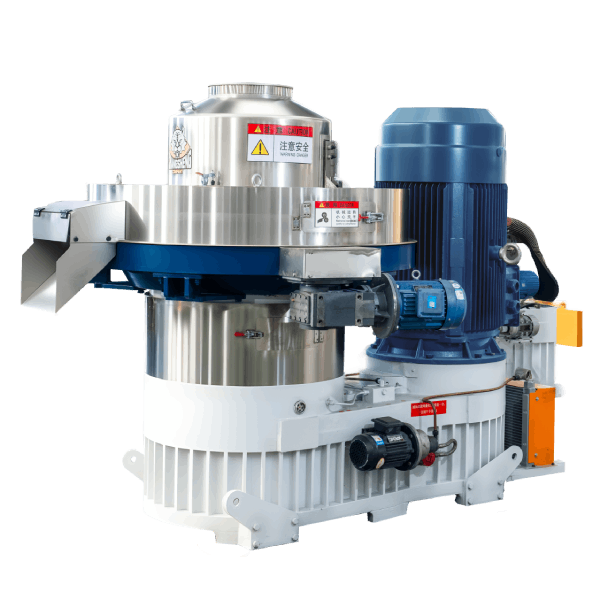
For a pellet mill, the relevant issues normally include the machinery safety requirements, the electrical safety of the control system, the guarding of moving parts, emergency stop arrangements, and the dust and fire risks associated with the material being processed. The technical file and the operating and safety instructions should be available in the language required by the destination country.
A buyer should check what the declaration of conformity actually covers, which standards are cited, and whether the documentation matches the machine being supplied. A CE mark on the nameplate is not evidence on its own, and a supplier who cannot explain the conformity route in specific terms is a warning sign worth taking seriously.
How to calculate the total landed cost
Landed cost is built, not looked up. The structure is the CIF price, plus import duty, plus import VAT or GST, plus destination port handling, plus customs brokerage and clearance, plus inland transport, plus unloading, installation, and commissioning.
A worked example makes the structure clearer, but the numbers in it are illustrative and do not represent any specific shipment or any specific country’s rates. Take a CIF value of 15,400 euros to a European port. Import duty at an assumed 1 percent is 154 euros, giving a customs value of 15,554 euros. Import VAT at an assumed 21 percent on that base is 3,266 euros. Port handling at 400 euros, customs clearance at 200 euros, and inland transport at 500 euros add 1,100 euros. The total in the example is 19,920 euros. The point of the example is the structure and the order of the calculation, and every line should be replaced with a quote or a rate for the actual shipment. The duty rate and the VAT rate, in particular, should come from the destination country’s rules and the buyer’s tax position, not from a generic figure.
Additional costs after CIF delivery
Destination port handling and storage. Terminal handling, lift-on and lift-off, and any storage at the port are charged at the destination and vary between ports. Storage and demurrage charges apply when containers are not collected within the free time allowed, and they accumulate quickly, so the clearance and inland transport should be arranged to avoid them.
Customs clearance and brokerage. The broker’s fee, the documentation charges, and any inspection costs are buyer-side costs and should be quoted before the shipment arrives.
Import duty and import VAT. As above, the rates depend on the classification, the origin, the destination country, and the buyer’s tax position.
Inland transport, unloading, and installation. Transport from the port to the site, unloading, foundations, electrical connection, installation, commissioning, and training are all buyer-side costs under CIF unless separately agreed. These items are frequently left out of the budget and appear at the end of the project.
How to compare CIF quotations from Chinese suppliers
A CIF comparison is only meaningful if the quotations cover the same thing. The following items should be obtained from each supplier and compared side by side.
The machine model and quantity. The motor power and brand, and the efficiency class. The guaranteed capacity and the tested raw material on which that capacity is based. The complete equipment list. The main components and their specifications. The die and roller specification for the intended material. The gearbox configuration. The electrical control system and the voltage and frequency it is built for. The spare parts included. The packing dimensions and gross weight. The named loading port and destination port. The freight quote date and the validity of the freight. The shipping and insurance scope. The delivery time. The warranty and after-sales support. The installation and commissioning scope, and whether it is included or excluded.
The most important item is the scope of supply and exclusions. Each supplier should state what the CIF price includes and what it does not, in writing. A low CIF quotation that omits the dryer, the cooler, the spare parts package, or the insurance is not a lower price for the same thing; it is a price for less, and the difference appears later in the project.
CIF compared with FOB for European buyers
The choice between CIF and FOB is not a rule that can be applied by buyer experience alone. It depends on the buyer’s logistics arrangements and on the shipment, and the comparison is more useful when it is made dimension by dimension.
Freight cost transparency. FOB shows the buyer what the freight actually costs, because the buyer contracts it. CIF bundles it into the seller’s price, so the freight component is invisible unless the seller itemises it.
Shipping control. FOB gives the buyer control over the carrier, the routing, and the booking date. CIF gives that control to the seller, which is simpler for a buyer without a forwarder but removes the buyer’s ability to shop the route.
Insurance arrangements. Under FOB the buyer arranges insurance and can choose the cover. Under CIF the seller arranges the minimum cover required by the rule, and the buyer has to check whether that cover is adequate for the shipment and add cover if it is not.
Destination port charges. These are buyer-side costs under both terms, and they should be quoted by a forwarder or broker at the destination. The choice between CIF and FOB does not change them, but they are frequently left out of a CIF budget because the buyer reads CIF as delivered.
Risk transfer. Risk passes at loading on board at the port of shipment under both CIF and FOB. The difference is in who arranges carriage and insurance, not in when risk moves.
Freight forwarder availability. A buyer with an established forwarder and competitive rates will often do better on FOB, because the forwarder can be used across shipments. A buyer without one may find CIF simpler, at the cost of visibility.
Total landed cost. The term that produces the lower landed cost is the one to choose, and the only way to know is to build the landed cost for both options on the same shipment. For containerized cargo handed over at a terminal rather than loaded on board a vessel, FCA may be a more appropriate term than FOB, and buyers should consider it with their forwarder.
What to send when requesting a CIF quotation
A CIF quotation is only as good as the information it is based on. The useful minimum is the material type and source, the target capacity and the pellet diameter, the moisture range of the material, the destination port, the voltage and frequency at the site, whether a complete line or a single machine is required, and any site constraints that affect the layout. With those inputs, a supplier can quote a specification rather than a catalog number, and the quotation can be compared with another one on equal terms.
If you are comparing suppliers for a pellet mill or a complete line and want a CIF quotation you can compare item by item, send the material, the target capacity, the pellet diameter, and the destination port, and the Shandong Changsheng Machinery team can prepare a specification-based CIF quotation with the scope, the exclusions, and the packing dimensions stated.
Bottom line
A CIF price to Europe is a defined term, not a delivered cost. It covers the equipment, the carriage to the named port, and the minimum insurance, and it stops at the port. Import duty, VAT, port handling, clearance, inland transport, and installation are the buyer’s costs, and the landed cost is built from the CIF price plus those items. The duty and VAT should come from the destination country’s rules and the buyer’s tax position, not from a generic rate. CE conformity is a manufacturer’s declaration supported by a technical file, not a document a supplier hands over. A CIF quotation that states the specification, the capacity basis, the scope, the exclusions, the named port, the freight quote date, and the packing dimensions is the one that can actually be compared.