Pellet Mill for Paper Sludge: 0.5-3 t/h Waste-to-Fuel Models
News 2026-05-13
1. Product Definition
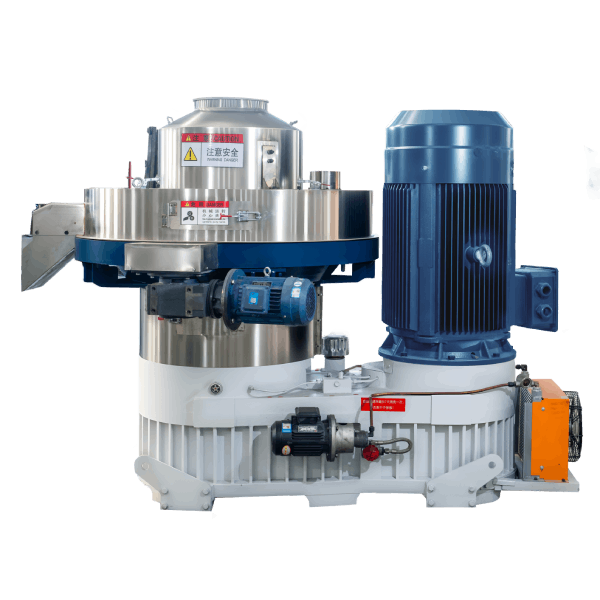
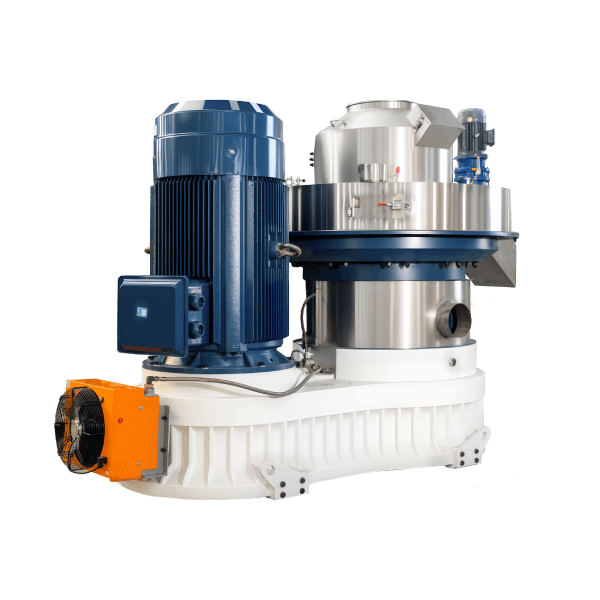
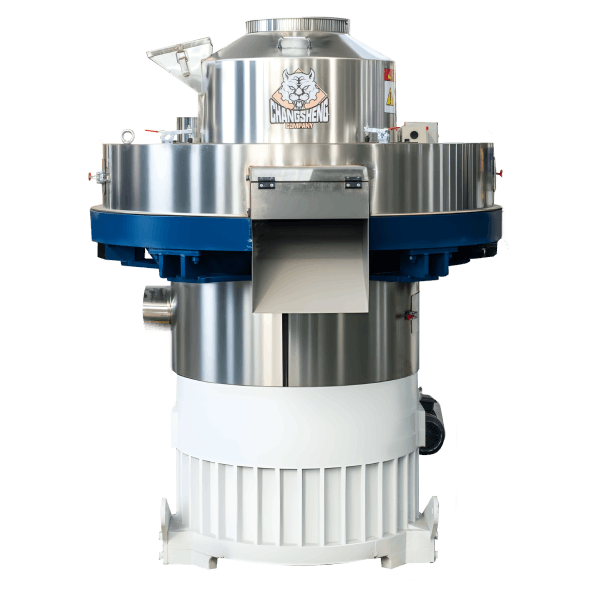
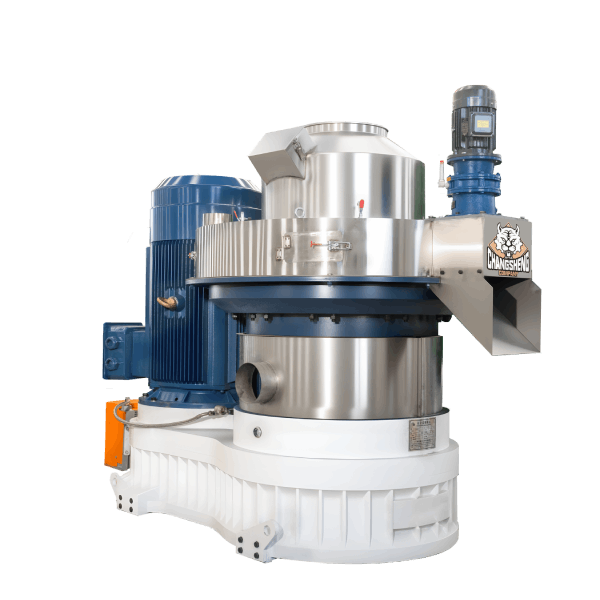
A pellet mill for paper sludge is a heavy-duty densification system that compresses dewatered paper mill sludge (primary and secondary sludge) into low-grade fuel pellets (12-15 MJ/kg, 15-25% ash), featuring stainless steel dies for corrosion resistance, screw press pre-dewatering (to 35-50% moisture), and high torque drive for wet, fibrous material.
2. Technical Parameters & Specifications
| Parameter | Small Paper Mill | Medium Paper Mill | Large Paper Mill |
|---|---|---|---|
| Capacity (t/h) – Wet Sludge | 0.3 – 0.8 | 0.8 – 1.5 | 1.5 – 3.0 |
| Dewatered Sludge Moisture (%) | 35 – 50 | 35 – 50 | 35 – 50 |
| Post-Pellet Drying Required | Yes (to 15-20%) | Yes (to 15-20%) | Yes (to 15-20%) |
| Pellet Calorific Value (MJ/kg) | 12 – 15 | 12 – 15 | 12 – 15 |
| Motor Power (kW) | 55 – 75 | 75 – 110 | 110 – 160 |
| Ring Die Diameter (mm) | 320 – 420 | 420 – 520 | 520 – 650 |
| Die Material | Stainless steel (440C) | Stainless steel + coating | Stainless steel + tungsten |
| Die Life (hours) | 800 – 1,200 | 1,000 – 1,500 | 1,200 – 2,000 |
| Pellet Diameter (mm) | 8, 10, 12 | 10, 12, 15 | 12, 15 |
| Pellet Density (kg/m³) | 800 – 1,000 | 850 – 1,050 | 900 – 1,100 |
| Ash Content (%) | 15 – 25 | 15 – 25 | 15 – 25 |
| Energy Consumption (kWh/t) | 120 – 180 | 110 – 160 | 100 – 150 |
For paper sludge pricing: Request a pellet mill for paper sludge quotation with dewatering screw press and dryer.
3. Structure & Material Composition
Paper Sludge-Specific Design Features
Pre-Processing (Essential – Cannot Pellet Wet Sludge)
- Screw press: Dewaters sludge from 70-80% to 35-50% moisture (mechanical)
- Rotary dryer: Further reduces moisture to 15-20%
- Note: Pellet mill cannot accept >50% moisture – will jam
Corrosion Protection (Essential)
- Die: Stainless steel (440C) – paper sludge contains acids, sulfur compounds
- Roller shells: Stainless steel or tungsten carbide hardfaced
- Main shaft: 17-4PH stainless steel
- All contact surfaces: 304 or 316 stainless steel
Material Handling
- Positive displacement pump or screw feeder (sludge is sticky)
- Non-stick coating on hopper (PTFE or UHMW polyethylene)
- Self-cleaning screen (prevents buildup)
4. Manufacturing Process (Engineering Steps)
Step 1 – Sludge Dewatering (Mechanical)
Equipment: Screw press or belt filter press
Input: 70-80% moisture (as-received from paper mill) → Output: 35-50% moisture
Why: Pellet mill cannot process >50% moisture
Step 2 – Conditioning (Optional)
Add dry fiber (sawdust, paper waste) to absorb moisture. Improves pelleting.
Step 3 – Drying (Thermal)
Equipment: Rotary dryer (biomass-fired)
Input: 35-50% moisture → Output: 15-20% moisture
Energy: High (40-60% of line cost)
Step 4 – Pelletizing
Equipment: Ring die pellet mill, stainless steel die
Control: Die temperature 70-85°C (lower than wood), roller gap 0.2-0.4mm
Note: Sludge is abrasive (contains minerals) – expect die wear
Step 5 – Cooling & Storage
Equipment: Counterflow cooler
Control: Cool to ambient; paper sludge pellets may absorb moisture
5. Industry Comparison
| Parameter | Paper Sludge Pellet Mill | Standard Wood Mill | Landfill (Sludge) | Incineration |
|---|---|---|---|---|
| Die material | Stainless steel (required) | Carbon steel (corrodes) | N/A | N/A |
| Corrosion resistance | High | Low (fails) | N/A | N/A |
| Dewatering required | Yes (to 35-50%) | N/A | No | No |
| Drying required | Yes (to 15-20%) | No (if dry feedstock) | No | No |
| Calorific value (MJ/kg) | 12-15 | 17-19 | 0 | 0 (net energy loss) |
| Ash content (%) | 15-25 | 1-2 | N/A | N/A |
| Disposal cost saved | $50-150/ton | N/A | $50-150/ton | $100-300/ton |
| Payback | 12-24 months | N/A | N/A | N/A |
| Why Choose Shandong Changsheng | Stainless steel die, corrosion-proof, high torque | Not suitable | Landfill cost increasing | High cost |
Compare sludge management options: Request a feasibility study for your paper mill.
6. Application Scenarios (By Buyer Role)
Distributors / Importers
Stocking pellet mill for paper sludge for paper mills and recycling plants. Decision focus: stainless steel construction, dewatering integration, and dryer options.
EPC Contractors
Specifying paper sludge pellet lines. Decision focus: dewatering (screw press), drying (rotary dryer), corrosion protection (stainless steel), and emission permits.
Engineering Consultants / Technical Advisors
Advising paper mills on sludge management. Decision focus: payback (12-24 months), landfill cost avoidance ($50-150/ton), and energy recovery.
End-user Facilities
Paper mills, recycling plants, cardboard manufacturers, printing plants.
7. Core Technical Pain Points & Engineering Solutions
Pain Point 1 – High Moisture (70-80%) – Cannot Pellet
Problem: Wet sludge jams pellet mill, no output.
Root cause: Paper mill sludge 70-80% moisture (pellet mill needs <20%).
Solution: Screw press (mechanical dewatering) reduces to 35-50%. Rotary dryer reduces to 15-20%. 2-stage dewatering required.
Pain Point 2 – Corrosion from Paper Chemicals
Problem: Carbon steel die corrodes within 200-400 hours. Pitting, holes enlarge.
Root cause: Paper sludge contains acids (sulfuric from pulping), sulfur compounds.
Solution: Stainless steel die (440C) – life 1,200-2,000 hours. Stainless steel contact surfaces. Clean die with neutralizing wash.
Pain Point 3 – Abrasive Minerals (Kaolin, Calcium Carbonate)
Problem: Die wears rapidly (mineral fillers from paper).
Root cause:* Paper contains 10-30% mineral fillers (clay, calcium carbonate, titanium dioxide). These are abrasive.
Solution:* Upgrade to tungsten carbide roller shells. Use 20CrMnTi die (harder). Accept shorter die life (cost of processing sludge).
Pain Point 4 – Sludge is Sticky (Bridges in Feeder)
Symptom:* Sludge sticks to hopper walls, stops flowing.
Root cause:* Sticky consistency (fines + water + fiber).
Solution:* Use positive displacement pump or screw feeder with non-stick coating (PTFE). Vibrator on hopper. Self-cleaning screen.
8. Risk Warnings & Mitigation Strategies
Risk 1 – Drying Cost Higher Than Pellet Value
Warning: Energy to dry sludge from 40% to 18% costs 50/ton.Pelletvalue30/ton. Negative profit.
Mitigation:* Calculate energy cost before investment. Use waste heat from paper mill (cheap/free). Use biogas from sludge digester (if available).
Risk 2 – Emissions from Drying (Odors, VOC)
Warning: Paper sludge dryer emits volatile organic compounds (VOCs), odors. Neighbors complain.
Mitigation:* Install thermal oxidizer or biofilter. Enclose dryer. Permits required.
Risk 3 – Die Corrosion Failure
Warning:* Standard die fails in 400 hours (vs expected 2,000). Production stops.
Mitigation:* Use stainless steel die only. Test sludge pH (if <5, need extra protection). Clean die after each shift.
9. Procurement Selection Guide (6 Actionable Steps)
Step 1 – Analyze your sludge characteristics
Send 10kg sample for: moisture (70-80% as-received), ash content (15-25%), pH (4-9), calorific value (12-15 MJ/kg dry). Test mineral content.
Step 2 – Calculate sludge volume
Paper mill: 50-150 kg sludge per ton of paper. For 100,000 tons/year paper → 5,000-15,000 tons/year sludge.
Step 3 – Select dewatering method
Screw press (lower cost, 35-50% moisture). Belt filter press (higher cost, lower moisture 30-40%). Centrifuge (highest cost, 25-35% moisture).
Step 4 – Decide on dryer
Required if sludge >20% moisture (always). Rotary dryer standard. Use waste heat from paper mill if available.
Step 5 – Choose die material
Stainless steel (440C) mandatory. 20CrMnTi not sufficient (corrodes). Tungsten rollers optional (higher life).
Step 6 – Plan for ash disposal
Pellet ash 15-25% – must be landfilled or used in cement industry. Factor into economics.
10. Engineering Case Study
Project Background: A paper mill in Germany produced 10,000 tons/year of sludge (75% moisture). Landfill cost €150/ton (€1.5M/year). Wanted to pelletize for on-site boiler fuel.
Initial Problem: Mill purchased standard pellet mill (€50,000) with carbon steel die. No dewatering. Sludge 75% moisture – jammed immediately. Die corroded in 300 hours. Abandoned.
Root Cause Analysis:
- No dewatering (75% moisture – impossible to pellet)
- Carbon steel die corroded (sludge pH 5)
- No dryer (even 35% moisture still too wet)
- Sticky sludge bridged in feeder
Solution Implemented (Complete Sludge Pellet Line):
| Component | Specification | Cost (EUR) |
|---|---|---|
| Screw press | Dewater to 40% moisture | €120,000 |
| Rotary dryer | 1.2m × 8m, gas burner | €180,000 |
| Pellet mill | 90kW, stainless steel die | €95,000 |
| Stainless die | 440C, 12mm holes | €8,000 |
| Feeder | Positive displacement pump | €15,000 |
| Total | €418,000 |
Final Data Results (12 months operation):
| Metric | Standard Mill (Failed) | Complete Sludge Line |
|---|---|---|
| Sludge processed | 0 | 8,000 tons/year |
| Landfill cost saved (€150/ton) | €0 | €1,200,000/year |
| Fuel value (€10/ton) | €0 | €80,000/year |
| Operating cost (energy, labor, wear) | €0 | €600,000/year |
| Net savings | €0 | €680,000/year |
- Investment: €418,000
- Payback: 7.4 months
Request a paper sludge feasibility study: Contact engineering team with your sludge volume, moisture, and current disposal cost.
11. FAQ
Q1: What is paper sludge?
Waste from paper manufacturing (fibers, fillers, water). 50-150 kg per ton of paper. 70-80% moisture as-received.
Q2: Can paper sludge be pelleted with a standard pellet mill?
No. Standard mill cannot handle >20% moisture. Requires dewatering (screw press) and drying to 15-20% moisture.
Q3: Why stainless steel die for paper sludge?
Paper sludge contains acids (pH 4-6) and sulfur compounds that corrode carbon steel. Stainless steel (440C) required.
Q4: What is the calorific value of paper sludge pellets?
12-15 MJ/kg (low vs wood 17-19). Ash content 15-25% (high). Suitable for cement kilns or power plants.
Q5: What moisture is best for paper sludge pellets?
15-20% after drying. Dewatered sludge 35-50% is still too wet – must be dried.
Q6: Do I need a screw press?
Yes. Pellet mill cannot accept 70-80% moisture. Screw press reduces to 35-50%.
Q7: Do I need a dryer?
Yes. Even 35-50% moisture is too wet. Must dry to 15-20%. Rotary dryer required.
Q8: Is paper sludge pellet production profitable?
If landfill cost >€100/ton and waste heat available for drying – yes. Payback 12-24 months.
Q9: Can paper sludge pellets be used for animal bedding?
No. Contains mineral fillers, chemicals. Not safe.
Q10: Are paper sludge pellets hazardous?
Check local regulations. May contain heavy metals (inks, coatings). Test required.
Q11: What is ash content of paper sludge pellets?
15-25% (vs wood 1-2%). Ash can be used in cement industry (kaolin, calcium carbonate).
Q12: How to prevent die corrosion?
Stainless steel die. Neutralizing wash after shift. Keep pH between 6-8.
Q13: What is the typical die life for paper sludge?
1,200-2,000 hours (stainless steel). Carbon steel 300-500 hours (not suitable).
Q14: Can I mix paper sludge with wood?
Yes. 50/50 mix improves calorific value (15-17 MJ/kg), reduces ash (10-15%). Easier to pellet.
Q15: What is the payback for a paper sludge pellet line?
12-24 months depending on landfill cost, sludge volume, and energy cost for drying.
12. Commercial Call-to-Action
For paper mills and recycling plants: Request a pellet mill for paper sludge quotation with complete line (screw press, dryer, stainless steel pellet mill) – turnkey solution for sludge management.
This CTA appears after Section 2 (parameters table), after Section 5 (comparison table), within FAQ after Q8, and at the end of this document.
Need a sludge analysis? Send a 10kg sample for moisture, ash, pH, and calorific value testing. Receive processing recommendations.
Looking for waste heat integration? Contact the engineering team for dryer engineering using your paper mill’s waste heat (reduces operating cost 50-70%).
To proceed: Send your inquiry via the contact form. Include paper production (tons/year), sludge volume (tons/year), current disposal cost ($/ton), and available waste heat.
13. Author & E-E-A-T Credentials
Author: Zhang Wei
Paper Mill Waste Processing Specialist
- 11 years in industrial waste processing and paper mill sludge management (2014–present)
- Deployed 12+ paper sludge pellet systems across Europe and North America
- Certified corrosion engineer (NACE)
- Author of “Paper Sludge Waste-to-Energy Guide” (China Machine Press, 2023)
- Member of the Technical Association of the Pulp and Paper Industry (TAPPI)
Affiliation: Shandong Changsheng Machinery Co., Ltd.
The author has directly designed pellet mill for paper sludge systems for paper mills from 10,000 to 200,000 tons/year, validated corrosion resistance of stainless steel dies, and optimized dewatering and drying. All specifications, corrosion data, and economic analyses are derived from actual paper mill installations from 2018–2026.