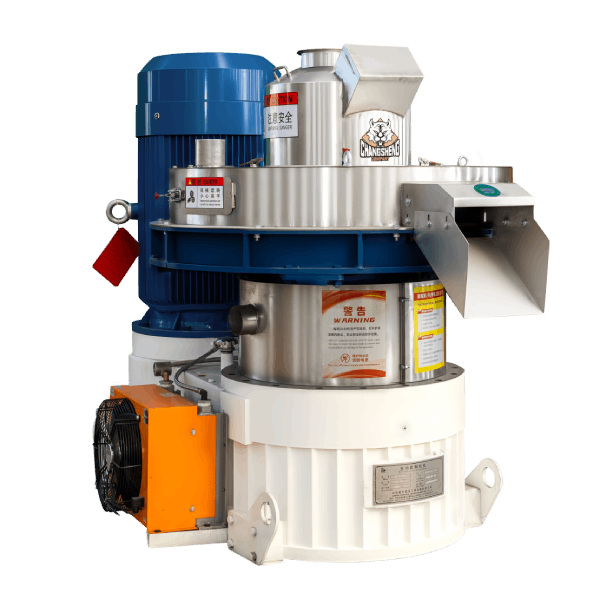
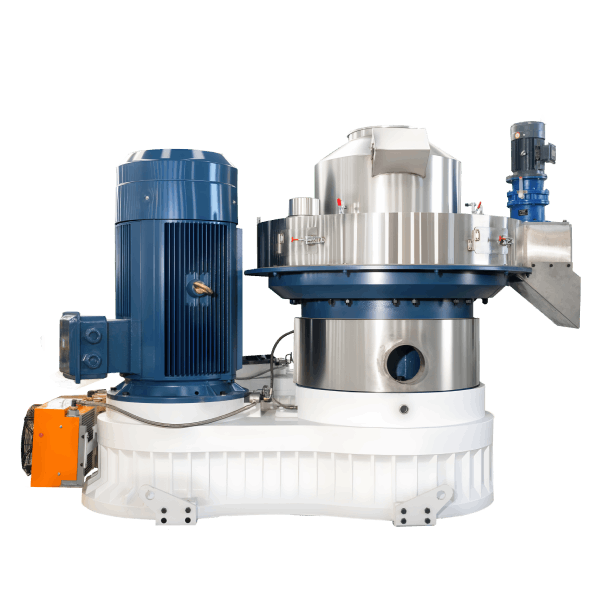
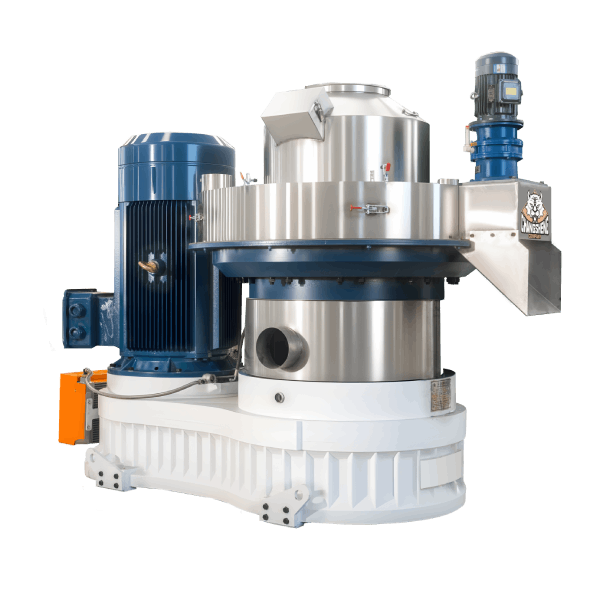
Pellet Mill for Olive Pomace Processing: Complete Technical Guide
News 2026-07-16
Page SEO Summary: This technical guide helps project developers and procurement professionals evaluate pellet mills for olive pomace processing—covering material properties, critical processing parameters, equipment specifications, and safety considerations for converting olive oil waste into valuable biomass pellets.
Every year, the global olive oil industry produces millions of tons of olive pomace—a fibrous, oily by-product that has historically been treated as waste. With rising energy costs and growing environmental awareness, this “waste” is increasingly being recognized as a valuable resource for biomass energy production.
Olive pomace pellets offer a sustainable fuel source with calorific values comparable to wood pellets, at a fraction of the raw material cost. However, the material presents unique challenges: high oil content, abrasive fiber structure, and variable moisture levels all affect the pelleting process.
For project developers and procurement professionals evaluating a pellet mill for olive pomace processing, understanding these material-specific requirements is essential for successful equipment selection and plant operation.
Olive Pomace: Understanding the Feedstock
Before specifying equipment, it is critical to understand the material being processed. Olive pomace is not homogeneous—its properties vary significantly depending on the olive oil extraction method used.
Types of Olive Pomace
| Type | Production Process | Typical Characteristics |
|---|---|---|
| Two-phase pomace | Modern two-phase centrifugation | Higher moisture (55-70%); paste-like consistency; less oil residue |
| Three-phase pomace | Traditional three-phase extraction | Lower moisture (45-50%); contains more oil; more solid |
| Exhausted pomace | After solvent extraction of residual oil | Very low oil content (<2%); dry; ideal for fuel pellets |
| Dried pomace | Dried pomace for fuel | Moisture <12%; ready for combustion or pelletizing |
Key Physical-Chemical Properties
| Property | Typical Value Range | Impact on Processing |
|---|---|---|
| Moisture content | 10-55% (raw) | Must be reduced to <12% for pelletizing |
| Oil content | 2-12% | Higher oil reduces pellet durability and may require blending |
| Bulk density | 600-650 kg/m³ | Affects conveying and storage design |
| Ash content | 4-7% | Higher than wood; impacts boiler maintenance |
| Lignin content | 30-35% | Natural binder; aids pellet formation |
| Abrasiveness | High | Accelerates wear on hammers, dies, and rollers |
Calorific Value
| Material | Lower Calorific Value (MJ/kg) | Comparison |
|---|---|---|
| Olive pomace (exhausted, dry) | 17-19 | Moderate |
| Olive pomace (with residual oil) | 20-24 | Higher due to oil content |
| Wood pellets (ENplus A1) | 16.5-18 | Slightly lower |
| Coal (reference) | 24-28 | Significantly higher |
Critical Processing Parameters: What the Research Shows
Research on olive pomace pelletization provides clear guidance on optimal processing conditions.
Optimal Processing Conditions
| Parameter | Optimal Range | Effect on Pellet Quality |
|---|---|---|
| Particle size | 900-1200 µm | Produces highest pellet strength |
| Compaction pressure | 150-225 MPa | Higher pressure = higher density |
| Die temperature | ~90°C | Strengthens inter-particle bonds |
| Moisture content | 10-12% | Optimal for flow and bonding |
Achievable Pellet Properties
| Property | Achievable Range | Industry Standard |
|---|---|---|
| Density | 1.0-1.35 g/cm³ | >0.8 g/cm³ (minimum) |
| Durability | 81-95% | >90% preferred |
| Fines content | <5% | <3% preferred |
| Ash content | 4-7% | Depends on feedstock |
Parameter Interactions
Research indicates these three factors have interactive effects:
| Condition | Effect on Pellets |
|---|---|
| Highest strength | 900-1200 µm + 90°C + 225 MPa |
| Highest density | 600-900 µm + 225 MPa |
| Best durability | 150 MPa + 90°C |
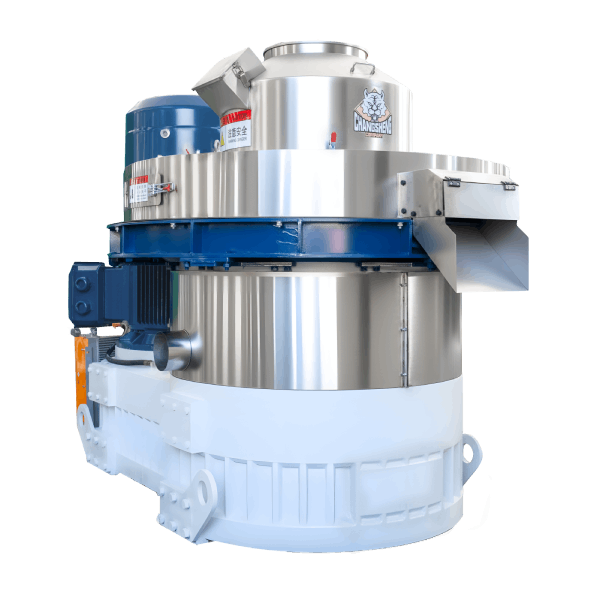
Equipment Requirements for Olive Pomace Processing
A pellet mill for olive pomace processing requires specific configurations that differ from standard wood pellet mills.
Key Pellet Mill Specifications
| Specification | Recommendation | Rationale |
|---|---|---|
| Die compression ratio | Higher than wood (e.g., 1:12 to 1:16) | Fibrous material requires more compression |
| Die material | Premium alloy (X46Cr13 or equivalent) | High abrasion resistance required |
| Roller material | Hardened steel with tungsten carbide coating | Extends service life in abrasive environment |
| Motor power | 1.2-1.5× standard wood pellet mill | Higher energy required for compression |
| Feed screw | Heavy-duty variable speed | Handles variable material flow |
| Conditioner | Optional (recommended) | Pre-heating improves pellet quality |
Pre-Processing Equipment
Before the pellet mill, olive pomace requires significant preparation:
| Equipment | Function | Critical Specification |
|---|---|---|
| Dryer | Reduce moisture to 10-12% | Drum or belt dryer; capacity matched to production |
| Hammer mill | Reduce particle size to 900-1200 µm | Hardened hammers; wear-resistant screens |
| Screening | Remove oversize and foreign material | Destoner may be required for raw pomace |
| Magnetic separator | Remove tramp metal | Protects downstream equipment |
Optional Equipment Based on Application
| Equipment | Application | Recommendation |
|---|---|---|
| Oil extraction | For high-oil pomace (>5%) | Reduces oil content for better pellet durability |
| Blending system | Mix with wood or other biomass | Improves pellet quality; extends die life |
| Additive dosing | Add binders or lubricants | May reduce energy consumption |
Complete Production Process
Step-by-Step Flow
| Stage | Equipment | Parameter Target | Purpose |
|---|---|---|---|
| Receiving | Intake pit, conveyor | — | Raw material handling |
| Pre-screening | Vibrating screen, destoner | Remove stones | Protect downstream equipment |
| Drying | Rotary dryer | <12% moisture | Reduce moisture to pelletizing optimum |
| Size reduction | Hammer mill | 900-1200 µm | Achieve uniform particle size |
| Condition (optional) | Conditioner | 70-90°C | Pre-heat for better bonding |
| Pelletizing | Pellet mill | 150-225 MPa; ~90°C | Form dense pellets |
| Cooling | Cooler | Ambient | Stabilize pellets |
| Screening | Fines screen | — | Remove fines |
| Packaging/Storage | Bagging or bulk system | — | Final handling |
Considerations for Scale
| Scale | Typical Capacity | Configuration |
|---|---|---|
| Small pilot | 100-200 kg/h | Single machine with basic pre-processing |
| Commercial small | 500-1000 kg/h | Complete line with dryer, hammer mill, pellet mill |
| Commercial large | 2-5 t/h | Full industrial line with automation |
| Industrial | 5-10 t/h | Multi-line; advanced automation |
Safety Considerations: Olive Pomace Dust Explosion Risk
Olive pomace dust, like many biomass dusts, is combustible and poses explosion risks in processing facilities.
Explosion Parameters
| Parameter | Research Findings |
|---|---|
| Minimum Ignition Energy | Measurable; organic dust typical range |
| Minimum Explosive Concentration | 60-150 g/m³ (typical biomass range) |
| Kst value | Low to moderate (biomass dusts generally class St1-St2) |
| Minimum Ignition Temperature | 350-450°C (layer); 450-600°C (cloud) |
Engineering Controls
| Control Measure | Purpose |
|---|---|
| Dust collection | Capture dust at generation points |
| Explosion venting | Pressure relief in event of explosion |
| Spark detection | Early warning and suppression |
| Isolation valves | Prevent explosion propagation |
| Grounding | Prevent static discharge ignition |
| Hot work permit | Control ignition sources during maintenance |
Operational Safety Measures
- Maintain cleaning schedules to prevent dust accumulation
- Train operators on dust explosion risks
- Inspect and maintain dust collection systems
- Monitor dust concentrations in the facility
- Implement proper ventilation
Economic Viability
Olive Pomace Production Potential
| Country | Estimated Annual Production |
|---|---|
| Spain | 0.8-1.0 million tons |
| Greece | 0.2-0.3 million tons |
| Italy | 0.2-0.3 million tons |
| Portugal | >0.15 million tons |
| Turkey | >0.3 million tons |
| Global | Approx. 3-4 million tons (dry basis) |
Cost Advantage
Olive pomace is typically available at very low cost (sometimes negative cost) due to disposal costs for olive oil producers. This creates a significant raw material cost advantage:
| Raw Material | Typical Cost (per ton) | Calorific Value (MJ/kg) | Cost per GJ |
|---|---|---|---|
| Olive pomace (exhausted) | Very low to negative | 17-19 | Very low |
| Wood chips (market) | Moderate | 15-18 | Moderate |
| Wood pellets (market) | High | 16.5-18 | High |
Blending Economics
Research shows blending olive pomace with sawmill residues:
| Blend | Calorific Value | Cost Advantage |
|---|---|---|
| 100% olive pomace | 20.6 MJ/kg | Reference |
| 50/50 olive/wood | 19.2 MJ/kg | Moderate savings |
| 10/90 olive/wood | 18.7 MJ/kg | Small savings |
End-Use Markets
| Market | Application | Specification Requirements |
|---|---|---|
| Industrial combustion | Boilers, power plants | Bulk pellets; less stringent quality |
| Residential heating | Pellet stoves | ENplus quality; low ash and fines |
| Animal feed | Ruminant feed | Low oil content; specific protein/energy |
| Biochar production | Soil amendment | Pyrolysis feedstock; less quality critical |
Procurement Checklist: Pellet Mill for Olive Pomace
Material Assessment
- Olive pomace type identified (two-phase/three-phase/exhausted)
- Moisture content measured
- Oil content determined (affects equipment and process)
- Abrasiveness evaluated
- Ash content and composition tested
Equipment Specifications
- Pellet mill motor power sized for olive pomace (higher than wood)
- Die material specified for abrasion resistance
- Die compression ratio specified for fibrous material
- Roller material and coating specified
- Drying system capacity matched to material and output
- Hammer mill with hardened components specified
- Dust collection and explosion protection included
Process Parameters
- Drying target: 10-12% moisture
- Particle size target: 900-1200 µm
- Die temperature target: ~90°C
- Pressure capability: 150-225 MPa
Supplier Evaluation
- Supplier has experience with abrasive or fibrous biomass
- References from similar projects
- Ability to provide complete line (not just pellet mill)
- Knowledge of safety requirements
- After-sales support and spare parts availability
Frequently Asked Questions
1. Can olive pomace be pelletized in a standard wood pellet mill?
Yes, but with modifications. Olive pomace is more abrasive and requires higher compression than wood. A standard pellet mill may work for short-term testing but will require heavy-duty components (hardened die, rollers, reinforced feed screw) for commercial operation.
2. What moisture content is optimal for olive pomace pelletizing?
Olive pomace should be dried to 10-12% moisture before pelletizing. Raw pomace often contains 45-70% moisture and requires significant drying. Drying is typically the highest capital and operating cost in an olive pomace pellet plant.
3. What is the optimal die temperature for olive pomace?
Research indicates approximately 90°C is optimal for producing olive pomace pellets with best density, strength, and durability.
4. Does olive pomace oil content affect pellet quality?
Yes. High oil content (above 5-6%) can reduce pellet durability and may cause issues with combustion in certain applications (e.g., pellet stoves). For bioenergy use, EU standards generally require oil content <3%.
5. What is the ideal particle size for olive pomace pellets?
Research shows particle size of 900-1200 micrometers produces the highest pellet strength. Hammer mill screens should be specified accordingly.
6. Is olive pomace pelletizing economically viable?
Yes. Olive pomace is often available at very low cost or even negative cost (because olive oil producers pay for disposal). The combination of low raw material cost and reasonable calorific value makes it economically attractive, particularly for industrial combustion applications.
7. What are the main safety risks in olive pomace processing?
The primary safety risk is dust explosion. Olive pomace dust is combustible and can form explosive dust clouds. Proper dust collection, explosion venting, spark detection, and operational procedures are essential.
8. Can olive pomace be blended with other materials?
Yes. Blending with wood sawmill residues or other biomass can improve pellet quality and reduce processing energy. Research shows blends of 10-30% wood with olive pomace can significantly improve pellet durability.
About the Author
Zhang Wei – Senior International Sales Engineer, Shandong Changsheng Machinery Co., Ltd.
Zhang Wei has over 12 years of experience in the biomass and feed pellet mill industry, with a background in mechanical engineering and international project execution. He has managed pellet mill supply projects for clients across Southeast Asia, the Middle East, Africa, Europe, and Latin America, including specialty applications for agricultural by-products and challenging feedstocks such as olive pomace, rice husks, and coffee grounds.
With hands-on experience in both the manufacturing workshop and client-side operations, Zhang brings practical insights into successful equipment procurement—from the factory floor to the customer’s production site.