Turnkey Pellet Plant with Hammer Mill and Cooler: Complete Project Guide
News 2026-07-14
Page SEO Summary: This comprehensive guide helps project managers and procurement professionals evaluate turnkey pellet plant solutions—covering scope definition, project implementation phases, supplier evaluation criteria, and risk management strategies for complete production facility investments.
A feed producer in Vietnam has a business plan, a site, and a market waiting for product. A biomass processor in Poland has secured a supply of raw materials and has customers ready to place orders. An EPC contractor in Nigeria has won a bid to deliver a complete animal feed production facility.
What all of these scenarios share is a common challenge: taking the concept of a pellet production facility and turning it into a functioning, revenue-generating plant. For many project owners, the solution is a turnkey pellet plant with hammer mill and cooler—a complete production facility delivered by a single supplier, ready to operate from day one.
But “turnkey” means different things to different suppliers. The scope varies widely. The risks are significant. And the decision to award a turnkey contract is one of the most consequential procurement decisions a project owner can make. This guide provides a comprehensive framework for understanding, evaluating, and procuring a turnkey pellet plant—from initial concept to successful handover.
What “Turnkey” Actually Means in Pellet Plant Projects
The term “turnkey” originates from the concept that the owner only needs to “turn the key” to start operations—everything else has been provided. In the context of an industrial pellet plant, this is both the promise and the challenge.
Core Components of a True Turnkey Scope
| Scope Element | What It Includes | What It Excludes |
|---|---|---|
| Process design | Complete mass and energy balance; equipment selection and sizing | Raw material chemistry analysis (owner provides) |
| Equipment supply | All process equipment from intake to packaging | Owner-supplied equipment (if any) |
| Civil and structural | Foundation design and steel structure drawings | Site earthworks and concrete pouring (often owner scope) |
| Electrical and controls | MCC panels, cables, control system, instrumentation | Utility connection from site boundary |
| Installation supervision | Technical direction of installation work | Installation labor (often local) |
| Commissioning | Equipment startup, system integration, trial production | Production operations |
| Training | Operator and maintenance training | Ongoing operational support |
| Performance guarantee | Guaranteed capacity, product quality, power consumption | Production during commercial operation |
Degrees of Turnkey
Not all turnkey scopes are equal. Procurement professionals should understand the common variations:
Full Turnkey (Design-Build):
- Supplier is responsible for engineering, procurement, installation, commissioning, and performance guarantee
- Single point of responsibility
- Highest level of owner risk transfer
- Highest supplier management requirements
Equipment Supply with Installation Supervision:
- Supplier provides all equipment and engineering
- Supplier provides supervisory engineers for installation
- Owner contracts local installation labor separately
- Lower cost; higher owner coordination burden
Equipment Supply Only:
- Supplier provides equipment and basic engineering
- Owner manages installation through local contractors
- Owner responsible for integration and commissioning
- Lowest turnkey content; highest owner risk
Procurement Recommendation: For most project owners without dedicated project management and engineering teams, the full turnkey approach is preferred. For owners with in-house engineering capability, the “equipment supply with supervision” approach can reduce costs while retaining performance control.
The Turnkey Pellet Plant Project Lifecycle
A turnkey pellet plant project follows a predictable sequence. Understanding this lifecycle helps procurement professionals set realistic expectations and monitor supplier performance.
Phase 1: Feasibility and Design (Weeks 0–8)
Key Activities:
- Raw material testing and analysis
- Capacity definition and product specification
- Site assessment and utility availability verification
- Preliminary process flow and layout
- Budget proposal preparation
Owner Responsibilities:
- Provide raw material samples for testing
- Confirm site availability and site condition
- Define product specifications (pellet diameter, quality parameters)
- Confirm utility availability and costs
Supplier Deliverables:
- Preliminary layout drawings
- Equipment list and specifications
- Budget proposal
- Indicative project schedule
Phase 2: Detailed Engineering (Weeks 8–16)
Key Activities:
- Complete process and mechanical design
- Civil and structural engineering
- Electrical system design and control philosophy
- Equipment manufacturing drawings
- Installation and commissioning plan
Critical Procurement Step: This is the point where the project scope must be fully frozen. Changes after this phase cause significant cost and schedule impacts.
Phase 3: Manufacturing and Procurement (Weeks 16–36)
Key Activities:
- Equipment fabrication and assembly
- Material and component procurement (motors, bearings, instrumentation, conveyors)
- Factory acceptance testing (FAT)
- Packing and preparation for shipment
Quality Control Checkpoint: FAT should include functional testing of all major equipment and, where possible, integrated system simulation. This is the most cost-effective time to identify and correct issues.
Phase 4: Logistics and Delivery (Weeks 36–44)
Key Activities:
- Container packing and shipping coordination
- International freight
- Customs clearance coordination
- Site delivery
Risk Point: Port delays, customs inspections, and inland transport disruptions are common. Build contingency into the project schedule for this phase.
Phase 5: Installation and Mechanical Completion (Weeks 44–56)
Key Activities:
- Equipment placement and alignment
- Mechanical interconnection
- Electrical wiring and control system installation
- Mechanical completion inspection
Typical Duration: 8–12 weeks for a mid-sized plant (5–10 t/h)
Phase 6: Commissioning and Performance Testing (Weeks 56–62)
Key Activities:
- Individual equipment startup and testing
- System integration testing
- Trial production with actual raw materials
- Performance testing and verification
Critical Requirement: Commissioning requires raw materials, utilities (power, steam, water), and experienced personnel. These must be available when the commissioning team arrives.
Phase 7: Training and Handover (Weeks 62–64)
Key Activities:
- Operator training (theoretical and hands-on)
- Maintenance training
- Documentation handover (O&M manuals, drawings, spare parts lists)
- Final acceptance and handover
Complete Plant Component Breakdown
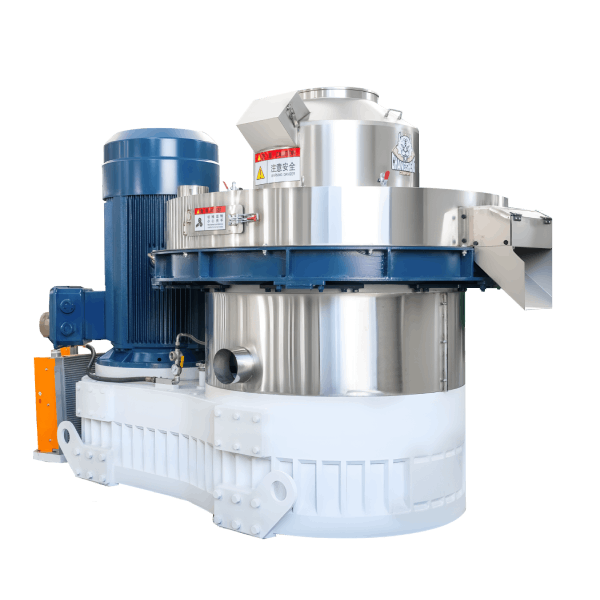
A turnkey pellet plant with hammer mill and cooler includes multiple equipment systems. Understanding the full component list helps procurement professionals verify completeness of supplier proposals.
Raw Material Receiving and Storage
| Equipment | Typical Specifications | Purpose |
|---|---|---|
| Intake pit and hopper | 20–30 m³ capacity | Raw material receiving |
| Vibrating screen | 1.5–3.0 kW; 5–8 mm screen | Debris removal |
| Magnetic separator | 5,000+ Gauss | Ferrous metal removal |
| Bucket elevator | 15–25 t/h; 15–25 m lift | Vertical conveying |
| Storage bins | 20–100 t per bin | Raw material storage |
Grinding Section
| Equipment | Typical Specifications | Purpose |
|---|---|---|
| Hammer mill | 55–200 kW; 2–6 mm screen | Size reduction |
| Air assist system | 7.5–22 kW fan | Product discharge |
| Dust collection | Cyclone + bag filter | Dust control |
| Surge bin | 2–5 t capacity | Buffer between grinding and batching |
Batching and Mixing Section
| Equipment | Typical Specifications | Purpose |
|---|---|---|
| Weighing scales | Electronic load cells; 0.1% accuracy | Formulation control |
| Mixer | 1–3 t/batch capacity | Ingredient homogenization |
| Liquid addition system (optional) | Spray nozzles; flow meters | Molasses/fat addition |
Conditioning and Pelletizing Section
| Equipment | Typical Specifications | Purpose |
|---|---|---|
| Conditioner | Double shaft; variable speed | Temperature and moisture control |
| Pellet mill | 55–200 kW; 400–800 mm die | Pelletizing core process |
| Pellet die | 2.0–8.0 mm diameter | Pellet specification |
Cooling and Screening Section
| Equipment | Typical Specifications | Purpose |
|---|---|---|
| Cooler | Counterflow; 10–20 min retention | Temperature/moisture reduction |
| Fines screen | Double deck; 5–15 t/h | Pellet/fines separation |
| Fines return conveyor | Screw or bucket elevator | Recycle fines to pellet mill |
Packaging and Storage Section
| Equipment | Typical Specifications | Purpose |
|---|---|---|
| Packing machine | 20–40 kg bags; 10–20 t/h | Bagging |
| Bag sewing machine | Automatic; high-speed | Bag closure |
| Bulk loader (optional) | 50–100 t/h | Bulk truck loading |
| Finished product storage | 50–500 t capacity | Product warehousing |
Utilities and Ancillary Systems
| System | Typical Components | Purpose |
|---|---|---|
| Steam system | Boiler (if not provided by site), piping, traps | Steam for conditioning |
| Compressed air | Compressor, filter, dryer | Instrumentation and cleaning |
| Dust control | Cyclones, bag filters, ducting | Environmental and safety |
| Electrical distribution | MCC, transformers, cable | Power distribution |
| Control system | PLC, HMI, field instruments | Process control and monitoring |
Supplier Evaluation Criteria for Turnkey Pellet Plants
Evaluating turnkey suppliers requires assessing capabilities beyond equipment manufacturing. The following framework provides a structured approach.
Technical Capability
| Criterion | What to Evaluate | Method |
|---|---|---|
| Process design expertise | Ability to select and size all components | Review previous project references |
| Equipment manufacturing | Quality of in-house manufacturing | Plant visit; FAT attendance |
| Control system capability | PLC/HMI integration and functionality | Review control philosophy; visit reference site |
| Documentation quality | Technical manuals, drawings, O&M | Review sample documentation |
Project Management Capability
| Criterion | What to Evaluate | Method |
|---|---|---|
| Track record | Number of completed turnkey projects | Reference calls; site visits |
| Schedule adherence | On-time delivery history | Review references; check lateness history |
| Budget control | Cost overrun management | Review financial references |
| Communication | Responsiveness and transparency | Evaluate proposal process |
Local Presence and Support
| Criterion | What to Evaluate | Method |
|---|---|---|
| Local representation | Sales and service presence in the region | Verify with local references |
| Language capability | Communication in owner’s preferred language | Proposal communication assessment |
| Import knowledge | Experience with local import regulations | Verify with previous projects |
Procurement Recommendation: Request at least three references from turnkey projects of similar scope, conducted within the last five years. Ask specific questions about project completion timing, cost overruns, and responsiveness during the project.
Contract Structure: Key Clauses to Negotiate
The turnkey contract is the foundation of the project. The following clauses require particular attention.
Scope Definition Clause
The scope of work must be unambiguous. Key questions:
- Is the scope equipment-only, or does it include installation and commissioning?
- Are civil works and foundation design included?
- Are electrical cables and MCC included, or only equipment?
- Who provides the steam boiler (if required)?
Performance Guarantee Clause
This is the most important commercial clause in a turnkey contract.
| Performance Parameter | Typical Guarantee | Measurement Method |
|---|---|---|
| Production capacity | ±10% of specified t/h | Measured over 8 hours; specified material |
| Product quality | Pellet durability index ≥95% (or as specified) | Standardized durability test |
| Power consumption | Within ±10% of specified kWh/t | Measured over production run |
| Pellet moisture | 10–12% after cooling | Standard moisture measurement |
Important: Performance guarantees should include liquidated damages—financial penalties if the supplier fails to meet guarantees. Typical liquidated damages are 0.5–1.0% of contract value per week of delay or underperformance.
Payment Terms Clause
Common payment structure:
| Milestone | Typical Payment Percentage | Condition |
|---|---|---|
| Contract signing | 20–30% | Contract execution |
| Design completion | 10–15% | Approval of drawings |
| Manufacturing completion | 30–35% | FAT completion |
| Delivery | 15–20% | Bill of lading issued |
| Installation completion | 10–15% | Mechanical completion |
| Performance acceptance | 5–10% | Performance test passed |
Warning: The final payment (after performance acceptance) should not be less than 5% of the contract value. This provides leverage for addressing any post-commissioning issues.
Warranty Clause
| Component | Typical Warranty Period | Terms |
|---|---|---|
| Process equipment | 12–24 months | Parts and labor |
| Wear parts | Excluded or limited | Dies, rollers, hammers, screens |
| Installation | 12 months | Worksmanship defects |
| Performance | 12 months | Guaranteed capacity and quality |
Change Order Clause
Change orders are a significant source of project cost overruns. The contract should specify:
- Who has authority to approve change orders
- Cost and schedule impact assessment process
- Communication protocol for changes
- Maximum threshold for approved change orders
Risk Management in Turnkey Pellet Plant Projects
Common Risks and Mitigation Strategies
| Risk Category | Specific Risk | Mitigation |
|---|---|---|
| Technical | Equipment underperforms | Performance guarantees with liquidated damages |
| Technical | Incompatible components | Require system integration testing during FAT |
| Schedule | Manufacturing delays | Milestone-based payments; progress reporting |
| Schedule | Installation labor quality issues | Require supplier to supervise installation labor |
| Schedule | Shipping delays | Include contingency time in schedule; use FCL where possible |
| Cost | Currency fluctuations | Consider fixed price contract in stable currency (USD/EUR) |
| Cost | Change orders | Freeze scope before detailed engineering |
| Quality | Substandard components | Specify preferred component brands; attend FAT |
| Safety | On-site installation accidents | Require safety plan and compliance with local regulations |
| Commercial | Supplier financial failure | Check supplier financials; consider performance bond |
Key Decision Factors: Summary
| Factor | Weight | Evaluation Method |
|---|---|---|
| Supplier experience with similar turnkey projects | High | Reference calls; site visits |
| Scope completeness | High | Detailed proposal review |
| Performance guarantee and liquidated damages | High | Contract negotiation |
| Project schedule | Medium-High | Compare to industry benchmarks |
| Price (total installed cost) | Medium | Compare proposal breakdown |
| After-sales support and local presence | Medium | Reference verification |
| Technology and equipment quality | Medium | FAT and reference site visits |
Frequently Asked Questions
1. What does a turnkey pellet plant cost?
The cost of a complete turnkey pellet plant ranges from approximately $300,000 for a 1–2 t/h line to over $5 million for a 15–20 t/h fully automated facility. The cost depends on capacity, automation level, building requirements, and scope of supply (equipment only vs. fully installed).
2. How long does it take to build a turnkey pellet plant?
From contract signing to commercial production, typical timelines range from 8 to 16 months for a 5–10 t/h plant. The timeline depends on scope complexity, site readiness, and shipping distance.
3. What is included in a turnkey pellet plant contract?
A full turnkey contract includes process design, equipment supply, installation supervision, commissioning, performance testing, and training. The owner is typically responsible for site preparation, utilities connection, and raw material supply during commissioning.
4. Should I choose a turnkey supplier or manage the project myself?
If you have in-house engineering and project management expertise, managing the project yourself may reduce costs. Most project owners without this expertise benefit significantly from the turnkey approach—the single responsibility reduces risk and management burden.
5. What performance guarantees should I request?
Request guarantees for: production capacity (t/h), pellet quality (durability index), power consumption (kWh/t), and pellet moisture after cooling. Ensure the guarantees include liquidated damages if the supplier fails to meet the specified performance.
6. How do I evaluate a supplier’s turnkey capability?
Review their track record of completed turnkey projects, visit at least one reference site, check the quality of their technical documentation, and assess their responsiveness during the proposal stage. A supplier’s ability to communicate clearly during procurement is a leading indicator of their project management capability.
7. What payment terms are standard for turnkey pellet plants?
Payments are typically tied to project milestones: contract signing (20–30%), design completion (10–15%), manufacturing completion (30–35%), delivery (15–20%), installation completion (10–15%), and performance acceptance (5–10%). Reserve 5–10% for final acceptance to ensure post-commissioning issues are addressed.
8. What is the most common cause of turnkey pellet plant project delays?
Manufacturing delays and shipping delays are the most common, followed by site readiness issues (late civil works, delayed utility connection). These can be mitigated by requiring regular progress reporting and freezing the design before manufacturing begins.
About the Author
Zhang Wei – Senior International Sales Engineer, Shandong Changsheng Machinery Co., Ltd.
Zhang Wei has over 12 years of experience in the biomass and feed pellet mill industry, with a background in mechanical engineering and international project execution. He has managed complete turnkey pellet plant projects for clients across Southeast Asia, the Middle East, Africa, Europe, and Latin America, overseeing everything from initial concept design through installation support and commissioning.
With hands-on experience in both the manufacturing workshop and client-side operations, Zhang brings practical insights into successful pellet plant project planning—from the factory floor to the customer’s production site.