Turnkey Pellet Plant with Hammer Mill and Cooler 0.5-5t/h | Supplier Guide
News 2026-07-09
Product Definition
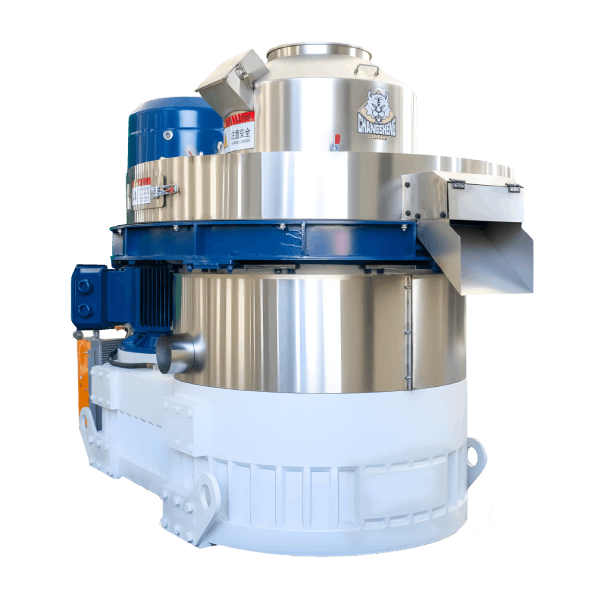
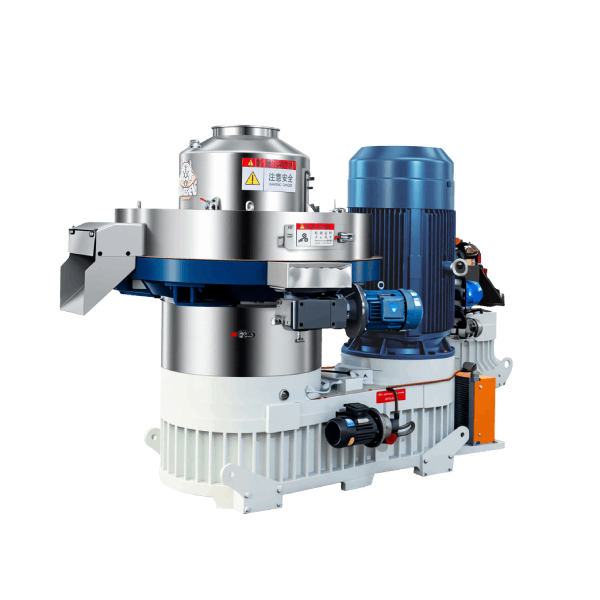
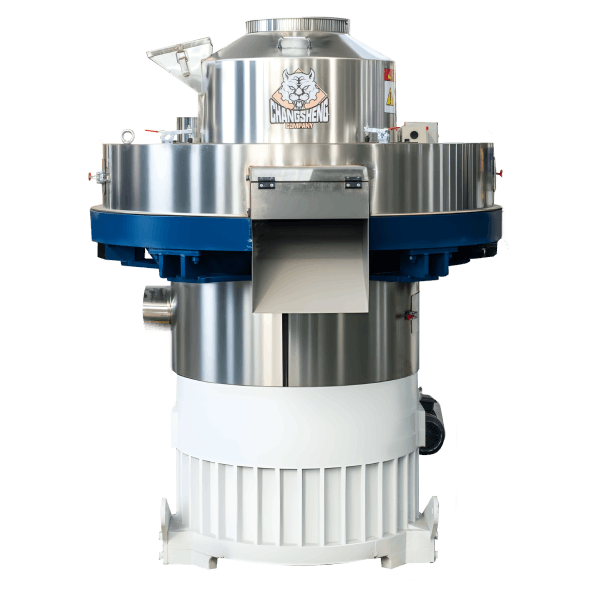
A turnkey pellet plant with hammer mill and cooler is a fully integrated pellet production system comprising size reduction, conditioning, pelletising, cooling, and screening equipment. The complete line processes biomass residues, feed ingredients, or agricultural waste into finished pellets ready for packaging or bulk storage.
Technical Specifications & Performance Parameters
| Parameter | Value Range / Specification |
|---|---|
| Throughput capacity | 0.5 – 5.0 t/h (feedstock-dependent) |
| Pellet mill motor power | 55 – 160 kW (IE3 / IE4 compatible) |
| Hammer mill motor power | 30 – 110 kW |
| Ring die inner diameter | 400 – 800 mm |
| Pellet diameter | 6 – 12 mm (customisable) |
| Pellet bulk density | 600 – 750 kg/m³ |
| Raw material moisture | 12% – 18% (optimal: 14% – 16%) |
| Hammer mill screen size | 2.0 – 6.0 mm |
| Total installed power | 100 – 350 kW |
| Specific energy consumption | 30 – 45 kWh/t (complete line) |
| Die service life | 800 – 1,200 hours |
| Roller shell service life | 600 – 900 hours |
| Maintenance man-hours | 8 – 12 h / month (complete line) |
Structural Composition & Material Selection
The turnkey pellet plant comprises five major equipment subsystems:
Hammer Mill System
- Heavy-duty hammer mill with replaceable screens (2.0–6.0mm)
- Rotor: Balanced steel disc with hardened hammers
- Screen: Perforated steel, quick-change design
- Cyclone + airlock: Dust-free material discharge
- Feeding: Screw or belt conveyor with magnetic separator
Conditioning System
- Double-shaft paddle mixer with steam injection
- Retention time: 45–120 seconds
- Temperature control: 80–100°C
Pelletising System
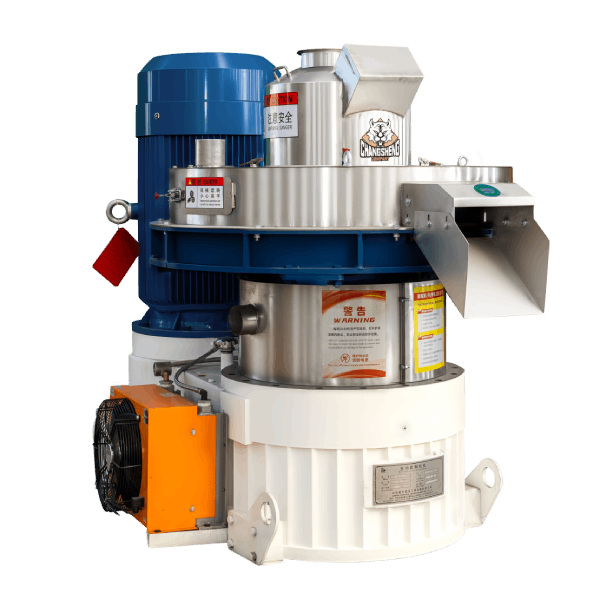
- Ring die pellet mill (55–160 kW)
- Automatic lubrication system
- VFD for speed control (optional)
- Die: Forged alloy steel (20CrMnTi) HRC 58–62
- Roller shells: High-chromium cast iron (Cr26)
Cooling System
- Counterflow cooler with induced draft fan
- Retention time: 6–15 minutes
- Final temperature: Ambient +5°C maximum
- Moisture reduction: to ≤12%
Screening & Packaging System
- Vibrating screener (two decks)
- Fines return screw conveyor
- Automatic bagging scale with sewing system
Manufacturing Process – Engineering Workflow
Step 1 – Raw Material Grinding (Hammer Mill)
Feedstock conveyed to hammer mill. Screens sized for final product (2.0–3.0mm for feed, 4.0–6.0mm for biomass). Material reduced to uniform particle size. Cyclone separates dust and discharges ground material.
Step 2 – Conditioning
Ground material enters paddle conditioner. Steam injection at 0.2–0.4 MPa. Temperature elevated to 80–100°C. Retention time 45–120 seconds ensures uniform moisture and temperature.
Step 3 – Pelletising
Conditioned mash enters pellet mill feed hopper. Ring die pellet mill compresses material into pellets. Roller gap maintained at 0.15–0.30 mm. Pellet temperature at die exit: 80–95°C.
Step 4 – Cooling
Hot pellets transferred to counterflow cooler. Ambient air drawn through pellet bed. Retention time 6–15 minutes. Pellet temperature reduced to ambient +5°C. Moisture reduced to ≤12%.
Step 5 – Screening & Packaging
Pellets screened to remove fines. Oversize pellets returned to pellet mill. Fines recirculated or collected. Final product bagged or stored in bulk.
Industry Comparison – Complete Plant Options
| Plant Type | Capacity (t/h) | Total Power (kW) | Scope | Typical Application |
|---|---|---|---|---|
| Turnkey Plant (HM + Pellet Mill + Cooler) | 0.5 – 5.0 | 100 – 350 | Complete line | Commercial pellet production |
| Standalone Pellet Mill Only | 0.5 – 5.0 | 55 – 160 | Pelletising only | Existing lines |
| Dryer + Pellet Mill | 0.5 – 5.0 | 200 – 500 | Drying + pelletising | Wet feedstock |
| Manual/Basic Plant | 0.1 – 1.0 | 30 – 100 | Partial | Pilot, small farms |
Differentiation (Shandong Changsheng Machinery):
Our turnkey pellet plants are engineered as complete solutions – reducing the complexity of sourcing and integrating individual components. The system is designed for seamless material flow from grinding to finished product. Single-point control and integrated auxiliaries reduce installation time and commissioning effort.
Application Scenarios by Buyer Role
Distributors / Importers
Focus on complete plant solutions for industrial clients. Require system specifications and installation support for customer sites.
EPC Contractors
Integrating turnkey pellet plants into new or existing facilities. Need complete system design and single-source supply.
Engineering Consultants / Technical Advisors
Evaluate complete plant viability and energy balance. Require system data for project feasibility studies.
End-user Production Facilities
Feed mills, biomass plants, and waste processing facilities. Demand ready-to-operate lines with minimal integration effort.
Core Pain Points & Engineering Solutions
Pain Point 1 – Multiple suppliers causing integration issues
Root cause: Sourcing equipment from different suppliers – compatibility and interface problems.
Solution: Single-source turnkey plant – all components designed to work together. Single point of responsibility.
Pain Point 2 – Extended installation and commissioning time
Root cause: Coordinating multiple suppliers for installation and commissioning.
Solution: Pre-engineered system with standardised layout. Single commissioning team. Faster start-up.
Pain Point 3 – Inconsistent pellet quality from process variation
Root cause: Lack of integrated process control across individual machines.
Solution: Centralised PLC control with HMI – all process parameters monitored from single interface.
Pain Point 4 – High energy consumption
Root cause: Inefficient equipment selection or suboptimal integration.
Solution: Optimised system design with VFDs and energy monitoring. Balanced capacities avoid bottleneck inefficiencies.
Critical Risk Warnings & Mitigation Measures
Risk 1 – Material flow bottleneck between machines
Mitigation: Review capacity matching. Ensure conveyors have 15%–20% capacity margin. Install buffer bins.
Risk 2 – Hammer mill dust explosion
Mitigation: Install explosion vents. Dust collection at mill. Magnetic separator for metal. Static grounding.
Risk 3 – Cooler efficiency reduction from blocked screens
Mitigation: Install air pressure monitoring. Regular screen cleaning. Oversize recirculation.
Procurement Selection Guide – 7 Executable Steps
Step 1 – Define feedstock and output requirement
Identify material type, moisture, and particle size. Determine target capacity with 20% margin.
Step 2 – Determine hammer mill configuration
Screen size (2.0–6.0mm), motor power (30–110 kW), and feeding method. Match to pelletising requirements.
Step 3 – Specify pellet mill
Ring die diameter (400–800mm), motor power (55–160 kW), and VFD option. Select die compression ratio.
Step 4 – Verify cooling system capacity
Cooling retention time (6–15 minutes). Confirm air flow and discharge temperature requirements.
Step 5 – Review electrical requirements
Total installed power (100–350 kW). Voltage and frequency. Control system integration.
Step 6 – Plan for dust and fire safety
Dust collection at hammer mill and transfer points. Explosion venting. Fire suppression.
Step 7 – Establish commissioning schedule
Pre-commissioning inspection. Machine testing. Full line run. Operator training.
Engineering Case Study – Feed Mill Turnkey Plant in Kenya
Project Background
A new feed mill in Kenya required a 2.0 t/h pellet production line. Client had no previous pelletising experience and needed a complete, ready-to-operate solution.
Initial Problem
Client was considering sourcing equipment from multiple suppliers – would require separate installation, integration, and commissioning. No single point of responsibility for line performance.
Root Cause Analysis
In-house engineering capability limited. Turnkey solution would reduce project risk and provide single-source accountability.
Solution Implemented
Installed complete turnkey pellet plant: hammer mill (75kW), conditioner, pellet mill (90kW), counterflow cooler, and screening/packaging. Single-point PLC control.
Final Data Results
| Metric | Value |
|---|---|
| Plant capacity | 2.0 t/h (rated) |
| Installation time | 10 days |
| Commissioning time | 3 days |
| Line availability (first year) | 94% |
| Pellet quality | ENplus-compliant |
Frequently Asked Questions (FAQ)
1. What is included in a turnkey pellet plant?
Hammer mill, conditioner, pellet mill, cooler, screener, conveyors, dust collector, and control system – complete line ready to operate.
2. What capacity range is available?
0.5 – 5.0 t/h depending on model and feedstock.
3. What is the total installed power?
100 – 350 kW depending on system configuration.
4. What is the specific energy consumption?
30 – 45 kWh/t for the complete line (feedstock-dependent).
5. What is the typical pellet mill die life?
800 – 1,200 hours – extended life with premium alloy dies.
6. What size pellets can be produced?
6 – 12 mm customisable – die selection determines diameter.
7. Does the plant include dust collection?
Yes – integrated dust collection at hammer mill and transfer points.
8. What is the cooling retention time?
6 – 15 minutes – pellet temperature reduced to ambient +5°C.
9. Can the plant process different feedstocks?
Yes – feed ingredients, wood biomass, agricultural residues. Die and screen selection adjusted.
10. How long does installation take?
10 – 20 days depending on site conditions and capacity.
11. What is the commissioning timeline?
3 – 5 days for complete line testing and operator training.
12. What is the warranty period?
12 months on mechanical components. Extended warranties available.
Author & E-E-A-T Credentials
Author: Dr. Chen Wei
Title: Senior Mechanical Engineer, Pelletising Systems Division
Experience: 14 years in biomass densification and feed processing equipment design
Notable Projects:
- Commissioned 6 turnkey pellet plants across Africa, Asia, and Europe
- Developed integrated line design and commissioning protocols
- Co-author of “Industrial Pellet Mill Maintenance and Optimisation” (Engineering Press, 2022)
Affiliation: Shandong Changsheng Machinery Co., Ltd.