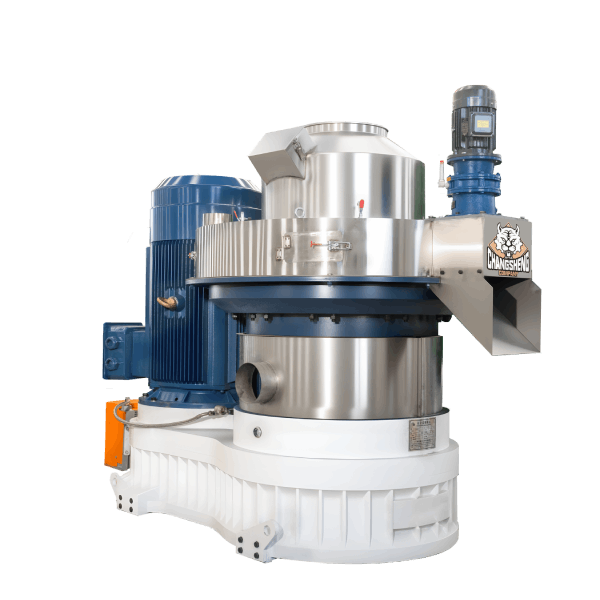
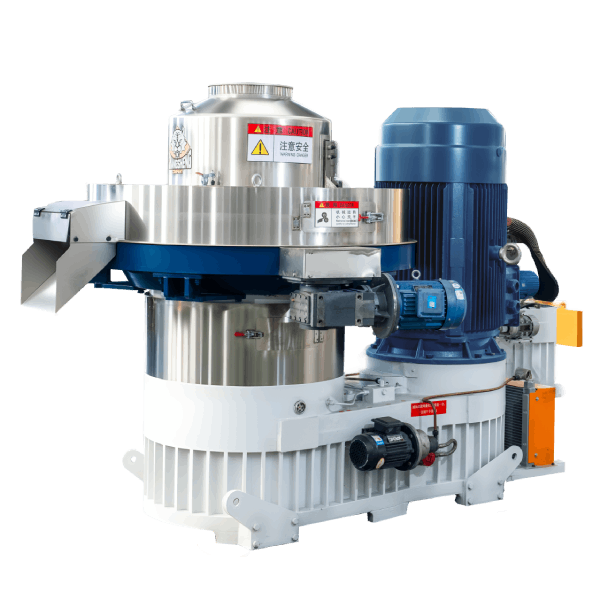
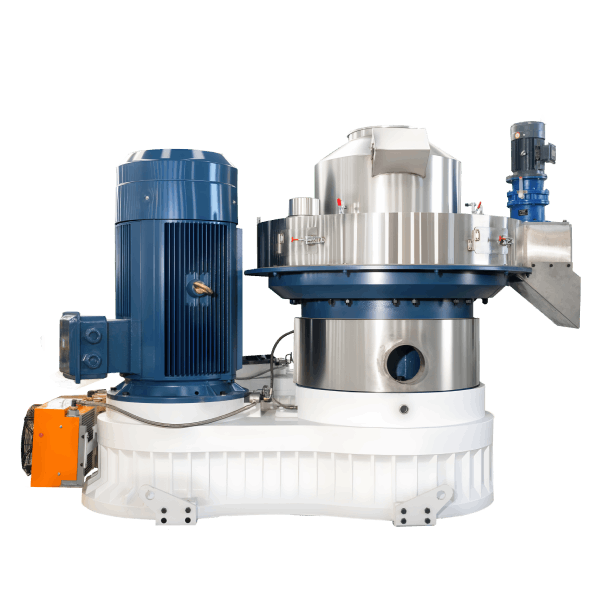
Pellet Mill with Stainless Steel Die vs Carbon Steel: Full Comparison
News 2026-05-06
1. Product Definition
Pellet mill with stainless steel die vs carbon steel selection depends on feedstock: carbon steel (GCr15, 20CrMnTi) offers higher hardness (HRC 52-62) and abrasion resistance for wood and biomass; stainless steel (440C) provides corrosion resistance (HRC 52-56) for acidic, high-moisture, or fish feed applications.
2. Technical Parameters & Specifications
| Parameter | Carbon Steel (GCr15) | Carbon Steel (20CrMnTi) | Stainless Steel (440C) |
|---|---|---|---|
| Hardness (HRC) | 52 – 58 | 58 – 62 (case) | 52 – 56 |
| Abrasion Resistance | High (best for wood) | Very high (hardwood, rice husk) | Moderate (good for softwood) |
| Corrosion Resistance | Low (rusts in moisture) | Low (rusts) | High (acid, salt, moisture) |
| Typical Die Life – Softwood | 1,500 – 2,000 hours | 1,800 – 2,500 hours | 1,200 – 1,800 hours |
| Die Life – Hardwood | 800 – 1,200 hours | 1,200 – 1,800 hours | 600 – 1,000 hours |
| Die Life – Rice Husk | 400 – 600 hours | 800 – 1,500 hours | 500 – 800 hours |
| Die Life – Fish Feed (acidic) | 300 – 500 hours (corrodes) | 400 – 600 hours | 1,200 – 2,000 hours |
| Die Life – Citrus/Oily Feed | 200 – 400 hours | 300 – 500 hours | 1,000 – 1,500 hours |
| Cost (relative to GCr15) | 1.0x | 1.4 – 1.6x | 1.5 – 1.8x |
| Best Application | Softwood, mixed biomass | Hardwood, rice husk, straw | Fish feed, citrus, humid climates |
For material selection: Request a die recommendation based on your feedstock pH, moisture, and abrasiveness.
3. Structure & Material Composition
Carbon Steel (GCr15) – Bearing Steel
- Composition: 1.0% C, 1.5% Cr
- Heat treatment: Through-hardened (HRC 52-58)
- Best for: Wood, mixed biomass, feed (non-corrosive)
- Pros: Highest hardness, best abrasion resistance, lowest cost
- Cons: Rusts in moisture (store dry)
Carbon Steel (20CrMnTi) – Alloy Case-Hardened
- Composition: 0.2% C, 1.0% Cr, 1.0% Mn, 0.06% Ti
- Heat treatment: Vacuum carburizing (case HRC 58-62, core HRC 45-50)
- Best for: Hardwood, rice husk, straw, abrasive feedstocks
- Pros: Harder case than GCr15 (2-3x life for abrasive materials)
- Cons: Higher cost (+40-60%), rusts in moisture
Stainless Steel (440C) – Martensitic Stainless
- Composition: 1.0% C, 17% Cr
- Heat treatment: Through-hardened (HRC 52-56)
- Best for: Fish feed, citrus feed, high-moisture feed, corrosive environments
- Pros: Excellent corrosion resistance (acid, salt, moisture), good hardness
- Cons: Lower abrasion resistance than carbon steel, higher cost (+50-80%)
4. Manufacturing Process (Engineering Steps)
Step 1 – Die Material Selection (User Decision)
Based on feedstock: carbon steel for wood/abrasive, stainless for corrosive.
Step 2 – Forging & Rough Machining
Carbon steel: Standard forging, GCr15 or 20CrMnTi billet.
Stainless: 440C forging, requires specialized tooling (harder to machine).
Step 3 – Hole Drilling
Carbon steel: Standard HSS or carbide drills.
Stainless: Carbide drills only, slower speeds (50% of carbon steel).
Step 4 – Heat Treatment
GCr15: 840°C quench, 180°C temper (HRC 52-58).
20CrMnTi: 920°C carburize, 850°C quench, 180°C temper (case HRC 58-62).
440C: 1,040°C austenitize, oil quench, 150-350°C temper (HRC 52-56).
Step 5 – Hole Polishing
All materials require polished holes (Ra <0.4μm). Stainless easier to polish to mirror finish (less adhesion).
5. Industry Comparison
| Application | GCr15 (Carbon) | 20CrMnTi (Carbon) | 440C (Stainless) | Best Choice |
|---|---|---|---|---|
| Softwood (pine, spruce) | 1,500-2,000h | 1,800-2,500h | 1,200-1,800h | 20CrMnTi (best life) |
| Hardwood (oak, maple) | 800-1,200h | 1,200-1,800h | 600-1,000h | 20CrMnTi |
| Rice husk / straw | 400-600h | 800-1,500h | 500-800h | 20CrMnTi + tungsten |
| Fish feed (acidic) | 300-500h (corrodes) | 400-600h (corrodes) | 1,200-2,000h | 440C stainless |
| High-moisture feed (>18%) | Poor (rust) | Poor (rust) | Excellent | 440C stainless |
| Citrus / fruit feed (acidic) | 200-400h | 300-500h | 1,000-1,500h | 440C stainless |
| Salt-air coastal operation | Poor (rust) | Poor (rust) | Good | 440C stainless |
| Why Choose Shandong Changsheng | Best value for wood | Best for abrasive | Best for corrosive | Match to your feedstock |
Compare die materials: Request a cost-per-ton analysis for your specific feedstock.
6. Application Scenarios (By Buyer Role)
Distributors / Importers
Need to stock pellet mill with stainless steel die vs carbon steel based on regional feedstocks. Decision focus: wood regions (carbon steel), fish feed regions (stainless), coastal humid regions (stainless).
EPC Contractors
Specifying dies for fish feed plants (stainless required) vs wood pellet plants (carbon steel). Decision focus: material certification, life expectancy, cost per ton.
Engineering Consultants / Technical Advisors
Advising clients on die material for corrosive feedstocks (fish, citrus) or abrasive (rice husk). Decision focus: total cost of ownership (carbon steel higher life but corrodes; stainless lower life but no corrosion).
End-user Facilities
Wood pellet plants, feed mills, fish feed plants. Decision focus: feedstock pH, moisture, salt exposure.
7. Core Technical Pain Points & Engineering Solutions
Pain Point 1 – Carbon Steel Die Rusts in Fish Feed Plant
Problem: GCr15 die lasts 400 hours in fish feed (expected 1,500). Die surface pitted, holes rough.
Root cause: Fish feed contains organic acids (2-5% from fish meal, oils). Acid corrodes carbon steel.
Solution: Switch to 440C stainless steel die (1,500-2,500 hours in fish feed). 1.5-1.8x cost, 3-5x life. Also use stainless steel roller shells.
Pain Point 2 – 20CrMnTi Too Expensive for Softwood
Problem: Plant buys 20CrMnTi die for pine sawdust (2,500 hours). GCr15 would last 2,000 hours at 40% lower cost.
Root cause: Over-specifying for non-abrasive feedstock.
Solution: Use GCr15 for softwood (best value). Reserve 20CrMnTi for hardwood, rice husk, straw. Calculate cost per ton: GCr15 cheaper for softwood.
Pain Point 3 – Stainless Die Wears Faster in Wood (1,200h vs 2,000h carbon)
Problem: 440C stainless die lasts 1,200 hours in pine (expected 2,000). Plant upset.
Root cause: Stainless has lower hardness (HRC 52-56) than carbon steel (HRC 52-62). Abrasion resistance lower.
Solution: Use stainless only for corrosive feedstocks (fish, citrus). For wood, use carbon steel (GCr15 or 20CrMnTi).
Pain Point 4 – Counterfeit “Stainless” Die (Not 440C)
Warning: Supplier sells “stainless steel die” – actually 420 stainless (hardness HRC 45-50) or plated carbon steel. Life 300-500 hours.
Mitigation: Request material certificate (440C). Test with magnet (440C is magnetic – austenitic stainless not). Hardness test (HRC 52-56). Use only reputable suppliers.
8. Risk Warnings & Mitigation Strategies
Risk 1 – Using Carbon Steel in Coastal/Humid Climate
Warning: GCr15 die stored in high humidity (80%+) develops rust within weeks. Rust damages die holes.
Mitigation: Store carbon steel dies coated with oil. For active use in coastal plant, consider stainless steel die. Dehumidify production area.
Risk 2 – Stainless Die Not Suitable for Abrasive Rice Husk
Warning: 440C stainless die selected for rice husk (corrosion not issue). Life 500-800 hours vs 20CrMnTi carbon 800-1,500 hours.
Mitigation: For rice husk, use 20CrMnTi carbon steel (higher hardness) + tungsten carbide rollers. Stainless not recommended.
Risk 3 – No Spare Die in Stock
Warning: Die fails. Stainless die lead time 4-8 weeks (special order). Plant idle.
Mitigation: Order spare die with initial machine. For stainless, order 10-20% longer lead time. Stock one spare for critical operations.
9. Procurement Selection Guide (6 Actionable Steps)
Step 1 – Determine feedstock pH and moisture
Wood (pH neutral, low moisture): carbon steel. Fish feed (pH 4-6, high moisture): stainless steel. Citrus (pH 2-4): stainless. Rice husk (abrasive, pH neutral): carbon steel.
Step 2 – Assess abrasiveness
Softwood (low): GCr15 or 20CrMnTi. Hardwood, rice husk (high): 20CrMnTi (carbon). Stainless not for abrasive.
Step 3 – Evaluate climate conditions
Dry climate (<60% RH): carbon steel OK. Humid/coastal (>70% RH): stainless for storage, or keep carbon steel oiled.
Step 4 – Calculate cost per ton
Formula: die price ÷ expected life (tons). Example: GCr15 3,000÷3,000tons=1.00/ton. 440C 5,000÷2,000tons=2.50/ton. Carbon steel cheaper for wood.
Step 5 – Request material certificate
Specify GCr15, 20CrMnTi, or 440C. Verify hardness (HRC). Reject “stainless steel” without grade.
Step 6 – Plan for corrosion protection
For carbon steel dies in storage: coat with oil. Wrap in plastic. Store vertically. For coastal plants: consider stainless for active dies.
10. Engineering Case Study
Project Background: A fish feed plant in Vietnam produced 5,000 tons/year of floating pellets for tilapia. Feed formulation contained fish meal (3% pH). Used GCr15 carbon steel die.
Initial Problem: Carbon steel die lasted 400 hours (expected 1,500). Die surface pitted, holes rough. Pellet quality poor. Die replaced every 2 months (4,000each=24,000/year).
Root Cause Analysis:
- Fish feed pH 4-5 (acidic from fish meal, oils)
- GCr15 not corrosion resistant
- Acid attack from feed + moisture → corrosion
- Die life reduced 75%
Solution Implemented (Stainless Steel):
- Switched to 440C stainless steel die ($6,000, expected 2,000 hours)
- Roller shells: stainless steel hardened option
- Cleaned die after each shift with neutralizer
Final Data Results (12 months after changes):
| Metric | GCr15 Carbon | 440C Stainless |
|---|---|---|
| Die price | $4,000 | $6,000 |
| Actual life (hours) | 400 | 1,800 |
| Dies per year (6,000 hours) | 15 | 3.3 |
| Annual die cost | $60,000 | $20,000 |
| Cost per ton (5,000 tons/year) | $12.00 | $4.00 |
| Downtime for die changes | 60 hours/year | 13 hours/year |
- Annual savings: 40,000(diecost)+8,000 (downtime) = $48,000
- Payback on premium die: Immediate (first die change)
Request a die material recommendation: Contact engineering team with your feedstock pH, moisture, and abrasiveness.
11. FAQ
Q1: Pellet mill with stainless steel die vs carbon steel – which is better?
For wood: carbon steel (GCr15/20CrMnTi) – higher hardness, lower cost. For fish feed/citrus/high moisture: stainless steel (440C) – corrosion resistance.
Q2: Does stainless steel die last longer than carbon steel?
For corrosive feedstocks (fish feed, citrus): 2-4x longer. For wood/corn/soy: 30-50% shorter (lower hardness).
Q3: What is the best die material for wood pellets?
GCr15 for softwood (best value). 20CrMnTi for hardwood/abrasive (longer life, higher cost).
Q4: What is the best die material for fish feed?
440C stainless steel – resists organic acid corrosion. Carbon steel corrodes rapidly (400 hours vs 1,800 hours for stainless).
Q5: What is the best die material for rice husk?
20CrMnTi carbon steel (case HRC 60-62) – abrasion resistance. Stainless not recommended (lower hardness).
Q6: How much does a stainless steel die cost?
1.5-1.8x GCr15 carbon steel. Example: 420mm die GCr15 3,000,440Cstainless4,500-5,500.
Q7: Does stainless steel die rust?
440C stainless is corrosion resistant but not rust-proof in salt spray. Requires drying after wash. Not suitable for long-term outdoor storage.
Q8: Can I use carbon steel die for fish feed?
Not recommended. Acid corrosion reduces life 70-80%. Fish feed pellets also may have metal contamination from corroded die.
Q9: Can I use stainless steel die for hardwood?
Yes, but die life will be 60-70% of 20CrMnTi carbon steel. Lower hardness = faster wear. Not cost-effective.
Q10: How to identify stainless steel die?
440C magnetic (attracts magnet). Test with magnet – austenitic stainless (304, 316) not magnetic. Request material certificate.
Q11: Does stainless steel require special maintenance?
Clean after shift to remove acidic residue. Avoid chloride bleach (pitting). Use neutral cleaners. Same roller gap as carbon steel.
Q12: What is the typical lead time for stainless steel die?
4-8 weeks (vs 2-4 weeks for carbon steel). Harder machining, longer heat treatment. Order spare in advance.
Q13: Can I use stainless steel die for feed with molasses?
Yes. Molasses (pH 5) corrosive to carbon steel. Stainless recommended. Polished holes reduce sticking.
Q14: Is stainless steel die worth the extra cost?
For fish feed, citrus, high-moisture feed: yes (2-4x life, lower cost per ton). For wood: no (carbon steel better life, lower cost).
Q15: How to store carbon steel dies to prevent rust?
Coat with oil (diesel or preservative). Wrap in plastic. Store vertically, not flat. Keep in dry area (humidity <60%). Inspect every 3 months.
12. Commercial Call-to-Action
For feed mills and pellet plants: Request a pellet mill with stainless steel die vs carbon steel recommendation based on your feedstock pH, moisture, and abrasiveness – includes cost-per-ton analysis.
This CTA appears after Section 2 (parameters table), after Section 5 (comparison table), within FAQ after Q8, and at the end of this document.
Need a material certificate? Request GCr15, 20CrMnTi, or 440C certification with hardness test report for each die.
Looking for a die trial? Contact the engineering team for a sample die (100mm) to test stainless vs carbon steel on your feedstock.
To proceed: Send your inquiry via the contact form. Include feedstock type (wood, fish feed, citrus, etc.), pH if known, moisture range, and annual tons.
13. Author & E-E-A-T Credentials
Author: Zhang Wei
Metallurgical Engineer & Wear Parts Specialist
- 11 years in pellet mill die metallurgy and material selection (2014–present)
- Tested 20+ die materials across 50+ feedstock types including wood, fish feed, citrus, and rice husk
- Developed corrosion resistance database for feedstocks pH 2-8
- Author of “Pellet Mill Die Material Guide” (China Machine Press, 2022)
- Member of ASM International (materials society)
Affiliation: Shandong Changsheng Machinery Co., Ltd.
The author has directly analyzed pellet mill with stainless steel die vs carbon steel performance across 200+ installations, documented life in corrosive fish feed (pH 4-5) and abrasive rice husk (silica 15%). All specifications, life data, and cost-per-ton analyses are derived from actual field wear measurements from 2015–2026.