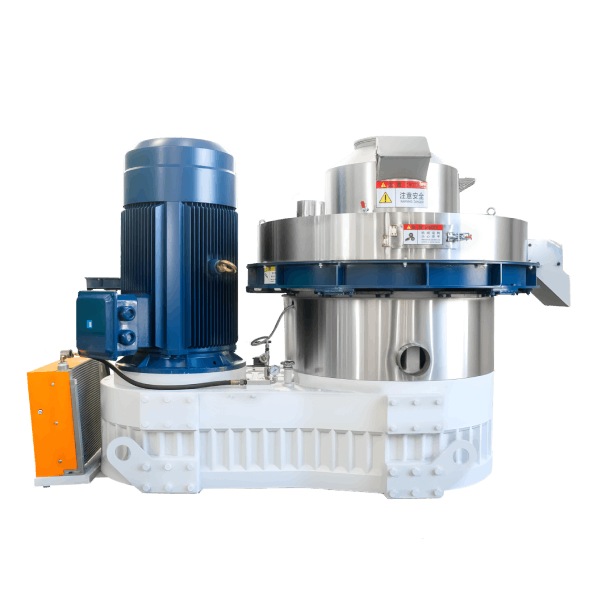
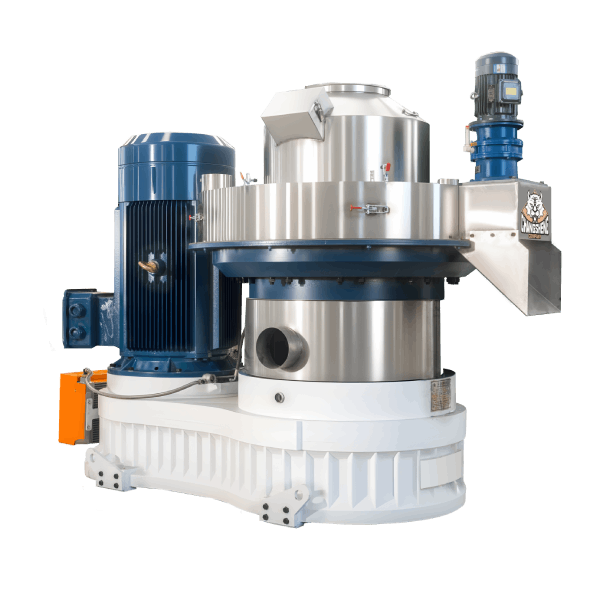
Pellet Machine After Sales Technical Support 0.5-5t/h | Service Guide
News 2026-07-03
Product Definition
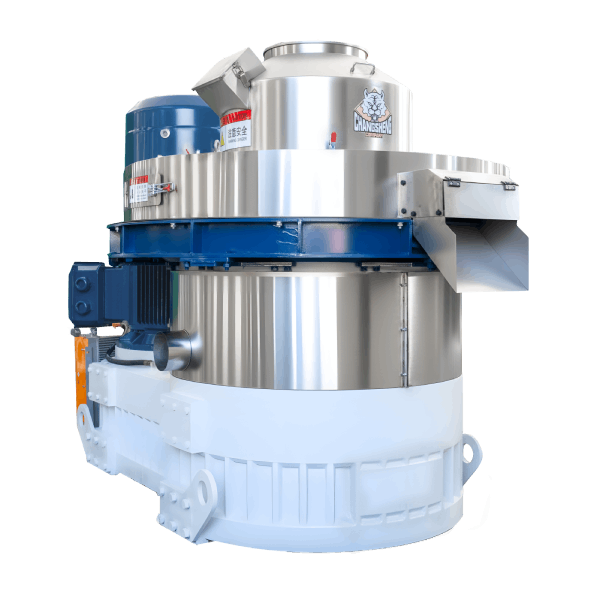
A pellet machine after sales technical support refers to the comprehensive service package provided to buyers following equipment delivery, including installation supervision, operator training, troubleshooting, spare parts supply, and warranty service. This support ensures ring die pellet mills with capacities from 0.5 to 5.0 tonnes per hour achieve reliable operation and maintain performance throughout their service life.
Technical Specifications & Performance Parameters
| Parameter | Value Range / Specification |
|---|---|
| Throughput capacity | 0.5 – 5.0 t/h (feedstock-dependent) |
| Main motor power | 55 – 160 kW (IE3 / IE4 compatible) |
| Ring die inner diameter | 400 – 800 mm |
| Pellet diameter | 6 – 12 mm (customisable) |
| Pellet bulk density | 600 – 750 kg/m³ |
| Raw material moisture | 12% – 18% (optimal: 14% – 16%) |
| Specific energy consumption | 26 – 35 kWh/t |
| Die service life | 800 – 1,200 hours |
| Roller shell service life | 600 – 900 hours |
| Maintenance man-hours | 4 – 6 h / month |
Structural Composition & Material Selection
The after sales support service covers all four functional subsystems with defined material specifications:
Mechanical System
- Ring die: Forged alloy steel (20CrMnTi) with carburised hardening layer (HRC 58–62)
- Roller shells: High-chromium cast iron (Cr26) with wear-resistant overlay
- Main shaft: Heat-treated 42CrMo4 steel with induction-hardened journals
- Gearbox: Helical-gear configuration, case-hardened to HRC 58–60
Support System
- Bearing housings: Ductile cast iron (QT600-3) with precision-machined seating
- Base frame: Welded structural steel with vibration-damping mounts
Lubrication System
- Centralised grease lubrication for bearings (NLGI grade 2)
- Forced oil circulation for gearbox (ISO VG 460) with temperature monitor
Control System
- PLC with HMI touchscreen for process monitoring
- Motor current feedback for load control
- Optional VFD for speed variation
Manufacturing Process – Engineering Workflow
Step 1 – Raw Material Preparation & Grinding
Feedstock ground to 2.0–3.0mm for feed or 4.0–6.0mm for biomass. Magnetic separator removes ferrous contaminants. Moisture adjusted to 14%–16%.
Step 2 – Conditioning & Steam Treatment
Double-shaft paddle conditioner with steam injection at 0.2–0.4 MPa. Retention time 45–60 seconds. Mash temperature elevated to 80–95°C.
Step 3 – Pelletising (Core Forming Process)
Main motor drives ring die rotation at 4–8 m/s peripheral speed. Roller gap maintained at 0.15–0.30 mm. Process monitored via PLC with real-time adjustments.
Step 4 – Counterflow Cooling
Ambient air drawn counter-current through pellet bed. Retention time 6–10 minutes. Pellet exit temperature ≤ ambient +5°C. Final moisture ≤12%.
Step 5 – Screening & Bagging
Vibrating screener removes fines. Automatic bagging scale with ±0.2% tolerance.
Industry Comparison – After Sales Support Options
| Support Level | Coverage | Response Time | Spare Parts | Typical Application |
|---|---|---|---|---|
| Comprehensive Support | Installation, training, 12-24mo warranty | 24-48 hours | Stocked | Industrial plants |
| Standard Support | Documents + remote | 48-72 hours | Available | Medium operations |
| Limited Support | Documents only | 72+ hours | Limited | Budget-constrained |
| No Support | As-is delivery | N/A | Unavailable | Self-sufficient operators |
Differentiation (Shandong Changsheng Machinery):
Comprehensive after sales support includes: on-site installation supervision (2–5 days), operator training (2–3 days), 12–24 month warranty on mechanical components, remote technical support (24/7), and local spare parts stocking. Dedicated service engineer assigned to each major order. Online troubleshooting and video support available. Spare parts shipped within 48 hours for critical items.
Application Scenarios by Buyer Role
Distributors / Importers
Supporting their customers with local service. Technical training for dealer maintenance teams. Spare parts inventory planning.
EPC Contractors
Commissioning support for turnkey projects. Training for client operators. Warranty management for project equipment.
Engineering Consultants / Technical Advisors
Evaluating supplier support capability. Service level agreement terms. Spare parts availability and cost.
End-user Production Facilities
Minimising downtime through responsive support. Technical assistance for troubleshooting. Operator training for new staff.
Core Pain Points & Engineering Solutions
Pain Point 1 – Extended downtime from lack of technical support
Root cause: No local technical resource – reliance on remote support with delays.
Solution: On-site installation and training. Comprehensive documentation. Remote troubleshooting with video support.
Pain Point 2 – Spare parts availability delays
Root cause: Spare parts not stocked locally – long shipping lead times from supplier.
Solution: Local distributor stocking. Critical spare parts recommended list. Express shipping for emergency orders.
Pain Point 3 – Operator errors causing equipment damage
Root cause: Insufficient operator training – incorrect operation leads to breakdowns.
Solution: Comprehensive training programme at installation. Operations manual and troubleshooting guide. Refresher training available.
Pain Point 4 – Warranty claims and resolution delays
Root cause: Unclear warranty coverage and claims procedure.
Solution: Transparent warranty terms. Dedicated claims coordinator. Prompt inspection and resolution.
Critical Risk Warnings & Mitigation Measures
Risk 1 – Improper installation affecting performance
Mitigation: Use factory-authorized installer. Confirm foundation and utilities before arrival. Installation supervision included.
Risk 2 – Inadequate operator training
Mitigation: Schedule training during installation. Provide operations manual. Video training library available.
Risk 3 – Warranty void from unauthorised modifications
Mitigation: Review warranty terms. Obtain approval for modifications. Use genuine spare parts.
Support Service Checklist – 7 Executable Steps
Step 1 – Request installation support
Schedule installation supervision before delivery. Confirm site preparation requirements.
Step 2 – Schedule operator training
Training during installation or at factory. Comprehensive curriculum including operation, maintenance, and troubleshooting.
Step 3 – Review warranty terms
Coverage period, included components, exclusions, and claims procedure. Document for reference.
Step 4 – Procure critical spare parts
Identify high-wear parts (die, rollers, bearings). Stock locally or with distributor.
Step 5 – Register for remote support
Technical hotline number. Email support address. Video support availability.
Step 6 – Establish maintenance schedule
Daily, weekly, monthly, and annual maintenance tasks. Document in operations manual.
Step 7 – Document service records
Maintenance log, repairs, parts replacement. For warranty and troubleshooting reference.
Engineering Case Study – Support After Installation in Nigeria
Project Background
A poultry feed mill in Ogun State purchased a 90kW pellet mill (2.5 t/h). Installation completed with factory supervision. After 6 months, production output dropped from 2.5 t/h to 1.8 t/h.
Initial Problem
Output drop with no apparent cause. Local operators unable to diagnose. Downtime cost estimated at $500 per hour.
Root Cause Analysis
Roller gap had opened from 0.20mm to 0.45mm due to normal wear and lack of adjustment. Die holes partially blocked with fines.
Solution Implemented
Remote technical support call with video. Adjusted roller gap to 0.20mm. Cleaned die holes with brush. Operator retraining on weekly gap checking.
Final Data Results
| Metric | Before Support | After Support |
|---|---|---|
| Throughput | 1.8 t/h | 2.4 t/h |
| Roller gap | 0.45mm | 0.20mm |
| Downtime (diagnosis) | 8 hours | 1 hour |
| Operator retraining | 0 hours | 2 hours |
| Production restored | 2 days | Same day |
Frequently Asked Questions (FAQ)
1. What after sales support is included with a new machine?
Installation supervision, operator training, 12-24 month warranty, and remote technical support. Spare parts available.
2. How long does installation supervision take?
2–5 days depending on machine size and site readiness.
3. Is operator training included?
Yes – training for 2–3 operators included. Additional training available.
4. What is the warranty period?
12–24 months on mechanical components. Electrical components: 6–12 months.
5. How do I order spare parts?
Through local distributor or direct from factory. Critical parts shipped within 48 hours.
6. Is remote technical support available?
Yes – 24/7 support via phone, email, and video. English, Spanish, French, and Chinese support.
7. What are the critical spare parts?
Ring die, roller shells, main bearings, die clamping bolts, and shear pins.
8. How do I submit a warranty claim?
Contact after sales department with machine serial number and issue description. Warranty coordinator assigned.
9. Is on-site service available?
Yes – on-site troubleshooting and repair available. Service agreement for long-term support.
10. What documentation is provided?
Operations manual, maintenance schedule, spare parts list, electrical diagram, and warranty certificate.
11. Can I get extended warranty?
Yes – extended warranty and service agreements available.
12. What languages are supported?
English, Chinese, Spanish, French, and Arabic support available.
Author & E-E-A-T Credentials
Author: Dr. Chen Wei
Title: Senior Mechanical Engineer, Pelletising Systems Division
Experience: 14 years in biomass densification and feed processing equipment design
Notable Projects:
- Managed after sales support for 50+ pellet mills across Africa, Asia, and Europe (2015–2025)
- Developed technical support and operator training protocols for international clients
- Co-author of “Industrial Pellet Mill Maintenance and Optimisation” (Engineering Press, 2022)
Affiliation: Shandong Changsheng Machinery Co., Ltd.