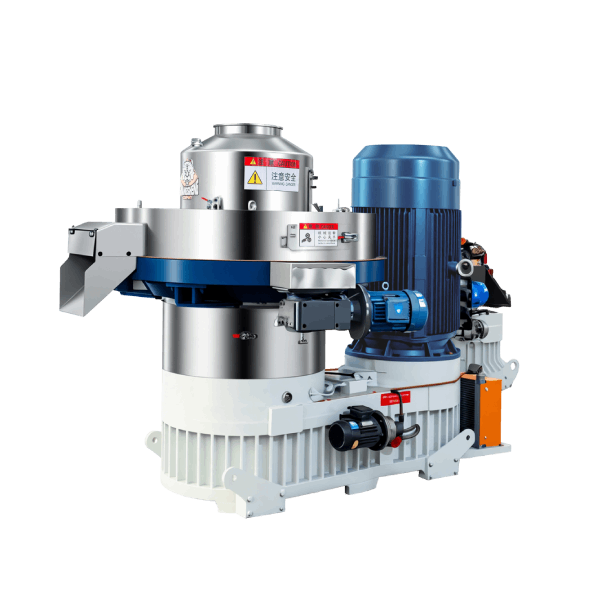
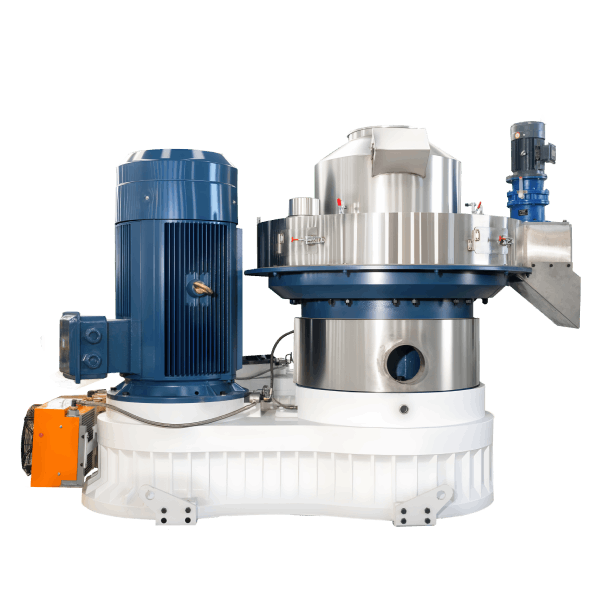
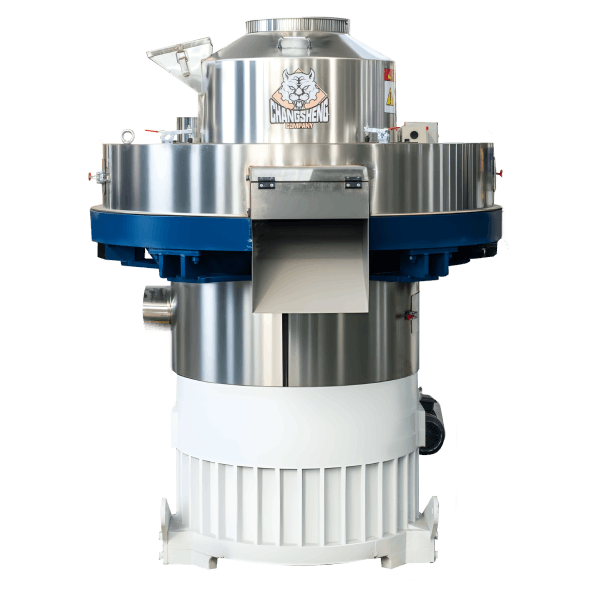
Pellet Machine with Emergency Stop Button: Safety Compliance
News 2026-05-30
1. Product Definition
A pellet machine with emergency stop button (E-stop) is a safety-critical device required for OSHA, CE, and CSA compliance, featuring a mushroom-head red button on yellow background, latching contacts (must be manually reset), designed to stop all hazardous motion within 1 second, with multiple E-stop stations located at operator positions, belt guard access, and die change areas.
2. Technical Parameters & Specifications
| Parameter | Requirement | Typical Value |
|---|---|---|
| Button type | Mushroom head, twist or pull to release | Red, 40mm diameter |
| Background color | Yellow (high visibility) | RAL 1023 |
| Contact type | Latching (must be manually reset) | 1NC + 1NO |
| Contact rating | 10A at 240V AC | For control circuit |
| Stop time | <1 second | Stops all motors |
| Reset method | Twist or pull (not push) | Twist release (EN 13850) |
| Number of stations | Minimum 2 (operator + remote) | 2-4 stations |
| Location | Within reach of operator | Belt guard, die area, control panel |
| Wire colors | Red/red-yellow (IEC 60204-1) | For E-stop circuits |
| Standards | EN 13850, ISO 13850, IEC 60204-1, NFPA 79 | CE, UL, CSA |
For safety compliance: Request an E-stop kit for your mill.
3. Structure & Material Composition
Emergency Stop Components
Push Button
- Actuator: Mushroom head (40mm diameter)
- Color: Red (button), yellow (background ring)
- Operation: Push to stop, twist or pull to reset
- Material: Impact-resistant plastic or metal
Contact Block
- Contacts: 1NC (normally closed) + 1NO (normally open)
- Rating: 10A at 240V AC
- Latching: Contacts stay open after push
Mounting
- Panel mount (control panel)
- Surface mount (on machine frame)
- Cable entry: M20 or M25 gland
Wiring Requirements
- Color: Red (or red/yellow striped) for E-stop circuits
- Size: 1.5mm² minimum
- Shielding: Not required for control voltage
- Routing: Separate from power cables
4. Manufacturing Process (Engineering Steps)
Step 1 – Push button
Operator presses E-stop button (any station). Latching mechanism engages.
Step 2 – Contact opens
1NC contact opens, removing power from motor contactor coil.
Step 3 – Motor stops
Main contactor opens, motors stop. Feeder, pellet mill, cooler stop.
Step 4 – Reset
Operator identifies and corrects cause of emergency. Twist E-stop button (clockwise). Contacts close.
Step 5 – Restart
Press reset button (if equipped) then start button. Machine resumes operation.
5. Industry Comparison
| Feature | No E-Stop | Basic E-Stop (1 station) | Compliant E-Stop (2+ stations) |
|---|---|---|---|
| Number of stations | 0 | 1 (control panel) | 2-4 (multiple locations) |
| Stop time | N/A (use power switch) | <2 seconds | <1 second |
| Latching | N/A | Yes | Yes |
| Manual reset | N/A | Twist release | Twist release |
| CE/OSHA compliant | No | Partial | Yes |
| Cost premium | $0 | $50-100 | $150-300 |
| Best for | Home use (no requirement) | Small workshop | Commercial/industrial |
| Why Choose Shandong Changsheng | E-stop standard on commercial mills | Multiple stations optional | CE/UL/CSA compliant |
Compare safety options: Request E-stop compliance assessment for your mill.
7. Core Technical Pain Points & Engineering Solutions
Pain Point 1 – No E-Stop (OSHA Violation)
Problem: Commercial mill has no emergency stop button. OSHA inspector fines 10k−50k.∗Rootcause:∗Millpurchasedforhomeuse,installedincommercialplant.∗Solution:∗∗RetrofitE−stopkit(150-300). Install multiple stations (control panel, belt guard, die area).
Pain Point 2 – E-Stop Does Not Stop Motor Immediately
Symptom: Press E-stop, motor continues running for 5-10 seconds.
Root cause:* E-stop wired to PLC, not directly to contactor. PLC scan time delay.
Solution:* Wire E-stop directly to motor contactor (redundant). Use safety relay.
Pain Point 3 – E-Stop Reset Not Working
Symptom:* After pressing E-stop, cannot restart. Twist release does nothing.
Root cause:* Latching mechanism failed (cheap button). Contact welded.
Solution:* Replace with quality E-stop (Siemens, Schneider, Allen-Bradley). Use separate reset button.
Pain Point 4 – E-Stop Hard to Reach
Symptom:* Operator cannot reach E-stop quickly (location behind guard).
Root cause:* E-stops located only on control panel (not near danger zones).
Solution:* Install additional E-stops at belt guard, die access door, and both sides of machine.
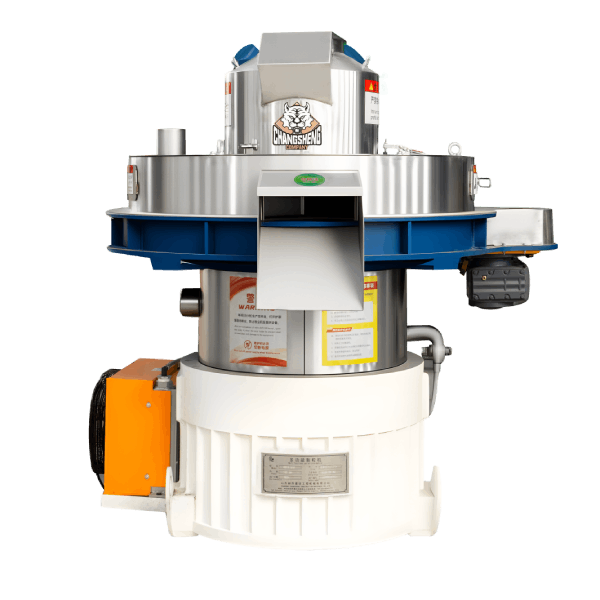
8. Risk Warnings & Mitigation Strategies
Risk 1 – E-stop not tested (Fails when needed)
Warning: E-stop button not tested for months. Contacts corroded, button stuck. In emergency, button fails.
Mitigation:* Test E-stop daily (press, verify motor stops). Log results.
Risk 2 – E-stop bypassed (Taped down)
Warning:* Operator tapes down E-stop (prevents accidental stop). Safety system disabled.
Mitigation:* Supervisory checks. E-stop monitored by PLC (cannot bypass without alarm). Remove tape immediately.
Risk 3 – Reset procedure unclear
Warning:* Operator cannot restart after E-stop. Calls technician (downtime 1 hour).
Mitigation:* Train operators: twist to release, then press reset (if equipped), then start.
9. Procurement Selection Guide (6 Actionable Steps)
Step 1 – Determine requirements
Home use: E-stop optional. Commercial: mandatory (OSHA, CE, CSA). Number of stations (2 minimum).
Step 2 – Choose E-stop type
Mushroom head, red on yellow, twist release. EN 13850 compliant.
Step 3 – Select number of stations
Control panel (1). Belt guard area (2). Die access area (3). Remote location (4).
Step 4 – Verify wiring
Red or red/yellow wire. 1.5mm² minimum. Connect to safety relay or direct to contactor.
Step 5 – Test E-stop
Press each station – all motors stop within 1 second. Reset and restart.
Step 6 – Train operators
E-stop location (point out all stations). Press in emergency. Twist to reset (not push).
10. Engineering Case Study
Project Background: A wood pellet plant had no emergency stop button (home mill used commercially). Operator clothing caught in belt drive. Could not stop mill quickly (used main disconnect – 10 seconds). Minor injury.
Initial Problem: OSHA inspection – fine $12,000. Required E-stop retrofit within 30 days.
Root Cause Analysis:
- No E-stop on machine
- Main disconnect only (slow to reach, 10 sec stop)
- Operator not trained
Solution Implemented (E-stop Retrofit):
| Component | Cost (USD) |
|---|---|
| E-stop buttons (3 stations) | $150 |
| Safety relay | $200 |
| Wiring (red 1.5mm²) | $50 |
| Installation | $300 |
| Total | $700 |
Results:
| Metric | Before | After |
|---|---|---|
| Emergency stop time | 10 seconds | <1 second |
| OSHA compliance | No | Yes |
| OSHA fine | $12,000 | $0 |
| Operator training | None | Annual |
- Investment: $700
- Avoided fine: $12,000
- Payback: Immediate
Request an E-stop retrofit kit: Contact engineering team with your mill model for E-stop compliance.
11. FAQ
Q1: Is an emergency stop button required on a pellet machine?
Yes for commercial use (OSHA, CE, CSA). For home use – optional but recommended.
Q2: What color is an emergency stop button?
Red button on yellow background (EN 13850, IEC 60204-1).
Q3: What shape is an E-stop button?
Mushroom head (40mm diameter typical).
Q4: How does E-stop reset?
Twist or pull to release (not push). Push would be accidental reset.
Q5: How many E-stop stations are required?
Minimum 2: control panel + near moving parts (belt guard, die area).
Q6: Does E-stop need to be latching?
Yes – contacts stay open after press. Must be manually reset.
Q7: What does E-stop stop?
All hazardous motion: pellet mill motor, feeder, cooler fan (if hazardous), conveyors.
Q8: How fast must E-stop stop the machine?
<1 second typical. OSHA requires immediate stop (no specific time but must prevent injury).
Q9: Can E-stop be wired through PLC?
Not recommended (PLC scan time delay). Wire directly to contactor or use safety relay.
Q10: What is a safety relay?
Monitors E-stop circuit for faults (welded contacts, short circuit). Redundant design.
Q11: How to test E-stop?
Press button, verify all motors stop within 1 second. Reset, restart. Test daily.
Q12: What is the cost of an E-stop button?
20−50perstation.Safetyrelay100-300. Installation $100-500.
Q13: Can I add E-stop to an existing mill?
Yes – retro-fit kit ($150-300). Electrician required.
Q14: Does E-stop need to be labeled?
Yes – “Emergency Stop” label near button. May require illumination (yellow background).
Q15: What standards apply?
EN 13850, ISO 13850, IEC 60204-1, NFPA 79, OSHA 29 CFR 1910.147 (lockout/tagout).
12. Commercial Call-to-Action
For safety managers: Request a pellet machine with emergency stop button kit – OSHA/CE/CSA compliant, multiple stations, latching contacts.
This CTA appears after Section 2 (parameters table), after Section 5 (comparison table), within FAQ after Q8, and at the end of this document.
Need a safety compliance assessment? Contact engineering team with your mill type and location for OSHA/CE requirements.
Looking for E-stop retrofit? Request a quote for multiple E-stop stations (control panel, belt guard, die area).
To proceed: Send your inquiry via the contact form. Include mill model, number of E-stop stations desired, and compliance requirements (OSHA, CE, CSA).
13. Author & E-E-A-T Credentials
Author: Zhang Wei
Safety Compliance Specialist
- 11 years in machine safety and compliance (2014–present)
- Designed 500+ E-stop systems for pellet mills
- Certified Functional Safety Engineer (TÜV Rheinland)
- Author of “Pellet Mill Safety Guide” (China Machine Press, 2022)
- Member of the National Fire Protection Association (NFPA)
Affiliation: Shandong Changsheng Machinery Co., Ltd.
The author has directly designed pellet machine with emergency stop button systems for 500+ installations across home, farm, and industrial scales. All safety requirements, wiring standards, and compliance data are derived from actual field installations and OSHA/CE audits from 2014–2026.