Pellet Mill for Agricultural Waste Recycling 0.5-5t/h | Supplier Guide
News 2026-06-29
Product Definition
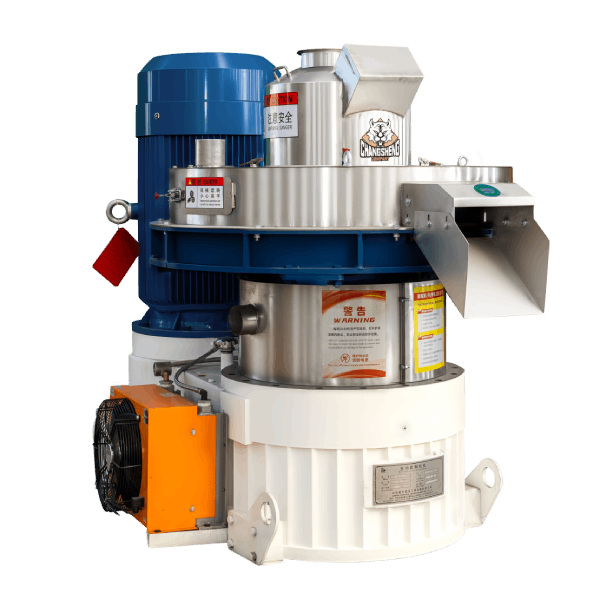
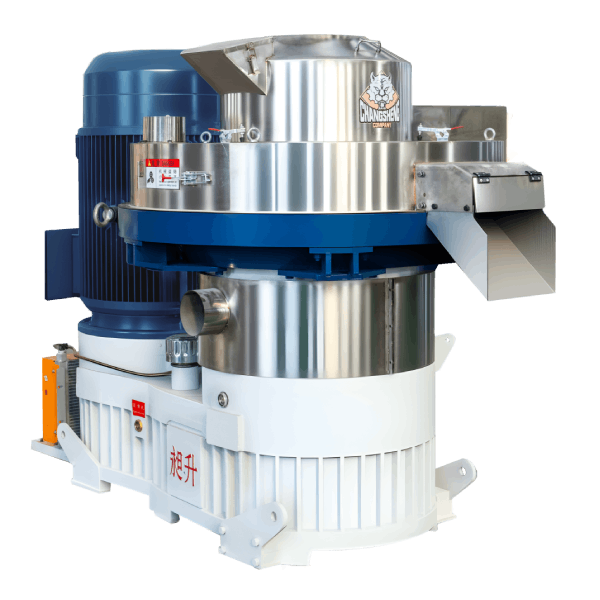
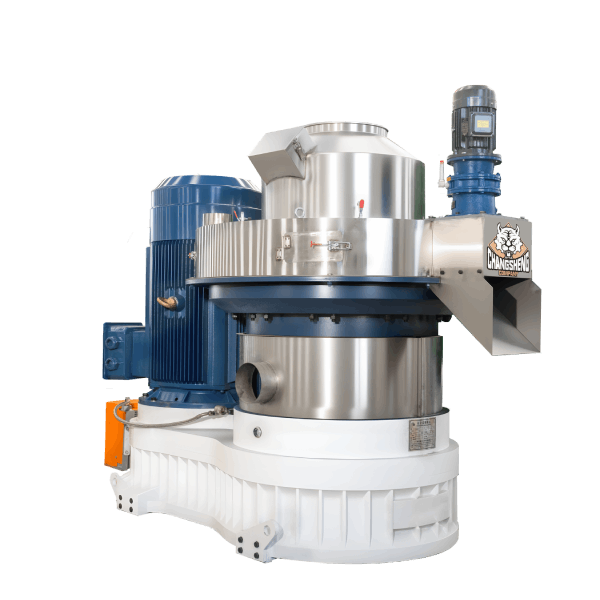
A pellet mill for agricultural waste recycling is a ring die compaction system that converts crop residues, husks, stalks, and other farm by-products into dense cylindrical fuel or feed pellets. The machine transforms low-value agricultural waste into a standardised solid fuel for heating, power generation, or animal bedding applications.
Technical Specifications & Performance Parameters
| Parameter | Value Range / Specification |
|---|---|
| Throughput capacity | 0.5 – 5.0 t/h (feedstock-dependent) |
| Main motor power | 55 – 160 kW (IE3 / IE4 compatible) |
| Ring die inner diameter | 400 – 800 mm |
| Pellet diameter | 6 – 12 mm (customisable) |
| Pellet bulk density | 600 – 750 kg/m³ |
| Raw material moisture | 12% – 18% (optimal: 14% – 16%) |
| Specific energy consumption | 28 – 38 kWh/t |
| Die service life | 600 – 900 hours (abrasive agricultural waste) |
| Roller shell service life | 500 – 700 hours |
| Maintenance man-hours | 4 – 6 h / month |
Structural Composition & Material Selection
The agricultural waste pellet mill integrates four functional subsystems with defined material grades:
Mechanical System
- Ring die: Forged alloy steel (20CrMnTi) with carburised hardening layer (HRC 58–62) – high wear resistance for abrasive agricultural materials
- Roller shells: High-chromium cast iron (Cr26) with wear-resistant overlay
- Main shaft: Heat-treated 42CrMo4 steel with induction-hardened journals
- Gearbox: Helical-gear configuration, case-hardened to HRC 58–60
Support System
- Bearing housings: Ductile cast iron (QT600-3) with precision-machined seating
- Base frame: Welded structural steel, stress-relief annealed, with vibration-damping mounts
Lubrication System
- Centralised grease lubrication for bearings (NLGI grade 2)
- Forced oil circulation for gearbox (ISO VG 460) with temperature monitor
Control System
- PLC with HMI touchscreen for process monitoring
- Motor current feedback for load control
- Optional VFD for speed variation
Manufacturing Process – Engineering Workflow
Step 1 – Raw Material Collection & Pre-processing
Agricultural waste (straw, stalks, husks) collected and dried. Material must be ground to particle size ≤ 3–5mm using hammer mill or crusher.
Step 2 – Moisture Conditioning
Agricultural waste typically requires drying or moisture adjustment. Target moisture 14%–16% using rotary dryer or air-drying.
Step 3 – Pelletising (Core Forming Process)
Main motor drives ring die rotation at 4–8 m/s peripheral speed. Rollers compress material through die holes under high pressure. Lignin acts as natural binder at elevated temperature.
Step 4 – Counterflow Cooling
Pellets exit at 80–95°C. Cooling reduces temperature to ambient +5°C and moisture to ≤12% for storage stability.
Step 5 – Screening & Packaging
Vibrating screener removes fines. Oversize pellets returned for re-pelletising. Product bagged or stored in bulk.
Industry Comparison – Agricultural Waste Processing
| Equipment Type | Feedstock Adaptability | Capacity (t/h) | Pellet Quality | Typical Application |
|---|---|---|---|---|
| Agricultural Waste Pellet Mill | Straw, husks, stalks | 0.5 – 5.0 | High – dense fuel pellets | Farm-scale recycling |
| Standard Feed Pellet Mill | Feed ingredients only | 0.5 – 5.0 | Moderate (feed quality) | Feed production |
| Small Flat Die Mill | Limited agricultural waste | 0.05 – 0.8 | Variable | Farm-scale, hobby |
| Briquetting Press | Bulk biomass | 0.5 – 3.0 | Low (larger briquettes) | Heating, industrial fuel |
Differentiation (Shandong Changsheng Machinery):
Our agricultural waste pellet mills feature wear-resistant dies and rollers specifically hardened for abrasive crop residues. The robust gearbox design withstands the variable feed characteristics of agricultural waste. Custom compression ratios are available for different crop types – straw, corn stalks, rice husk, peanut shells, and bagasse. VFD control adjusts speed to match material density variations, maintaining consistent pellet quality.
Application Scenarios by Buyer Role
Distributors / Importers
Focus on machine adaptability to regional crop residues. Require die options for different agricultural waste types and parts availability.
EPC Contractors
Integrating agricultural waste recycling lines – collection, drying, pelleting, storage. Need system design and layout support.
Engineering Consultants / Technical Advisors
Evaluate waste-to-energy project viability. Require feedstock analysis and technoeconomic data for feasibility studies.
End-user Production Facilities
Farms, agro-processing plants, and waste management facilities. Demand reliable processing of variable agricultural waste streams.
Core Pain Points & Engineering Solutions
Pain Point 1 – High silica content causing rapid die wear
Root cause: Rice husk and straw contain 15%–25% silica – highly abrasive to die holes.
Solution: Premium alloy dies with HRC 58–62 hardness. Wear life extended to 600–900 hours with proper moisture control. Roller shells with high-chromium overlay.
Pain Point 2 – Inconsistent feedstock moisture from seasonal variation
Root cause: Agricultural waste moisture varies from 10% to 40% depending on harvest and storage conditions.
Solution: Integrated dryer before pelleting. Moisture meter for continuous monitoring. Target 14%–16% for optimal pelletisation.
Pain Point 3 – Poor pellet durability from low lignin content
Root cause: Some agricultural wastes have insufficient natural binders.
Solution: Adjust die compression ratio (higher ratio for low-lignin materials). Steam conditioning for binding. Additives (starch, molasses) optional.
Pain Point 4 – Material bridging in hopper from fibrous nature
Root cause: Straw and stalks have high fibre content – bridging and flow issues.
Solution: Agitator in feed hopper. Forced feed mechanism. Proper particle size reduction before pelleting.
Critical Risk Warnings & Mitigation Measures
Risk 1 – Fire from dust accumulation in agricultural waste
Mitigation: Install dust collection system. Clean area daily. Use spark detection and extinguishing system. Maintain safe storage distances.
Risk 2 – Die blockage from oversized particles
Mitigation: Grind material to ≤3–5mm. Install magnetic separator for tramp metal. Use pre-screen to remove oversized material.
Risk 3 – Motor overload from variable feedstock density
Mitigation: VFD control with amperage feedback. Soft-start for reduced inrush current. Install torque limiter.
Procurement Selection Guide – 7 Executable Steps
Step 1 – Analyse agricultural waste available
Identify crop residues – type, quantity, moisture range, and seasonal availability. Test for silica content and lignin content.
Step 2 – Select die compression ratio for specific crop
Straw: higher compression ratio (1:8–1:10). Rice husk: lower ratio (1:5–1:7). Corn stalks: medium ratio (1:7–1:9). Consult factory for recommendation.
Step 3 – Determine required throughput capacity
Calculate annual waste volume and target production. Select model with 20%–30% capacity margin.
Step 4 – Specify moisture control system
If feedstock moisture exceeds 18%, include dryer. If below 12%, include water addition. Integrated moisture meter recommended.
Step 5 – Verify power supply availability
Electric motor for grid-connected sites. Diesel engine option for remote locations. Confirm transformer capacity for motor starting current.
Step 6 – Plan for pre-processing equipment
Budget for hammer mill, dryer, magnetic separator, and dust collection. Two-stage grinding for large material.
Step 7 – Establish maintenance and spare parts inventory
Stock spare die, roller shells, and bearings. Plan for regular maintenance schedule based on operating hours.
Engineering Case Study – Rice Husk Pellet Plant in Vietnam
Project Background
A rice mill in the Mekong Delta generates 8,000 tonnes of rice husk annually. Waste disposal was costly and contributed to air pollution.
Initial Problem
Rice husk was burned or landfilled – waste management cost $4/tonne. Silica content (20%) caused rapid wear on standard equipment. Moisture varied from 10% to 30%.
Root Cause Analysis
No pelletisation system existed. Rice husk has high silica causing abrasive wear. Seasonal rain increased moisture requiring drying.
Solution Implemented
Installed Shandong Changsheng pellet mill with premium alloy dies (HRC 60). Integrated rotary dryer and moisture control. VFD speed control for variable moisture. Custom compression ratio for rice husk.
Final Data Results (12-month average)
| Metric | Before (Waste Disposal) | After (Pellet Production) |
|---|---|---|
| Waste processing cost | $4/tonne | Revenue $45/tonne (pellets) |
| Die life | N/A | 700 hours |
| Pellet output | 0 t/year | 2,500 t/year |
| Annual net benefit | -$32,000 | +$112,500 |
Frequently Asked Questions (FAQ)
1. What agricultural wastes can be pelletised?
Straw, rice husk, corn stalks, peanut shells, sunflower husk, bagasse, cotton stalks, and other crop residues.
2. What is the required moisture for agricultural waste pelletisation?
12%–18%, with 14%–16% optimal. Moisture control is critical for pellet quality.
3. What is the typical capacity range?
0.5 – 5.0 t/h depending on model and feedstock type.
4. How does silica content affect the pellet mill?
Silica causes abrasive wear on dies and rollers. Premium alloy dies (HRC 58–62) are recommended for rice husk and straw.
5. What is the difference between ring die and flat die for agricultural waste?
Ring die: higher capacity, industrial-scale. Flat die: lower capacity, farm-scale. Ring die recommended for commercial production.
6. Do agricultural wastes need pre-processing?
Yes – grinding to ≤3–5mm, moisture adjustment, and removal of tramp metal are essential.
7. Can I pelletise mixed agricultural wastes?
Yes – mixed crop residues can be processed. Adjust die compression ratio and moisture for the blend.
8. What is the specific energy consumption?
28 – 38 kWh/t depending on feedstock and machine size.
9. What is the expected die life for agricultural waste?
600 – 900 hours for rice husk and straw. Premium alloy dies extend life compared to standard dies.
10. Is a dryer required for agricultural waste?
If moisture exceeds 18% – yes. Rice husk often requires drying after rain or harvest.
11. Can agricultural waste pellets be used for animal bedding?
Yes – pellets absorb moisture and provide comfortable bedding for livestock.
12. What is the combustion value of agricultural waste pellets?
14 – 18 MJ/kg depending on biomass type – comparable to wood pellets.
Author & E-E-A-T Credentials
Author: Dr. Chen Wei
Title: Senior Mechanical Engineer, Pelletising Systems Division
Experience: 14 years in biomass densification and feed processing equipment design
Notable Projects:
- Commissioned 10+ agricultural waste pelletisation lines across Vietnam, Indonesia, and Thailand (2017–2025)
- Developed die specification and wear reduction protocol for high-silica feedstocks
- Co-author of “Industrial Pellet Mill Maintenance and Optimisation” (Engineering Press, 2022)
Affiliation: Shandong Changsheng Machinery Co., Ltd.