Pellet Mill for Small Scale Biomass Energy 50-800kg/h | Supplier Guide
News 2026-06-29
Product Definition
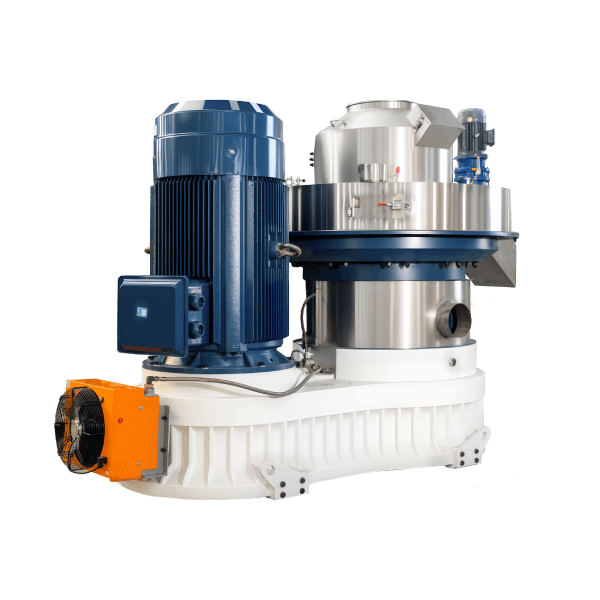
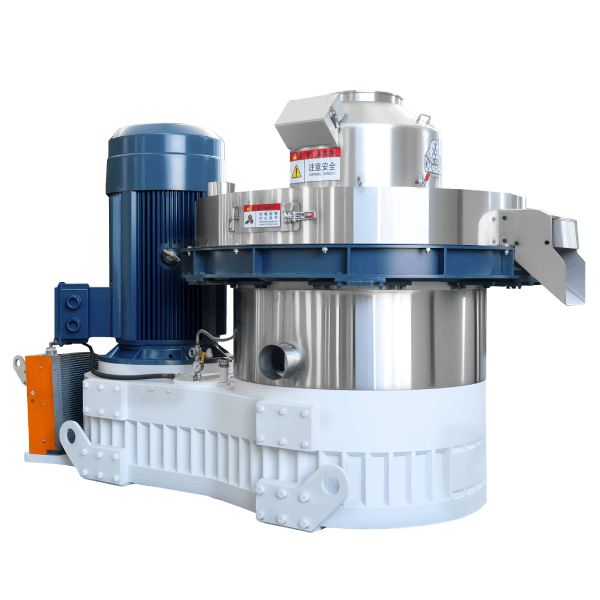
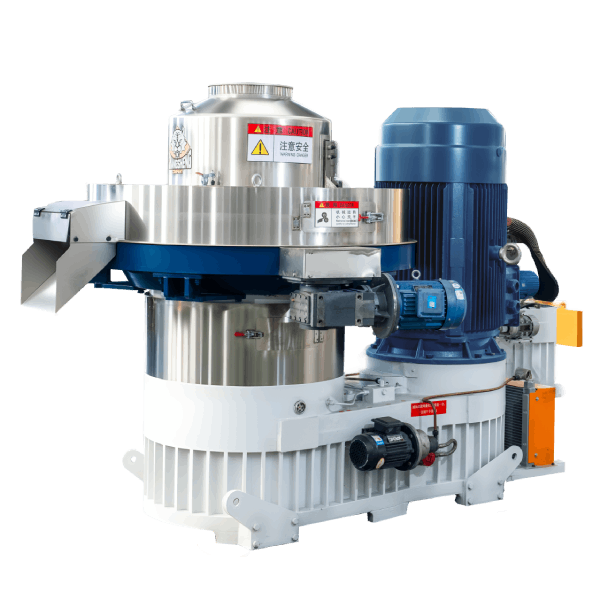
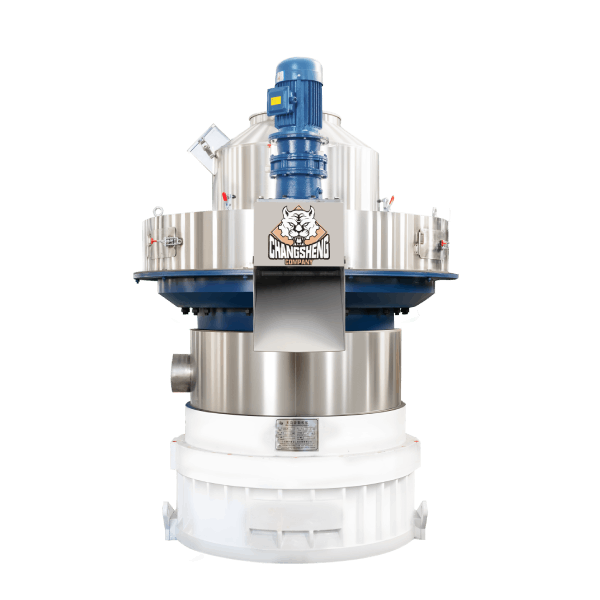
A pellet mill for small scale biomass energy is a mechanical compaction system that converts agricultural residues, wood waste, and herbaceous biomass into dense cylindrical fuel pellets with capacities ranging from 50 to 800 kg/h. These flat die machines are designed for on-farm, workshop, or small industrial use, transforming low-value biomass into high-energy solid fuel for heating and combustion applications.
Technical Specifications & Performance Parameters
| Parameter | Value Range / Specification |
|---|---|
| Throughput capacity | 50 – 800 kg/h (feedstock-dependent) |
| Main motor power | 5.5 – 55 kW (electric) or diesel engine option |
| Die type | Flat die (D-type or R-type configuration) |
| Die diameter | 150 – 550 mm |
| Pellet diameter | 2.5 – 12 mm (customisable) |
| Pellet bulk density | 600 – 750 kg/m³ |
| Raw material moisture | 12% – 18% (optimal: 14% – 16%) |
| Specific energy consumption | 40 – 80 kWh/t |
| Die service life | 500 – 600 hours |
| Roller service life | 800 hours |
| Maintenance man-hours | 2 – 4 h / week |
Structural Composition & Material Selection
Small-scale biomass pellet mills are typically flat die machines with two main configurations:
Mechanical System – D-Type (Die-Rotating)
- Flat die rotates while rollers remain stationary
- Die material: 40Cr alloy steel, wear-resistant
- Suitable for softwood and agricultural waste processing
- Die thickness matched to compression ratio requirements
Mechanical System – R-Type (Roller-Rotating)
- Rollers rotate while flat die remains stationary
- Higher pressure application for hardwood materials
- Robust construction for denser feedstocks
Support System
- Cast steel or welded frame construction
- Vibration-damping mounts for stable operation
- Compact footprint for space-constrained installations
Lubrication System
- Manual grease lubrication for bearings
- Lubrication interval: every 4–8 operating hours
Control System
- Emergency stop button
- Optional VFD for speed control
- Manual operation with basic controls
Manufacturing Process – Engineering Workflow
Step 1 – Raw Material Preparation
Biomass must be ground to particle size no larger than the die hole diameter. Use hammer mill with appropriate screen. Moisture must be adjusted to 12%–18% – critical for successful pelletisation.
Step 2 – Feedstock Conditioning
Material moisture control – dry feedstock if moisture exceeds 18%, add water if below 12%. Uniform moisture distribution essential. Some operators use pre-mix for difficult materials.
Step 3 – Pelletising (Core Forming Process)
Feedstock enters flat die chamber. Rollers compress material through die holes. Heat and pressure fuse lignin or starch, forming dense pellets. Roller pressure setting critical – specific gap adjustment required.
Step 4 – Cooling & Hardening
Pellets exit machine hot and soft. Cooling required to harden and reduce moisture to ≤12% for storage stability.
Step 5 – Screening & Bagging
Pellets screened to remove fines. Bagged for storage or sale. Proper storage prevents moisture reabsorption.
Industry Comparison – Small vs Large Scale Equipment
| Equipment Type | Capacity | Power | Die Type | Typical Application |
|---|---|---|---|---|
| Small Scale Pellet Mill | 50 – 800 kg/h | 5.5 – 55 kW | Flat die | Farm, workshop, home use |
| Large Ring Die Mill | 1 – 10 t/h | 90 – 250 kW | Ring die | Industrial pellet plants |
| Flat Die (D-Type) | 50 – 400 kg/h | 5.5 – 22 kW | Flat die (die rotates) | Softwood, agricultural waste |
| Flat Die (R-Type) | 80 – 800 kg/h | 7.5 – 55 kW | Flat die (roller rotates) | Hardwood, demanding materials |
Differentiation (Shandong Changsheng Machinery):
Our small-scale pellet mills are designed with 40Cr alloy dies providing 500+ hours service life. Multiple drive options available: electric motor, diesel engine, PTO, or gasoline. The compact footprint enables installation in existing farm buildings – reducing capital costs compared to large industrial plants. Die compression ratios can be customised to specific feedstock materials for optimal pellet quality.
Application Scenarios by Buyer Role
Distributors / Importers
Focus on machine versatility for multiple feedstock types. Require parts availability and low-cost maintenance consumables.
EPC Contractors
Integrating small pellet mills into complete mobile or on-farm systems. Need compact layout and simple installation requirements.
Engineering Consultants / Technical Advisors
Evaluate small-scale feasibility for rural communities. Require technoeconomic data – small-scale plants can be profitable with proper feedstock logistics.
End-user Production Facilities
Farmers, small workshops, and rural energy projects. Demand reliable operation, low capital cost, and practical maintenance without specialist technicians.
Core Pain Points & Engineering Solutions
Pain Point 1 – Inconsistent pellet quality from moisture variation
Root cause: Biomass moisture fluctuates with weather and storage conditions.
Solution: Install moisture meter and pre-dry or condition feedstock to 14%–16% before pelleting. Keep records of moisture-performance relationships.
Pain Point 2 – Die and roller wear from abrasive feedstocks
Root cause: Straw, rice husk, and some wood residues contain silica causing abrasion.
Solution: Use 40Cr alloy dies. Replace both roller and die as a set when worn. Hardened parts extend service life.
Pain Point 3 – Start-up difficulties with new machines
Root cause: Learning curve – pelleting is a process requiring experience.
Solution: Use pre-mix or test batches to build die pressure. Plan for experimentation phase. Document successful settings.
Pain Point 4 – High energy consumption at small scale
Root cause: Small machines have lower efficiency than large industrial mills.
Solution: Use VFD to adjust speed – slower speed increases pellet hardness but reduces capacity. Diesel engine option for remote sites.
Critical Risk Warnings & Mitigation Measures
Risk 1 – Die jamming from oversized particles
Mitigation: Grind material ≤ die hole diameter. Use hammer mill with 6mm or smaller screen. Screen material regularly.
Risk 2 – Fire risk in pellet storage
Mitigation: Cool pellets completely before storage. Ensure moisture ≤12%. Monitor storage pile temperature. Maintain safe distances to structures.
Risk 3 – Roller damage from insufficient pressure
Mitigation: Set roller gap properly. Check roller pressure weekly. Replace worn rollers before die damage occurs.
Procurement Selection Guide – 7 Executable Steps
Step 1 – Define your feedstock type and availability
Identify biomass sources – wood waste, straw, grass, husks. Estimate annual tonnage. Test moisture range. D-type for soft materials, R-type for hardwoods.
Step 2 – Determine required output capacity
Calculate pellet demand. Select model with 20% capacity margin. Available capacities: 50–800 kg/h.
Step 3 – Select drive power source
Electric motor for grid-connected sites. Diesel engine for remote/no power. PTO for tractor-driven. Gasoline for portability.
Step 4 – Specify pellet diameter and die compression ratio
Common diameters: 6mm, 8mm, 10mm. Compression ratio customised to material – consult factory for recommendation.
Step 5 – Verify floor space and clearance
Small mills require minimal space – typical footprint under 2m². Allow access for maintenance and die changes.
Step 6 – Plan for feedstock preparation equipment
Budget for hammer mill, moisture meter, and storage. Two-stage grinding for large material.
Step 7 – Establish maintenance schedule
Weekly: roller and die inspection, lubrication. Monthly: gap adjustment, belt tension. Document operating hours for wear part replacement.
Engineering Case Study – On-Farm Pellet Production in Pennsylvania
Project Background
A Pennsylvania farm with unutilised land and access to switchgrass considered small-scale pellet production for own heating and local sale.
Initial Problem
Farm lacked industrial-scale infrastructure. Capital for large pellet plant was prohibitive. Feedstock challenging to pelletise.
Root Cause Analysis
Switchgrass is herbaceous with lower lignin content than wood – requires specific die and roller pressure. Existing literature indicated learning curve and pre-mix may be required.
Solution Implemented
Acquired flat die pellet mill with 200 kg/h capacity. Pre-mix of switchgrass with distiller’s dried grains to build die pressure. Incremental learning and record keeping.
Final Data Results
| Metric | Value |
|---|---|
| Production cost (per tonne) | $85 – $150 |
| Feedstock source | On-farm switchgrass, crop residues |
| Pellet use | On-farm heating + local sale |
| Key insight | Patience and experimentation essential |
Frequently Asked Questions (FAQ)
1. What biomass materials can a small pellet mill process?
Wood waste, sawdust, straw, rice husk, peanut shells, sunflower husk, grass, and agricultural residues.
2. What capacity range is available for small scale?
50 – 800 kg/h depending on model and feedstock.
3. What moisture content is required?
12% – 18%, with 14% – 16% optimal. Moisture control is critical for pellet quality.
4. What is the difference between D-type and R-type flat die mills?
D-type: die rotates, rollers stationary – for softwood/agricultural waste. R-type: rollers rotate, die stationary – for hardwood/high-pressure applications.
5. How long does a flat die last?
500 – 600 hours typical. Replace with roller as a set when worn.
6. Can I use a diesel engine instead of electric motor?
Yes – diesel, PTO, and gasoline options available for remote locations.
7. What pellet diameters can I produce?
2.5 – 12mm, customisable with different dies.
8. Is small-scale pellet production profitable?
Yes – on-farm production can achieve $85-$150 per tonne with proper feedstock and logistics.
9. What feedstock preparation is required?
Grinding to particle size ≤ die hole diameter. Moisture adjustment to 12%–18%.
10. How difficult is machine operation?
Learning curve exists – requires experimentation and record keeping.
11. What maintenance is required for small pellet mills?
Weekly lubrication and inspection. Roller gap adjustment. Die and roller replacement at 500-800 hours.
12. Can I use additives to improve pellet quality?
Oil addition can reduce power consumption. Binders may improve pellet properties.
Author & E-E-A-T Credentials
Author: Dr. Chen Wei
Title: Senior Mechanical Engineer, Pelletising Systems Division
Experience: 14 years in biomass densification and feed processing equipment design
Notable Projects:
- Commissioned 15+ small-scale pellet mills for on-farm and rural applications across Asia and Africa (2016–2025)
- Developed feedstock conditioning and die selection protocols for herbaceous biomass
- Co-author of “Industrial Pellet Mill Maintenance and Optimisation” (Engineering Press, 2022)
Affiliation: Shandong Changsheng Machinery Co., Ltd.