Belt Drive vs Gear Drive Pellet Mill: Efficiency & Cost Comparison
News 2026-05-27
1. Product Definition
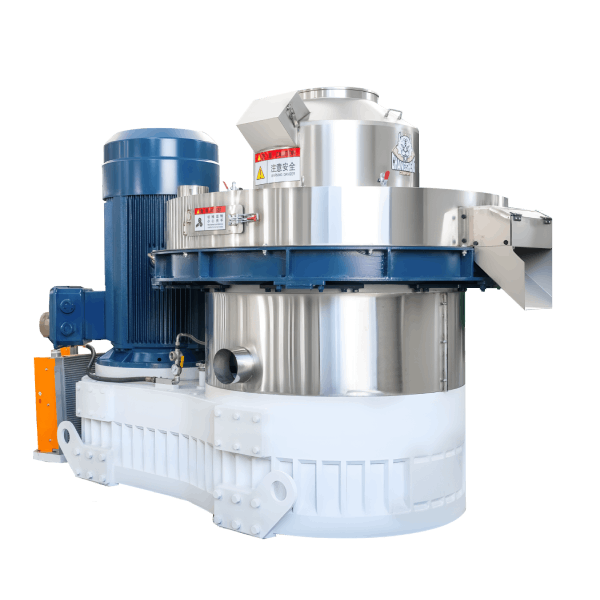
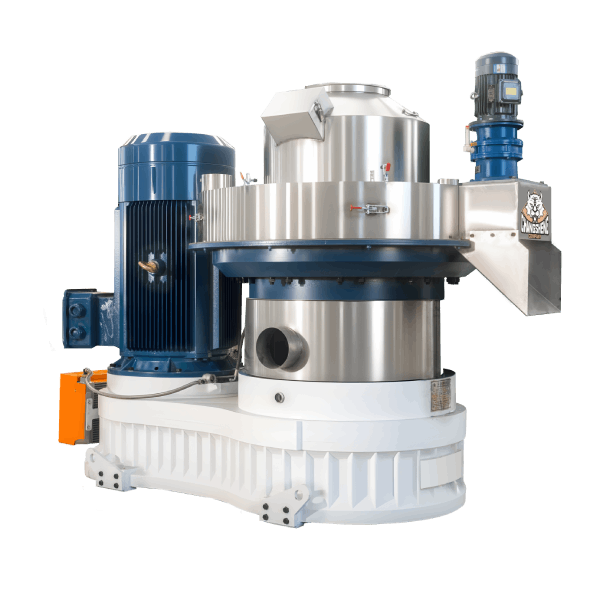
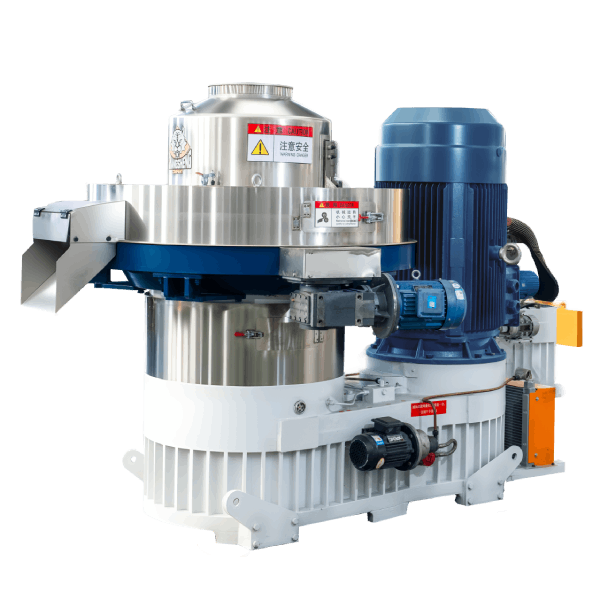
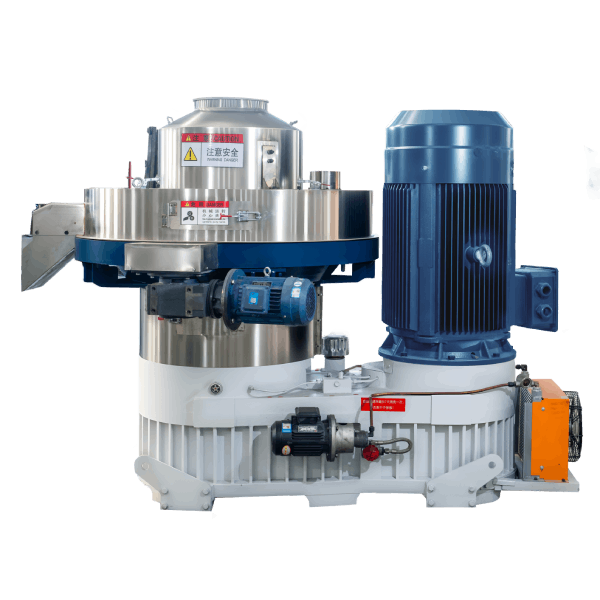
Belt drive vs gear drive pellet mill refers to power transmission method: belt drive uses V-belts (3-8 belts) between motor and mill shaft, offering 93-97% efficiency, lower cost, and overload protection (belt slip), typically for flat die mills (2.2-22kW); gear drive uses helical or straight-cut gears in oil bath (92-96% efficiency), higher torque, and longer life, standard for ring die mills (55-160kW).
2. Technical Parameters & Specifications
| Parameter | Belt Drive | Gear Drive |
|---|---|---|
| Efficiency (%) | 93 – 97 | 92 – 96 |
| Torque multiplication | Pulley ratio (2:1 to 8:1) | Gear ratio (10:1 to 20:1) |
| Max power (kW) | 2.2 – 90 | 22 – 500 |
| Overload protection | Belt slip (protects motor/gearbox) | Shear pin or torque limiter (not automatic) |
| Noise level (dB) | 70 – 80 | 75 – 85 |
| Maintenance frequency | Belt tension (monthly), replace (1-2 years) | Oil change (1,000-1,500 hours), seals |
| Maintenance cost | Low ($50-200/year) | Moderate ($200-1,000/year) |
| Initial cost | Lower (no gearbox) | Higher (gearbox) |
| Typical mill type | Flat die, small ring die | Ring die (commercial) |
| Speed reduction method | Pulley diameter ratio | Gear ratio inside gearbox |
| Best for | Home, farm (<0.5 t/h) | Commercial (>0.5 t/h) |
For drive selection: Request a recommendation based on your mill type and capacity.
3. Structure & Material Composition
Belt Drive System
Components
- Motor pulley (small diameter): Mounted on motor shaft
- Mill pulley (large diameter): Mounted on mill input shaft
- V-belts: 3-8 belts (SPB, SPC, or wedge type)
- Tension adjustment: Movable motor base or idler pulley
- Guard: Perforated steel (safety)
Operation
- Motor rotates at 1,450-1,750 RPM (50/60Hz)
- Pulley ratio reduces speed (e.g., 4:1 = 1,500 RPM to 375 RPM)
- Belts transmit power to mill
Advantages
- Overload protection (belts slip)
- Simpler, lower cost
- Absorbs shock loads
Gear Drive System
Components
- Gearbox: Cast iron housing
- Gears: Helical (quiet) or straight-cut (noisy)
- Bearings: Tapered roller or spherical roller
- Oil bath: ISO VG 150-220 gear oil
- Input shaft: Direct coupled to motor (or belt)
- Output shaft: Direct to mill rotor/die
Operation
- Motor rotates at 1,450-1,750 RPM
- Gear ratio (10:1 to 20:1) reduces speed
- Gears transmit power (no slip)
Advantages
- Higher torque capacity
- No belt maintenance
- More compact
4. Manufacturing Process (Engineering Steps)
Step 1 – Belt drive installation
Mount motor on adjustable base. Install pulleys. Install belts (matched set). Tension to spec (deflection 10mm per meter).
Step 2 – Gear drive installation
Couple motor to gearbox input. Fill gearbox with oil (ISO VG 150-220). Check alignment (±0.1mm).
Step 3 – Operation
Belt drive: belts may slip under overload (protects mill). Gear drive: shear pin or torque limiter required.
Step 4 – Maintenance
Belt drive: check tension monthly. Replace belts as set (1-2 years). Gear drive: change oil every 1,000-1,500 hours.
5. Industry Comparison
| Feature | Belt Drive | Gear Drive |
|---|---|---|
| Efficiency | 93-97% | 92-96% |
| Overload protection | Excellent (belt slip) | Poor (requires shear pin) |
| Shock load absorption | Good (belts absorb) | Poor (shock transfers to gears) |
| Torque capacity | Limited by belt grip | High (gears can handle high torque) |
| Maintenance frequency | Monthly (belts) | Oil change (1,000-1,500h) |
| Maintenance cost | $50-200/year | $200-1,000/year |
| Initial cost (for same power) | Lower | Higher (+20-50%) |
| Noise level | 70-80 dB | 75-85 dB |
| Typical mill type | Flat die (<22kW) | Ring die (55-160kW) |
| Speed ratio range | 2:1 to 8:1 (pulley diameter) | 10:1 to 20:1 (gearbox) |
| Best for | Home, farm, small business | Commercial, industrial |
| Why Choose Shandong Changsheng | Belt drive on flat die mills | Gear drive on ring die mills |
Compare drive options: Request a recommendation based on your mill size.
7. Core Technical Pain Points & Engineering Solutions
Pain Point 1 – Belt Slippage (Low Output)
Symptom: Mill runs but output low. Belts squeal. Motor RPM normal.
Root cause: Belt tension too low, belts glazed, or oil contamination.
Solution:* Tension belts to spec (deflection 10mm per meter). Replace belts if glazed. Clean oil from belts.
Pain Point 2 – Belt Wear (Frequent Replacement)
Symptom: Belts crack or wear within 6 months.
Root cause:* Pulley misalignment, incorrect tension, undersized belts.
Solution:* Align pulleys (straight edge). Use matched belt set. Increase number of belts.
Pain Point 3 – Gearbox Overheating
Symptom:* Gearbox housing hot (>85°C). Oil smells burnt.
Root cause:* Low oil level, wrong oil viscosity, overloading.
Solution:* Check oil level weekly. Use ISO VG 220 synthetic for high temp. Reduce load.
Pain Point 4 – Gear Noise (Whining/Grinding)
Symptom:* Gearbox noisy, pitch changes with load.
Root cause:* Low oil, worn gears, bearing wear.
Solution:* Check oil level. Change oil. If noise persists, gearbox rebuild required.
8. Risk Warnings & Mitigation Strategies
Risk 1 – Belt Breakage (Foreign Object)
Warning: Tramp metal enters mill → sudden overload → belts snap. Flying belt fragments.
Mitigation:* Belt guard (perforated steel). Magnetic separator. Replace belts as set.
Risk 2 – Gearbox Failure (No Overload Protection)
Warning:* Ring die jam (foreign object) → torque spike → gear teeth break. $5k-15k repair.
Mitigation:* Install torque limiter or shear pin. Magnetic separator. Soft starter (reduces shock).
Risk 3 – Oil Leak (Gearbox)
Warning:* Seal leak → oil loss → gearbox runs dry → failure.
Mitigation:* Check oil level weekly. Inspect seals annually. Use high-quality seals.
9. Procurement Selection Guide (6 Actionable Steps)
Step 1 – Determine mill type
Flat die (<0.5 t/h) → belt drive. Ring die (>0.5 t/h) → gear drive.
Step 2 – Assess power requirement
<22kW: belt drive acceptable. 22-90kW: belt or gear (belt lower cost). >90kW: gear drive required.
Step 3 – Consider overload risk
High risk (tramp metal, variable feedstock) → belt drive (slip protection). Low risk → gear drive.
Step 4 – Evaluate maintenance capability
Basic mechanical skills → belt drive (simple). Trained mechanic → gear drive (oil changes).
Step 5 – Calculate total cost of ownership
Belt drive: lower initial, higher belt replacement cost. Gear drive: higher initial, lower operating cost (long-term).
Step 6 – Plan for spare parts
Belt drive: stock spare belts. Gear drive: stock spare oil, seals, shear pin.
10. Engineering Case Study
Project Background: A farm upgraded from flat die (belt drive, 7.5kW) to ring die (gear drive, 90kW) for higher capacity.
Initial Problem: Belt drive mill (7.5kW) output 0.1 t/h (too low). Farm needed 0.5 t/h.
Root Cause Analysis:
- Flat die (belt drive) max capacity 0.15 t/h
- Ring die required for 0.5 t/h
- Gear drive standard on ring die mills
Solution (Gear Drive Ring Die):
| Parameter | Belt Drive (Flat Die) | Gear Drive (Ring Die) |
|---|---|---|
| Power | 7.5kW | 90kW |
| Capacity (t/h) | 0.12 | 0.6 |
| Efficiency | 95% | 94% |
| Maintenance | Belts ($50/year) | Oil change ($200/year) |
| Initial cost | $3,000 | $35,000 |
Results:
| Metric | Belt Drive (Flat Die) | Gear Drive (Ring Die) |
|---|---|---|
| Annual production | 120 tons | 600 tons |
| Cost per ton (operating) | $45 | $25 |
| Payback | N/A | 18 months |
- Lesson: Belt drive vs gear drive pellet mill selection based on scale – gear drive for commercial.
Request a drive selection recommendation: Contact engineering team with your target capacity and mill type.
11. FAQ
Q1: Belt drive vs gear drive pellet mill – which is better?
Belt drive for flat die (<0.5 t/h, lower cost, overload protection). Gear drive for ring die (>0.5 t/h, higher torque, longer life).
Q2: Which is more efficient?
Similar: belt 93-97%, gear 92-96%. Difference small (1-3%).
Q3: Which has lower maintenance?
Belt drive (belts last 1-2 years). Gear drive requires oil changes (1,000-1,500h), seals.
Q4: Which is quieter?
Belt drive (70-80 dB) – no gear meshing noise. Gear drive 75-85 dB.
Q5: Which provides overload protection?
Belt drive – belts slip under overload. Gear drive requires shear pin or torque limiter.
Q6: Which has higher torque capacity?
Gear drive – gearbox can multiply torque 10-20x. Belt drive limited by belt grip.
Q7: Which is cheaper to buy?
Belt drive – no gearbox (20-50% lower cost for same power).
Q8: Which is more reliable?
Both reliable with proper maintenance. Belt drive simpler (fewer parts). Gear drive longer life if oil changed.
Q9: Can I convert belt drive to gear drive?
Not practical – different frame, mounting, shaft alignment. Buy correct drive initially.
Q10: Which is best for home use?
Belt drive (flat die mill) – lower cost, single-phase option.
Q11: Which is best for commercial?
Gear drive (ring die mill) – higher capacity, longer life, lower cost per ton.
Q12: How often to replace belts?
Every 1-2 years or when cracked/glazed. Replace as set.
Q13: How often to change gearbox oil?
Mineral oil: 1,000-1,500 hours or 6 months. Synthetic: 2,000-3,000 hours or 12 months.
Q14: Can belts slip cause low output?
Yes – loose belts slip, mill runs slow, output drops. Tension belts.
Q15: Can gearbox run without oil?
No – gears will seize within hours. Check oil level weekly.
12. Commercial Call-to-Action
For pellet mill buyers: Request a belt drive vs gear drive pellet mill recommendation based on your target capacity, mill type, and maintenance capability.
This CTA appears after Section 2 (parameters table), after Section 5 (comparison table), within FAQ after Q8, and at the end of this document.
Need a torque calculation? Contact engineering team with your die diameter and feedstock for gearbox sizing.
Looking for belt drive retrofit? Request flat die mill with belt drive – standard for home/farm use.
To proceed: Send your inquiry via the contact form. Include target capacity (t/h), mill type (flat/ring die), and budget.
13. Author & E-E-A-T Credentials
Author: Zhang Wei
Power Transmission Specialist
- 11 years in pellet mill drive design and power transmission (2014–present)
- Designed 500+ belt drive and gear drive pellet mills
- Certified in power transmission (PTDA)
- Author of “Pellet Mill Drive Selection Guide” (China Machine Press, 2022)
- Member of the American Gear Manufacturers Association (AGMA)
Affiliation: Shandong Changsheng Machinery Co., Ltd.
The author has directly compared belt drive vs gear drive pellet mill performance across 500+ installations, documented efficiency, reliability, and maintenance costs. All specifications, efficiency data, and cost comparisons are derived from actual field performance from 2014–2026.