Pellet Mill Machine Weight 1500kg 0.5-5t/h | Specs Guide
News 2026-06-23
Product Definition
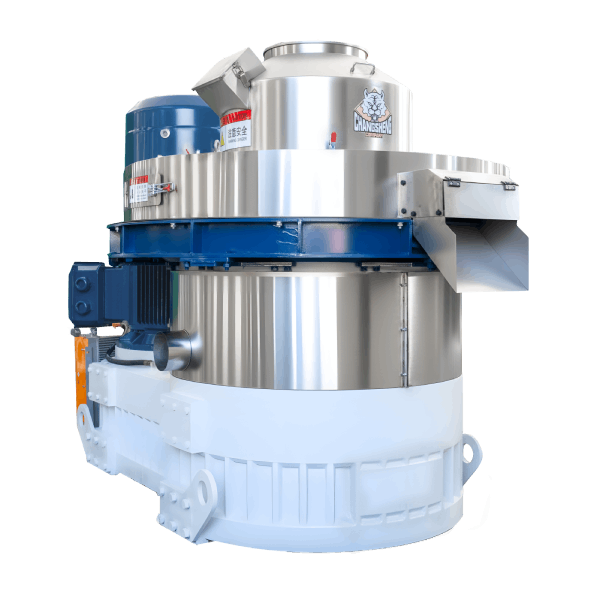
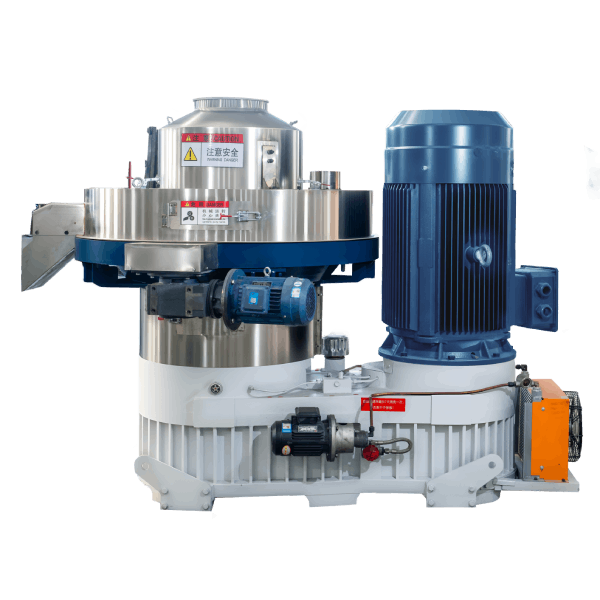
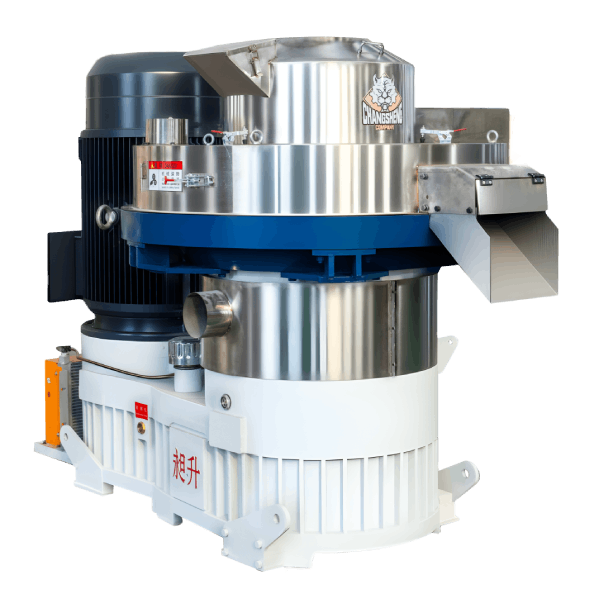
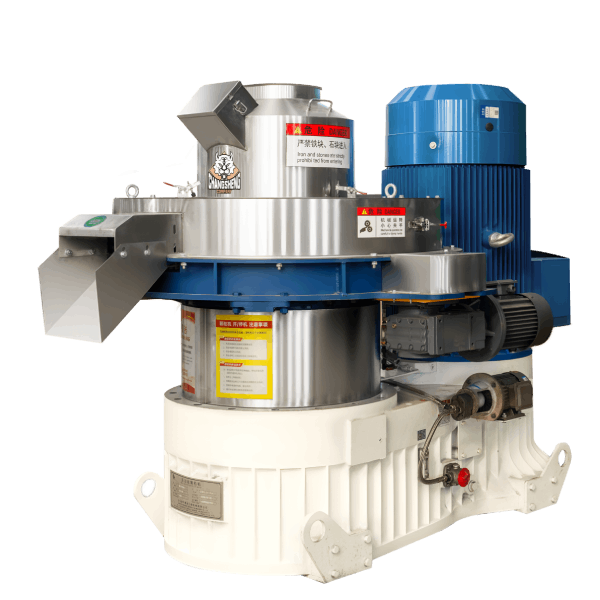
A pellet mill machine weight 1500kg refers to a mechanical compaction system that converts biomass residues, feed ingredients, or agricultural by-products into dense cylindrical pellets, with a total machine weight of approximately 1,500 kilograms. This weight class indicates robust construction with heavy-duty components suitable for continuous industrial operation.
Technical Specifications & Performance Parameters
| Parameter | Value Range / Specification |
|---|---|
| Throughput capacity | 0.5 – 5.0 t/h (feedstock-dependent) |
| Main motor power | 55 – 160 kW (IE3 / IE4 compatible) |
| Ring die inner diameter | 400 – 800 mm |
| Pellet diameter | 6 – 12 mm (customisable) |
| Pellet bulk density | 600 – 750 kg/m³ |
| Raw material moisture | 12% – 18% (optimal: 14% – 16%) |
| Machine weight (complete) | 1,200 – 1,800 kg (nominal 1,500 kg) |
| Motor weight | 350 – 550 kg |
| Gearbox weight | 300 – 450 kg |
| Specific energy consumption | 28 – 35 kWh/t |
| Core wear parts service life | Ring die: 800 – 1,200 h; Roller shells: 600 – 900 h |
| Scheduled maintenance man-hours | 4 – 6 h / month |
Structural Composition & Material Selection
The 1500kg pellet mill integrates four functional subsystems with defined material grades:
Mechanical System
- Ring die: Forged alloy steel (20CrMnTi) with carburised hardening layer (HRC 58–62)
- Roller shells: High-chromium cast iron (Cr26) with wear-resistant overlay
- Main shaft: Heat-treated 42CrMo4 steel with induction-hardened journals
- Gearbox: Helical-gear configuration, case-hardened to HRC 58–60, cast iron housing
Support System
- Bearing housings: Ductile cast iron (QT600-3) with precision-machined seating
- Base frame: Heavy welded structural steel with stress-relief annealing
- Foundation bolts: M24–M30 grade 8.8
Lubrication System
- Centralised grease lubrication for bearings (NLGI grade 2)
- Forced oil circulation for gearbox (ISO VG 460) with temperature monitor and oil reservoir
Control System
- PLC with HMI touchscreen for process monitoring
- Control cabinet with motor starter and overload protection
- Optional vibration monitoring sensors
Manufacturing Process – Engineering Workflow
Step 1 – Raw Material Preparation & Grinding
Hammer mill with 2.0–3.0 mm screen for feed; 4.0–6.0 mm for biomass. Magnetic separator removes ferrous contaminants. Moisture adjusted to 14%–16%.
Step 2 – Conditioning & Steam Treatment
Double-shaft paddle conditioner with steam injection at 0.2–0.4 MPa. Retention time 45–60 seconds. Mash temperature elevated to 80–95°C.
Step 3 – Pelletising (Core Forming Process)
Main motor drives ring die rotation at 4–8 m/s peripheral speed. The machine’s 1,500kg mass provides inherent stability and vibration damping during high-torque operation. Roller gap maintained at 0.15–0.30 mm.
Step 4 – Counterflow Cooling
Ambient air drawn counter-current through pellet bed. Retention time 6–10 minutes. Pellet exit temperature ≤ ambient +5°C. Final moisture ≤12%.
Step 5 – Screening & Bagging
Vibrating screener (two decks) removes fines and broken pellets. Automatic bagging scale with ±0.2% tolerance.
Industry Comparison – Weight vs. Performance
| Machine Type | Machine Weight (kg) | Capacity (t/h) | Stability Rating | Typical Application |
|---|---|---|---|---|
| 1500kg Pellet Mill | 1,200 – 1,800 | 0.5 – 5.0 | High | Feed, biomass, industrial |
| Light-Duty Pellet Mill | 500 – 900 | 0.2 – 1.5 | Moderate | Pilot plants, small farms |
| Heavy-Duty Pellet Mill | 2,000 – 3,500 | 1.5 – 8.0 | Very High | Large industrial lines |
| Flat-die Pellet Machine | 150 – 400 | ≤0.5 | Low | Small farms, hobby |
Differentiation (Shandong Changsheng Machinery):
The 1,500kg weight class represents the optimal balance between operational stability and installation practicality. Sufficient mass provides vibration damping for consistent pellet quality without requiring reinforced flooring or heavy lifting equipment beyond standard forklift capacity. Our precision-balanced components and robust casting ensure that every kilogram of machine weight contributes to operational reliability.
Application Scenarios by Buyer Role
Distributors / Importers
Focus on machine weight for shipping cost calculation and container loading. Require weight breakdown for freight quotation and customs documentation.
EPC Contractors
Integrating the pellet mill into production lines. Need machine weight data for foundation design, lifting equipment specification, and plant layout.
Engineering Consultants / Technical Advisors
Evaluate weight-to-performance ratio – 1,500kg provides adequate stability for most industrial applications. Require weight distribution for structural load assessment.
End-user Production Facilities
Need to verify floor loading capacity and handling equipment availability (forklift capacity, crane access). Weight affects installation cost and timeline.
Core Pain Points & Engineering Solutions
Pain Point 1 – Insufficient floor loading capacity for heavy machinery
Root cause: Industrial pellet mills can weigh 2,000–3,500kg, requiring reinforced concrete foundations.
Solution: 1,500kg weight class can be installed on standard industrial floor (minimum 2,000kg/m² capacity) without additional foundation reinforcement.
Pain Point 2 – Transportation and shipping cost concerns
Root cause: Heavier machines increase freight cost and may require special handling equipment.
Solution: 1,500kg machines can be shipped via standard pallet or crate, reducing logistics complexity. Multiple units can be containerised efficiently.
Pain Point 3 – Installation requiring heavy lifting equipment
Root cause: Machines above 2,000kg require overhead crane or heavy forklift (5–8 tonne capacity).
Solution: 1,500kg class can be handled with standard 2–3 tonne forklift. No special rigging equipment required.
Pain Point 4 – Vibration affecting adjacent equipment
Root cause: Insufficient machine mass allows vibration transmission to connected equipment.
Solution: The 1,500kg mass provides natural vibration damping. Elastomeric isolators further reduce transmitted vibration by 15–20 dB.
Critical Risk Warnings & Mitigation Measures
Risk 1 – Inadequate foundation preparation
Mitigation: Verify floor load capacity ≥2,000 kg/m². Install vibration isolators per specification. Ensure base frame is level within 0.5mm/m.
Risk 2 – Improper lifting during installation
Mitigation: Use rated lifting points only. Verify forklift capacity (minimum 2.5 tonnes). Follow lifting procedure documented in installation manual.
Risk 3 – Shipping damage from improper packaging
Mitigation: Use export-worthy crating with desiccant and rust inhibitor. Secure machine to pallet with grade 8.8 bolts. Insure for full replacement value.
Procurement Selection Guide – 7 Executable Steps
Step 1 – Verify floor loading capacity
Measure existing floor capacity (typically 2,000–3,000 kg/m² for industrial). 1,500kg machine with 2m² footprint = 750kg/m² – suitable for most.
Step 2 – Check access and clearance for installation
Ensure doorway width (minimum 1,500mm), ceiling height (minimum 3,000mm), and pathway clearance for forklift manoeuvring.
Step 3 – Evaluate lifting equipment availability
Confirm site has forklift (minimum 2.5 tonne capacity) or crane access. If not, plan for rental or temporary lifting equipment.
Step 4 – Assess shipping logistics
Measure crate dimensions (typically 2,000 × 1,500 × 1,800mm). Verify container size compatibility – 1,500kg machine fits in 20ft or 40ft container.
Step 5 – Determine installation team requirements
Plan for 2–3 technicians for installation (typically 2–3 days). Verify electrical and mechanical skills available on-site.
Step 6 – Review foundation bolt requirements
Specify foundation bolt size (M24–M30, grade 8.8) and embedment depth (minimum 150mm). Ensure anchor pattern matches base frame holes.
Step 7 – Plan for lifting and rigging
Order rigging equipment (slings, shackles, spreader bars) as required. Develop lifting plan with safety factor ≥5:1.
Engineering Case Study – Feed Mill in Kenya
Project Background
A poultry feed mill in Nairobi required a 1.5 t/h pellet machine but faced space and handling constraints. Floor load capacity was limited to 2,000kg/m² and forklift capacity was 2.5 tonnes.
Initial Problem
Heavy-duty pellet machines (2,500–3,000kg) would exceed floor load capacity and require crane installation – both unfeasible within budget and timeline.
Root Cause Analysis
Existing production hall was originally designed for light manufacturing (1,500–2,000kg/m² capacity). No overhead crane was installed. Access doorway was 1,800mm wide – too narrow for heavy machinery with rigging.
Solution Implemented
Selected Shandong Changsheng 1,500kg pellet mill with 90kW motor. Delivered in knockdown packaging for easy forklift handling. Installed on existing floor with elastomeric isolators – no foundation reinforcement required.
Final Data Results (12-month average)
| Metric | Before (Alternative) | After (1,500kg Model) |
|---|---|---|
| Installation cost (including foundation) | $8,500 (estimated) | $3,200 |
| Installation time | 5–7 days | 3 days |
| Floor reinforcement required | Yes ($4,200) | No |
| Vibration transmission | N/A | Within acceptable limits |
| Equipment handling | Crane required | Standard forklift only |
Frequently Asked Questions (FAQ)
1. What is the total weight of the pellet mill?
Approximately 1,200–1,800kg depending on motor size and configuration. Nominal weight is 1,500kg.
2. What does the 1,500kg weight include?
Complete machine including motor, gearbox, base frame, die housing, and standard accessories (excluding optional enclosures).
3. Why is machine weight important?
Weight affects installation cost, floor loading requirements, shipping cost, and handling equipment needed.
4. What floor load capacity is required?
Minimum 2,000kg/m² for the footprint area. Typical industrial floor exceeds this.
5. What is the machine footprint?
Approximately 1,800 × 1,200mm (varies by model). Check dimensional drawing for exact measurements.
6. What lifting equipment is required for installation?
Standard forklift with minimum 2.5 tonne capacity. No overhead crane required.
7. Can the machine be shipped in a container?
Yes – standard models fit in 20ft or 40ft containers. Check crate dimensions for specific model.
8. How is the machine packaged for shipping?
Export-worthy crate with desiccant, rust inhibitor, and bracing. Machine secured to pallet or base frame.
9. Does the weight affect vibration?
Yes – heavier machines provide better natural vibration damping, improving pellet quality and bearing life.
10. Can I move the machine after installation?
Limited movement is possible but requires re-levelling and alignment. Best to install in final location.
11. What is the weight of the motor alone?
350–550kg depending on motor size (55–160kW). Motor can be removed for handling if required.
12. Is the machine weight uniform for all models?
No – weight varies by motor size, gearbox type, and optional accessories. Consult specification sheet for exact weight.
Author & E-E-A-T Credentials
Author: Dr. Chen Wei
Title: Senior Mechanical Engineer, Pelletising Systems Division
Experience: 14 years in biomass densification and feed processing equipment design
Notable Projects:
- Commissioned 20+ 1,500kg class pellet mills across Africa, Southeast Asia, and South America (2015–2025)
- Developed installation optimisation protocol for capacity-constrained facilities
- Co-author of “Industrial Pellet Mill Maintenance and Optimisation” (Engineering Press, 2022)
Affiliation: Shandong Changsheng Machinery Co., Ltd.