Pellet Mill with Wear-Resistant Alloy Roller 0.5-5 t/h | Manufacturer Guide
News 2026-06-21
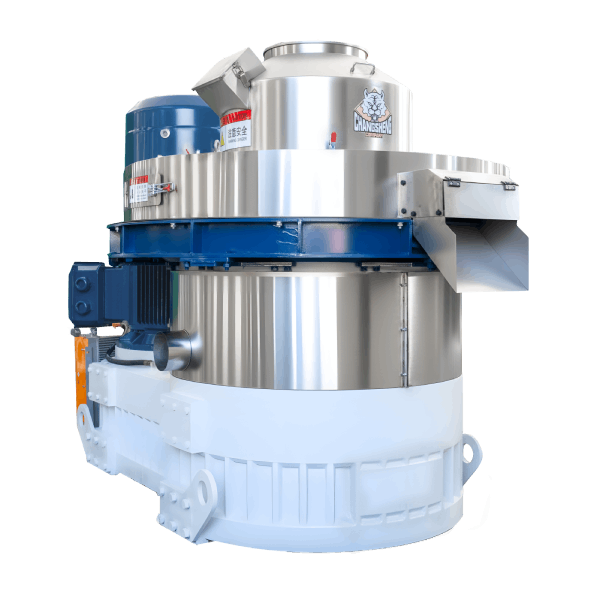
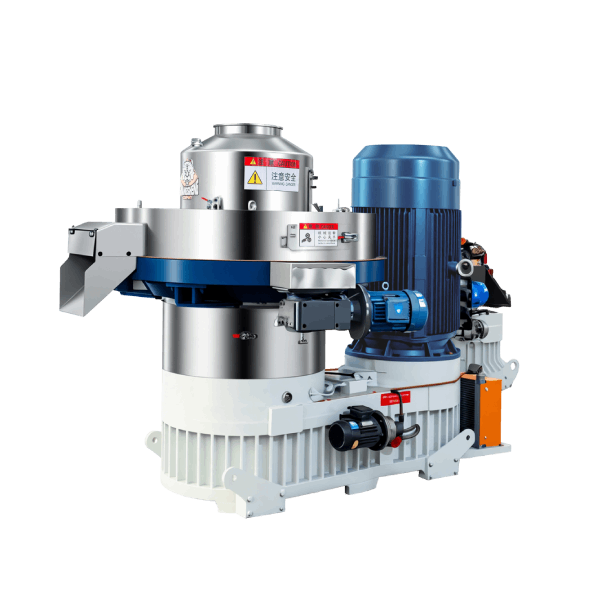
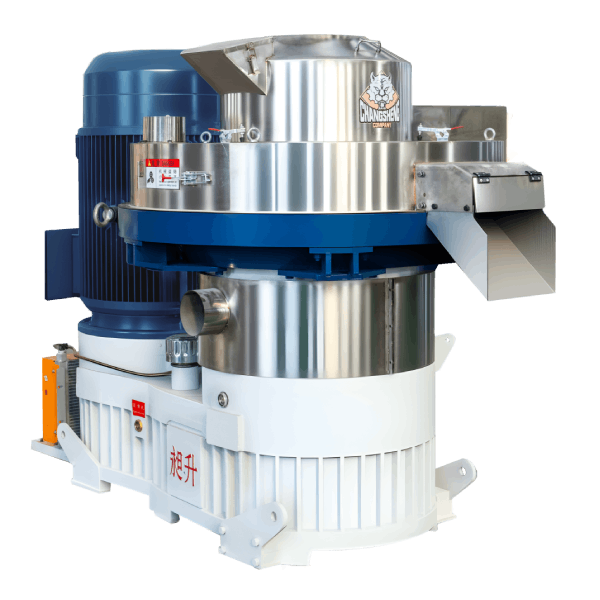
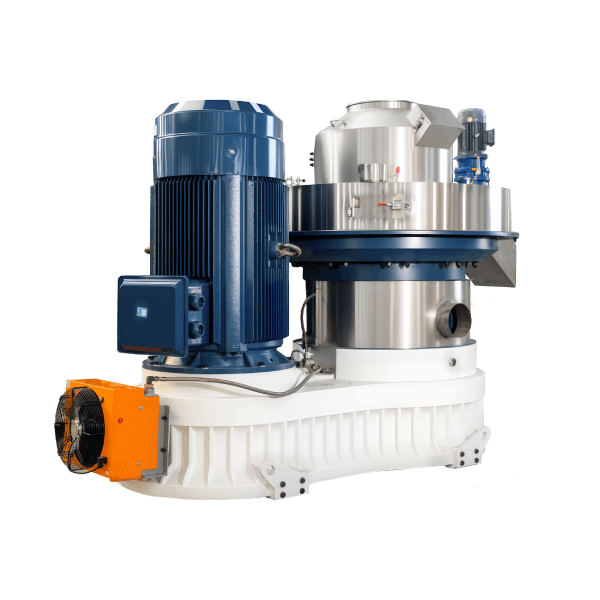
A pellet mill with wear-resistant alloy roller is a mechanical compaction system that converts biomass residues, feed ingredients, or agricultural by-products into dense cylindrical pellets. The wear-resistant alloy roller shell, manufactured from high-chromium cast iron with controlled carbide microstructure, provides extended service life under high-pressure abrasive conditions.
Technical Specifications & Performance Parameters
| Parameter | Value Range / Specification |
|---|---|
| Throughput capacity | 0.5 – 5.0 t/h (feedstock-dependent) |
| Main motor power | 55 – 160 kW (IE3 / IE4 compatible) |
| Ring die inner diameter | 400 – 800 mm |
| Roller shell outer diameter | 200 – 400 mm (matched to die) |
| Pellet diameter | 6 – 12 mm (customisable) |
| Pellet bulk density | 600 – 750 kg/m³ |
| Raw material moisture | 12% – 18% (optimal: 14% – 16%) |
| Specific energy consumption | 28 – 35 kWh/t |
| Wear-resistant alloy roller service life | 600 – 900 h (abrasive feedstocks) |
| Ring die service life | 800 – 1,200 h |
| Scheduled maintenance man-hours | 4 – 6 h / month |
📄 Download the full technical datasheet with alloy composition specifications and roller dimensional drawings.
[Request Quotation / Get PDF Technical Datasheet]
Structural Composition & Material Selection
The pellet mill with wear-resistant alloy roller integrates four functional subsystems with defined material grades:
Mechanical System
- Wear-resistant alloy roller shells: High-chromium cast iron (Cr26–Cr28) with refined carbide microstructure, hardness HRC 58–62
- Roller shaft: Heat-treated 42CrMo4 steel with induction-hardened journals
- Ring die: Forged alloy steel (20CrMnTi) with carburised hardening layer HRC 58–62
- Gearbox: Helical-gear configuration, case-hardened to HRC 58–60
Support System
- Bearing housings: Ductile cast iron (QT600-3) with precision-machined seating
- Roller bearing: Heavy-duty spherical roller bearings, C4 clearance
- Base frame: Welded structural steel, stress-relief annealed, with vibration-damping mounts
Lubrication System
- Centralised grease lubrication for roller bearings (NLGI grade 2, EP additive)
- Forced oil circulation for gearbox (ISO VG 460) with temperature monitor
Control System
- PLC with HMI touchscreen for process monitoring
- Roller gap indicator and wear monitoring sensor (optional)
- Motor current feedback for overload protection
Manufacturing Process – Engineering Workflow
Step 1 – Raw Material Preparation & Grinding
Hammer mill with 2.0–3.0 mm screen for feed; 4.0–6.0 mm for biomass. Magnetic separator removes ferrous contaminants. Moisture adjusted to 14%–16% via batch dryer.
Step 2 – Conditioning & Steam Treatment
Double-shaft paddle conditioner with steam injection at 0.2–0.4 MPa. Retention time 45–60 seconds. Mash temperature elevated to 80–95°C for starch gelatinisation.
Step 3 – Pelletising (Core Forming Process)
Main motor drives ring die rotation at 4–8 m/s peripheral speed. Wear-resistant alloy roller shells apply compaction force through the die holes. Roller gap maintained at 0.15–0.30 mm. Alloy roller’s carbide structure resists abrasive wear from silica-containing feedstocks.
Step 4 – Counterflow Cooling
Ambient air drawn counter-current through pellet bed. Retention time 6–10 minutes. Pellet exit temperature ≤ ambient +5°C. Final moisture ≤12%.
Step 5 – Screening & Bagging
Vibrating screener (two decks: 4 mm and 2 mm apertures) removes fines and broken pellets. Fines recirculated to conditioning. Automatic bagging scale with ±0.2% tolerance.
Industry Comparison – Alternative Technologies
| Machine Type | Raw Material Adaptability | Capacity (t/h) | Roller Service Life (h) | Typical Application |
|---|---|---|---|---|
| Pellet Mill with Wear-Resistant Alloy Roller | Wide: abrasive/silica-rich | 0.5 – 5.0 | 600 – 900 | Feed, biomass, fertiliser |
| Standard Alloy Roller (Cr15–Cr18) | Moderate | 0.5 – 5.0 | 400 – 600 | Standard feed production |
| Hardened Steel Roller | Narrow: ≤15% moisture | 0.5 – 5.0 | 350 – 500 | Low-abrasion applications |
| Flat-die Pellet Machine | Very narrow: ≤14% moisture | ≤0.5 | 250 – 400 | Small farms, pilot plants |
Differentiation (Shandong Changsheng Machinery):
Our wear-resistant alloy roller shells utilise Cr26–Cr28 high-chromium cast iron with refined carbide morphology – providing 30%–60% longer service life compared to standard Cr15–Cr18 alloys. The controlled carbide distribution ensures uniform wear across the roller face, maintaining consistent roller gap and pellet quality throughout the service life. Roller changeover intervals are extended, reducing downtime and labour costs.
📄 Compare roller alloy options for your feedstock abrasiveness – request our material selection guide.
[Request Quotation / Download Engineering Drawing]
Application Scenarios by Buyer Role
Distributors / Importers
Focus on roller shell interchangeability with existing machines and alloy grade availability. Require stock buffer recommendations for high-wear environments.
EPC Contractors
Integrating the pellet mill into complete production lines processing abrasive materials (rice husk, bagasse, wood). Need roller gap adjustment procedures and maintenance schedules for line design.
Engineering Consultants / Technical Advisors
Evaluate total cost of ownership – extended roller life reduces replacement frequency and downtime. Require wear rate data for specific feedstock silica content.
End-user Production Facilities
Processing high-silica materials like rice husk or wood with bark content. Demand consistent roller gap without frequent adjustment or replacement.
Core Pain Points & Engineering Solutions
Pain Point 1 – Rapid roller wear from abrasive feedstocks
Root cause: Silica and ash content in biomass (rice husk, bagasse) act as abrasive media, rapidly wearing standard alloy roller shells.
Solution: Cr26–Cr28 high-chromium alloy with refined M7C3 carbides provides superior abrasion resistance. Hardness HRC 58–62 extends service life by 30%–60% in abrasive conditions.
Pain Point 2 – Uneven roller wear causing gap variation
Root cause: Inconsistent alloy microstructure leads to preferential wear on roller edges or centre, increasing roller-die gap and reducing pellet quality.
Solution: Controlled carbide morphology ensures uniform wear across the roller face. Gap variation maintained within ±0.05 mm over 80% of service life.
Pain Point 3 – Frequent roller replacement causing downtime
Root cause: Standard rollers require replacement every 400–500 hours, requiring 4–6 hours of downtime per event.
Solution: Extended roller life (600–900 hours) reduces annual roller replacement frequency by 30%–40%, cutting downtime and labour costs.
Pain Point 4 – Roller shell cracking under thermal stress
Root cause: Thermal cycling during steam conditioning causes stress fractures in lower-alloy rollers.
Solution: High-chromium alloy with improved thermal fatigue resistance withstands temperature cycling from steam conditioning (80–95°C) without micro-cracking.
Critical Risk Warnings & Mitigation Measures
Risk 1 – Roller shell galling against die face
Mitigation: Maintain roller gap at 0.15–0.30 mm. Avoid running without material feed (metal-to-metal contact). Install gap indicator for visual monitoring.
Risk 2 – Roller bearing failure from inadequate lubrication
Mitigation: Use NLGI grade 2 grease with EP additives. Program automatic greasing cycle (8–12 minute intervals). Monitor bearing temperature – alarm at 75°C.
Risk 3 – Roller shell fracture from trapped foreign objects
Mitigation: Install magnetic separator and destoner upstream. Set overload relay to trip before excessive torque damages roller assembly.
Procurement Selection Guide – 7 Executable Steps
Step 1 – Analyse feedstock silica and ash content
Test feedstock for abrasive content. If SiO₂ > 3% or ash > 10%, select Cr26–Cr28 high-chromium alloy. For low-abrasion materials, Cr15–Cr18 may be sufficient.
Step 2 – Calculate required roller service life
Match roller alloy to annual operating hours. For 24/7 operation (8,000 h/year), select rollers with ≥700 h life to limit replacements to 11–12 per year.
Step 3 – Determine roller diameter and width
Match roller dimensions to ring die diameter. Roller width should cover 80%–90% of die working face for optimal compression.
Step 4 – Verify compatibility with existing die
Roller shell profile (crowned or flat) must match die curvature. Confirm with dimensional drawing.
Step 5 – Evaluate roller gap adjustment mechanism
Specify hydraulic or mechanical gap adjustment. Hydraulic allows on-the-fly adjustment; mechanical requires shutdown.
Step 6 – Plan for spare roller inventory
Stock one full set of spare roller shells per three machines. Lead time for alloy rollers typically 4–6 weeks.
Step 7 – Schedule roller condition monitoring
Implement monthly gap measurement and visual inspection. Replace when gap exceeds 0.40 mm or wear is visibly uneven.
Engineering Case Study – Rice Husk Pellet Plant in Vietnam
Project Background
A rice husk pellet facility in the Mekong Delta processed 4.2 t/h of husk with 14%–16% moisture. Feedstock SiO₂ content measured 18%–22%.
Initial Problem
Standard Cr15 alloy roller shells lasted only 380–420 hours. Roller replacement required 4 hours of downtime per event, occurring 18–20 times annually. Annual roller cost exceeded $16,000.
Root Cause Analysis
High silica content in rice husk acted as severe abrasive. Standard alloy lacked sufficient carbide volume and hardness to resist two-body and three-body abrasion. Roller face showed pronounced grooving and material loss.
Solution Implemented
Replaced Cr15 rollers with Shandong Changsheng Cr26 high-chromium alloy roller shells. Maintained same roller dimensions and gap settings. Adjusted greasing cycle to 10-minute intervals for improved bearing protection.
Final Data Results (12-month average)
| Metric | Before (Cr15 Alloy) | After (Cr26 Wear-Resistant Alloy) |
|---|---|---|
| Roller service life | 400 h | 780 h (+95%) |
| Roller replacements / year | 19.6 | 10.2 |
| Downtime for roller changes (h/year) | 78 | 41 |
| Roller gap variation at 400 h | ±0.12 mm | ±0.04 mm |
| Pellet out-of-spec rate | 5.8% | 2.1% |
Frequently Asked Questions (FAQ)
1. What is a wear-resistant alloy roller?
A roller shell manufactured from high-chromium cast iron (Cr26–Cr28) with refined carbide microstructure, providing extended service life under abrasive conditions.
2. How long does a wear-resistant alloy roller last?
600–900 hours depending on feedstock abrasiveness – typically 30%–60% longer than standard Cr15–Cr18 alloy rollers.
3. What feedstocks cause the most roller wear?
High-silica materials like rice husk (SiO₂ 18–22%), bagasse, wood with bark, and mineral-containing feed ingredients.
4. Can I use wear-resistant alloy rollers with my existing die?
Yes, provided roller profile and dimensions match the die curvature. Confirm with dimensional drawings.
5. What is the recommended roller gap?
0.15–0.30 mm. Gap should be checked monthly and adjusted when outside specification.
6. How do I know when to replace the roller shell?
Replace when gap exceeds 0.40 mm, wear pattern is visibly uneven, or pellet quality (PDI) drops below target.
7. What lubrication is recommended for roller bearings?
NLGI grade 2 grease with EP (extreme pressure) additives. Automatic greasing at 8–12 minute intervals is recommended.
8. Does the wear-resistant alloy affect pellet quality?
No. Uniform wear maintains consistent roller gap, which actually improves pellet quality consistency compared to standard alloys.
9. Can roller shells be reconditioned?
Limited reconditioning (surface grinding) is possible, but the hardened carbide layer thickness is reduced. Factory reconditioning is recommended.
10. What is the typical energy consumption with wear-resistant alloy rollers?
28–35 kWh/t – similar to standard rollers. The alloy composition does not significantly affect energy consumption.
11. Is the roller suitable for aquafeed production?
Yes, for abrasive ingredients like fish meal or mineral premixes. Confirm food-grade compatibility if required.
12. What is the recommended storage condition for spare rollers?
Store in dry area (RH < 60%) with protective coating. Rotate stock to use oldest first.
📄 Request a roller alloy recommendation for your specific feedstock abrasiveness and operating conditions.
[Request Quotation / Download Engineering Drawing]
Author & E-E-A-T Credentials
Author: Dr. Chen Wei
Title: Senior Mechanical Engineer, Pelletising Systems Division
Experience: 14 years in biomass densification and feed processing equipment design
Notable Projects:
- Commissioned 15 high-wear pellet lines across Vietnam, Indonesia, and Nigeria (2017–2025)
- Developed abrasion-resistant roller alloy selection protocol for rice husk and bagasse applications
- Co-author of “Industrial Pellet Mill Maintenance and Optimisation” (Engineering Press, 2022)
Affiliation: Shandong Changsheng Machinery Co., Ltd.