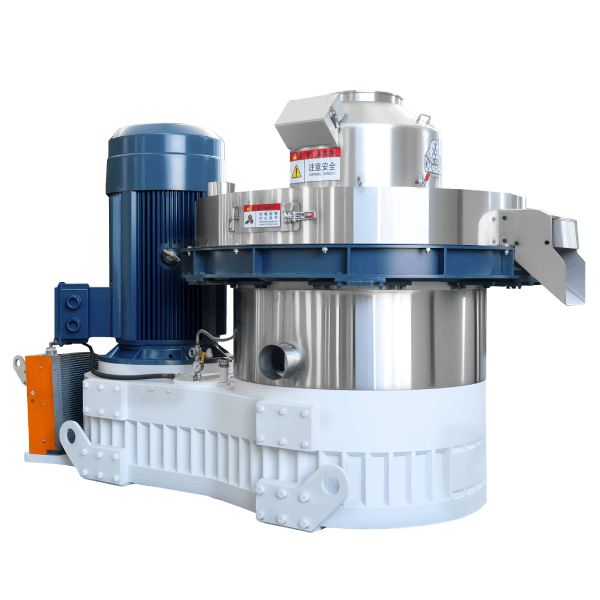
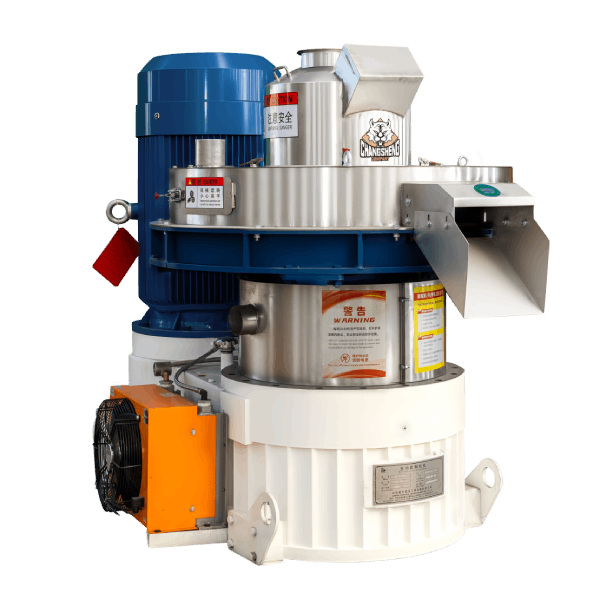
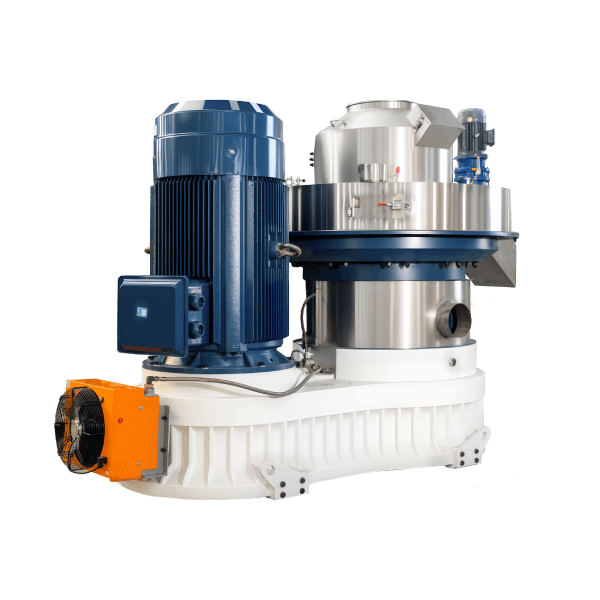
Pellet Mill with Cyclone Dust Collector and Magnetic Separator 2-5 t/h Guide
News 2026-06-17
1. Product Definition
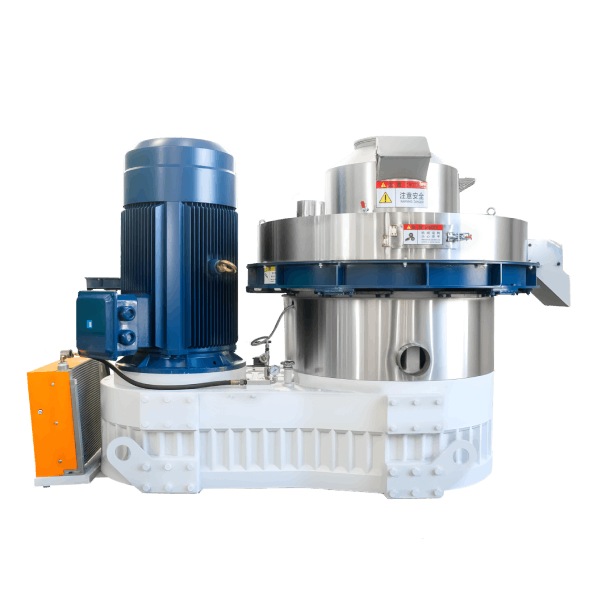
A fully integrated pelletizing system that combines a ring-die pellet mill with a cyclone dust collection unit for airborne particle capture and a magnetic separator for ferrous metal removal. This integrated configuration processes clean biomass feedstocks (sawdust, shavings, agricultural residues) into high-density fuel pellets while ensuring downstream equipment protection and regulatory dust emission compliance.
2. Technical Parameters & Specifications
| Parameter | Specification Range | Remarks |
|---|---|---|
| Production Capacity | 2.0 – 5.0 t/h | Based on 12-15% moisture, 3mm grind size |
| Main Motor Power | 55 – 160 kW | 6/8-pole, grid-dependent |
| Ring Die Diameter | 420 – 550 mm | With quick-change flange |
| Cyclone Collector Efficiency | 92 – 98% | For particles >5μm |
| Magnetic Separator Strength | 10,000 – 12,000 Gauss | Rare-earth neodymium array |
| Finished Pellet Diameter | 6 – 12 mm | Interchangeable die |
| Pellet Density | 1.1 – 1.3 g/cm³ | Formation rate ≥95% |
| Raw Material Moisture | 12% – 18% | Optimum: 15% |
| Specific Energy Consumption | 62 – 85 kWh/t | Material-dependent |
| Roller/Ring Die Service Life | 800 – 1,200 hours | Repairable via hardfacing |
| Scheduled Maintenance | 6 – 8 hours/month | Includes cyclone discharge check |
[CTA: Download Complete Technical Datasheet]
3. Structure & Material Composition
The integrated system consists of four primary subsystems:
- Mechanical System (Pelletizing Chamber & Drivetrain): Ring die in high-chromium alloy steel (X46Cr13) with through-hardened wear layer. Roller shells feature tungsten carbide overlay (≥5mm thickness). Main shaft forged from 40CrNiMoA, quenched and tempered to 28-32 HRC.
- Filtration & Separation System (Cyclone & Magnetic Assembly): Cyclone body constructed from 6mm Q235B steel with internal wear-resistant ceramic lining in cone section. Magnetic separator housing in 304 stainless steel with hinged clean-out door for easy ferrous debris removal.
- Lubrication System: Main bearings utilize forced-circulation oil lubrication with flow and temperature sensors. Roller bearings serviced by an automatic grease lubrication pump (2-4g per cycle, adjustable interval).
- Control & Monitoring System: PLC-based panel (Siemens S7-1200) with HMI touchscreen. Monitors: main motor current, differential pressure across cyclone, bearing temperatures, and magnetic separator status with alarm outputs.
4. Manufacturing Process (Engineering Steps)
- Step 1 – Feedstock Receiving & Initial Screening: Vibrating screen removes oversized particles and coarse debris. Control point: Screen mesh ≤6mm to prevent blockages in downstream magnetic separator.
- Step 2 – Ferrous Contaminant Removal: Material passes through a high-intensity magnetic separator (10,000 Gauss) via a vibratory feeder with even material bed depth (≤30mm). Control point: Daily manual inspection of collected tramp metal.
- Step 3 – Grinding & Particle Size Reduction: Hammer mill reduces feedstock to ≤3mm for optimal pellet formation. Control point: Screen perforation size and hammer tip speed (80-100 m/s).
- Step 4 – Conditioning & Extrusion: Material enters the conditioner where steam (0.2-0.4 MPa, 80-100°C) adjusts moisture to 17-18%. The conditioned material then enters the ring-die chamber for high-pressure extrusion at 90-110°C.
- Step 5 – Pneumatic Conveying & Cyclone Filtration: A high-pressure fan draws pelletized output through a conveying line into the cyclone dust collector. Control point: Inlet air velocity (16-20 m/s) and pressure drop (1.0-1.5 kPa) for 95%+ particulate capture efficiency.
- Step 6 – Pellet Cooling, Screening & Storage: Pellets exit the cyclone into a counter-flow cooler. Fines are removed via vibrating screen and recycled to the pellet mill inlet. Finished product is conveyed to storage silos.
5. Industry Comparison
| Dimension | Pellet Mill + Cyclone + Magnet (This System) | Pellet Mill Without Cyclone | Pellet Mill with Fabric Filter Only | Standard Mill + External Dust Collector |
|---|---|---|---|---|
| Dust Emission Control | High (92-98% capture) | None (open discharge) | Very High (>99%) | Medium (site-dependent) |
| Metal Protection | Integrated 10,000 Gauss magnet | None (high wear risk) | None (high wear risk) | External magnet optional |
| Footprint | Compact (single skid) | Compact | Large (baghouse footprint) | Very Large |
| Typical Application | Biomass pellet plants, EPC turnkey lines | Small workshops | Large industrial plants with permits | Retrofitted existing lines |
| Why Choose Changsheng | Single-source integration reduces engineering coordination and guarantees system performance under warranty | — | — | — |
[CTA: Request Quotation with Integrated System Layout]
6. Application Scenarios (By Buyer Role)
- Distributors/Importers: Seeking a complete, container-friendly system that simplifies after-sales support with a single equipment package and common wear parts.
- EPC Contractors: Valuing single-supplier responsibility for emissions compliance, with the system delivering guaranteed particulate capture rates to meet local environmental permits without requiring multiple vendor interfaces.
- Engineering Firms/Technical Consultants: Assessing the system’s pressure drop, fan sizing, and ductwork integration for accurate plant-wide balance calculations.
- End-User Plants (Pellet Producers): Focused on reducing housekeeping costs and fire risks from accumulated dust, while minimizing unplanned downtime from metal-related damage to dies and rollers.
7. Core Pain Points & Solutions
- Pain Point 1: Frequent die and roller damage from tramp metal in feedstock → Root Cause: Nails, screws, and metal fragments from logging equipment enter the production line undetected. → Solution: The integrated 10,000 Gauss magnetic separator with easy-clean tray captures ferrous particles, with an optional metal detector upstream for additional security.
- Pain Point 2: Regulatory fines for fugitive dust emissions → Root Cause: Pellet discharge points and conveying systems generate significant airborne dust. → Solution: The cyclone collector captures >95% of particulates, reducing downstream emissions and allowing compliance with most local air quality standards.
- Pain Point 3: High maintenance costs from separate vendor coordination → Root Cause: When cyclone, magnet, and pellet mill come from different suppliers, system integration and warranty claims become fragmented. → Solution: Single-source system from Changsheng with coordinated engineering, reducing interface issues and simplifying maintenance.
- Pain Point 4: Material buildup and plugging in cyclone cone section → Root Cause: High-moisture or sticky feedstocks adhere to cyclone walls, reducing efficiency. → Solution: Optional air purge or vibratory assist on cone section; cyclones are sized with conservative inlet velocities (≤18 m/s) for difficult materials.
8. Risk Warnings & Mitigation Recommendations
- Risk 1: Magnetic separator saturation and bypass → Accumulated metal debris can bridge across magnet bars, allowing subsequent tramp metal to pass through. Mitigation: Schedule daily cleaning of the magnet tray; install a second magnet in series for critical applications where metal contamination is frequent.
- Risk 2: Cyclone under-cone plugging leading to system backpressure → If discharge airlocks fail or fines buildup exceeds design, pressure drop spikes, causing material backup into the pellet mill. Mitigation: Install differential pressure transmitter with high-pressure alarm; perform weekly visual inspection of cone discharge.
- Risk 3: Explosive dust atmosphere from fine particles → The cyclone system concentrates fine biomass dust, creating a potential deflagration hazard if ignition sources exist. Mitigation: Equip the cyclone with explosion vents (per NFPA 68) and grounding straps; maintain fan inlet velocity above 16 m/s to prevent dust settling in ducts.
9. Procurement Selection Guide (6+ Actionable Steps)
- Quantify Your Dust Emission Limits: Review your local environmental permit for particulate matter (PM) limits (e.g., mg/Nm³). A cyclone alone typically achieves 50-150 mg/Nm³; if you require <20 mg/Nm³, consider specifying an additional baghouse downstream.
- Characterize Your Tramp Metal Risk: Audit your feedstock supply chain for metal contamination frequency. For high-risk sources (demolition wood, recycling yards), specify a dual-magnet arrangement or include an induction-based metal detector.
- Determine Airflow Requirements: Calculate required air volume based on conveying distance and pellet throughput. A typical system needs 3,000-5,000 m³/h for 3-4 t/h production.
- Select Cyclone Cut Size: For biomass applications, specify a cyclone designed for a 5-10μm cut point to capture fine char and dust while maintaining pressure drop below 1.5 kPa.
- Evaluate Integration Interfaces: Confirm that the cyclone discharge airlock (rotary valve) and ducting dimensions match your upstream (pellet mill outlet) and downstream (cooler/fan) equipment.
- Review Explosion Protection Requirements: Ensure the supplier provides explosion venting calculations (per EN 14491 or NFPA 68) and considers system isolation devices for fire safety.
10. Engineering Case Study
- Project Background: A newly built 3 t/h wood pellet production facility in Vietnam, processing mixed Acacia and rubberwood sawdust. The facility was located near residential areas, requiring strict dust control.
- Initial Problem: During commissioning with a standard pellet mill and no integrated dust control, visible dust plumes at the discharge point triggered complaints from neighboring businesses and a warning notice from local environmental authorities. The operator also experienced a ring die failure within 150 hours due to a lost screw from a hammer mill entering the chamber.
- Root Cause Analysis: The original equipment package omitted both the cyclone and magnetic separator. The customer had attempted to use a generic dust hood without adequate suction, and had not installed any metal protection.
- Solution: Retrofitted with Changsheng’s integrated pellet mill system featuring a 10,500 Gauss neodymium magnetic separator at the inlet and a 1.8m diameter high-efficiency cyclone with a rotary airlock discharge. Added a differential pressure monitor with remote alarm.
- Final Results: Visible emissions eliminated; ambient dust levels measured at 2.1 mg/m³ (well below the 5 mg/m³ local limit). The magnetic separator collects an average of 4.2 kg of tramp metal per week. Ring die life increased to 950 operating hours. The system achieved full environmental compliance within 30 days.
11. FAQ
Q1: What types of materials can this integrated system handle?
Sawdust, wood shavings, agricultural residues (rice husk, corn stover), and some biomass blends up to 15% bark content.
Q2: Does the cyclone eliminate the need for a baghouse?
For many biomass plants with moderate emission limits (50-150 mg/Nm³), yes. For stricter permits (<20 mg/Nm³), a baghouse or wet scrubber is still required downstream.
Q3: How often should the magnetic separator be cleaned?
Check daily; high-contamination feedstocks may require twice-daily cleaning to maintain full magnetic strength.
Q4: Can the system be installed outdoors?
Yes, with weather protection for the control panel and motor. Cyclone and ducting are weather-resistant; motor should be IP55-rated.
Q5: What causes cyclone efficiency to drop?
High inlet velocity (>22 m/s) increases re-entrainment; low velocity (<14 m/s) allows particles to fall out before capture. Maintain optimal range.
Q6: Is there a fire hazard inside the cyclone?
Fine dry dust and sparks are a risk; install spark detectors and explosion vents per local safety codes.
Q7: How much floor space does the integrated system require?
Approximately 8m × 3.5m for the complete pellet mill with cyclone and magnet. Additional clearance is required for maintenance access.
Q8: Can I add the cyclone to my existing pellet mill?
Yes, with proper ducting design and fan sizing. Field retrofits are common; contact Changsheng for an engineering assessment.
Q9: What is the typical pressure drop through the cyclone?
Usually 1.0 to 1.5 kPa at design airflow, depending on the inlet configuration.
Q10: Does the cyclone separate fines for re-pelletizing?
Yes, collected fines can be returned to the pellet mill inlet via a screw conveyor, improving overall yield.
[CTA: Request Customized Proposal & Real-Time Quotation]
13. Author & E-E-A-T Credentials
Zhang Haifeng | Technical Engineering Director | 12 years in biomass processing equipment design and integrated system engineering
Holds a Master’s degree in Mechanical Engineering from Shandong University and completed advanced studies in dust control systems at TU Freiberg, Germany. Has led engineering and commissioning for 35+ integrated pellet production systems across Southeast Asia, Eastern Europe, and South America, including complete turnkey plants with cyclone and filtration packages. Author of several technical papers on biomass dust explosion prevention. Regularly conducts supplier audits for major EPC firms.
Affiliation: Shandong Changsheng Machinery Co., Ltd.
(Final CTA)
For your specific capacity, emission limits, and feedstock conditions, our engineering team provides a detailed system sizing report. Submit your project parameters for a customized proposal with guaranteed efficiency metrics.