Pellet Mill Maintenance Guide 2026: Daily, Weekly, Monthly Tasks
News 2026-04-21
1. Product Definition
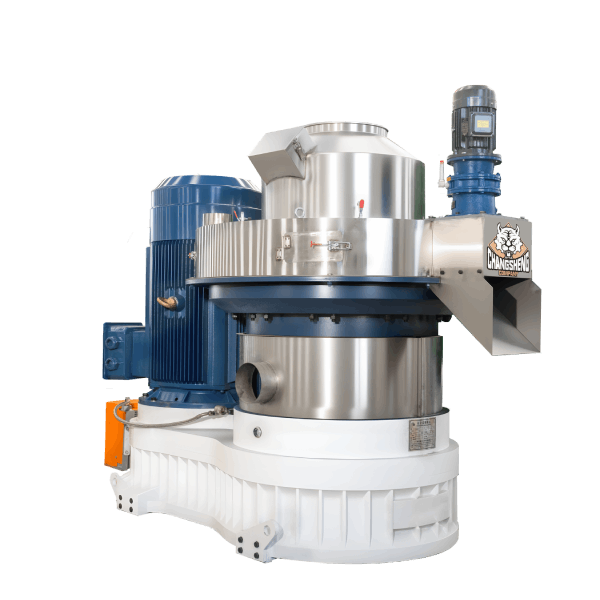
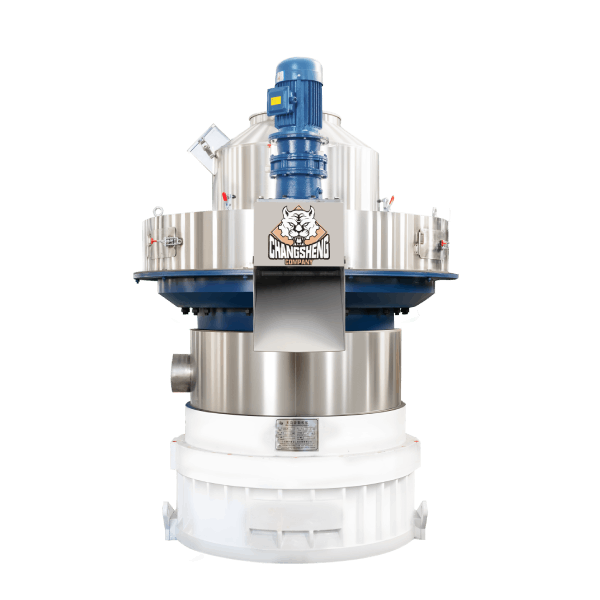
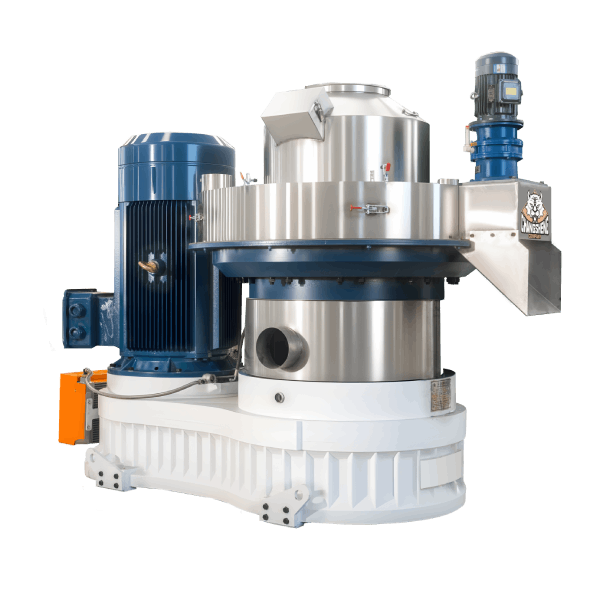
A pellet mill maintenance guide is a systematic schedule of inspection, lubrication, cleaning, and replacement procedures designed to maximize equipment uptime, extend wear parts life, and prevent catastrophic failures in ring die or flat die pellet mills.
2. Technical Parameters & Specifications
| Parameter | Ring Die Mill | Flat Die Mill |
|---|---|---|
| Daily maintenance (minutes) | 20 – 30 | 15 – 25 |
| Weekly maintenance (hours) | 1 – 2 | 0.5 – 1 |
| Monthly maintenance (hours) | 3 – 6 | 2 – 4 |
| Quarterly maintenance (hours) | 6 – 10 | 4 – 6 |
| Annual maintenance (days) | 2 – 5 | 1 – 2 |
| Expected die life (hours) | 1,500 – 2,500 | 500 – 1,000 |
| Bearing replacement interval (hours) | 8,000 – 12,000 | 3,000 – 5,000 |
| Gearbox oil change (hours) | 1,000 – 1,500 | 500 – 800 |
| Belt replacement (hours) | 1,000 – 2,000 | 500 – 1,000 |
For maintenance scheduling: Request a complete maintenance log template for your mill type.
3. Structure & Material Composition
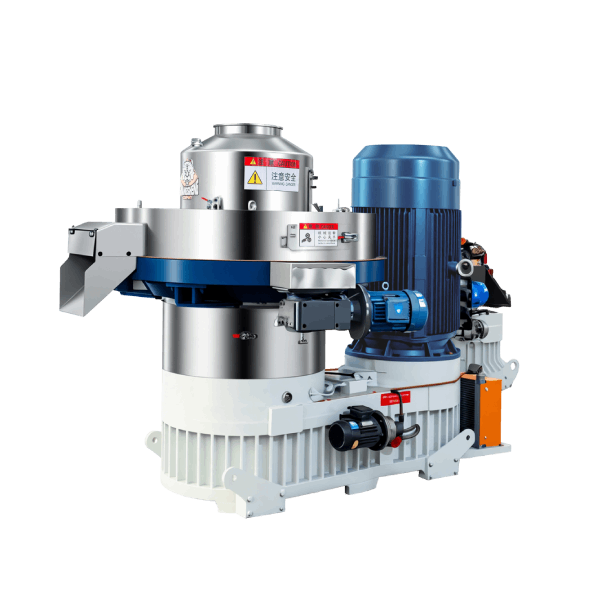
Ring Die Pellet Mill Components Requiring Maintenance
- Ring die: Replaceable wear part (GCr15 or 20CrMnTi steel)
- Roller shells: Replaceable wear surface (Cr26 hardfacing)
- Roller bearings: Sealed or greaseable (SKF/FAG/Timken)
- Main shaft bearings: Critical rotating component
- Gearbox: Oil bath with helical gears
- Belts: Multiple V-belts for power transmission
- Feeder screw: Variable speed with VFD
- Magnets: Permanent magnets for tramp metal removal
Flat Die Pellet Mill Components
- Flat die: Replaceable wear part (GCr15 steel)
- Rollers: Replaceable roller assemblies with bearings
- Gearbox: Smaller, oil bath or grease-packed
- Belts: 2-4 V-belts
4. Manufacturing Process (Engineering Steps)
Step 1 – Daily Pre-Start Inspection (15-30 minutes)
Check: Roller gap (0.1-0.3mm ring die), belt tension, magnet cleanliness, grease levels
Why: Catches issues before they cause damage
Record: Log readings, visual observations
Step 2 – Daily Lubrication
Ring die: Automatic grease system (check reservoir) or manual grease to roller bearings every 8-12 hours
Flat die: Manual grease every 4-6 hours
Grease type: NLGI grade 2 lithium-complex (high-temp)
Step 3 – Weekly Inspection (1-2 hours)
Check: Die surface wear pattern, roller shell condition, bearing temperature (touch test), belt wear, gearbox oil level, magnet cleanliness
Action: Clean die holes with oil-soaked sawdust. Remove tramp metal from magnet.
Step 4 – Monthly Maintenance (2-6 hours)
Check: Die thickness (measure), roller gap consistency (all positions), gearbox oil change (if due), bearing vibration, bolt torque on housing
Action: Replace belts if cracked. Grease gearbox fittings.
Step 5 – Quarterly Overhaul (4-10 hours)
Check: Die and roller replacement (if worn), bearing replacement (if noisy), gearbox oil analysis, alignment verification
Action: Replace wear parts before failure (planned downtime)
Step 6 – Annual Major Service (1-5 days)
Check: Gearbox internal inspection, main shaft runout, all bearing replacements, electrical panel inspection, full cleaning
Action: Schedule during low-production season
5. Industry Comparison
| Parameter | Preventive Maintenance | Reactive (Run-to-Failure) | Predictive (Condition-Based) |
|---|---|---|---|
| Downtime (hours/year) | 50 – 100 | 200 – 500 | 30 – 60 |
| Maintenance cost (% of asset) | 2-4% | 6-12% | 1-3% |
| Die life (hours) | 1,500-2,500 | 800-1,200 | 1,800-2,500 |
| Bearing life (hours) | 8,000-12,000 | 3,000-5,000 | 10,000-15,000 |
| Unplanned failures | Low | High | Very low |
| Staff skill required | Moderate | Low | High |
| Why Choose Shandong Changsheng | Most practical for most plants | Higher cost long-term | Requires advanced sensors |
Compare maintenance strategies: Request a cost analysis for your operation.
6. Application Scenarios (By Buyer Role)
Distributors / Importers
Need pellet mill maintenance guide to provide to customers (reduces warranty claims). Decision focus: clear language, photos/diagrams, and translation availability.
EPC Contractors
Require maintenance documentation as part of plant commissioning. Decision focus: schedule integration with plant CMMS (computerized maintenance management system).
Engineering Consultants / Technical Advisors
Advising clients on maintenance staffing and spare parts inventory. Decision focus: required man-hours per week and skill level needed.
End-user Facilities (Pellet plants, feed mills, farms)
Training maintenance staff. Decision focus: step-by-step procedures, checklists, and troubleshooting guides.
7. Core Technical Pain Points & Engineering Solutions
Pain Point 1 – Inadequate Lubrication
Problem: Roller bearings fail prematurely (2,000 hours vs. expected 8,000+).
Root cause: Manual grease applied inconsistently or wrong grease type.
Solution: Install automatic grease system (retrofit available $1,500-3,000). Use NLGI grade 2 lithium-complex grease (not generic). Grease every 8 hours (not “when remembered”). Document in log.
Pain Point 2 – Ignoring Roller Gap Adjustment
Problem: Output drops 30-40%, die wears unevenly, pellets inconsistent.
Root cause: Roller gap not checked or adjusted for months.
Solution: Check gap weekly with feeler gauge (0.1-0.3mm ring die). Adjust all rollers equally. Mark positions on eccentric bolts. Log gap readings.
Pain Point 3 – Running with Worn Dies
Problem: Output declines slowly, operators compensate by increasing feed rate → motor overload.
Root cause: No baseline output measurement to detect wear.
Solution: Measure output (kg/h) weekly and log. Replace die when output drops 20% below baseline. Track tons per die. Calculate cost per ton to optimize change interval.
Pain Point 4 – Neglecting Magnet Cleaning
Problem: Tramp metal enters die, causing cracking or roller shell damage.
Root cause: Magnet not cleaned for weeks (covered with metal fines).
Solution: Clean magnet every shift (daily for single shift). Install secondary magnet. Use metal detector with diverter for critical applications.
8. Risk Warnings & Mitigation Strategies
Risk 1 – Bearing Seizure from Grease Starvation
Warning: Automatic greaser runs empty for days. Roller bearing seizes, roller stops, die surface damages. Repair cost $5,000-15,000.
Mitigation: Check grease reservoir weekly. Install low-level alarm ($200-500). Set phone reminder every 7 days. Keep spare grease cartridge on site.
Risk 2 – Gearbox Failure from Contaminated Oil
Warning: Water or wood dust enters gearbox via breather. Oil becomes milky, gears wear rapidly.
Mitigation: Install breather filter (desiccant type) on gearbox vent. Change oil every 1,000 hours or 6 months. Send oil sample for analysis annually ($50-100).
Risk 3 – Electrical Fire from Dust Accumulation
Warning: Wood dust accumulates on motor, control panel, and wires. Dust ignites from electrical spark.
Mitigation: Blow out motor and panel with compressed air weekly. Install dust-tight enclosures for electrical. Clean floor and surfaces daily.
9. Procurement Selection Guide (6 Actionable Steps)
Step 1 – Create a maintenance log
Document: daily checks, weekly measurements, monthly replacements. Track die life (tons), bearing life (hours), belt life (hours). Review monthly for trends.
Step 2 – Stock critical spare parts
Ring die: one spare die, two roller sets, belt set, bearing kit, seal kit. Flat die: one spare die, one roller set, belt set. Minimum stock to avoid 2-6 week lead times.
Step 3 – Schedule weekly maintenance time
Block 1-2 hours on same day each week (e.g., Friday afternoon). Do not skip. Preventive maintenance takes less time than emergency repair.
Step 4 – Train operators on daily tasks
Every operator must know: how to check roller gap, how to grease bearings, how to clean magnet, how to detect unusual noise. Test annually.
Step 5 – Implement condition monitoring
Touch bearings (warm but not hot). Listen for unusual noise. Measure motor amps (compare to baseline). Log all readings. Train operators to report changes immediately.
Step 6 – Use maintenance checklist
Laminated checklist at machine. Operator initials each task. Supervisor audits weekly. Digital checklists (tablet) with timestamp improve compliance.
10. Engineering Case Study
Project Background: A 2 t/h wood pellet plant in Germany had frequent unplanned downtime (250 hours/year, 15% of operating time). Die life averaged 1,200 hours (vs. expected 2,200). Bearing failures every 3,000 hours. Maintenance was reactive (run-to-failure).
Initial Problem: Plant manager frustrated with production losses. No maintenance log. No scheduled grease intervals. Operators not trained on gap adjustment. Magnet cleaned “when remembered.”
Root Cause Analysis:
- Roller gap not checked for 6 months (measured 0.7mm — should be 0.2mm)
- Automatic greaser empty for 3 weeks (bearing seized)
- Magnet covered with metal fines (tramp metal damaged die)
- No baseline output measurement (worn die used 500 hours past optimal)
Solution Implemented (Shandong Changsheng maintenance guide):
- Implemented daily, weekly, monthly checklist (laminated at machine)
- Trained 4 operators on gap adjustment, greasing, magnet cleaning
- Installed low-level alarm on grease reservoir
- Created maintenance log (shared drive, updated daily)
- Stocked spare die and roller sets (reduced lead time from 6 weeks to 0)
Final Data Results (12 months after implementation):
- Unplanned downtime: 40 hours/year (84% reduction)
- Die life: 2,100 hours (75% increase)
- Bearing life: 9,000 hours (200% increase)
- Magnet cleaned daily (tramp metal removed weekly)
- Maintenance cost: reduced 40% (fewer emergency repairs)
- Production increase: 180 tons/year from reduced downtime
Request a complete pellet mill maintenance guide: Contact engineering team for a customized maintenance schedule and log templates.
11. FAQ
Q1: How often should I grease roller bearings?
Ring die: every 8-12 hours (automatic system). Flat die: every 4-6 hours (manual). Use NLGI grade 2 lithium-complex grease. Do not over-grease (damages seals).
Q2: How do I know when to replace the die?
When output drops 20% below baseline, or pellets become less dense, or die surface shows cracks. Track tons per die to predict replacement.
Q3: What is the correct roller gap?
Ring die: 0.1-0.3mm (use feeler gauge). Flat die: 0.2-0.5mm. Check weekly and after die changes.
Q4: How often to change gearbox oil?
Every 1,000-1,500 hours or 6 months (whichever first). Use ISO VG 220 synthetic for ring die, ISO VG 150 for flat die.
Q5: What causes die cracking?
Thermal shock (cold material into hot die), roller gap too tight (metal contact), or substandard die material.
Q6: How do I clean die holes?
Run oil-soaked sawdust (20kg diesel or vegetable oil per 200kg sawdust) through mill for 10-15 minutes. Never drill out holes.
Q7: What are signs of bearing failure?
Unusual noise (grinding, squealing), excessive heat (too hot to touch), increased vibration. Replace immediately to avoid die damage.
Q8: How often to replace belts?
Every 1,000-2,000 hours or when cracked or glazed. Replace as set (all together). Keep tension at 10mm deflection per meter of span.
Q9: Do I need to clean the magnet?
Yes, daily for single shift, every shift for multi-shift. Tramp metal damages die and rollers.
Q10: How do I store spare dies?
Coat with rust preventative oil. Store vertically on edge (not flat). Keep in dry area (humidity <60%). Inspect for rust every 3 months.
Q11: What is the most common maintenance mistake?
Inconsistent greasing. Operators skip or forget. Automatic greaser solves this.
Q12: How do I check belt tension?
Deflection method: press at midpoint of span, deflection should be 10mm per meter of span. Use tension gauge for accuracy.
Q13: What should be in a maintenance log?
Date, hours run, grease added, die gap, motor amps, output (tons), parts replaced, observations. Review monthly for trends.
Q14: How often to replace bearings?
Roller bearings: replace when failed (monitor noise/heat). Main bearings: every 8,000-12,000 hours preventively.
Q15: Can I do maintenance while the mill is running?
No. Lock out and tag out (LOTO) before any inspection or adjustment. Never bypass safety interlocks.
12. Commercial Call-to-Action
For maintenance teams and plant managers: Request a complete pellet mill maintenance guide with daily/weekly/monthly checklists, lubrication schedule, and log templates for your specific mill model.
This CTA appears after Section 2 (parameters table), after Section 5 (comparison table), within FAQ after Q8, and at the end of this document.
Need on-site maintenance training? Contact the engineering team for 2-day training covering all maintenance procedures, troubleshooting, and spare parts management.
Looking for a maintenance audit? Submit your current downtime and maintenance cost data for a customized improvement plan.
To proceed: Send your inquiry via the contact form. Include your mill type (ring or flat die), annual operating hours, current maintenance challenges, and spare parts stocking status.
13. Author & E-E-A-T Credentials
Author: Zhang Wei
Maintenance Engineering Specialist & Reliability Consultant
- 11 years in pellet mill maintenance and reliability engineering (2014–present)
- Developed maintenance programs for 80+ pellet plants across 25 countries
- Certified Maintenance & Reliability Professional (CMRP)
- Author of “Pellet Mill Maintenance Handbook” (China Machine Press, 2022)
- Member of the Society for Maintenance & Reliability Professionals (SMRP)
Affiliation: Shandong Changsheng Machinery Co., Ltd.
The author has directly implemented pellet mill maintenance guide programs at facilities ranging from 1 to 50+ pellet mills, documented failure modes and optimized maintenance intervals, and trained 300+ maintenance technicians. All procedures, intervals, and best practices are derived from actual field experience from 2014–2026.