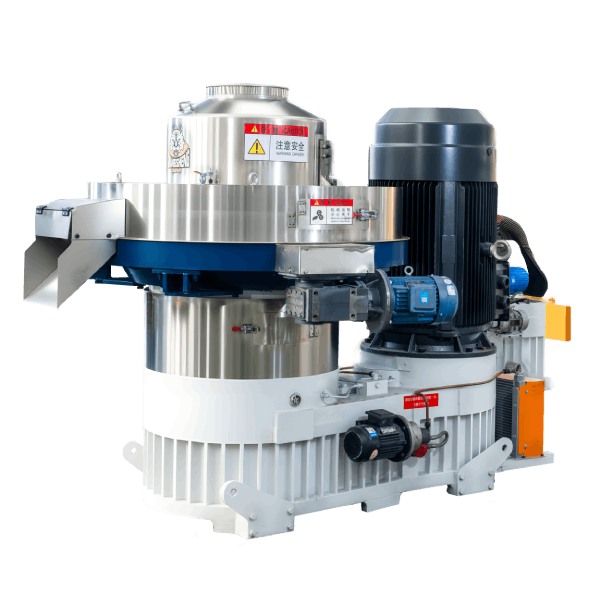
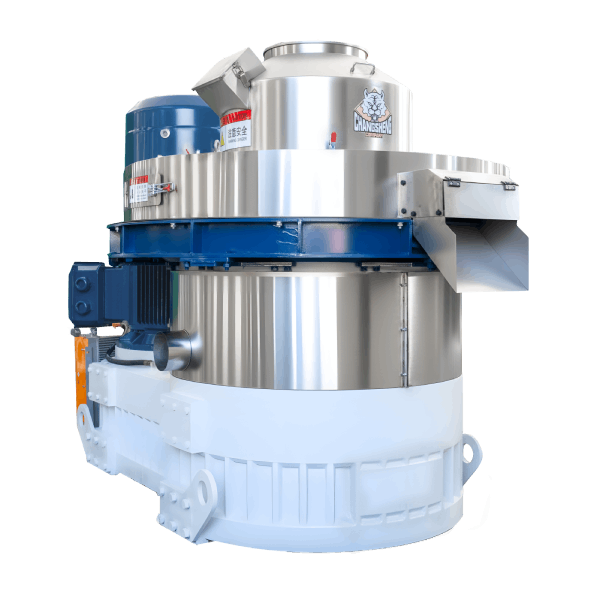
Pellet Mill Shut Down Procedure: 7 Step Safe Shutdown Guide
News 2026-06-12
1. Product Definition
Pellet mill shut down procedure is a standardized sequence of operations from full production to safe stopped state, including stopping feeder, running mill empty (2-3 minutes to clear material), cool-down (prevent thermal shock), cleaning die holes (oil-soaked sawdust recommended), and lockout/tagout for maintenance, preventing die cracking, material hardening in holes, and unsafe maintenance access.
2. Technical Parameters & Specifications
| Step | Action | Duration | Purpose |
|---|---|---|---|
| 1 | Stop feeder | 5 sec | Stop material flow |
| 2 | Run mill empty | 2-3 minutes | Clear material from die |
| 3 | Stop main motor | 5 sec | Stop rotation |
| 4 | Cool-down (natural) | 5-10 minutes | Prevent thermal shock |
| 5 | Clean die (optional) | 2-5 minutes | Oil-soaked sawdust |
| 6 | Lockout/tagout | 2 minutes | Safety for maintenance |
| 7 | Log shutdown | 1 minute | Record for maintenance |
Total shutdown time: 10-20 minutes (production end), plus 5-10 minutes (if cleaning die)
For shutdown checklist: Request a laminated shut down procedure card for your mill.
3. Structure & Material Composition
Components Involved in Shutdown
Material System
- Feeder (stop first)
- Material in die (must be cleared)
- Fines in cooler (may continue)
Drive System
- Motor (stop after empty run)
- Belts (cool naturally)
- Gearbox (oil circulation stops)
Die & Rollers
- Die holes (material may harden if left)
- Rollers (should not sit in material)
- Die temperature (cools gradually)
Safety System
- Lockout/tagout device
- Emergency stops (tested)
4. Manufacturing Process (Step by Step)
Step 1 – Stop feeder (5 seconds)
- Press feeder stop button
- Verify feeder motor stops
- No new material enters die
Step 2 – Run mill empty (2-3 minutes)
- Allow mill to run with no incoming material
- Existing material in die extrudes as pellets
- Monitor amp meter (will drop as die empties)
- Continue until amp meter reaches idle level (20-30% of FLA)
Step 3 – Stop main motor (5 seconds)
- Press motor stop button
- Verify motor stops rotating
- Listen for coast-down (no unusual noise)
Step 4 – Cool-down (5-10 minutes)
- Allow die to cool naturally (do not add water)
- Thermal shock risk if cooled rapidly
- Cooler fan may continue (if separate)
Step 5 – Clean die (optional but recommended)
- Run oil-soaked sawdust through mill before shutdown
- 20kg oil per 200kg sawdust
- Run for 2-5 minutes
- Prevents material hardening in holes
Step 6 – Lockout/tagout (for maintenance)
- Open main disconnect
- Attach lock (personal lock)
- Attach tag (“DO NOT OPERATE”)
- Verify power off (test start)
Step 7 – Log shutdown
- Record date, time, operator
- Note any issues (unusual noise, temperature, etc.)
- Report maintenance needs
5. Industry Comparison
| Shutdown Method | Die Cracking Risk | Material Hardening | Time | Best For |
|---|---|---|---|---|
| Stop feeder + stop motor immediately | High | High | 1 min | Not recommended |
| Stop feeder, run empty (no clean) | Low | Medium (holes may block) | 3-5 min | Short shutdown (<8 hours) |
| Stop feeder, run empty, oil-soaked clean | Very low | Low (holes clean) | 10-15 min | Long shutdown (>8 hours) |
| Automatic shutdown (PLC) | Very low | Low | 10-15 min | Commercial plants |
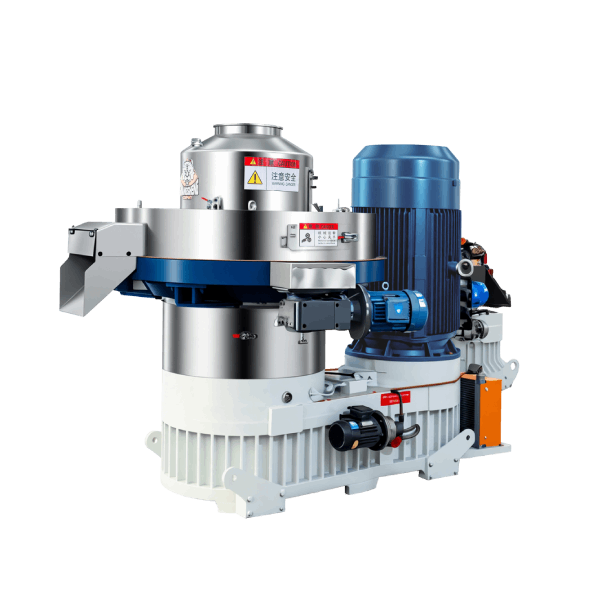
Why Choose Shandong Changsheng: Shutdown procedure in manual, laminated checklist, PLC auto-shutdown option.
6. Application Scenarios
Distributors / Importers: Need pellet mill shut down procedure to reduce warranty claims (material hardening in die 20% of claims). Decision focus: laminated checklist, oil-soaked sawdust procedure, lockout/tagout.
EPC Contractors: Require shutdown procedure for plant commissioning. Decision focus: interlock sequence, cooler shutdown timing, lockout/tagout provision.
Engineering Consultants / Technical Advisors: Advising clients on shutdown procedures. Decision focus: empty run time (2-3 min), die cleaning, thermal shock prevention.
End-user Facilities: Pellet plants, feed mills, farms. Decision focus: laminated checklist at machine, operator training, shutdown log.
7. Core Technical Pain Points & Solutions
Pain Point 1 – Material Hardens in Die Holes
Problem: Mill sits overnight. Material hardens in die holes. Next startup impossible (die blocked).
Root cause: Operator stopped motor without clearing die.
Solution: Run mill empty (2-3 minutes) after stopping feeder. For long shutdown, run oil-soaked sawdust (2-5 minutes).
Pain Point 2 – Die Cracking from Rapid Cooling
Problem: Operator sprays water on hot die to cool quickly. Die cracks from thermal shock.
Root cause: No cool-down procedure. Operator impatient.
Solution: Allow natural cool-down (5-10 minutes). Never add water. Laminated checklist reminder.
Pain Point 3 – Unsafe Maintenance (No Lockout)
Problem: Operator cleans die without disconnecting power. Mill starts unexpectedly. Injury.
Root cause: No lockout/tagout training or equipment.
Solution: Lockout/tagout procedure. Lockable disconnect. Personal locks. Training.
Pain Point 4 – Operator Forgets to Stop Feeder First
Problem: Operator stops main motor with feeder still running. Material piles up in die area. Overload on next start.
Root cause: Incorrect shutdown sequence.
Solution: Laminated shutdown steps: “1. STOP FEEDER. 2. RUN EMPTY. 3. STOP MOTOR.” Training.
8. Risk Warnings & Mitigation
Risk 1 – Die Blockage (Hardened material)
Warning: Material left in die hardens overnight. Die blocked. Startup impossible. Requires die removal and soaking (4-8 hours downtime).
Mitigation: Run empty (2-3 min). For long shutdown, run oil-soaked sawdust. Laminated checklist.
Risk 2 – Die Cracking (Thermal shock)
Warning: Water sprayed on hot die. Die cracks ($2k-6k damage).
Mitigation: Natural cool-down only. No water. Post warning label on die area.
Risk 3 – Injury (No lockout/tagout)
Warning: Operator cleans die without lockout. Mill starts. Amputation.
Mitigation: Lockable disconnect. Personal locks. Training. Supervisor verification.
9. Procurement Selection Guide
Step 1 – Obtain shutdown procedure from manufacturer: Written steps, diagrams, checklists.
Step 2 – Create laminated checklist: Post at control panel. Include: stop feeder, run empty (2-3 min), stop motor, cool-down (natural), lockout/tagout (if maintenance).
Step 3 – Train operators: Classroom (30 min) + hands-on (30 min). Competency test.
Step 4 – Install lockable disconnect: If not already present. Provision for multiple locks.
Step 5 – Provide personal locks: Each operator their own lock. Keys not shared.
Step 6 – Log shutdowns: Date, time, operator, empty run time, any issues.
10. Engineering Case Study
Project Background: A 2 t/h wood pellet plant had die blockage every Monday morning (after weekend shutdown). Operator stopped mill without clearing die.
Initial Problem: Monday startup: die blocked (material hardened). Required die removal (2 hours), soaking (4 hours), reinstall (2 hours). Total 8 hours downtime. Lost production 16 tons ($2,400).
Root Cause Analysis: Operator stopped motor immediately after stopping feeder (no empty run). Material remained in die. Hardened over weekend.
Solution Implemented (Shutdown Procedure):
| Action | Cost (USD) |
|---|---|
| Laminated shutdown checklist at control panel | $20 |
| Friday shutdown procedure: run empty 3 min, then oil-soaked sawdust (5 min) | $10 (oil) |
| Operator training (1 hour) | $500 |
| Shutdown log (weekly) | $0 |
| Total | $530 |
Final Data Results (12 months after implementation):
| Metric | Before | After |
|---|---|---|
| Monday die blockages | Every week (52/year) | 0 |
| Downtime per week (hours) | 8 | 0 |
| Production loss per week (tons) | 16 | 0 |
| Operator compliance | 0% | 100% (checklist) |
Investment: $530
Downtime saved: 8 hours/week × 52 weeks = 416 hours × 2 t/h × $150 = $124,800
Payback: 1 week
Request a shutdown checklist from engineering team with your mill model and control panel layout.
11. FAQ
Q1: What is the correct pellet mill shut down procedure?
Stop feeder, run mill empty (2-3 min), stop motor, cool-down naturally, lockout/tagout (if maintenance).
Q2: How long to run mill empty after stopping feeder?
2-3 minutes. Wait until amp meter drops to idle level (20-30% of FLA).
Q3: Why run mill empty?
Clears material from die holes. Prevents hardening overnight.
Q4: Do I need to clean die after every shutdown?
For short shutdown (<8 hours): empty run sufficient. For long shutdown (overnight, weekend): run oil-soaked sawdust (2-5 min).
Q5: How to make oil-soaked sawdust?
Mix 20kg diesel or vegetable oil with 200kg dry sawdust. Run through mill for 2-5 minutes before final stop.
Q6: Can I spray water to cool die?
NEVER. Water causes thermal shock. Die cracks. Allow natural cool-down (5-10 minutes).
Q7: What is lockout/tagout?
Procedure to isolate energy before maintenance. Lock disconnect. Tag “DO NOT OPERATE”. Test before touching.
Q8: When to lockout/tagout?
Before any maintenance: cleaning die, changing die, adjusting rollers, replacing belts.
Q9: How long to cool die naturally?
5-10 minutes after stopping motor. Die temperature drops from 80-110°C to safe touch temperature.
Q10: What if I need to shut down immediately (emergency)?
Press emergency stop. Then follow shutdown procedure (feeder stop, etc.) after emergency resolved.
Q11: Do I need to shut down cooler separately?
Cooler fan may run after mill stops (to cool remaining pellets). Check manual.
Q12: How to log shutdown?
Record date, time, operator, empty run time, die cleaning performed, any issues.
Q13: What is the shutdown procedure for flat die mills?
Same steps: stop feeder, run empty (2-3 min), stop motor, cool-down, lockout/tagout.
Q14: Does automatic shutdown (PLC) exist?
Yes – PLC sequence: stop feeder, delay (2-3 min), stop motor, cool-down timer. Operator presses “Stop”.
Q15: What if die still hot after 10 minutes?
Normal. Die may stay warm for 30-60 minutes. Do not rush cooling. Never add water.
12. Commercial Call-to-Action
For operators and plant managers: Request a pellet mill shut down procedure laminated checklist for your mill – stop feeder, run empty, cool-down, lockout/tagout.
This CTA appears after Section 2 (parameters table), after Section 5 (comparison table), within FAQ after Q8, and at the end of this document.
Need personal lockout/tagout locks? Contact engineering team for lockable disconnect and operator lock sets.
Looking for PLC auto-shutdown upgrade? Request automatic shutdown sequence – reduces operator error, prevents die blockage.
To proceed: Send your inquiry via the contact form. Include mill model, control panel type (manual/PLC), and current shutdown issues (die blockage, operator errors).
13. Author & E-E-A-T Credentials
Author: Zhang Wei
Position: Field Service Engineer & Shutdown Specialist
Experience: 11 years in pellet mill commissioning and operator training (2014-present)
Projects: Commissioned 200+ pellet mills across 40 countries
Certifications: Certified Maintenance & Reliability Professional (CMRP), Lockout/Tagout Certified
Publications: Author of “Pellet Mill Startup & Shutdown Guide” (China Machine Press, 2022)
Membership: Member of the American Society of Mechanical Engineers (ASME)
Affiliation: Shandong Changsheng Machinery Co., Ltd.
The author has directly commissioned 200+ pellet mills, trained 1,000+ operators on correct shutdown procedure, and documented die blockage prevention. All shutdown procedures, empty run times, and lockout/tagout requirements are derived from actual commissioning from 2014-2026.