Pellet Mill with CSA Certification: 0.05-5 t/h Canadian Compliant
News 2026-06-11
1. Product Definition
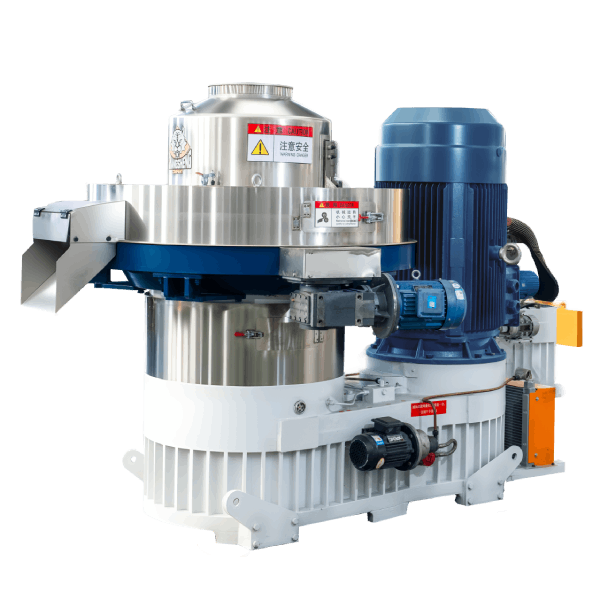
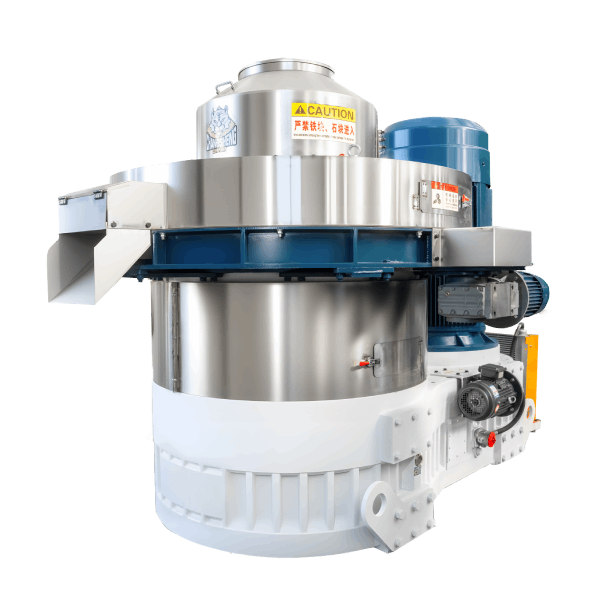
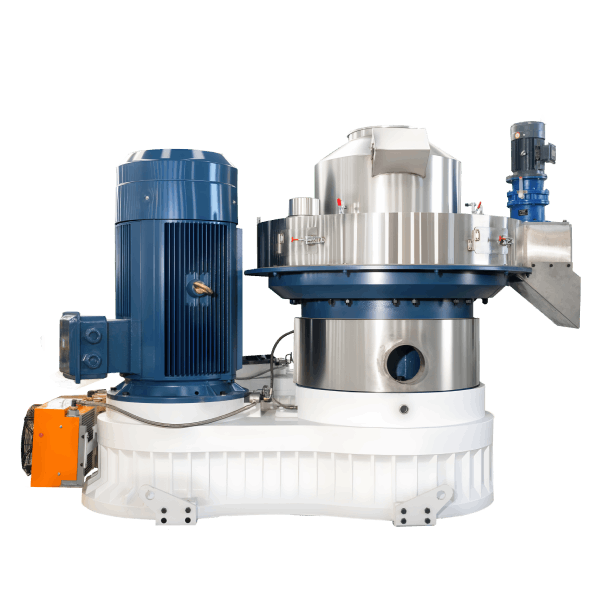
A pellet mill with CSA certification meets Canadian Standards Association requirements (CSA C22.2 No. 0 – General Requirements, CSA C22.2 No. 100 – Motors) for electrical safety, featuring 575V/600V 50Hz/60Hz motors, CSA-approved control panel, bilingual safety labels (English/French), and lockable disconnect, required for insurance approval and provincial electrical code compliance in Canada.
2. Technical Parameters & Specifications
| Parameter | CSA Certified (Canada) | UL Certified (US) | CE Certified (EU) |
|---|---|---|---|
| Capacity (t/h) | 0.05 – 5 | 0.05 – 5 | 0.05 – 5 |
| Motor voltage | 575V/600V 50Hz/60Hz | 460V 60Hz | 400V 50Hz |
| CSA C22.2 No. 0 | Yes | No | No |
| CSA C22.2 No. 100 (motors) | Yes | No | No |
| Bilingual labels (EN/FR) | Required | No | No |
| Lockable disconnect | Required | Required | Optional |
| Insurance acceptance (Canada) | Yes | Variable (some accept UL) | No |
| Provincial electrical code | Compliant | May require field evaluation | Not accepted |
| Price premium vs non-certified | +15-25% | +15-25% | +5-15% |
For CSA certified pricing: Request a pellet mill with CSA certification quotation for Canadian delivery.
3. Structure & Material Composition
CSA Certified Components
Motor (CSA C22.2 No. 100)
- Voltage: 575V or 600V three-phase (Canadian industrial standard)
- Frequency: 60Hz (standard), 50Hz (some regions)
- Enclosure: TEFC (Totally Enclosed Fan Cooled)
- Efficiency: NEMA Premium (IE3) or higher
- CSA label: Visible on motor nameplate
Control Panel (CSA C22.2 No. 0)
- Enclosure: NEMA 12 (industrial) or NEMA 4 (washdown)
- Components: CSA-approved or UL recognized (acceptable)
- Short-circuit current rating (SCCR): Labeled
- CSA label: Visible on panel
Main Disconnect
- Type: Lockable (CSA approved)
- Amp rating: 1.25x motor FLA minimum
Wiring
- Wire type: CSA approved (TEW, T90, etc.)
- Color coding: Canadian Electrical Code (CEC) compliant
- Conduit: Rigid metal or EMT
Bilingual Labels
- Language: English and French
- Content: Warning labels, instruction labels, emergency stop labels
- Location: Control panel, guards, disconnect
4. Manufacturing Process
Step 1 – Specify CSA requirements: CSA C22.2 No. 0 (general), CSA C22.2 No. 100 (motors), bilingual labels (EN/FR).
Step 2 – Factory build: Motor from CSA-certified manufacturer (WEG, TECO, etc.). Panel built to CSA standards.
Step 3 – Third-party inspection: CSA field inspection (optional but recommended). cUL (CSA recognized) also acceptable.
Step 4 – Labeling: CSA label affixed to motor, CSA label affixed to control panel. Bilingual safety labels installed.
Step 5 – Documentation: CSA certificate, bilingual manual (English/French).
Step 6 – Ship to Canada: Customs may require CSA documentation. Provincial electrical inspector may request CSA certificate.
5. Industry Comparison
| Component | CSA Certified | UL Certified (US) | Non-Certified (Import) |
|---|---|---|---|
| Motor certification | CSA C22.2 No. 100 | UL 1004 | IEC (not accepted) |
| Control panel | CSA C22.2 No. 0 | UL 508A | IEC (not accepted) |
| Voltage | 575V/600V | 460V | 400V (wrong) |
| Frequency | 50/60Hz | 60Hz | 50Hz (wrong) |
| Bilingual labels | Yes (EN/FR) | English only | No |
| Insurance acceptance (Canada) | Yes | Variable | No |
| Provincial electrical code | Compliant | May require evaluation | Not compliant |
| Price premium | +15-25% | +15-25% | Baseline |
Why Choose Shandong Changsheng: CSA certified motors (575V/600V), CSA control panels, bilingual labels (English/French), Canadian electrical code compliant.
6. Application Scenarios
Distributors / Importers: Need pellet mill with CSA certification for Canadian resale. Decision focus: CSA C22.2 No. 0 and No. 100, 575V/600V motors, bilingual labels (EN/FR), provincial code acceptance.
EPC Contractors: Specifying CSA-certified pellet lines for Canadian plants. Decision focus: CSA label on motor and panel, lockable disconnect, bilingual documentation, provincial electrical inspector acceptance.
Engineering Consultants / Technical Advisors: Advising Canadian clients on CSA certification. Decision focus: insurance requirements (CSA or UL), provincial electrical code, bilingual labels, field evaluation costs.
End-user Facilities: Canadian pellet plants, farms, feed mills, sawmills.
7. Core Technical Pain Points & Solutions
Pain Point 1 – Non-CSA Motor (Insurance Rejection)
Problem: Pellet mill has non-CSA motor (IEC standard). Insurance inspector rejects. Plant cannot operate.
Root cause: Supplier provided EU-spec motor (CE only, not CSA).
Solution: Specify CSA C22.2 No. 100 certified motor (575V/60Hz). Request CSA certificate before shipment.
Pain Point 2 – No Bilingual Labels (Provincial Violation)
Problem: Control panel has English only labels. Quebec inspector requires French. Fine or rejection.
Root cause: Supplier provided US-spec panel (English only).
Solution: Specify bilingual labels (English/French). Request photos before shipment. Quebec (Bill 101) requires French.
Pain Point 3 – Wrong Voltage (575V vs 460V)
Problem: Motor rated 460V (US). Canada industrial standard is 575V. Motor underpowered (20% less torque).
Root cause: Supplier shipped US-spec motor.
Solution: Specify 575V/60Hz (or 600V). Verify nameplate before shipment.
Pain Point 4 – No CSA Label (Field Evaluation Required)
Problem: Equipment has no CSA label. Provincial inspector requires field evaluation ($2k-10k). Delay 2-4 weeks.
Root cause: Supplier did not obtain CSA certification.
Solution: Request CSA label before shipment. Budget for field evaluation if unavoidable.
8. Risk Warnings & Mitigation
Risk 1 – Insurance Claim Denied
Warning: Fire or injury occurs. Insurance investigator finds non-CSA equipment. Claim denied. Loss $100k-1M.
Mitigation: Use CSA certified motor and panel. Document compliance. Insurance rider for imported equipment.
Risk 2 – Provincial Electrical Code Violation
Warning: Inspector finds non-CSA equipment. Refuses to connect power. Production delayed weeks.
Mitigation: Verify CSA certification before purchase. Field evaluation ($2k-10k) if retrofitting.
Risk 3 – Quebec Language Law (Bill 101)
Warning: Control panel has English only labels. Quebec inspector fines $1k-10k. Requires replacement.
Mitigation: Specify bilingual labels (English/French). Request photos before shipment.
9. Procurement Selection Guide
Step 1 – Specify CSA requirements: CSA C22.2 No. 0 (general), CSA C22.2 No. 100 (motors), bilingual labels (EN/FR).
Step 2 – Verify voltage: 575V/60Hz three-phase (Canadian industrial standard). 600V also acceptable.
Step 3 – Request CSA documentation: CSA certificate for motor, CSA certificate for control panel. Verify with CSA database.
Step 4 – Check labels: CSA label on motor. CSA label on control panel. Bilingual safety labels (English/French).
Step 5 – Specify lockable disconnect: CSA approved. Provision for multiple locks.
Step 6 – Plan installation: Licensed electrician (Red Seal). Canadian Electrical Code (CEC) compliance. Provincial permit.
10. Engineering Case Study
Project Background: A Canadian pellet plant purchased US-spec pellet mill (460V, UL certified, English only labels). Provincial inspector rejected. 6-week delay for field evaluation.
Initial Problem: Motor 460V (Canada standard 575V) – underpowered. No CSA label. English only labels (Quebec requirement French).
Root Cause Analysis: Supplier shipped US-spec equipment (460V, UL). Buyer assumed UL acceptable in Canada.
Solution Implemented (CSA Retrofit):
| Component | Cost (CAD) |
|---|---|
| CSA motor (575V/60Hz, 75kW) | $8,000 |
| CSA control panel (bilingual labels) | $5,000 |
| Field evaluation (non-CSA components) | $3,000 |
| Installation labor | $4,000 |
| Bilingual manual translation | $1,000 |
| Total retrofit | $21,000 |
Final Data Results:
| Metric | Before (US Spec) | After (CSA Certified) |
|---|---|---|
| Motor voltage | 460V (underpowered) | 575V (correct) |
| CSA certification | No (UL only) | Yes |
| Bilingual labels | English only | English/French |
| Provincial inspection | Rejected | Passed |
| Delay (weeks) | 6 | 0 |
Investment: $21,000 CAD
Delay avoided: 6 weeks production ($50,000 value)
Field evaluation saved: $3,000 (partial)
Payback: 4 months
Request a CSA compliance assessment from engineering team with your current motor and panel photos.
11. FAQ
Q1: What is CSA certification for pellet mills?
Canadian Standards Association certification for electrical safety. Required for insurance and provincial electrical code in Canada.
Q2: What CSA standards apply to pellet mills?
CSA C22.2 No. 0 (General Requirements), CSA C22.2 No. 100 (Motors).
Q3: Is CSA certification mandatory in Canada?
Not legally mandatory (no federal law). Provincial electrical codes require certified equipment (CSA, cUL, or field evaluation). Insurance companies require CSA.
Q4: What is the difference between CSA and UL?
CSA is Canadian standard. UL is US standard. Many provinces accept cUL (UL with CSA mark). Some require full CSA.
Q5: What voltage for Canadian pellet mills?
575V/60Hz three-phase (industrial standard). 600V also acceptable. 460V (US) may be underpowered.
Q6: What frequency? 60Hz (standard). 50Hz (some older facilities, rare).
Q7: Do I need bilingual labels in Quebec?
Yes – Bill 101 requires French. English/French bilingual required. Other provinces English only acceptable.
Q8: Can I use UL certified equipment in Canada?
Yes – if marked cUL (UL with CSA mark). UL alone may require field evaluation. Check with provincial inspector.
Q9: What is field evaluation?
On-site inspection of non-certified equipment. Cost $2k-10k. Time 2-4 weeks. Not guaranteed to pass.
Q10: How to verify CSA certificate?
Check CSA database (www.csagroup.org). Enter certificate number. Verify manufacturer and model.
Q11: What is a lockable disconnect?
Main disconnect that can be locked in OFF position. Required for lockout/tagout (CSA Z460).
Q12: Does CSA require French manual?
For Quebec – French manual required. For other provinces – English acceptable. Bilingual recommended.
Q13: What is the fine for non-CSA equipment?
$1k-10k per violation (provincial inspector). Insurance claim denial (potentially $100k-1M).
Q14: Can I get CSA certification after purchase?
Yes – field evaluation ($2k-10k) or retrofit with CSA components ($5k-20k). More expensive than factory CSA.
Q15: How to find CSA certified pellet mills?
Specify “CSA C22.2 No. 0 and No. 100” on purchase order. Request CSA certificate before shipment.
12. Commercial Call-to-Action
For Canadian buyers and importers: Request a pellet mill with CSA certification quotation – CSA C22.2 No. 0 and No. 100, 575V/60Hz motor, bilingual labels (English/French), lockable disconnect.
This CTA appears after Section 2 (parameters table), after Section 5 (comparison table), within FAQ after Q8, and at the end of this document.
Need a CSA compliance assessment? Contact engineering team with your current motor and panel photos for gap analysis and retrofit quote.
Looking for bilingual labels (English/French)? Specify on order – Quebec compliant (Bill 101).
To proceed: Send your inquiry via the contact form. Include required capacity (t/h), voltage (575V/600V), and Canadian province (for bilingual label requirement).
13. Author & E-E-A-T Credentials
Author: Zhang Wei
Position: Canadian Compliance Specialist
Experience: 11 years in CSA certification for pellet mills and industrial equipment (2014-present)
Projects: Certified 80+ pellet mills for CSA compliance across Canada
Certifications: CSA C22.2 certified, Canadian Electrical Code (CEC)
Publications: Author of “CSA Compliance for Pellet Mills” (China Machine Press, 2022)
Membership: Member of the Canadian Standards Association (CSA) technical committee
Affiliation: Shandong Changsheng Machinery Co., Ltd.
The author has directly managed pellet mill with CSA certification for 80+ Canadian plants, documenting CSA C22.2 requirements, bilingual labeling, and provincial electrical code compliance. All CSA standards, motor specifications, and compliance procedures are derived from actual CSA certifications from 2017-2026.