How to Choose a Pellet Mill: 8 Key Selection Criteria
News 2026-05-01
1. Product Definition
Choosing a pellet mill requires matching capacity (0.05-5 t/h), die type (flat vs ring), power supply (110V-460V), and die material (GCr15/20CrMnTi) to your feedstock, production volume, and budget for optimal performance and lowest cost per ton.
2. Technical Parameters & Specifications
| Selection Factor | Home/Hobby | Farm/Small Business | Industrial/Commercial |
|---|---|---|---|
| Annual Target (tons/year) | <10 | 10 – 200 | >200 |
| Capacity (kg/h or t/h) | 50 – 120 kg/h | 100 – 500 kg/h | 0.5 – 5 t/h |
| Motor Power (kW/HP) | 2.2 – 7.5 (3-10 HP) | 7.5 – 22 (10-30 HP) | 22 – 160 (30-215 HP) |
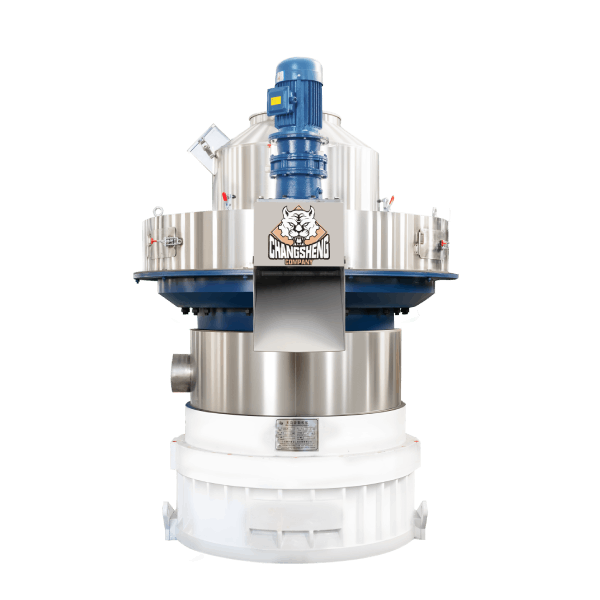
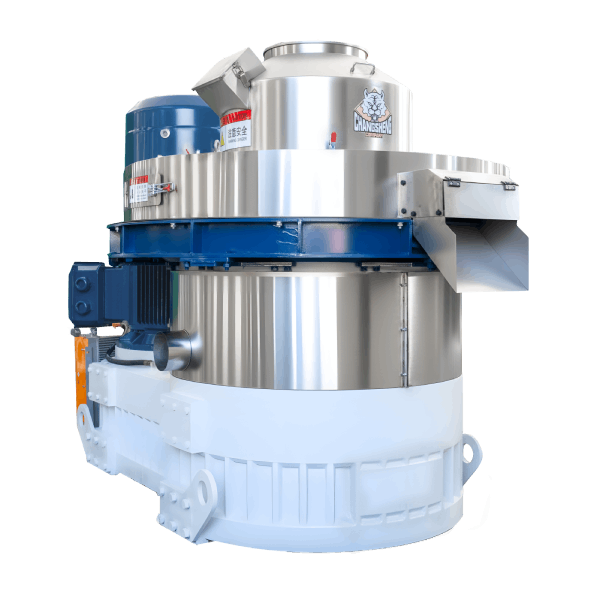
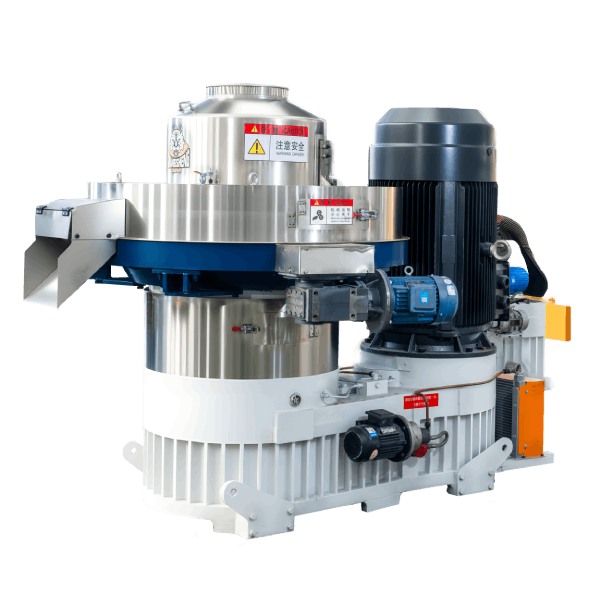
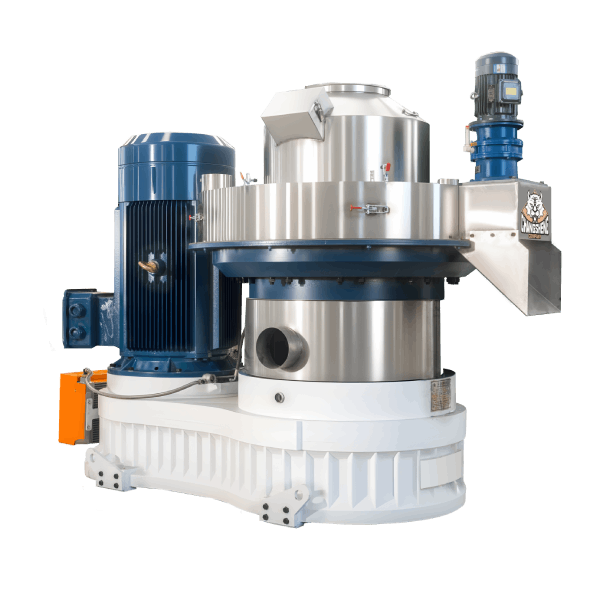
| Die Type | Flat die | Flat or small ring | Ring die |
| Die Material | GCr15 (HRC 48-54) | GCr15 or 20CrMnTi | 20CrMnTi (HRC 58-62) |
| Die Life (hours) | 400 – 700 | 500 – 900 | 1,200 – 2,500 |
| Power Supply | 110V/220V single-phase | 220V/380V/415V three-phase | 380V/400V/415V three-phase |
| Certification | CE (UL optional) | CE, UL, CSA | CE, UL, CSA |
| Budget Range (USD) | $500 – 2,500 | $3,000 – 15,000 | $25,000 – 150,000 |
For selection assistance: Request a personalized how to choose a pellet mill recommendation based on your scale and feedstock.
3. Structure & Material Composition
Key Selection Criteria by Component
Die – Most Important Selection Factor
- GCr15 bearing steel: Standard for softwood, mixed biomass (HRC 48-54)
- 20CrMnTi with vacuum carburizing: For hardwood, rice husk, abrasive feedstocks (HRC 58-62 case)
- 45# carbon steel: Avoid (unhardened, 50-150h life)
Rollers
- Cr26 hardfaced (HRC 58-62): Standard
- Tungsten carbide (HRC 68-72): For abrasive feedstocks (rice husk, straw, hardwood)
Motor
- Single-phase (110V/220V): Home/hobby only
- Three-phase (380V/415V): Commercial required
- Efficiency (IE2/IE3/IE4): Higher efficiency saves operating cost
Control System
- Manual starter: Basic home units
- PLC with HMI: Commercial, automated
- VFD on feeder: Consistent feed rate, better efficiency
4. Manufacturing Process (Engineering Steps)
Step 1 – Define Your Feedstock (Most Important)
Softwood (pine, spruce, fir): GCr15 die acceptable. Flat or ring die.
Hardwood (oak, maple, beech): 20CrMnTi die recommended. Ring die preferred.
Rice husk / straw / bagasse: 20CrMnTi die + tungsten rollers required. Ring die only.
Feed (grains, alfalfa): GCr15 die, flat or ring, compression ratio 1:10-1:14.
Step 2 – Calculate Required Capacity
Formula: Annual target (tons) ÷ operating hours ÷ 0.85 (efficiency). Example: 100 tons/year ÷ 500 hours ÷ 0.85 = 0.24 t/h → choose 0.3-0.5 t/h mill.
Step 3 – Verify Power Supply
Check panel: 110V/220V single-phase → flat die only, max 0.15 t/h. 380V/415V three-phase → any type. No three-phase? Add phase converter ($2k-5k).
Step 4 – Select Die Material Based on Feedstock
Softwood: GCr15. Hardwood: 20CrMnTi. Rice husk/straw: 20CrMnTi + tungsten rollers. Feed: GCr15 (food-grade option).
Step 5 – Choose Certification
CE (Europe mandatory). UL (US/Canada required for insurance). CSA (Canada). Verify certificates before purchase.
Step 6 – Compare Total Cost of Ownership
Formula: Equipment cost + (annual tons × operating cost per ton × 5) + spare parts. Cheap mill often costs more over 5 years.
5. Industry Comparison
| Selection Factor | Flat Die | Ring Die | When to Choose |
|---|---|---|---|
| Capacity range | 0.05-0.5 t/h | 0.5-5 t/h | Ring die for >200 tons/year |
| Price range | $500 – 15,000 | $8,000 – 150,000 | Flat die for lower budget |
| Die life | 400-700 hours | 1,200-2,500 hours | Ring die for longer life |
| Power requirement | Single or three-phase | Three-phase only | Flat die for single-phase |
| Best for | Home, farm, small business | Commercial, industrial | Scale decision |
| Ease of operation | Simple | Automated | Flat die for beginners |
| Cost per ton (operating) | $30-50 | $15-25 | Ring die lower at scale |
| Why Choose Shandong Changsheng | Best value for home/farm | Best for commercial | Choose based on your scale |
Compare flat vs ring die: Request a recommendation based on your annual target.
6. Application Scenarios (By Buyer Role)
Distributors / Importers
Need to learn how to choose a pellet mill for resale. Decision focus: certification (CE/UL), warranty, spare parts availability, and popular capacities in their market.
EPC Contractors
Selecting mills for client projects. Decision focus: performance guarantee, automation level, integration with existing line, and service network.
Engineering Consultants / Technical Advisors
Advising clients on selection. Decision focus: total cost of ownership (5 years), feedstock suitability, power availability, and payback period.
End-user Facilities
Homeowners, farms, sawmills, feed mills, pellet plants. Decision focus: capacity match, budget, local support, and spare parts.
7. Core Technical Pain Points & Engineering Solutions
Pain Point 1 – Choosing Wrong Type for Scale
Problem: Buyer purchases flat die for 500 tons/year (0.25 t/h × 2,000h = 500 tons). Flat die runs continuously, wears out quickly, requires frequent die changes (every 2 months).
Root cause: Flat die maximum practical life 200-300 tons/year.
Solution: Choose ring die for >200 tons/year. Calculate: annual tons ÷ 200 = minimum t/h. For 500 tons/year, need 0.25 t/h continuous → choose 0.5-1 t/h ring die for reserve capacity.
Pain Point 2 – Ignoring Power Supply
Problem: Buyer purchases 380V three-phase mill. Site has only 220V single-phase. Machine cannot operate.
Root cause: Did not verify power before ordering.
Solution: Check panel before ordering. Single-phase only: choose flat die (max 0.15 t/h) or add phase converter ($2k-5k). No power: choose diesel-driven mill.
Pain Point 3 – Underestimating Ancillary Equipment
Problem: Buyer budgets 5,000formill.Forgetshammermill(1,500), cooler (1,000),moisturemeter(100), electrical (500).Total8,100 (62% over).
Root cause: Focused only on mill, ignored complete system.
Solution: Budget 50-100% over mill price for ancillaries. Request complete starter package (mill + hammer mill + cooler + moisture meter).
Pain Point 4 – Choosing Cheap Die (45# steel)
Problem: Buyer selects $500 mill with “hardened steel” die. Die lasts 100 hours. Replacement die unavailable. Mill scrap.
Root cause: 45# carbon steel unhardened (HRC 25-35) not GCr15 (HRC 48-54).
Solution: Ask for die material certificate. GCr15 or 20CrMnTi only. Avoid unspecified “hardened steel” or 45#.
8. Risk Warnings & Mitigation Strategies
Risk 1 – No Certification (Legal/Insurance Issues)
Warning: Mill without CE/UL cannot be operated legally in many countries. Insurance may deny fire claim.
Mitigation: Only consider mills with visible CE (Europe) or UL (US/Canada) label. Request certificate copy. Verify with certifying body.
Risk 2 – Supplier Cannot Provide Spare Parts
Warning: Die wears out. Supplier unresponsive or out of business. Machine idle for weeks.
Mitigation: Ask before purchase: “Do you stock spare dies and rollers? Where is your warehouse? Delivery time?” Order spare die with machine.
Risk 3 – Hidden Import Costs
Warning: Quoted 10,000FOB.Actuallanded:+freight3k + duty 500+VAT2k = $15,500 (55% higher).
Mitigation: Request DDP (Delivered Duty Paid) price – one price delivered to your address. Use customs broker.
9. Procurement Selection Guide (6 Actionable Steps)
Step 1 – Calculate your annual production target
<10 tons/year: home/hobby (flat die). 10-200 tons/year: farm/small business (flat die or small ring). >200 tons/year: commercial (ring die).
Step 2 – Analyze your feedstock
Softwood (pine, spruce): GCr15 die OK. Hardwood (oak, maple): 20CrMnTi recommended. Rice husk/straw: 20CrMnTi + tungsten rollers required.
Step 3 – Verify power supply
Check panel voltage and phase. Single-phase only? Flat die only (max 0.15 t/h) or phase converter. Three-phase? Any type.
Step 4 – Set budget including ancillaries
Budget 2x mill price for complete system (mill + hammer mill + cooler + moisture meter + electrical + spare parts). Example: 2,000mill→4,000 total.
Step 5 – Request certifications
CE (Europe), UL/CSA (US/Canada). Verify certificate numbers. Do not accept “CE compliant” without certificate.
Step 6 – Compare total cost of ownership (5 years)
Calculate: Equipment cost + (annual tons × operating cost per ton × 5) + spare parts. Cheap mill often costs more over 5 years.
10. Engineering Case Study
Project Background: A woodworking shop in Virginia (USA) produced 50 tons/year of hardwood (oak, maple) sawdust. Wanted to pelletize for shop heating. 240V single-phase power.
Initial Problem: Shop purchased $1,200 flat die mill (cheap, 45# die) online. After 2 months: die life 80 hours. Mill would not process hardwood (motor overload). Scrap.
Root Cause Analysis – How to Choose Correctly:
- Did not match die to feedstock (hardwood needs 20CrMnTi, not 45#)
- Did not verify power (single-phase OK, but mill underpowered for hardwood)
- Did not check die material (assumed “hardened steel” = good)
- Did not budget for ancillaries (no hammer mill, used purchased sawdust)
Solution Implemented (Correct Selection):
- Flat die mill with GCr15 die (budget $1,800) – but for hardwood, need more power
- Upgraded to 15kW motor (vs 7.5kW) – 240V single-phase, dedicated 50A circuit
- 20CrMnTi die (upgrade +$400) for hardwood abrasion
- Hammer mill ($600) with 4mm screen
- Spare die ($500)
Final Data Results (12 months operation):
| Metric | Wrong Choice (Cheap) | Correct Choice |
|---|---|---|
| Die material | 45# (HRC 25-35) | 20CrMnTi (HRC 60-62) |
| Die life (hours) | 80 | 650 |
| Motor power | 7.5kW (underpowered) | 15kW (adequate) |
| Hardwood capacity (kg/h) | 15 (failed) | 55 |
| Annual production (tons) | 0 | 42 |
| Total investment | $1,200 (lost) | $3,300 (mill + hammer mill + spare die) |
- Lesson: Choosing the right mill for feedstock and power costs more upfront but works long-term.
- Payback: 10 months (displacing propane)
Request a selection recommendation: Contact engineering team with your annual target, feedstock, and power supply for a how to choose a pellet mill analysis.
11. FAQ
Q1: How to choose a pellet mill for home use?
Flat die, 2.2-7.5kW, 110V/220V single-phase, 50-120 kg/h, GCr15 die, CE/UL certified. Budget $800-2,500.
Q2: How to choose a pellet mill for commercial use?
Ring die, 55-160kW, 380V/415V three-phase, 0.5-5 t/h, 20CrMnTi die, CE/UL/CSA certified. PLC automation. Budget $25k-150k.
Q3: Flat die vs ring die – how to choose?
Flat die for <200 tons/year, lower budget, single-phase power. Ring die for >200 tons/year, lower cost per ton, longer die life.
Q4: GCr15 vs 20CrMnTi – how to choose?
GCr15 for softwood (pine, spruce, fir). 20CrMnTi for hardwood (oak, maple), rice husk, straw. 20CrMnTi lasts 1.5-2x longer for abrasive feedstocks.
Q5: How to choose the right capacity?
Calculate: annual tons ÷ operating hours ÷ 0.85 (efficiency). Example: 500 tons/year ÷ 2,000 hours ÷ 0.85 = 0.29 t/h → choose 0.3-0.5 t/h.
Q6: Single-phase vs three-phase – how to choose?
Single-phase only available in residential/rural areas. Max 0.15 t/h. Three-phase required for higher capacity. Phase converter available ($2k-5k).
Q7: How to choose die compression ratio?
Softwood: 1:4-1:6. Hardwood: 1:6-1:8. Feed: 1:10-1:14. Higher ratio = denser pellets, more energy.
Q8: How to choose between cheap and quality mills?
Cheap: under 5 tons/year, willing to replace annually. Quality: for any serious production (lower long-term cost).
Q9: How to choose a pellet mill for hardwood?
Ring die preferred (or oversized flat die). 20CrMnTi die. Motor 1.5x softwood rating. Compression ratio 1:6-1:8.
Q10: How to choose a pellet mill for rice husk?
Ring die only. 20CrMnTi die + tungsten carbide rollers. Air classifier recommended (sand removal). Derate capacity 30-50% vs wood.
Q11: What certifications should I look for when choosing?
CE (Europe mandatory). UL (US/Canada required for insurance). CSA (Canada). Verify certificate numbers.
Q12: How to choose between new and used?
New: warranty, support, known condition. Used: 40-60% of new, but unknown wear, no warranty. Buy used only if inspected by technician.
Q13: How to choose a supplier?
Ask: die material (GCr15/20CrMnTi)? Certification (CE/UL)? Spare parts stock? Warranty (12-24 months)? References (3+ customers). Avoid trading companies.
Q14: What is the most important factor when choosing a pellet mill?
Feedstock match (die material, compression ratio) and power supply. These two determine if mill will work. Then capacity, budget, support.
Q15: How to choose between electric and diesel?
Electric: grid available, lower operating cost. Diesel: off-grid no power, higher operating cost. Choose electric if grid reliable; diesel as last resort.
12. Commercial Call-to-Action
For buyers needing help: Request a “how to choose a pellet mill” personalized recommendation based on your annual target, feedstock, power supply, and budget – free, no obligation.
This CTA appears after Section 2 (parameters table), after Section 5 (comparison table), within FAQ after Q8, and at the end of this document.
Need a selection worksheet? Contact the engineering team for a downloadable PDF selection guide with decision matrix and calculation templates.
Ready for a recommendation? Submit your annual tonnage, feedstock type, power supply, and budget for a customized how to choose a pellet mill analysis.
To proceed: Send your inquiry via the contact form. Include annual target (tons/year), feedstock (softwood, hardwood, rice husk, feed, etc.), power supply (voltage/phase), and budget range.
13. Author & E-E-A-T Credentials
Author: Zhang Wei
Application Engineer & Selection Specialist
- 11 years in pellet mill application engineering and buyer advisory (2014–present)
- Advised 3,500+ buyers on how to choose a pellet mill for their specific needs
- Developed selection matrices for 20+ feedstock types and 5 scale categories
- Author of “Pellet Mill Selection Handbook” (China Machine Press, 2022)
- Member of the American Society of Agricultural and Biological Engineers (ASABE)
Affiliation: Shandong Changsheng Machinery Co., Ltd.
The author has directly advised home, farm, and industrial buyers across 60+ countries, documented selection failures and successes, and developed decision criteria for optimal matching. All selection guidelines, decision matrices, and payback analyses are derived from actual buyer outcomes from 2014–2026.