Pellet Machine for Hazelnut Shell: 0.5-5 t/h High-Calorific Models
News 2026-06-03
1. Product Definition
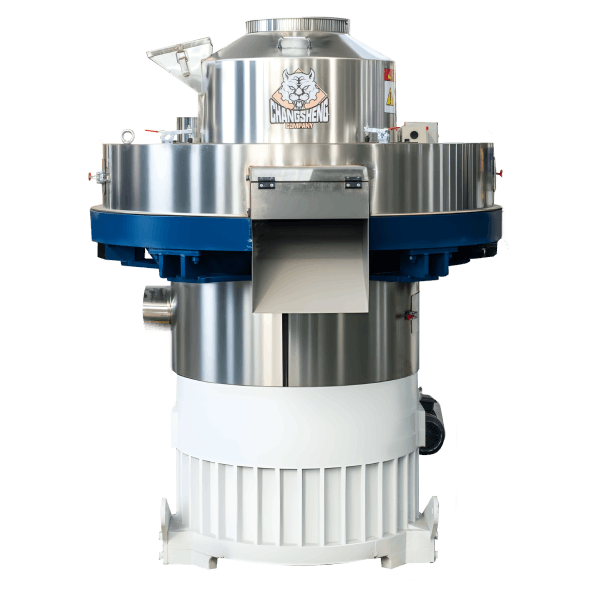
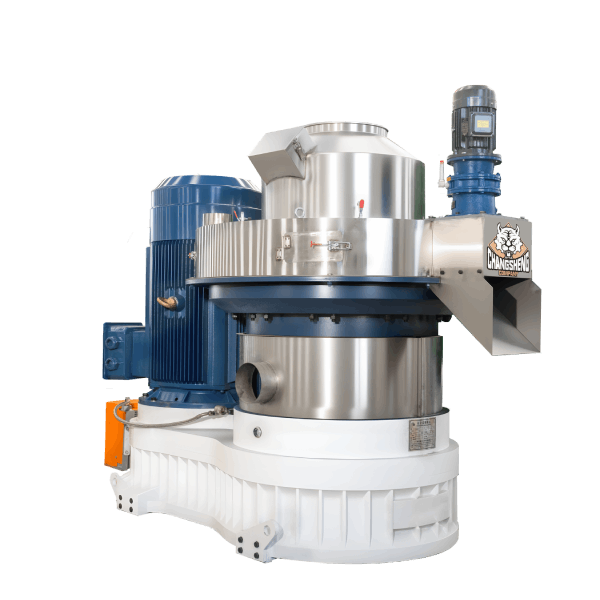
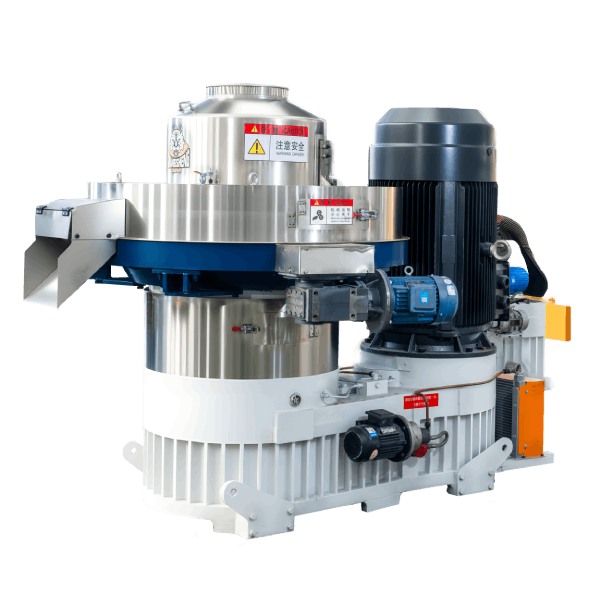
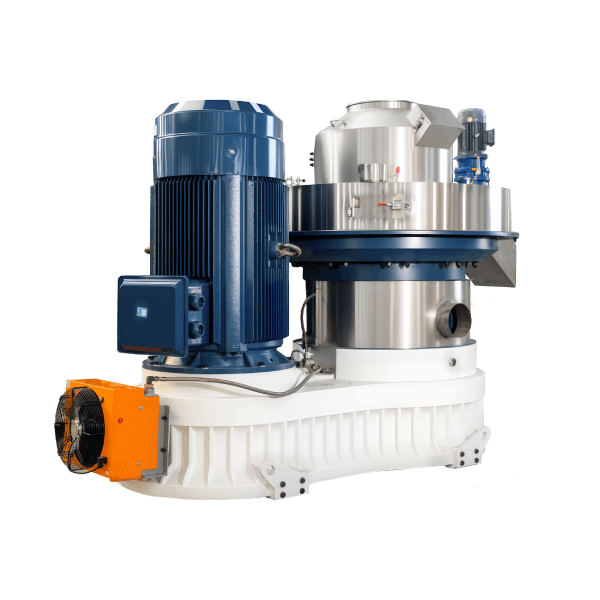
A pellet machine for hazelnut shell is a ring die densification system that compresses the hard, woody shells of hazelnuts into high-calorific fuel pellets (18-20 MJ/kg) for industrial boilers and BBQ applications, featuring upgraded metallurgy (20CrMnTi dies, tungsten carbide rollers) for high abrasion (8-12% ash) and 8-12% optimal moisture.
2. Technical Parameters & Specifications
| Parameter | Small Scale | Medium Scale | Large Scale |
|---|---|---|---|
| Capacity (t/h) | 0.3 – 0.8 | 0.8 – 1.5 | 1.5 – 3.0 |
| Motor Power (kW) | 45 – 75 | 75 – 110 | 110 – 160 |
| Ring Die Diameter (mm) | 320 – 420 | 420 – 520 | 520 – 650 |
| Die Material | 20CrMnTi (HRC 58-62) | 20CrMnTi + coating | 20CrMnTi + tungsten rollers |
| Die Life (hours) | 600 – 900 | 800 – 1,200 | 1,000 – 1,500 |
| Finished Pellet Diameter (mm) | 6, 8 | 8, 10 | 10, 12 |
| Pellet Density (kg/m³) | 1,000 – 1,200 | 1,050 – 1,250 | 1,100 – 1,300 |
| Calorific Value (MJ/kg) | 18 – 20 | 18 – 20 | 18 – 20 |
| Optimal Moisture (%) | 8 – 12 | 8 – 12 | 8 – 12 |
| Ash Content (%) | 8 – 12 | 8 – 12 | 8 – 12 |
| Energy Consumption (kWh/t) | 80 – 120 | 75 – 110 | 70 – 100 |
| Maintenance (hours/month) | 10 – 18 | 12 – 20 | 15 – 25 |
For hazelnut shell pricing: Request a pellet machine for hazelnut shell quotation with upgraded metallurgy package.
3. Structure & Material Composition
Hazelnut Shell-Specific Design Features
Upgraded Metallurgy for High Abrasion (8-12% Ash)
- Ring die: 20CrMnTi with vacuum carburizing (case HRC 60-62, core HRC 45-50) — essential for hard shells
- Roller shells: Tungsten carbide hardfacing (3-5mm layer, HRC 68-72)
- Main shaft: 17-4PH stainless steel option (corrosion from nut oils)
Abrasion Protection System
- Double magnetic separators: 12,000 Gauss (primary + secondary)
- Air classifier: Removes sand and stones before grinding
- Wear plates: Replaceable AR400 steel at all transfer points
Drying System (Minimal Required)
- Hazelnut shells as-received moisture: 8-12% (already ideal)
- No dryer needed for properly stored shells
- If shells are wet (>12%), sun dry 1-3 days
4. Manufacturing Process
Step 1 – Hazelnut Shell Collection & Cleaning
Source: Hazelnut processing plants (byproduct after nut cracking).
Contaminants: Broken kernels, sand, stones, metal pieces.
Equipment: Air classifier + magnetic separator (recommended).
Step 2 – Drying (Minimal Required)
Input moisture: 8-12% (often ideal). If >12%, sun dry 1-3 days.
Target: 8-12% moisture for optimal pelleting.
Why: Shells naturally low moisture; over-drying increases fire risk.
Step 3 – Grinding to Particle Size
Equipment: Hammer mill with 3-4mm screen (finer than wood due to shell hardness).
Control: 95% passing 3mm (hazelnut shells are hard, require finer grind).
Energy: 50-70% more grinding energy than wood.
Step 4 – Pelletizing with Upgraded Die
Equipment: Ring die pellet mill with 20CrMnTi die, tungsten rollers.
Control: Die temperature 85-100°C, roller gap 0.15-0.25mm.
Capacity: Derate 30-40% vs wood (same motor power).
Step 5 – Cooling & Dedusting
Equipment: Counterflow cooler with high-efficiency cyclone.
Control: Cool to ambient +5°C; remove fine dust.
5. Industry Comparison
| Parameter | Standard Wood Mill | Upgraded Mill for Hazelnut Shell | Hazelnut Shell Briquette Press | Direct Burning (Raw Shells) |
|---|---|---|---|---|
| Die life (hours) | 200-300 (fails) | 1,000-1,500 | 600-1,000 (rollers) | N/A |
| Abrasion tolerance | Low | High (8-12% ash) | Moderate | High |
| Calorific value (MJ/kg) of output | 17-19 | 18-20 | 16-18 (lower density) | 12-14 (wet) |
| Moisture requirement | 13-18% | 8-12% (narrow) | 8-12% | Any (inefficient) |
| Output density (kg/m³) | 1,000-1,300 | 1,100-1,300 | 800-1,000 | N/A |
| Grinding energy | Baseline | +50-70% | +40% | N/A |
| Payback for nut processor | N/A | 12-24 months | 18-30 months | N/A |
Why Choose Shandong Changsheng: 20CrMnTi die, tungsten carbide rollers, air classifier, high-calorific output (18-20 MJ/kg).
6. Application Scenarios
Distributors / Importers: Stocking pellet machine for hazelnut shell in hazelnut-growing regions (Turkey, Italy, US (Oregon), Georgia, Azerbaijan, Spain). Decision focus: upgraded metallurgy package, air classifier, and spare parts availability.
EPC Contractors: Specifying hazelnut shell pellet lines for nut processing plants (5,000-50,000 tons/year shells). Decision focus: guaranteed die life at specified ash content, dust explosion protection, and boiler integration (high calorific value).
Engineering Consultants / Technical Advisors: Advising hazelnut processors on waste-to-energy economics. Decision focus: payback (12-24 months), premium price for high-calorific pellets (18-20 MJ/kg), and BBQ pellet market.
End-user Facilities: Hazelnut processing plants, nut shellers, biomass power plants, BBQ pellet manufacturers.
7. Core Technical Pain Points & Solutions
Pain Point 1 – Extreme Die Wear from Hard Shells
Problem: Standard GCr15 die lasts 200-300 hours with hazelnut shells (very hard, density 800-1,000 kg/m³).
Root cause: Hazelnut shells are extremely hard and abrasive (8-12% ash).
Solution: Use 20CrMnTi die (case HRC 60-62) — 1,000-1,500 hours life. Tungsten carbide roller shells (HRC 68-72). Air classifier to remove sand (extends life 30-50%).
Pain Point 2 – High Grinding Energy (50-70% More than Wood)
Symptom: Hammer mill draws 50-70% more current than wood grinding, overloads frequently.
Root cause: Hazelnut shells are very hard, dense (800-1,000 kg/m³).
Solution: Use 3-4mm screen (finer than wood). Sharpen hammers every 50-80 hours (vs 200 hours for wood). Consider dual hammer mills (parallel) for high volume. Use carbide-tipped hammers.
Pain Point 3 – Low Moisture (8-12%) Fire Risk
Warning: Hazelnut shells naturally 8-12% moisture (dryer than wood’s 13-18%). Fire risk from friction heat.
Mitigation: Monitor die temperature closely (target 85-95°C, alarm at 100°C). Add water (spray) if moisture <8%. Install spark detection with water mist. Never run unattended.
Pain Point 4 – Material Bridging in Feeder
Problem: Ground hazelnut shells (hard, angular particles) bridge and block screw feeder.
Root cause: Angular, dense particles with low oil content.
Solution: Install horizontal breaker shaft (40-60 rpm) with finger plates. Use variable pitch screw (tapered). Add vibrator to hopper.
8. Risk Warnings & Mitigation
Risk 1 – Fire from Over-Dried Shells (<8% Moisture)
Warning: Hazelnut shells below 8% moisture highly combustible. Friction in die can ignite.
Mitigation: Test moisture before every batch. Add water (spray) to reach 8-12%. Install die temperature sensor (alarm at 100°C, shutdown at 110°C – lower than wood due to higher calorific value).
Risk 2 – Dust Explosion (Nut Shell Dust)
Warning: Fine nut shell dust explosive (high calorific value). Accumulation risk.
Mitigation: Install explosion vents on cyclones. Ground all equipment. ATEX motors in dust areas. Regular cleaning.
Risk 3 – Aflatoxin in Moldy Shells
Warning: Hazelnut shells stored in damp conditions may contain aflatoxins (carcinogenic).
Mitigation: Store shells in dry area (<12% moisture). Test for aflatoxins if used for BBQ pellets (human contact). Reject moldy shells.
9. Procurement Selection Guide
Step 1 – Analyze your hazelnut shell characteristics
Send 5kg sample for: moisture (8-12% typical), ash content (8-12%), hardness, calorific value (18-20 MJ/kg typical). Higher ash = shorter die life.
Step 2 – Calculate available shell volume
Hazelnut processing: 1 ton nuts produces 0.3-0.4 tons shells (by weight). For 10,000 tons/year nuts → 3,000-4,000 tons/year shells.
Step 3 – Select die metallurgy based on ash content
Ash <8%: 20CrMnTi (1,200-1,800h life). Ash 8-12%: 20CrMnTi + air classifier (1,500-2,000h). Ash >12%: 20CrMnTi + air classifier + tungsten rollers (2,000-3,000h).
Step 4 – Verify air classifier requirement
If shells contain visible sand or stones (common from harvest), mandatory. Adds $15,000-40,000 to line cost but extends die life 50-100%. Payback typically 6-12 months.
Step 5 – Choose hammer mill configuration
For hazelnut shells: 3-4mm screen (finer than wood). Expect 50-70% higher grinding energy. Budget for more frequent hammer sharpening.
Step 6 – Request fire safety package
Spark detection with water mist, explosion vents, temperature monitoring (alarm at 100°C, shutdown at 110°C). Adds $10,000-20,000. Non-negotiable for high-calorific shells.
10. Engineering Case Study
Project Background: A hazelnut processing plant in Turkey processed 20,000 tons/year of nuts → 6,000 tons/year shells (10% moisture, 10% ash). Previously sold shells for $50/ton animal bedding. Wanted premium fuel pellets ($180/ton) for export.
Initial Problem: Plant purchased standard wood pellet mill ($50,000). After 2 months: die life 250 hours (GCr15). Roller shells worn at 200 hours. Grinding took 4 hours per ton (vs 1 hour target). Hammer mill overloaded. Abandoned.
Root Cause Analysis: GCr15 die inadequate for hard shells (10% ash). No air classifier – sand accelerated wear. Hammer mill underpowered (30kW needed 75kW). Standard feeder unsuitable for hard particles.
Solution Implemented (Shandong Changsheng hazelnut-spec):
| Component | Specification | Cost (USD) |
|---|---|---|
| Ring die | 20CrMnTi (HRC 62) | $8,500 |
| Roller shells | Tungsten carbide hardfacing | $3,500 per set |
| Air classifier | Removes sand | $22,000 |
| Hammer mill | 75kW, 3.5mm screen | $25,000 |
| Carbide hammers | For hard shells | $2,000 |
| Fire safety | Spark detection + temp monitoring | $15,000 |
| Feeder | Breaker shaft + vibrator | $4,000 |
| Total upgrade | $80,000 |
Final Data Results (12 months operation):
| Metric | Standard Mill (Failed) | Upgraded Hazelnut Mill |
|---|---|---|
| Die life (hours) | 250 | 1,200 |
| Roller shell life (hours) | 200 | 1,000 |
| Grinding energy (kWh/t) | 120 (underpowered) | 70 |
| Capacity (t/h) | 0.3 | 0.7 |
| Annual pellet production | 0 | 5,000 tons |
| Pellet selling price ($/ton) | $50 (bedding) | $180 (fuel) |
| Revenue | $0 | $900,000/year |
Investment: $80,000
Annual revenue: $900,000
Operating cost: $450,000/year
Net profit: $450,000/year
Payback: 2 months
Request a hazelnut shell feasibility study from engineering team with your nut processing volume (tons/year), shell moisture, and current disposal method.
11. FAQ
Q1: What is hazelnut shell?
The hard woody shell of hazelnuts removed during processing. 0.3-0.4 tons shells per ton of nuts.
Q2: Can hazelnut shells be pelleted with a standard wood pellet mill?
Yes, but die life will be 200-300 hours (vs 1,500+ for wood). Shells are very hard and abrasive. Upgraded 20CrMnTi die required.
Q3: What is the calorific value of hazelnut shell pellets?
18-20 MJ/kg (higher than wood’s 17-19 MJ/kg). Ash content 8-12% (vs wood 1-2%). Excellent for industrial boilers and BBQ.
Q4: What moisture is best for hazelnut shell pellets?
8-12% (lower than wood’s 13-18%). Below 8%: fire risk. Above 12%: poor quality. As-received shells often 8-12% — ideal.
Q5: Why does hazelnut shell reduce die life so much?
Shells are very hard (density 800-1,000 kg/m³) and abrasive (8-12% ash). Much harder than wood (200-300 kg/m³).
Q6: Do I need an air classifier for hazelnut shells?
Recommended if shells contain visible sand or stones. Extends die life 30-50%. Payback typically 6-12 months.
Q7: What is the typical die life for hazelnut shells with upgraded equipment?
1,000-1,800 hours depending on ash content (8% vs 12%) and air classifier use. 20CrMnTi die with tungsten rollers recommended.
Q8: Are hazelnut shell pellets safe for home pellet stoves?
Not recommended. Higher ash (8-12%) clogs burn pots. Use in industrial boilers. Also excellent for BBQ (high heat, pleasant aroma).
Q9: Can hazelnut shell pellets be used for BBQ?
Yes – premium product. High calorific value (18-20 MJ/kg), pleasant nutty aroma, low smoke. Sells for $300-500/ton (vs fuel $150-200/ton).
Q10: What is the bulk density of hazelnut shell pellets?
1,100-1,300 kg/m³ (higher than wood’s 1,000-1,250). Denser due to shell hardness.
Q11: Do hazelnut shells require special grinding?
Yes – much harder than wood. Use 3-4mm screen (finer). Carbide-tipped hammers recommended. Expect 50-70% more grinding energy.
Q12: What certifications are needed for hazelnut shell pellet export?
ISO 17225-6 (solid biofuels). ENplus not applicable (hazelnut not wood). For BBQ: food-grade certification (no aflatoxins, no chemical treatments).
Q13: Can hazelnut shells be mixed with wood for pelleting?
Yes. 50% shells + 50% wood reduces ash to 4-6%, extends die life 30-50% vs pure shells. Good for ENplus A2 certification.
Q14: What is the global market for hazelnut shell pellets?
Growing. Turkey (70% of world production), Italy, US (Oregon), Georgia produce 500,000+ tons/year shells. Premium market for BBQ pellets.
Q15: What is the typical payback for a hazelnut processor investing in pellet production?
12-24 months for processors selling fuel pellets. 6-12 months for processors selling BBQ pellets (higher margin). Faster with carbon credits.
12. Commercial Call-to-Action
For hazelnut processors and BBQ pellet manufacturers: Request a pellet machine for hazelnut shell quotation with 20CrMnTi die, tungsten carbide rollers, air classifier, and fire safety package – premium high-calorific output.
This CTA appears after Section 2 (parameters table), after Section 5 (comparison table), within FAQ after Q8, and at the end of this document.
Need a hazelnut shell analysis? Send a 5kg sample for ash content, hardness, and calorific value testing. Receive die life projection and grinding recommendation.
Looking for BBQ pellet certification? Contact engineering team for aflatoxin testing and food-grade processing guidance.
To proceed: Send your inquiry via the contact form. Include your nut processing volume (tons/year), shell moisture (%), and target market (industrial fuel or BBQ).
13. Author & E-E-A-T Credentials
Author: Zhang Wei
Position: Nut Shell Processing Specialist
Experience: 11 years in biomass processing with focus on nut shells (hazelnut, almond, walnut, pecan) (2014-present)
Projects: Deployed 15+ hazelnut shell pellet systems across Turkey, Italy, US (Oregon), and Georgia
Publications: Author of “Nut Shell Waste-to-Energy Guide” (China Machine Press, 2023)
Membership: Member of the International Nut and Dried Fruit Council (INC)
Affiliation: Shandong Changsheng Machinery Co., Ltd.
The author has directly designed pellet machine for hazelnut shell systems for nut processing plants from 1,000 to 50,000 tons/year, validated die life vs. hardness curves, and documented premium pricing for BBQ pellets. All specifications, wear data, and economic analyses are derived from actual hazelnut processing installations from 2018-2026.